Miles of Lonely

I’d made reservations for a spot in a photo blind to see Lesser Prairie-Chickens on Sunday morning. We had to be in place before dawn, which meant I had to stay overnight in Oakley, Kansas. I decided to take back roads on my way east and see some obscure places that weren’t worth a trip on their own.

I left home around 6:30 and got to Sand Creek Massacre National Historic Site at 10:00. The park is in the middle of nowhere — it’s even seven miles from the nearest paved road. It commemorates a “battle” that took place on November 29, 1864.

Earlier in 1864, tensions between the Cheyenne and Arapaho tribes and settlers broke out into violence. War parties raided and killed throughout Colorado and Kansas, while the U.S. Army (with what troops it could spare from the Civil War) tried to track them down. Some chiefs asked for peace and were told to report to Fort Lyon on the Arkansas River in southeastern Colorado. Many did, including a group under Chief Black Kettle. After reporting at the fort, the Indians encamped at Sand Creek, 45 miles northeast, within lands ceded to the tribe by a recent treaty.

On the morning of November 29, two regiments of US Cavalry attacked the village. Black Kettle raised an American flag and a white flag to indicate that the Indians were peaceful. Several chiefs walked toward the troops, but the army, under Colonel John Chivington, began firing on the Indians with guns and howitzers. The villagers fled, and the army pursued and killed anyone they happened upon — including women and children. Some Indians grabbed their guns and fought back. Two companies of troops were repelled by what they saw and refused to participate. Troops scalped and mutilated the dead and took or destroyed property. Much of the violence was committed by short-term recruits from Denver. About 200 Indians and 18 soldiers died.

Initially, Chivington was hailed as a hero, but two of his officers (those who kept their troops out of the massacre) reported the truth. There was an investigation, and an Army judge declared the attack to be “cowardly cold-blooded slaughter,” but Chivington was never tried or even formally charged. John Evans, the governor of Colorado territory, who had encouraged the killing of Indians, was forced to retire a year later.

I arrived at the same time as an older couple from Denver. They were on their way home from a visit to “the Ark in Kentucky.” The ranger who came out to greet us wasn’t interested. I wanted to tell them I’d been to the Ark, but they seemed like the kind of people who would talk a long time, and I had a schedule to keep. It was a half-mile walk from the H.Q. (maintenance shed, a bathroom, and a tiny bookstore/office) to the overlook. There isn’t a lot to see at the site. Visitors aren’t allowed down in the valley where the village was and where the fighting took place. When I got to the overlook, I saw a trail that led for a mile and a half along the bluffs and, on a whim, decided to walk it to get in my miles and read the signs scattered along the way that told the stories of individual groups of Indians and other events during the day.

The landscape was bleak. There is no water in Sand Creek, nor was there in 1864. The Cottonwoods that grow along the creek bed and the low bluff alongside of it are the only features for as far as the eye can see. It was shirt-sleeve weather — pleasant and clear — but I kept wondering why I chose that place for a four-mile hike. The only interesting moment was when a Coyote or two began howling down in the valley — I didn’t know they did that in the middle of the day.

The Indian village was on the flats beyond the trees on the right in the photo. The bluff is on the left, with the trail visible on top. The Indians escaped north into the distance along the creek.

A look back at the overlook shelter. The troops attacked from this direction. The village was out of the shot to the left.

Another closer view of the village site beyond the cottonwoods. Visitors aren’t allowed down into the valley because the Indians consider the land sacred.

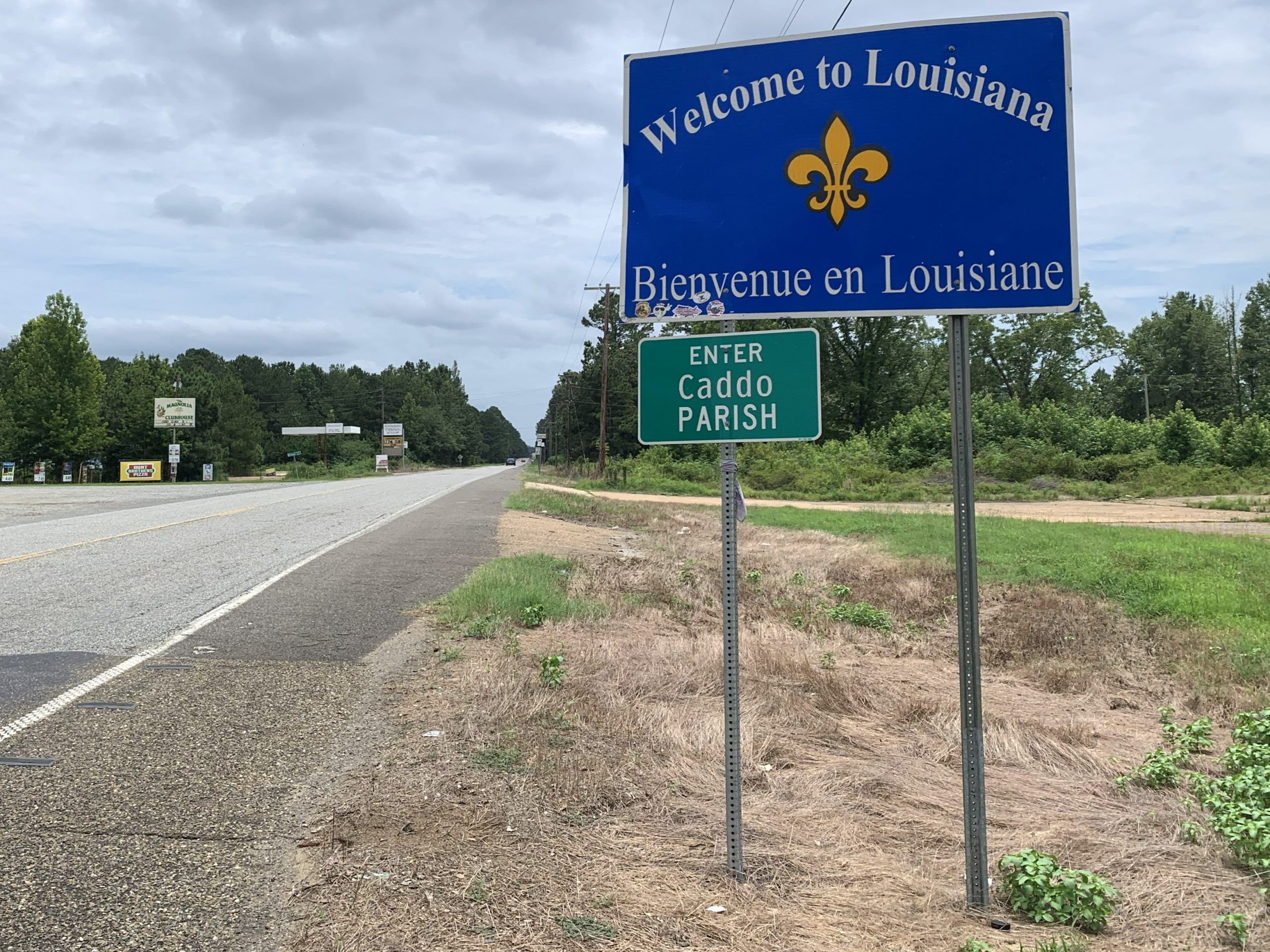
From Sand Creek, I drove an hour, much of it on dirt roads, though nowhere into Kansas.

My next stop was Mount Sunflower, the highest point in Kansas. It’s half a mile from the Colorado border and 11 miles from the nearest paved road. There are taller hills in the state, but because of the general rise in elevation from east to west, this spot, which looks like every other spot, is higher above sea level — 4,039 feet to be exact.

There isn’t much to do here except take pictures of the sculpture. I knew it would be like this, but enjoyed it anyway. I stayed about five minutes and was getting ready to leave when another car, with a family of five, drove up. The father asked me to take a picture of them, and so I did.

Twenty or so miles further east I visited the Fort Wallace Museum. There’s nothing left of the fort itself (which was located not far from the museum) except the cemetery. The museum consists of five buildings filled with random local stuff — as all small-town museums are — somebody’s grandma’s wedding dress, a clock that’s old, Uncle Farley’s WWI uniform. I stayed less than an hour, and for most of the time, I was the only visitor.

Rebuilt Conestoga Wagon and cattle drive chuck wagon.

The most interesting feature was the Pond Creek Stage Station, the only remaining station from the Butterfield Overland Stage Company. It was built in 1866.

I went to my next stop, about 40 miles southeast, mostly because of the name.

In 1878, about 300 Cheyennes left their reservation in Oklahoma and headed back toward their traditional territory to the north. They looted, murdered, and raped along the way and were pursued by the Army. They took refuge in this canyon and prepared an ambush. The warriors dug holes and lined them with rocks

The canyon

The cave, most of which is visible in this photo. It isn’t at all deep, more of an overhang than a cave.

The remains of one of the Cheyenne rifle pits on the far side of the canyon. The other canyon (visible as a slit through the middle of the photo) is where the Indians corralled their horses.

As 238 soldiers under Lieutenant Colonel William H. Lewis approached, an Indian fired a shot, hitting Lewis in the leg. He bled to death not long after. Without their commander, the troops allowed the Indians to escape in the night, although without part of their pony herd and supplies. They were later caught and either killed or resettled on a reservation in Montana. I was unable to find an explanation for the name.

I wandered around nearby Lake Scott State Park for an hour or so, birding and enjoying the day. The Indian ruins below are named El Cuartelejo. There are no doors, so the inside was apparently accessed by ladders to the roof and then down into the dwelling. Signs along the sides state that it was the northernmost Pueblo found in the US, but other signs just a few feet away say it was built by the Plains Apache. So who knows.

My long day ended with a supper of tasteless pizza at Pizza Hut, the only restaurant open at 7:00 pm on a Saturday night in Oakley, Kansas that wasn’t a bar. I stayed at the Kansas Country Inn, which hasn’t been updated or refurbished since 1970. The bed felt like it was stuffed with items from a kitchen junk drawer, and every noise made inside or outside the building reverberated through the walls and ceiling. I ended up turning on white noise on my phone and replaying it loudly all night. Even so, I got very little sleep. But apart from that, the day was a lot of fun.

Posted in Battlefields, Historic Buildings, Museums, National Parks, Road Trips, Scenery | Comments Off on Miles of Lonely

March Birds

On 3/4, I went to Brush Hollow, Tunnel Drive, and the Cañon City Riverwalk in search of Pinyon Jay, Juniper Titmouse, Rufous-crowned Sparrow, and Evening Grosbeak. I didn’t see any of the birds I was hoping to find. Here’s what I did see.

These two Hairy Woodpeckers were chasing each other back and forth through a small section of woods for at least 20 minutes.

Dark-eyed Junco. I think this may be an intergrade between the Oregon and Slate-colored types. It has the pattern of an Oregon Junco, but none of the warm tones.

Audubon’s (Yellow-rumped) Warblers

On the 13th, I went to Stratton Open Space to look for a Northern Goshawk. No luck, but I did get photos of some of the many Woodhouse’s Scrub-Jays.

On Wednesday, March 16, I hiked around South Platte Park in search of a Sedge Wren that has been hanging around there for a couple months. I neither saw or heard a hint of it. I did, however, see …

White-breasted Nuthatch

Common Goldeneye

Two Bushtits. The females have yellow eyes.

Wild Turkeys (seen just outside Chatfield State Park)

Not a bird I realize. Two separate Muskrats. I see them often in the Platte River just north of Chatfield.

On 3/24 I birded at Fountain Creek Regional Park. A Cooper’s Hawk relaxed and preened in a cottonwood along the parking lot when I arrived.

One of two Lincoln’s Sparrows.

The Rusty Blackbird that hung around all winter is molting into summer plumage.

Posted in Birds | Comments Off on March Birds

Search for a Rarity

After a week of cold weather, I was anxious to get outside and bird on Saturday. I checked the rare bird reports, and there really wasn’t anything worth chasing. When I went to bed on Friday, I had no idea where I’d head in the morning or if I’d just stay home.

But in the morning, I decided to go out and find a rarity of my own — something for other birders to chase. This is a constant wish by all birders, but it rarely happens. That’s why they’re called rarities.

I headed down to Lake Pueblo State Park and parked by Valco Ponds. I walked to the nearest pond and found it, not frozen over like I expected, but filled with ducks. A lot of times when I find a lot of ducks, I scan to see what species are there but just make wild estimates of the numbers for my eBird checklist. But I wasn’t in a hurry this day, so I took my time. I picked one species and did a slow scan from one end of the pond to the next, counting individuals. Then I picked another species and did the same thing. I’d been there about 10 minutes when I spotted a Eurasian Wigeon. I had my rarity.

Now, as rarities go, it wasn’t spectacular. A Eurasian Wigeon had been seen on that same pond in December — I’d seen it there myself. Chances are very good that this was the same bird. But it hadn’t been seen in a couple months, and it’s still a rare bird. That’s it on the left, chasing a female American Wigeon. (The two birds in the foreground are a pair of Hooded Mergansers.)

I took a slow stroll around the other ponds and, an hour or so after I spotted the wigeon, I submitted my Valco Ponds checklist on eBird. Then I headed up the river. I saw a Merlin, which kept flying ahead of me and never let me get close enough for a good photo. I also saw my first-of-the-year Northern Shrike. Later in the day, about half a mile away, I saw a Loggerhead Shrike, making this the first time that I’ve seen both shrikes in the same day. Here are some other photos from the day.

The bird in the right foreground is a female Redhead. The birds on the left and right are a pair of American Wigeons. The red bird in the middle is a Cinnamon Teal, also my first of the year and a little bit early for the species.

American Coot

Northern Pintail

Buffleheads

Red-breasted Merganser (chasing a female)

Two large flocks of Snow Geese flew over headed northwest. I estimated 400 birds, about a dozen of which were of the blue phase — like the top bird in the second photo.

American Kestrel

Immature Northern Shrike

Immature Cooper’s Hawk

Bald Eagle

Wilson’s Snipe

In all, I walked more than seven miles, and it was early afternoon when I got back near where I’d parked my car. On the bridge over the river, I met Brandon Percival, one of the top-notch birders in Colorado and a very nice guy. I’ve run into him several times — often enough that we recognize each other. As soon as he saw me, he said, “Thanks for the wigeon.” He was with another birder, and they’d come to see the duck because of my checklist.

When I got to the pond, there were five or six other birders there to see the bird. Here’s what the Colorado rare bird report looked like later that day.

And later that day, Brandon sent this out on the Colorado Birds report.

Over the weekend, many birders went to see it. So even though it wasn’t ultra-exciting, I did find a rarity.

Posted in Birds | Comments Off on Search for a Rarity

A Rare Day of Birding

Today wasn’t rare because of the number of species I saw (24), the number of lifers I found (0), or even the rarity of the birds I saw (although some of them are pretty rare in Colorado). It was rare because I saw all of the target birds I was hoping to see.

A couple weeks ago, I drove to the community of Alice, high up in the mountains north of Idaho Springs. I saw all three species of Rosy-Finch, which was nice. But I missed Pine Grosbeaks and Cassin’s Finches, which were being seen there regularly. Both species have continued to be seen, so I made another trip.

Cassin’s Finch (two males and then a female). There were six or seven that came and went.

Pine Grosbeak (two photos of a male and two of a female). I only saw the one male, and he didn’t stick around long. I think I saw three females, but I’m not sure.

(A Brown-capped Rosy-Finch in the background)

Brown-capped Rosy-Finch

Clark’s Nutcracker

Brown Creeper

Mountain Chickadee

From there, I drove to Standley Lake in Westminster to look for two Tundra Swans that were seen yesterday. I drove into the park and discovered a fee station. When I expressed surprise, the woman in the booth told me I could park for free just up the road and walk into the park. And so I did. After a long walk through snow and mud and more mud, I got to the lake and discovered the swans sleeping on the ice about half a mile away. With the light behind them. I thought I could get a better view from the other side of the lake, so I drove several miles and hiked a couple more through more snow and mud and more mud, only to find that I could get no closer from that side — maybe not even as close — although the light was better.

OK, confession. I normally wouldn’t count these, because, although I’m pretty sure they’re swans and not bags of laundry, I certainly can’t tell whether they’re Tundra or Trumpeter Swans from this distance. But I did see some close-up photos of these very birds taken yesterday, so I know what they are, and I did walk through a great deal of mud to see them, and that ought to count for something. I’d never count them for a lifer, but for a year list, why not?

In spite of all the mud-walking, I still hadn’t gotten in my five miles, so on the way home, I stopped at Bear Creek Trail in Lakewood to look for a Pacific Wren that I missed a couple weeks ago. I was standing by the log jam where it’s been seen so frequently when I saw two women with binoculars walk with determination down a nearby path along the creek. They acted like they had a destination in mind, so I followed and came upon one of the women actually looking at the wren. It was in the brush in the woods, about 30 yards from the creek, foraging rapidly through the sticks. The three of us watched it for about 20 minutes, waiting patiently for good photos, and our patience paid off.

The Pacific Wren looks very like a Winter wren, but with warmer brown tones. I’m familiar with Winter Wrens from Illinois, and this bird definitely had more red-brown coloring. The two species used to be considered one species — in fact, when I saw my first Pacific Wren in Oregon, it was still a Winter Wren. This is actually the second Pacific Wren I’ve seen in Colorado, but it’s my first photo of the species.

And yes, this isn’t a bird. But it is the tamest Black-tailed Prairie Dog I’ve ever seen. I took this photo while standing on the other side of a post and rail fence, not six feet away.

Posted in Birds | Comments Off on A Rare Day of Birding

Birds at Fountain Creek

I walked five miles in a little over three hours and saw 34 species of birds at Fountain Creek Regional Park this morning. And while none of the birds were unexpected, I did get some great photos.

Virginia Rail

Great Horned Owl

Northern Waterthrush (This one would normally be unexpected except that this individual has been hanging around all winter.)

Black-capped Chickadee. I’ve long struggled to get photos that clearly show the eye without having to do some heavy processing. Finally, today, the sun was just right.

Song Sparrow

Red-tailed Hawk (Harlan’s subspecies)

American Pipit

Posted in Birds | Comments Off on Birds at Fountain Creek