Pueblo Weisbrod Aircraft Museum

As the summer weather heats up and birding in the middle of the day becomes less inviting, I look for other things to explore. Like this museum. I wasn’t expecting much because, well … Pueblo. The museum consists of two hangers full of planes and displays and perhaps another 8 or 10 planes parked outside.

I’m not into the technical stuff — who designed and built the airplanes, how big the motor is, how many were produced. What I like to know is where and when this particular airplane — this exact one — was used. What is its tie to history? This museum was sadly lacking in that sort of information. I was never even sure when I was looking at an actual historic plane and when I was looked at a reproduction or a museum display cobbled together with spare parts. This was true even of the showpiece of the museum, a WWII-era B-29 bomber “Peachy.” There was certainly nothing in any of the displays about its service. I think, but I’m not sure, that it was made up of parts. It was named for a real plane that flew during the war with crew members from Pueblo. In the crowded hanger, I found it challenging to get a photo of the entire plane.

We were told that Peachy was the sister of the guy with the hat who’s shaking hands in the photo. There was even a photo of Peachy herself (looking nothing like the painting on the plane) and the outfit she wore when she posed for the painting. I thought it was a little creepy that some guy would want his sister painted on his plane looking like this.

The one exception to the vague history was this helicopter, a Sikorsky SH-34J Seabat. It was used to pick up Alan Shepard, the first American astronaut, on his Mercury Freedom 7 mission in May 1961. Now knowing stuff like that is cool.

A Russian MIG, captured during the Korean War (maybe).

Lockheed SP-2H Neptune used in anti-submarine warfare. The blob hanging down below it is sonar or radar or something.

Lockheed F-80C Shooting Star, the first operational U.S. jet. A few were used at the tail-end of WWII.

A 1926 Alexander Eaglerock bi-plane, made at the Alexander Aircraft Company in Colorado Springs. The factory building still stands on Nevada Avenue.

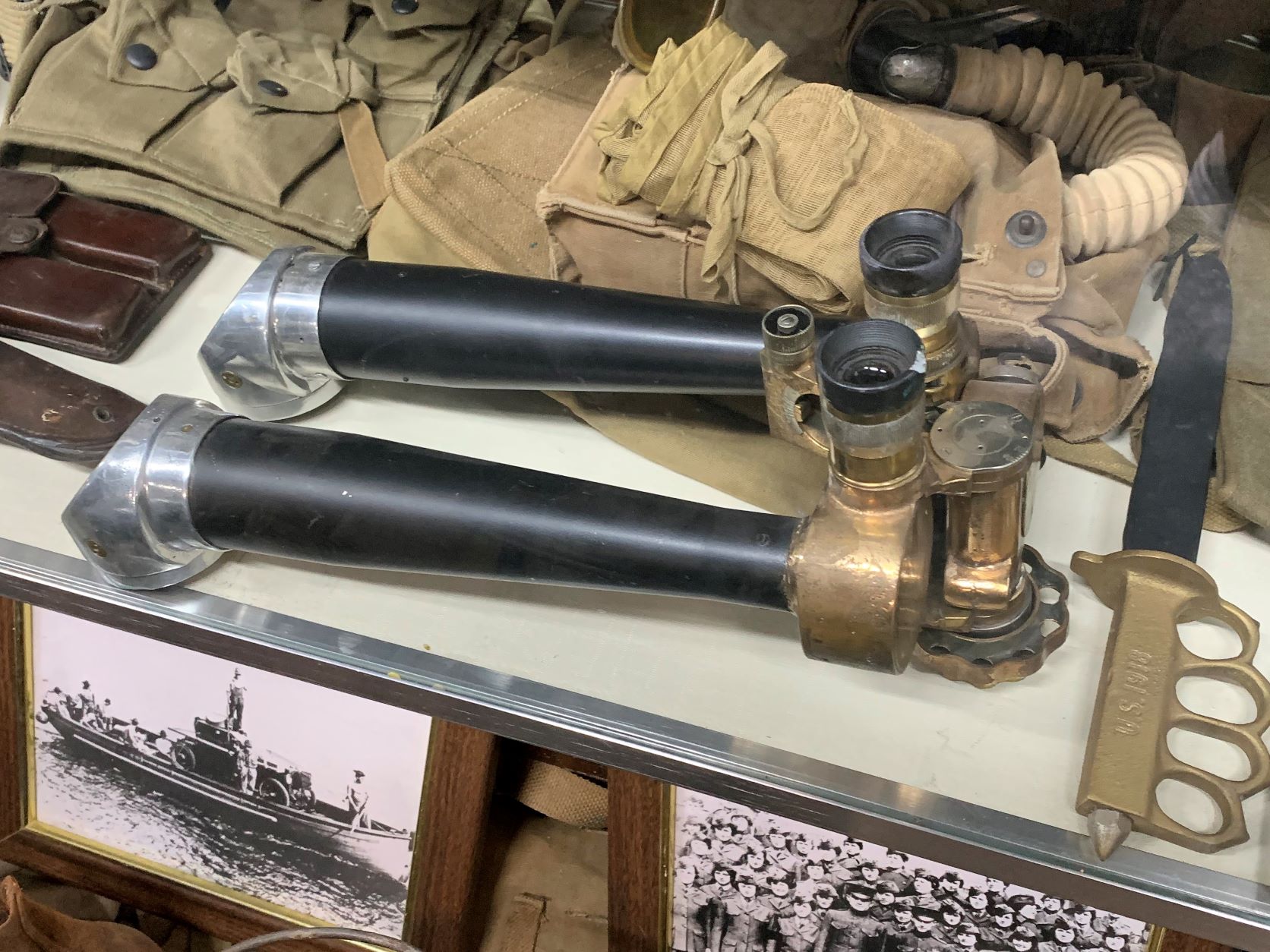
A Norden Bombsight used in bombing, and a photo of the view through it. The crosshairs are made of human hair.

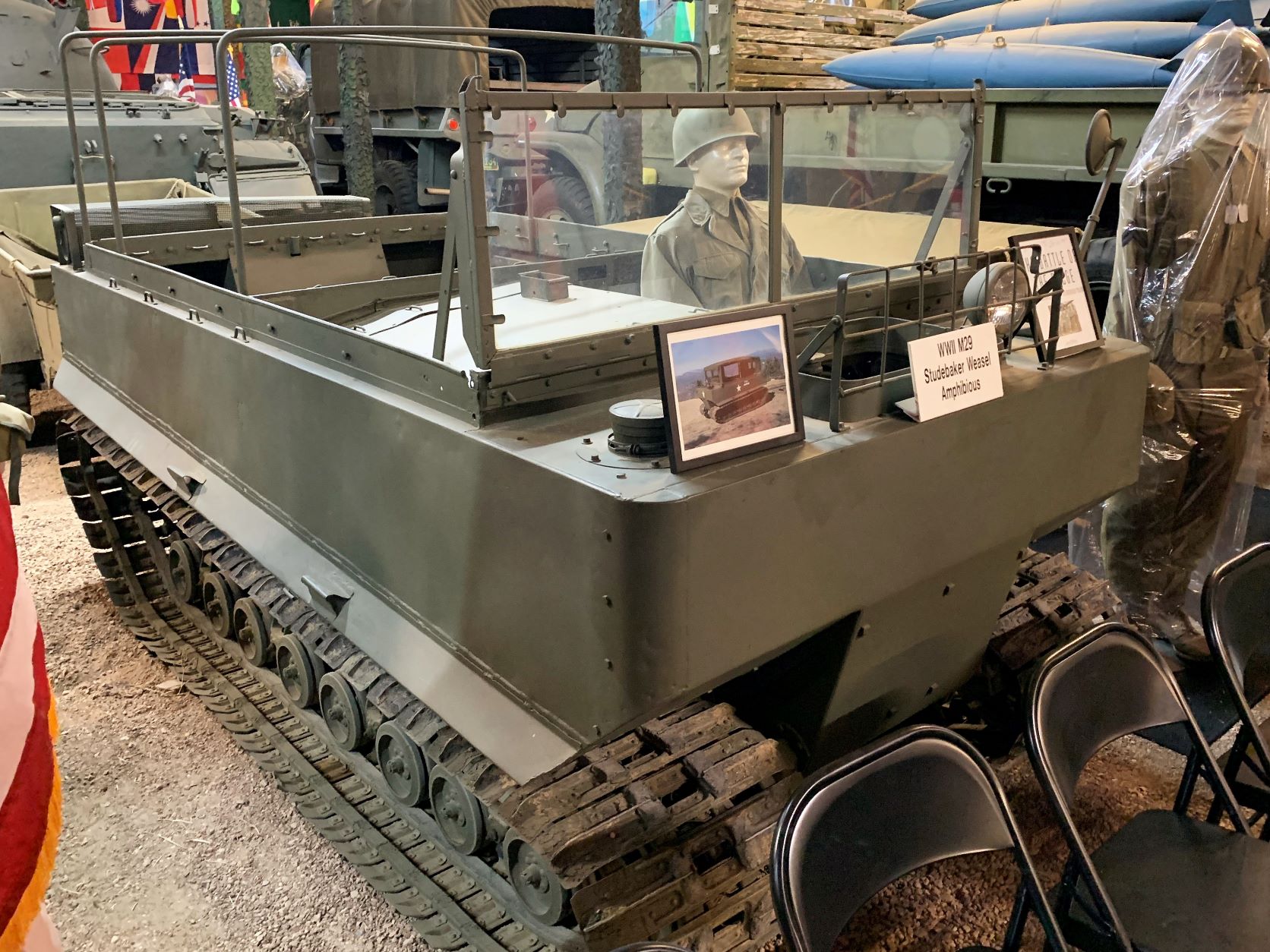
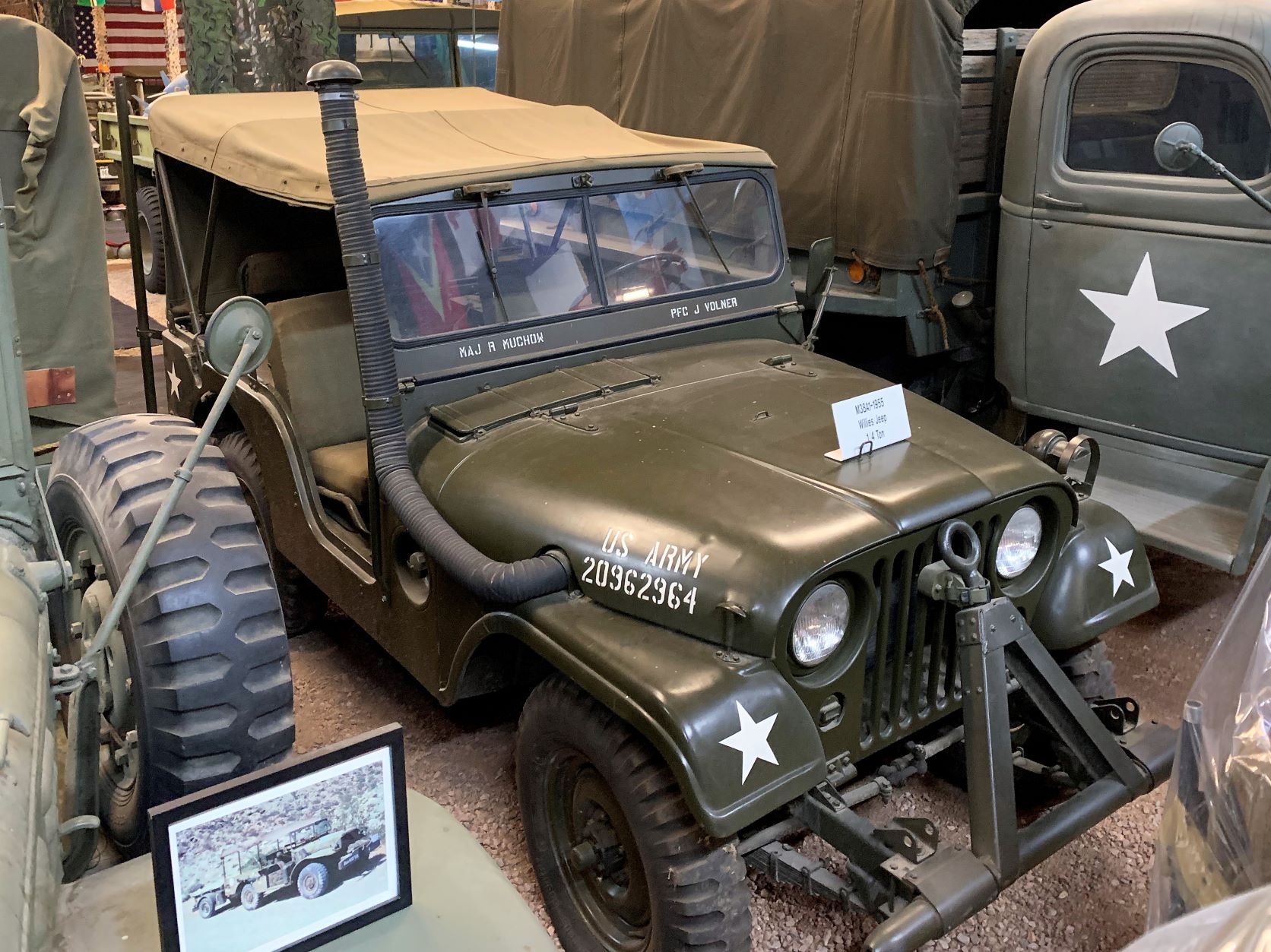
A Weasel, used in WWII in Italy and France. It could move through deep snow and was amphibious.

Wooden airplane models used for training in identification.

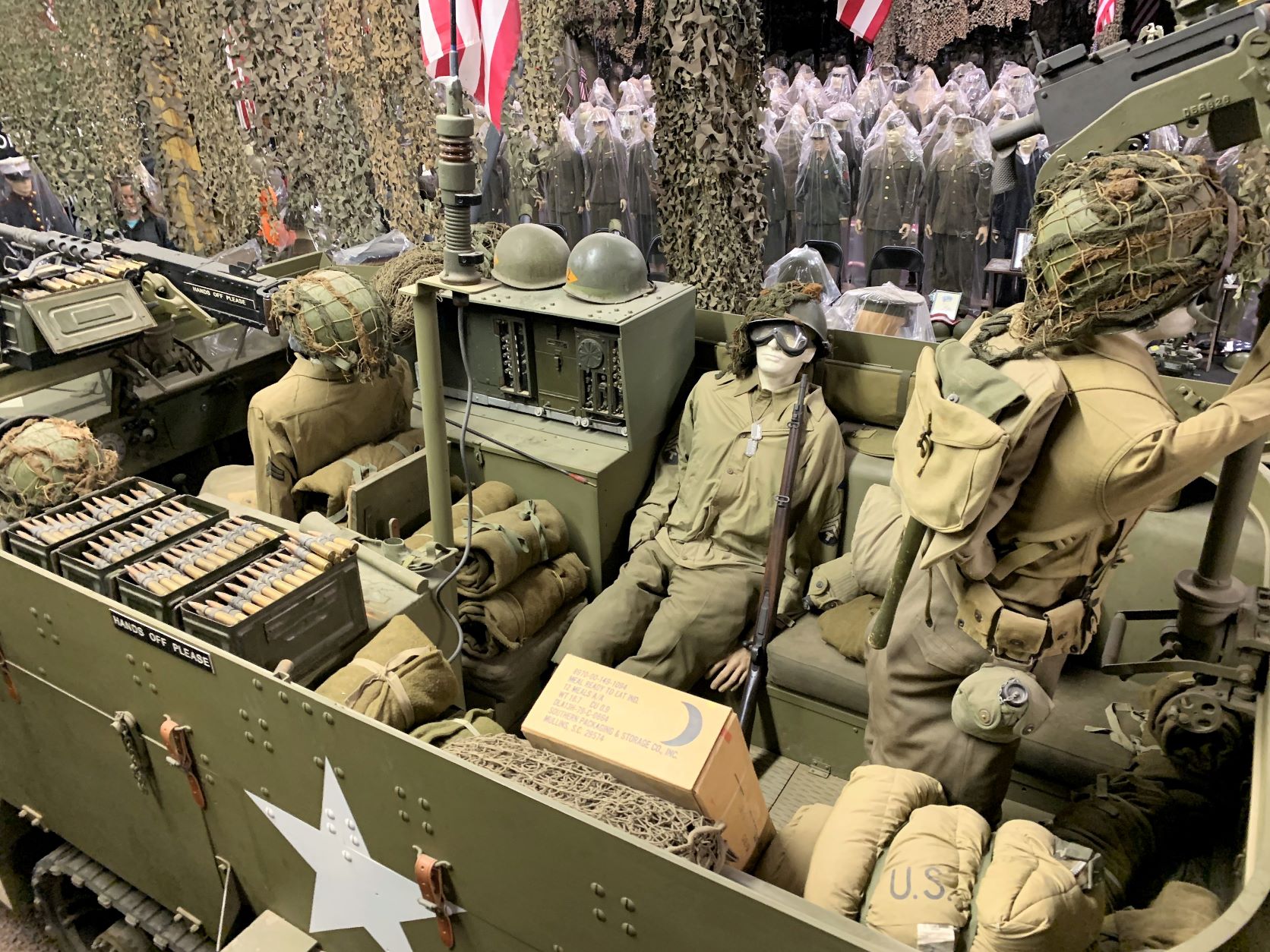
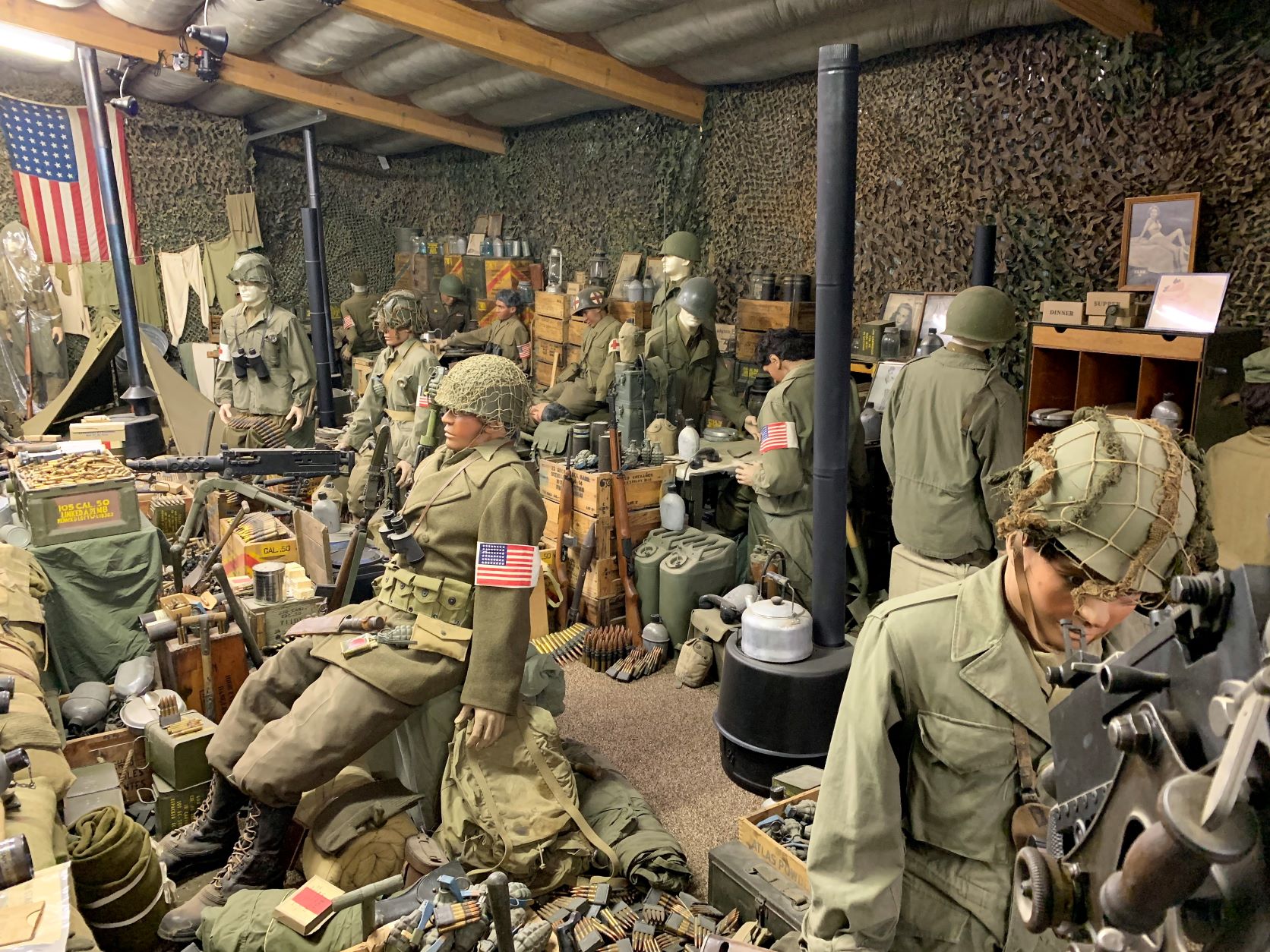
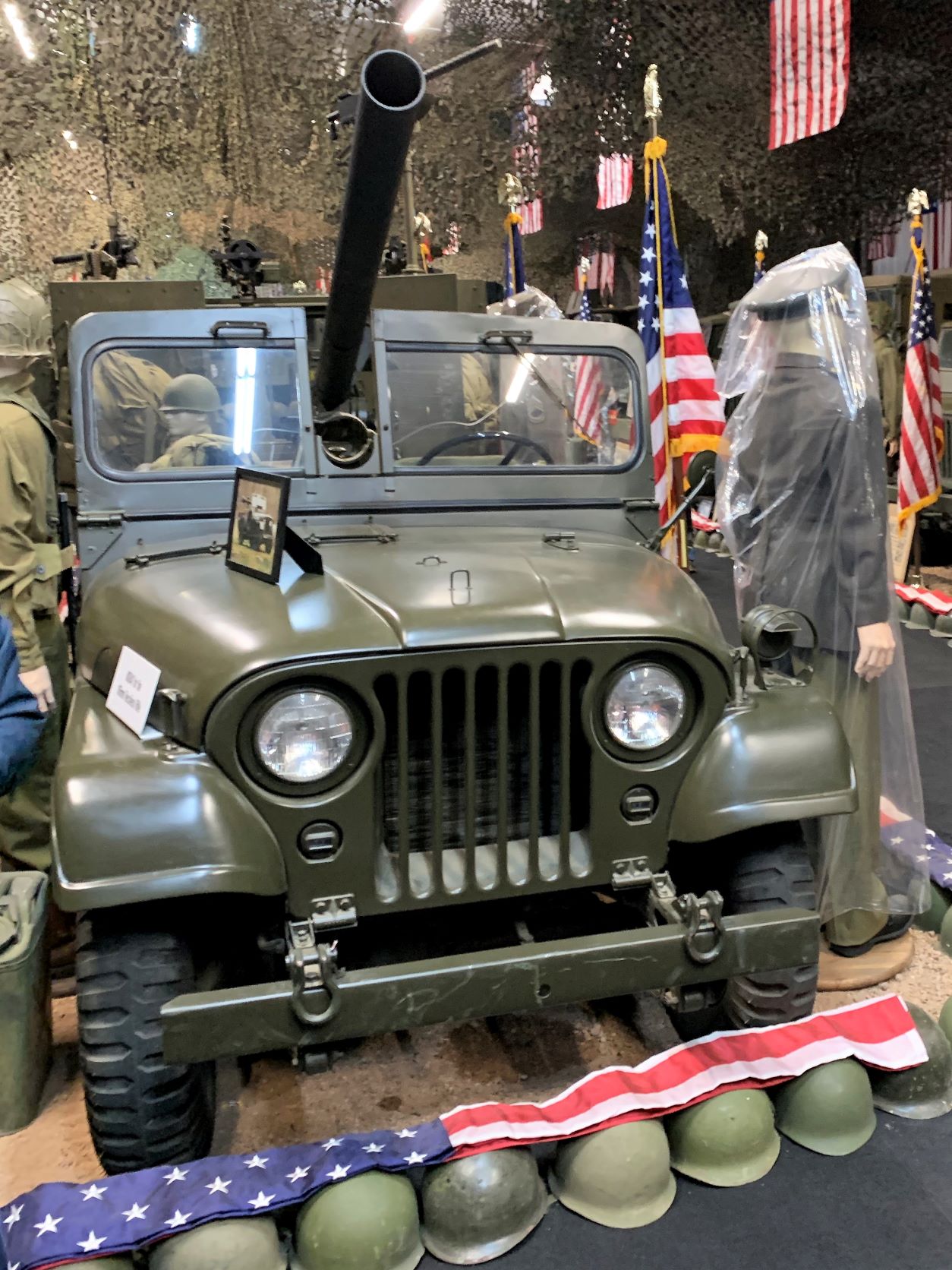
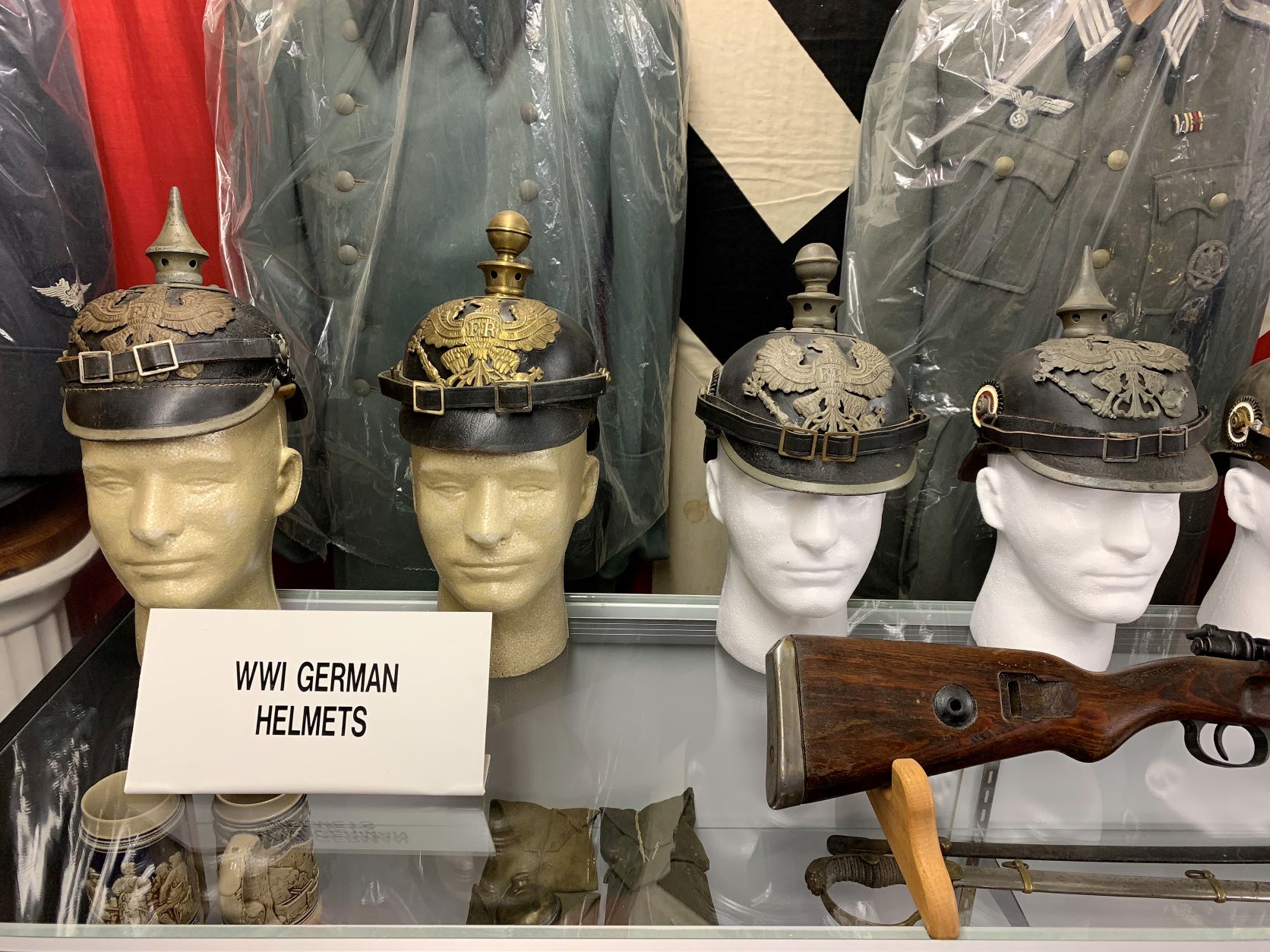
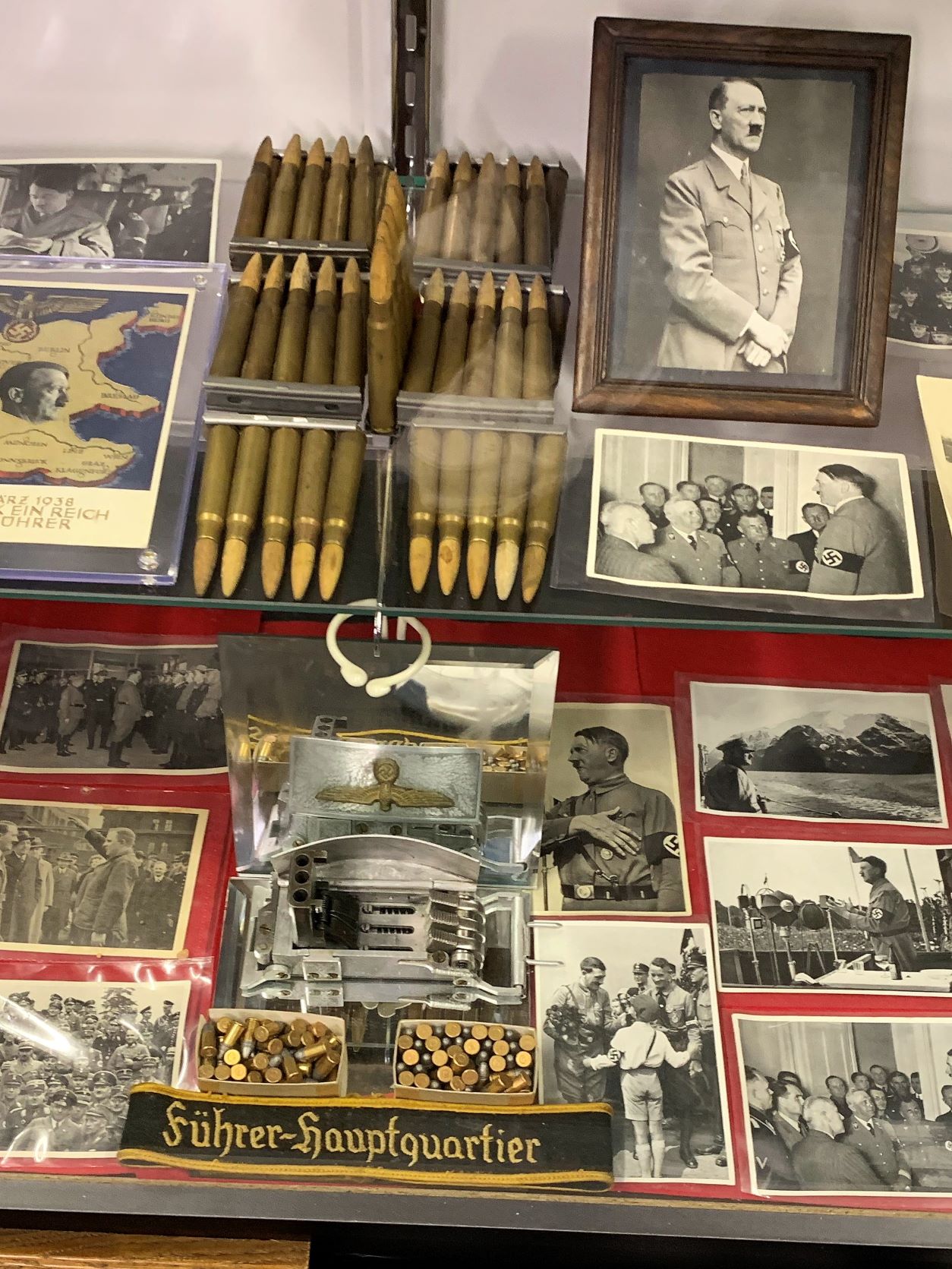
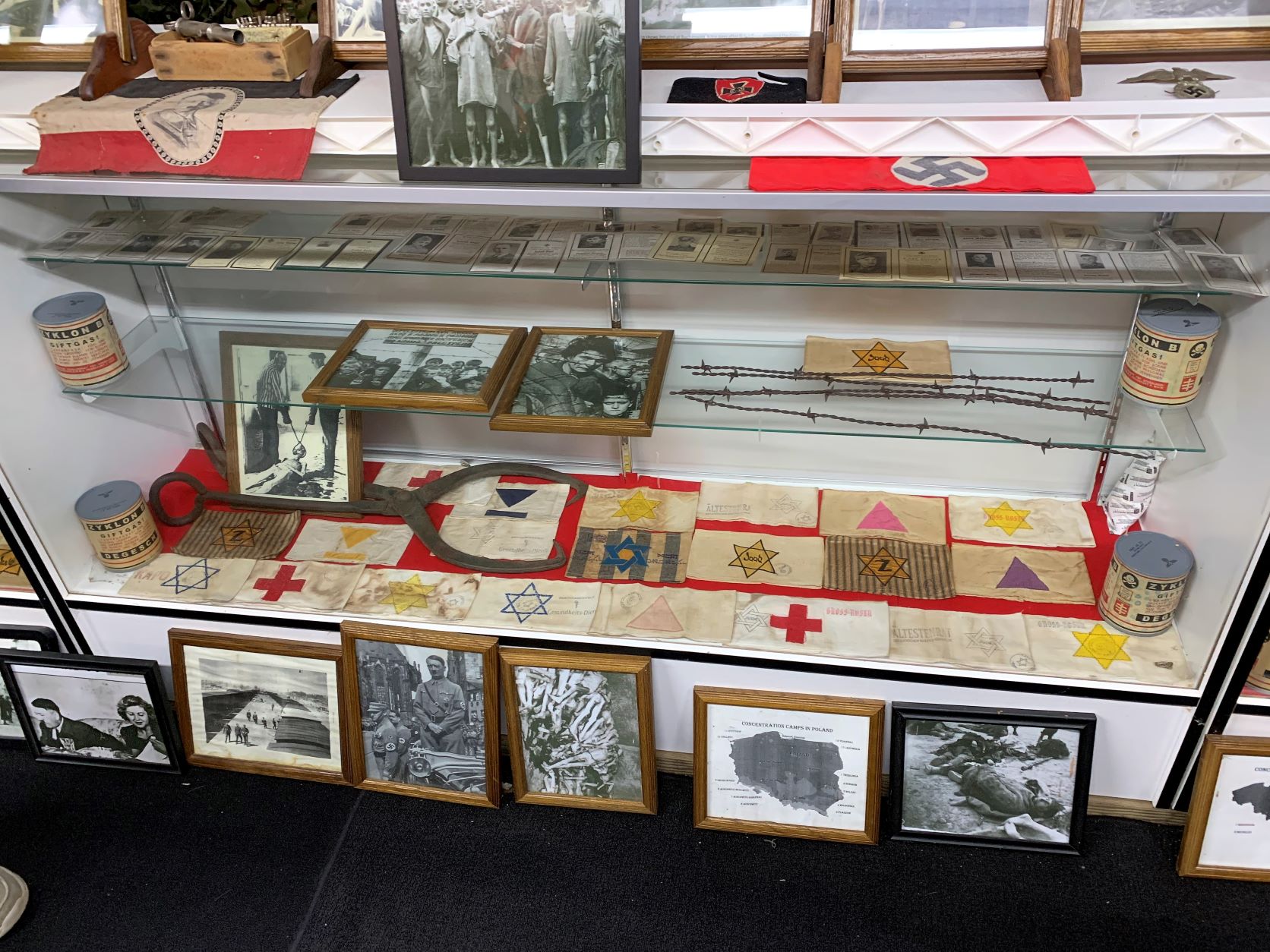
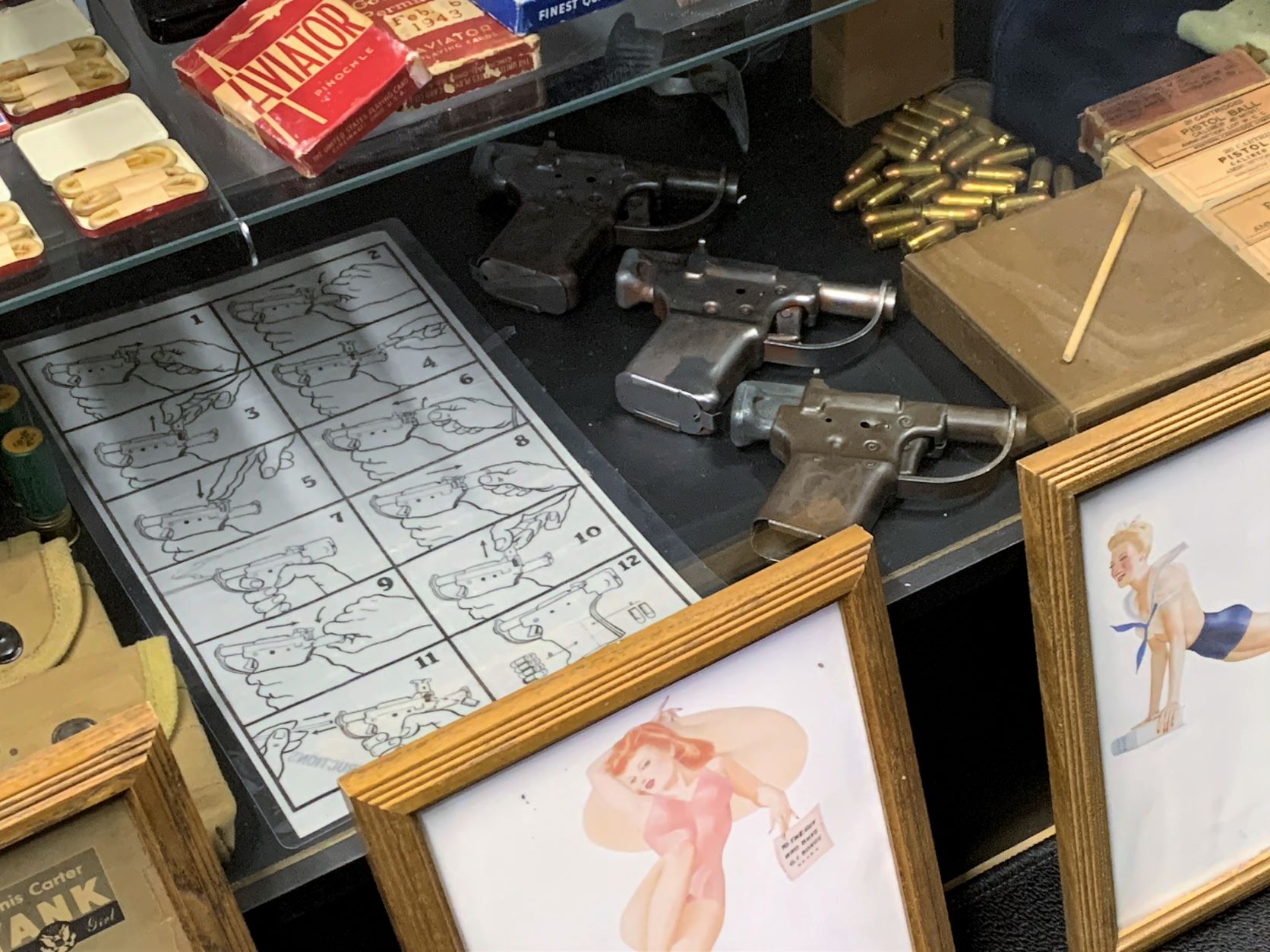
There were random displays on everything from space travel to uniforms to items captured from the Japanese and Germans. It was all such a jumble that I soon had sensory overload.

The most interesting and authentic thing about my visit was my guide. His name was Bruce Elson. He was a 97-year-old veteran of WWII who fought in the Philippines, trained for the invasion of Japan, and visited Hiroshima six weeks after the atomic bomb was dropped. He mixed in stories of his service with explanations of various exhibits in the museum. Although he walked with a cane, he was sharp, witty, and informed.

He told me that he didn’t think he’d be alive if the atomic bomb hadn’t been dropped. In training, the soldiers were told there would be 250,000 U.S. casualties on the first day of the invasion of the Japanese homeland. But he also said the Japanese people were so obedient to the emperor that, during his stay in the country immediately after the war as part of the occupying force, he received nothing but respect from the Japanese and never felt the slightest bit in danger. He was from Pueblo and went to high school at one of the local schools.

Posted in Museums, Transportation | 1 Comment

Reptile/Amphibian #33 — Colorado Checkered Whiptail

aspidoscelis neotesselata

Saturday, July 3, 2021 — 9:41 am

Lake Pueblo State Park, Colorado — Valco Ponds

As I was walking along the path that runs between the Arkansas River and one of the ponds, I kept noticing striped lizards. The smallest was about three inches long, the largest perhaps seven inches. I don’t generally make a concentrated effort to see reptiles and amphibians, but if one gives me a chance, I’ll take its picture and try to identify it later.

As it turns out, they’re Colorado Checkered Whiptails, a species only recently recognized and only found in Colorado. They’re a triploid species, which means (and I don’t pretend to understand this) that they are all females, they have three chromosomes, and they reproduce asexually. The young are genetically identical to the female.

Interesting, but they just looked like any other lizard, except perhaps a bit more prone to running down the trail in front of me instead of dashing for the trail-side vegetation.

Posted in Reptiles, etc. | Comments Off on Reptile/Amphibian #33 — Colorado Checkered Whiptail

Highlights from Recent Reading

But as I was saying, the hotel ladies behind Mrs. Massey and me at the beach were talking about our girls, not knowing they belonged to us. “do you see that slim flowerlike young thing?” one of these ladies said. “She’s the sister of that lovely dark-haired girl just throwing the ball. They certainly seem to be the belles of the place. They belong to a family that lives in that big cottage the driver pointed out to us yesterday, and of course would never deign to notice us mere hotel people — high-and-mighty cottagers! Their name’s Massey and they’re just about the leading family here. The waitress at my table told me so this morning.”

from Mary’s Neck, by Booth Tarkington

______________________________________________________________

“Don’t look now,” said Joe, “but will you marry me?”

from The Old Reliable, by P.G. Wodehouse

______________________________________________________________

“What’s wrong with marriage? It’s fine. Why, look at the men who liked it so much that, once started, they couldn’t stop, and just went on marrying everything in sight. Look at Brigham Young. Look at Henry the Eighth. Look at King Solomon. Those boys knew when they were on a good thing.”

Out of the night that covered him, black as the pit from pole to pole, there shone on Smedley a faint glimmer of light. Something like hope dawned in him. He weighed what she had just said.

Brigham Young, Henry the Eighth, King Solomon, knowledgeable fellows, all of them, men whose judgment you could trust. And they had liked being married, so much so that, as Wilhelmina had indicated, they made a regular hobby of it.

from The Old Reliable, by P.G. Wodehouse

______________________________________________________________

[From a short story about a man who caught a whale, hoisted it on his canal boat, hollowed it out , and sold tickets to anyone who wanted to go inside.]

He himself got a sailor’s coat and his hat and a new tie and done the steering. Every time he came to a village he blew on his horn and put into the dock. And the whole town came down. And danged near everyone would go inside the whale. It certainly was rigged out.

Uncle Ben’d built a regular room out of matched lumber and he had a winder on the far side opposite the door, and a chair and table in the front end, and a bunk and a stove running through a double pipe, which he didn’t never get up his nerve to light. And on the shelf in the back end he had a cupboard with all Aunt Em’s best china set out. And as he told the people, it was all real shipshape and very actively arranged, all but the plumbing.

And a lot of those farmers thought all whales was rigged out like that, and commenced to take the Bible seriously after.

from Mostly Canallers, by Walter D. Edmonds

________________________________________________________

After Rome’s fall, communications links in the West were largely limited to kings, monks, and scholars until the thirteenth century, when European businessmen began to sponsor services that were commercial rather than governmental. (The word “mail” derives from Middle English maille, or “metal link,” for the woven-metal bags carried by the armed couriers of the Hanseatic League, an organization formed at that time to protect the business interests of member German towns and merchant communities).

from How the Post Office Created America, by Winifred Gallagher

________________________________________________________

If a husband uses a guest towel, he should be quietly reprimanded, but under no circumstances sent to his room. After pointing out, briefly, that the guest towels are not to be used, the wife might even give him a piece of bread and butter with sugar on it, or a kind word. Too many wives do not consider it important to explain the facts of the guest towel to their husbands. A wife expects her husband to pick up his knowledge in the gutter or from other husbands, who know as little about the actual truth as he does himself. If a husband uses a guest towel, he should be gently reproved and then told where guest towels come from, in a clear, simply language. The wife should lead him to the drawer where she keeps the guest towels and show him wherein they differ from ordinary towels — the kind he may use. The average guest towel can be identified by curious markings, either elaborate initials or picturesque designs in one corner or running all the way around the border. The husband should also be told that the use of such towels is not pleasurable, because of the discomfort caused by the hemstitching, the rough embroidery, and the like. He should be made to understand that no man ever uses a guest towel, either in his own home or when he is a guest somewhere else, that they are hung up for lady guests to look at and are not to be disturbed. If he is told these simple truths in a calm, unexcited way, the chances are that he will never use a guest towel again and that he won’t worry unduly over the consequences of his having used one once or twice. But as soon as he is given the idea that he has done something terrible, that old feeling of being boxed in comes over him. He begins to think that he will never do anything right about the house, and that his home is merely a laboratory in which he has been trapped for the purpose of serving as the subject of strange experiments with towels and furniture.

from Is Sex Necessary?, by James Thurber

________________________________________________________

“You see, with smoke signals, that was the very first time in the whole history of the human race that you could tell somebody something that he couldn’t see you when you told him. You get what I mean?”

“No,” Dortmunder said.

“Before Smoke signals,” Medrick said, “I wanna tell you something, I gotta come over to where you are, and stand in front of you, and tell you. Like I’m doing now. And you get to look at my face, listen to how I talk, read my body language, decide for yourself, is this guy trying to pull a fast one. You get it?”

“Eye contact.”

“Exactly,” Medrick said. “Sure, people still lied to each other back then and got away with it, but it wasn’t so easy. Once smoke signals came in,  you can’t see the guy telling you the story, he could be laughing behind his hand, you don’t know it.”

“I guess that’s true,”  Dortmunder agreed.

“Every step up along the way,” Medrick said, “every other kind of way to communicate, it’s always behind the other guy’s back. For thousands of years, we’ve been building ourselves a liar’s paradise.”

from Watch Your Back!, by Donald Westlake

________________________________________________________

When I was young my father said to me: “Knowledge is power, Francis Bacon.” I understood it as “Knowledge is power, France is bacon.”

For more than a decade I wondered over the meaning of the second part and what was the surreal linkage between the two. If I said the quote to someone, “Knowledge is power, France is bacon,” they nodded knowingly. Or someone might say, “Knowledge is power” and I’d finish the quote “France is bacon” and they wouldn’t look at me like I’d said something very odd but thoughtfully agree. I did ask a teacher what did “Knowledge is power, France is bacon” mean and got a full 10-minute explanation of the “knowledge is power” bit but nothing on “France is bacon.” When I prompted further explanation by saying “France is bacon?” in a questioning tone I just got a “yes.” At 12 I didn’t have the confidence to press it further. I just accepted it as something I’d never understand.

It wasn’t until years later I saw it written down that the penny dropped.

from the Internet, written by Lard_Baron

________________________________________________________

The story of the vengeful curtain rod is an exciting and dramatic tale told by the people who only say “hup hup” on the east coast of Borneo. The real facts are vague and misty, but the legend of the vengeful curtain rod as told by the people who only say “hup hup” goes like this: “Hup hup hup hup hup hup hup hup hup hup hup hup.”

from Cruel Shoes, by Steve Martin

________________________________________________________

Soup is a robust addition to any meal and just about everyone has a favorite. but the primary concern is “how can  you carry soup on your body without appearing ridiculous?” When you ask yourself this question, you are ready for soup folding.

from Cruel Shoes, by Steve Martin.

________________________________________________________

It’s an old joke that the hypothesis that a million monkeys with typewriters would sooner or later produce the works of Shakespeare has been conclusively disproved by the creation of the internet.

from Blonde Bombshell, by Tom Holt

________________________________________________________

The word “slogan” derives from the Gaelic gluagh-ghairm, a battle cry. Man’s changing concerns are thus neatly summed up: the term that once stood for the fierce yells of Scotsmen carving each other with claymores now stands, according to advertising textbooks, for “a phrase used in order that the prospect may become favorably disposed toward the article for sale.”

from They Laughed When I Sat Down, by Frank Rowsome, Jr.

________________________________________________________

Pears’ Soap continued to lead the way in the slogan field with its interminable “Good morning. Have you used Pears’ Soap?” It grew to be part of the language, a humorously impertinent rejoinder to anyone who had the misfortune to say “Good morning” first.

from They Laughed When I Sat Down, by Frank Rowsome, Jr.

________________________________________________________

“Is there anything nearer or dearer to you

Than I am?” asked the lover with tremulous dread;

“There’s nothing that’s dearer

But something that’s nearer

And that’s my P.D. Corset,” she said.

from They Laughed When I Sat Down, by Frank Rowsome, Jr.

Posted in Books and Literature | Comments Off on Highlights from Recent Reading

Out Calhan Way

When we first moved to Colorado, I used to bird at Ramah Reservoir fairly often. It was the closest place to see shorebirds, and the grove of cottonwoods attracted a variety of birds. But after a couple years, the reservoir ran dry and there didn’t seem much point in going. I’ve heard rumors that the state is planning on turning it into a range for recreational shooters, so there goes that.

Yesterday was rainy and I stayed home. Today I wanted to go somewhere, but I didn’t want to drive far. Birders found a Yell0w-billed Cuckoo at Ramah a week or so ago. It would be a first for the year and the state, so I decided to head that way.

I had the place to myself. (In fact, during the two or three hours I was there, I only saw one other person, a guy walking his dog along the road, and he was a long way off.) I saw a Mule Deer doe, and later, while walking through some tall grass, a fawn leaped up from right at my feet and gave me a huge startlement.

I wandered through the cottonwoods for about 20 minutes before I heard the cuckoo. I played it’s song once, and it immediately flew to a nearby tree and called repeatedly. Over the next 10 minutes, it flew to three other perches and kept calling. I imagine it was calling for a mate, but since it was way out of its normal range, its chances are slim. I actually felt bad for giving it false hope. For the next half hour, while I was in ear range, I continued to hear it calling from time to time. My experience with cuckoos is that they can be hard to find. But this one certainly wasn’t.

I took my time strolling back to my car, enjoying the cool morning air and the solitude. I heard and then saw, my first Colorado Dickcissel. He was a long way off — I’m surprised my photos turned out this well. I tried to get closer, but he flew a long way out into the prairie.

Cassin’s Kingbird

I spotted a Loggerhead Shrike in a bush with two almost-fully-grown young. Later, I parked my car near a fence post where it stopped on its repeated forays into the prairie for insects. It would land on the post for a minute or so, then fly just above the grass. When it reached its goal, it would fly up and flutter in one place like a dragonfly, then drop down into the grass. On a couple of occasions, it stopped on the fence on its way back to its young. Once it had what looked like a giant ant in its bill. Another time it had a small grasshopper-looking bug that it ate itself.

The day was young, the weather was beautiful, and I was in the mood for more adventure. I decided to stop off at Paint Mines park, where I haven’t been in a couple years. A lot of other people had the same idea. When I was here before, it occurred to me the place may not be around for long because of all the people scrambling on the formations. But now El Paso County has two people stationed there to answer questions and prevent people from destroying the place. I didn’t stay very long, just long enough to walk down into the canyon, take some photos, and hike back out.

In my opinion, the state has done a lot to ruin the place by allowing wind turbines in the surrounding prairie, greatly destroying the views.

I’m sticking this here because I don’t want to make it a separate post. On Saturday, I found this little butterfly at Mary Kyer Park in Colorado Springs. I’m pretty sure it’s a Banded Hairstreak, an eastern butterfly with a small population on the front range in Colorado.

Posted in Birds, Scenery | Comments Off on Out Calhan Way

Abraham Lincoln Memorial Monument

We had a long drive across southern Wyoming to look forward to on Saturday. I looked for somewhere interesting to stop to break the trip. This was the best I could do. Some guy in Wyoming decided he wanted a statue of Lincoln on Abe’s 150th birthday. The best he could do was to connect it somehow to the Lincoln Highway, the first highway across the country, which passed somewhere close to here. The statue is just Lincoln’s head on top of a big pillar. It looks decidedly weird.

There’s a Lincoln Highway monument next to it.

We wandered about the rest stop for perhaps 15 minutes, but there really wasn’t much to see.

Signs in the travel center alerted us to another attraction down the road a bit. It’s a limber pine, known as “Lone Tree,” that seems to be growing out of a rock. It was first recorded in the 1860’s when the Union Pacific Railroad diverted their tracks rather than destroy it.

We didn’t even bother pulling off the interstate, but I took a photo as we blasted by at 80 mph.

Posted in Sculptures and Statues | Comments Off on Abraham Lincoln Memorial Monument