Dinosaur National Monument — Day 2

Since we took the trouble to go to Dinosaur National Monument, it seemed that, at some point, we should see the dinosaurs. I’ve never been very interested. Perhaps its because the study is so much speculation. Maybe it’s because people can’t talk about dinosaurs without talking about evolution. Or maybe it’s because they’re dead, and there’s nothing to look at but bones and footprints.

Anyway, to get into the Quarry Exhibit Hall, we had to make reservations. I didn’t know when I would get back from my search for the Gray Vireo, so I signed up for the 11:00 shuttle bus. As it turned out, we got to the visitor center around 9:30 and found out there really wasn’t much to it other than five-minutes of displays and a small gift shop. That gave us time to see some things in the Utah part of the park, like Turtle Rock. Perhaps this is the mountain turtle our street is named after.

There were also some more petroglyphs (carvings in rock) and pictographs (paintings on rock).

The road ended at the Josie Morris Cabin. After divorcing a string of husbands, Josie homesteaded in the canyon in 1913 and lived there by herself until 1964. She planted orchards and raised cattle. The cabin has three rooms.

We got back to the visitor center around 10:30, and the guy at the desk told us to take the next shuttle. We never had to show anyone our reservations, so we could have just gotten on board without them or without the $2.00 it cost to make them. There were signs on all the doors saying that it was required that anyone who hadn’t been vaccinated had to wear a mask, but since it didn’t specify what vaccination they were referring to, we were good. There were also signs saying that everyone had to wear masks on the shuttle, but since the driver was wearing his around his chin, we didn’t bother there either. In fact, we didn’t put on masks once the entire vacation. Probably 20% of the people we saw were.

Anyway, the shuttle ride took about five minutes. I know I was at the quarry building with my parents when I was little, but I don’t know if I actually remember being there or whether I remember seeing a postcard of our visit.

We spent maybe a half hour inside looking at the bones. We made no effort to sort out the bones or determine which ones went with which dinosaur.

You can get an idea of the scale of the place by noticing the ranger in the bottom left of this photo.

The most interesting bone was the skull at the top in this photo, just right of center.

As to how all the bones ended up here, they think there may have been a flood. Who knew?

The statue of the Stegosaurus (below) is one of nine life-size dinosaur statues displayed at the Sinclair Dinoland exhibit at the 1964-65 World’s Fair in Flushing Meadows Park in New York. I was at that fair with my mom and sister. It’s weird to think I may have seen this statue 56 years ago. It’s aged better than I have.

When the shuttle dropped us off back at the visitor center, we left the park and headed west across Utah. We got to Cottonwood Heights, where our hotel was, in plenty of time to take a side trip to the top of Little Cottonwood Canyon and even get out and walk along the creek for a bit.

That’s the south suburbs of Salt Lake City in the haze at the bottom of the canyon. About 3 and a half million people live in Utah, 3 million of them in a patch about 90 x 10 miles from Ogden in the north, through Salt Lake City, to Provo in the south.

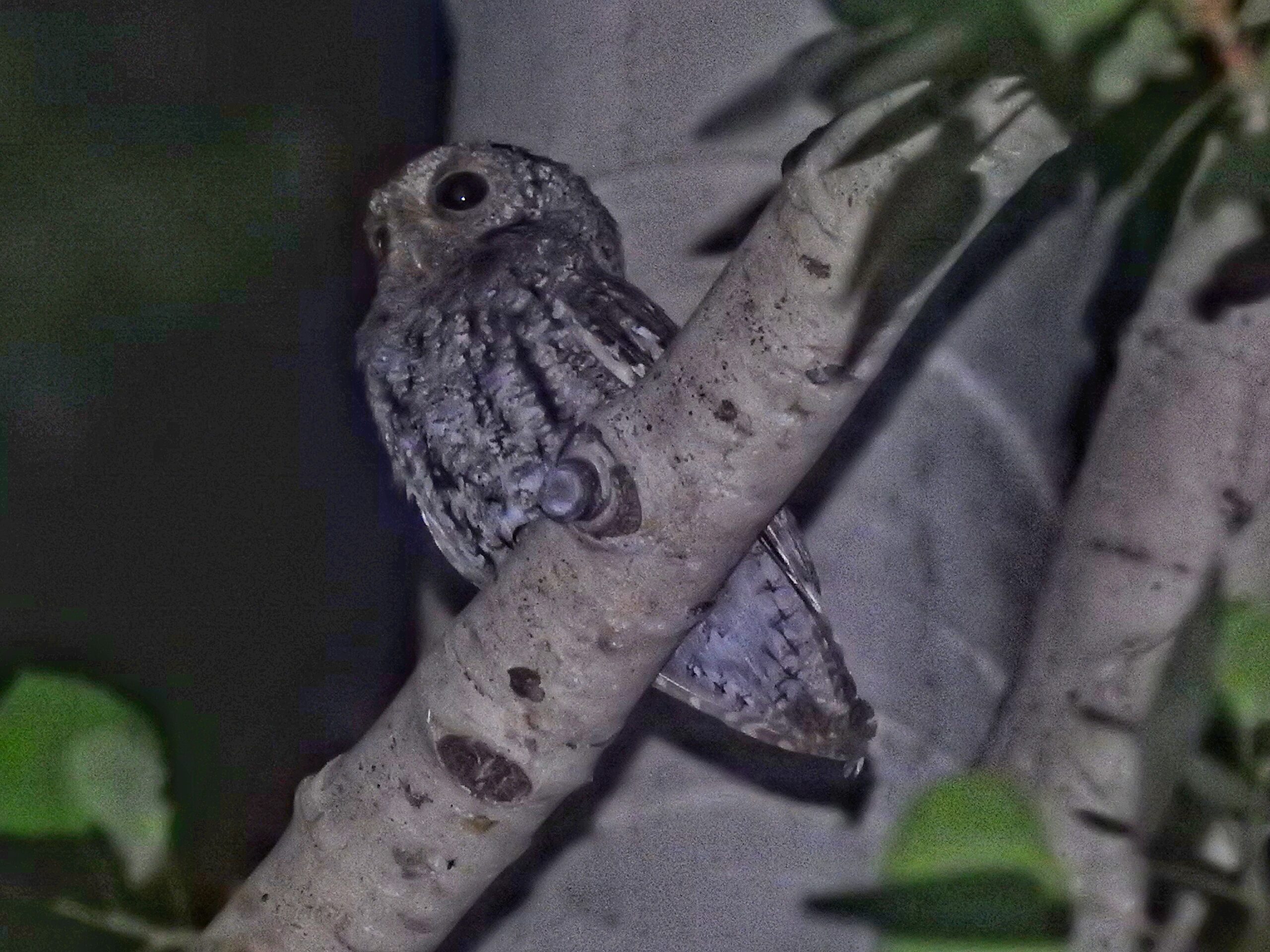
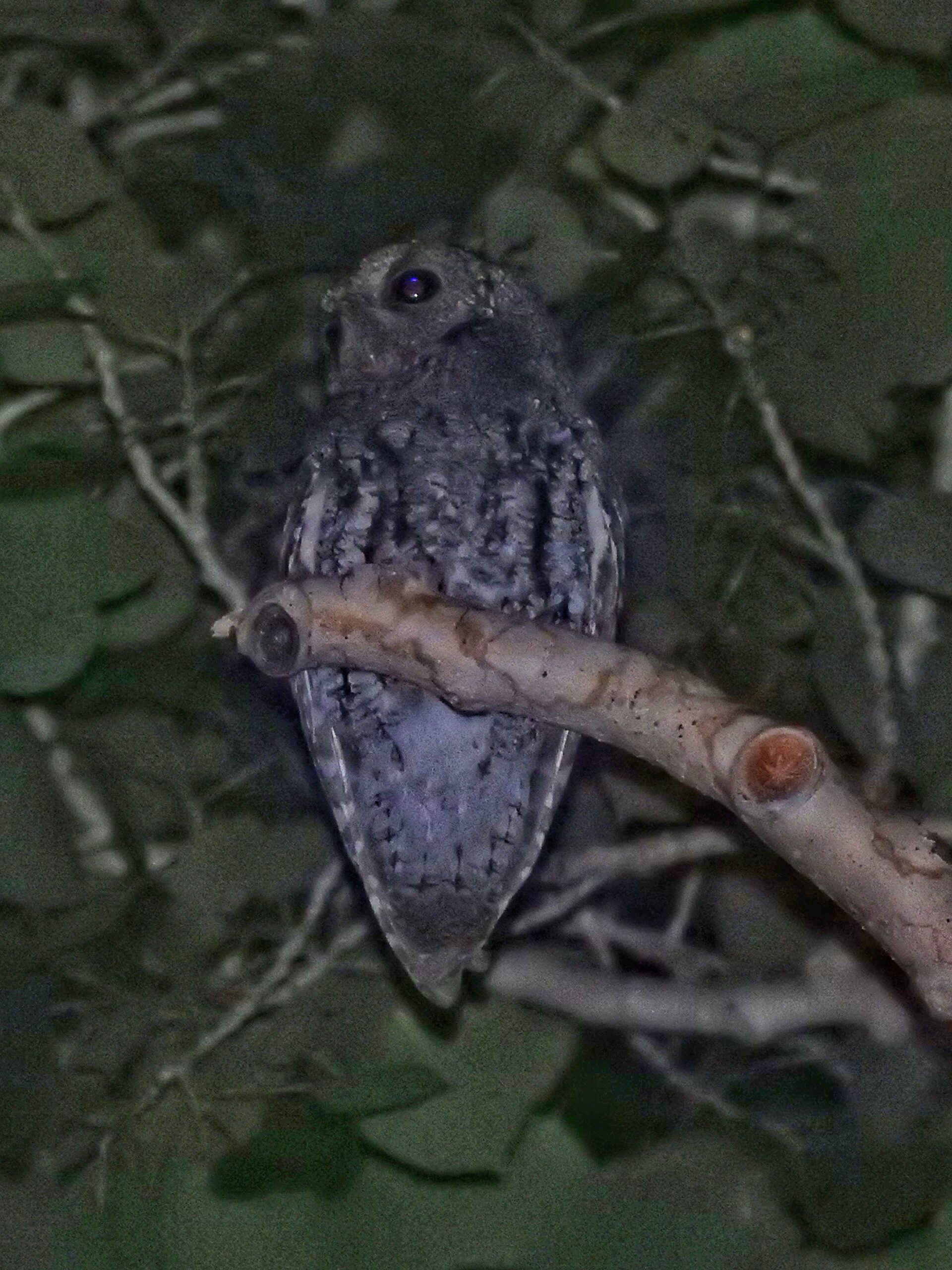
We had a hard time finding a place to eat supper — it was an upscale area with sit-down restaurants a lot fancier than what we were looking for. We ended up at Jimmy John’s. I relaxed and waiting until it was time to go owling.

Posted in Colorado | Comments Off on Dinosaur National Monument — Day 2

Bird #563 — Gray Vireo

vireo (bird) vicinior (from vicinus, neighboring, related — because of its similarity to other species)

Rio Blanco County, Colorado — Snake John Reef Road

Wednesday, June 16, 2021 — 6:58 am

The range of the Gray Vireo centers on the four-corner area where Utah, Colorado, New Mexico, and Arizona meet. A few summer in southeast Colorado, about three hours from my house, and that’s where I went to look for them one morning a year ago. I was not successful. I figured I’d have to make an overnight trip to Colorado National Monument sometime. They’re seen there regularly, but that’s a four-hour drive.

Then I saw that other birders had found them near Dinosaur, Utah. Since we were headed that way, I figured I could let my wife sleep in at our hotel and look for it early in the morning. I knew it would be a challenge, but a 45 minute drive is a lot shorter than 4 hours.

I set my alarm for 5:00. It was still dark when I left. I drove back east into Colorado, then headed a handful of miles south of the “town” of Dinosaur. The most recent sightings were on a dirt road through a pinyon/juniper forest. I parked just as the sun came over the mountains.

For the next 45 minutes, I wandered up and down the road, occasionally playing the Gray Vireo song. I saw Gray Flycatchers, Sagebrush Sparrows, and Ash-throated Flycatchers, but I was disappointed with both the variety and numbers of birds in the area. Even after the sun was fully up, the place was mostly quiet.

At one point, I was standing along the edge of the road looking for birds when I heard the sound of a running animal. I looked up to see a young Pronghorn trotting right toward me. It stopped about 40 yards away and began nosing at the ground. Then it must have gotten a whiff of me because it suddenly looked up with an expression that seemed to say, “Where did you come from?” We stared at each other for a few seconds, and then it took off through the trees toward the open prairie.

I began to suspect the road wasn’t going to be productive for Gray Vireo. A narrow track cut through the trees to the south, dipping down into a wash and then rising again. I decided to walk to the rise and then, if I still hadn’t seen the vireo, drive to one of the other places it had been reported this year. As I walked, I played the song a few times, but got no response.

I reached the rise and looked out over the trees ahead of me. Just then I heard the vireo singing behind me back by the wash. I walked back and played the song. Almost immediately, a Gray Vireo landed on a bare branch in a juniper, maybe 15 yards from where I stood. It hung around for maybe four minutes, enabling me to get several photos and a short video of it singing.

Then if flew off, and I never saw or heard it again. That night, I asked the bird guide who took me to see the Flammulated Owl about the vireo. He sometimes takes birders to see it too. He said Gray Vireos nest early in the spring, so that by mid-June, they’re pretty  much done. As I experienced, they will still respond to their song, but they aren’t territorial anymore and so aren’t terribly aggressive.

The song sounds like a vireo — perhaps a bit simpler and burrier than some. The bird is … gray. The throat and belly are paler. It has a thin white eye-ring and a thin white wing bar that doesn’t show up in my photos. It also had thin white lores that, with the eye-ring, give it a hint of the typical vireo spectacles. And that’s about it for distinguishing features. It’s chief mark is the lack of marks. The one I saw looked scruffy, like it hadn’t molted in a while or perhaps was mid-molt.

Here’s a close-up of the last photo.

I was back at the hotel by 8:00 am.

Other birds in the immediate area.

Sagebrush Sparrow

Gray Flycatcher

Posted in Wildlife | Comments Off on Bird #563 — Gray Vireo

Bird #562 — California Quail

callipepla (from kallos, beautiful, and pepla, robe) californica (California)

Vernal, Utah — Ashley Nature Park

Tuesday, June 15, 2021 — 7:37 pm

The main range of the California Quail includes California, Oregon, and parts of Washington, Idaho, and Nevada. There are scattered populations in Utah that may be introduced. Even though it’s a common bird, I’d never seen one because I haven’t spent a lot of time birding in its range.

On Tuesday, we toured the Colorado portion of Dinosaur National Monument. We spent the night in Vernal, Utah. On the north side of town, California Quails are reported almost daily, especially in a small nature park. I dropped my wife off at our hotel and headed over to the park, a drive of about 10 minutes.

The park is covered with scruffy brush and cottonwood trees. I walked slowly, listening for scuffling in the brush. On the other side of the border fence, there was an open area with scattered bushes. I spotted a quail running across the area, hightailing it for the woods. I managed one quick photo — good enough prove I saw the bird, but not at all satisfying.

I continued wandering. I think I may have caught glimpses of a few; it’s hard to say. I headed back toward where I saw the first one. A male was out in the open, picking at the ground just beyond the fence. I crept closer, looking for a place to get photos through the fence. Just when I was getting to a good place, a couple walked by talking. The bird ran off. The guy knew they had disturbed me. He asked, “What was it? Quail?” I nodded. He shrugged — it was no big deal to him. He lives there. But it was a lifer for me.

No problems. The quail quickly reappeared, further from the fence but in the open where I could get some decent photos.

I watched it for about 10 minutes. I was amused by the way its topknot bounced up and down as it walked. I imagine having that constantly in your peripheral vision would get old. The quail gradually moved further away to where tall grass and weeds blocked my view. It was also getting close to sunset, so I headed back to the hotel.

In the morning, we drove to the Utah unit of Dinosaur National Monument. I decided to take back roads, and I soon spotted a pair of California Quail foraging along the edge of a driveway. I made a quick U-turn so my wife could see them and so I could get some photos. This was a challenge — the birds move constantly with jerky movements.

The female was browner and had a smaller topknot.

Posted in Wildlife | Comments Off on Bird #562 — California Quail

Dinosaur National Monument — Day 1

The Colorado section of Dinosaur National Monument doesn’t have any dinosaurs. It doesn’t have a lot of visitors either. For the four hours we were in the park, we probably saw eight other vehicles (not counting park vehicles or the three ambulances that were rushing into Echo Park as we were driving out).

The afternoon was hot, but a breeze and low humidity kept it from being oppressive as long as we didn’t just stand still in the sun. I asked a ranger in the visitor center how we could see the famous Steamboat Rock, a narrow, high peninsula formed by a bend in the Green River. She showed me the road on a map, but she urged us not to take it unless we had a car with high clearance.

We drove north along the paved road, stopping at all the overlooks. It’s certainly a beautiful area, with red and white cliffs and green sage plains and pinyon/juniper woods.

At one of the stops, I saw a Black-throated Gray Warbler, the first I’ve seen on its summer habitat (rather than in migration).

We were in no hurry. At a few of the northernmost stops, we could look down on Steamboat Rock and Echo Park. The yellow arrow in the photo below points to the rock. The red arrow points to three cottonwood trees that serve as a point of reference for later in my story.

Here’s a zoomed look at the rock and the trees.

Impressive, but not the look I was hoping for. I decided to make the drive down. My wife was nervous about our car, but I promised that if we got to a place that was too rough, I’d turn around. As it turned out, the dirt road was steep and narrow, but well-maintained. There were maybe three places where I slowed to maneuver around holes or rocks, but even those places weren’t worrisome. The scenery was stunning, and the solitude made it even better.

It was 12 miles from the paved road to Echo Park, and there wasn’t a foot of it that wasn’t beautiful. Free range cows were hanging out in the trees, and we’d occasionally get a quick glimpse of them as we drove by.

Here’s some video of our drive down into the canyon, seen through our bug-splattered windshield.

Even the park itself wasn’t crowded. Maybe half a dozen people were camping in the campgrounds. A large group of rafters came down the river and pulled out in the park, but what little contact we had with them was pleasant. We parked and walked to the banks of the river to enjoy the view. And what a view it was. The Green River wraps around the rock. The Yampa River flows into the Green just to the east of where I took these photos. (It flows through the gap in the wall on the right in the second panorama.)

We weren’t in a hurry to leave, but it was hot in the sun. We walked about a quarter mile along the bank and stood in the shade of those three cottonwoods we’d earlier seen from the cliffs high above.

This was our view from that point.

It was hard to leave. When we finally did, we made a couple stops on our way back up to civilization. The first was to see some Indian petroglyphs.

It’s believed the carvings were made by the Fremont people about 1,000 years ago. Today, they are 35 feet up the canyon wall, far out of reach, but an interpretive sign said that’s where the floor of the canyon was then. Makes the evolutionists’ claim that it takes millions of years to carve canyons seem a bit silly, but we knew that already. The sign said these are “human-like figures, each with what appear to be elaborate headdresses or necklaces,” but I’m not seeing it. How do we know it’s not just 11th-century graffiti?

We also stopped to see the Chew Ranch. The Chews settled here in 1910 in a sod house. They build the frame house in the 1940s and sold out to the National Park Service in 1966.

We drove out of the canyon and on to Vernal, Utah. We stayed at the Dinosaur Inn, which was pleasant enough. Supper was pizza at a not-terrible place connected to the hotel.

With the successful search for wild horses, the stunning and unexpected adventure in Echo Canyon, and my first ever California Quail (next post), this was a great day.

Posted in Colorado | Comments Off on Dinosaur National Monument — Day 1

Sand Wash Basin Wild Horses

We ate breakfast at a restaurant in downtown Steamboat Springs and then headed west toward Dinosaur National Monument. We stopped at McDonald’s in the town of Craig to buy drinks. As we waited, an old guy began talking to me like we were best friends. (This has been happening to me a lot more often lately, for some reason.) Perhaps I’m old.

Anyway, he told me that he was on his way to Jackson, Wyoming and was sorry he hadn’t seen the wild horses — he’d just heard there was a refuge nearby but didn’t have time to go. I didn’t know about the horses either, but I looked them up and saw we’d pass within 23 miles. We decided to go for it.

Sand Wash Basin Herd Management Area is operated by the Bureau of Land Management. It’s huge — 156,500 acres — and consists mostly of sage plains and sand. The road through the center of the area is well-maintained dirt. In the hour and a half we spent there, we saw two campers parked in the middle of nowhere and zero people.

At first, we didn’t see any horses. I finally picked out a white one in the distance and pulled onto a rutted track to see if we could get closer. It wasn’t long before the ruts got deeper. It was a long, hot walk if we got stuck, so I turned around. Back on the main road, we finally saw a herd of about 12 off in the hazy distance, but it wasn’t a satisfying view. We kept going.

I picked a butte in the distance and told my wife I’d turn around there. We were about half a mile from it when I spotted a herd of maybe 25 out on the plains. I saw another two-rut track heading in their direction, and in spite of the protests of my wife I turned onto it. This one was in better shape, although the sage brush scraping against the underside of the car was disconcerting. After maybe a half mile, we got close to the horses.

Four of them were within 30 yards of where we stopped. The others were off in the distance. We couldn’t have wanted better looks. But here’s the thing. It’s really cool knowing that you’re looking at wild horses, but when all is said and done, they just look like horses.

On our way back along the ruts to the main road, another six popped up from somewhere. I thought the gray one with the white patches in the above photo was unique looking. We called it a day and headed on our way.

I found out later from reading the brochure that I wasn’t supposed to pull off the main road. Oh well. If I’d known, I wouldn’t have, but we wouldn’t have had nearly as good a time.

Posted in Colorado | Comments Off on Sand Wash Basin Wild Horses