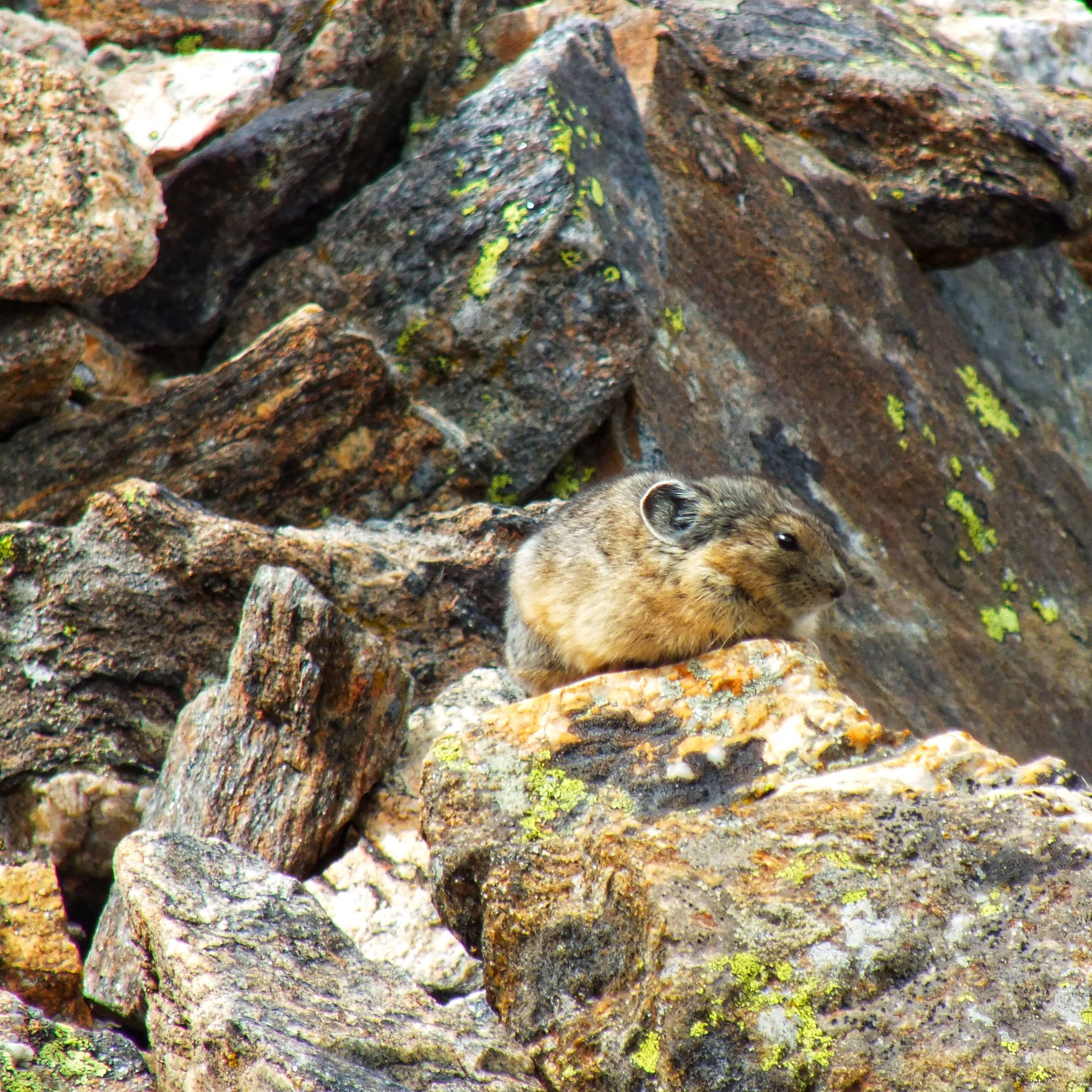
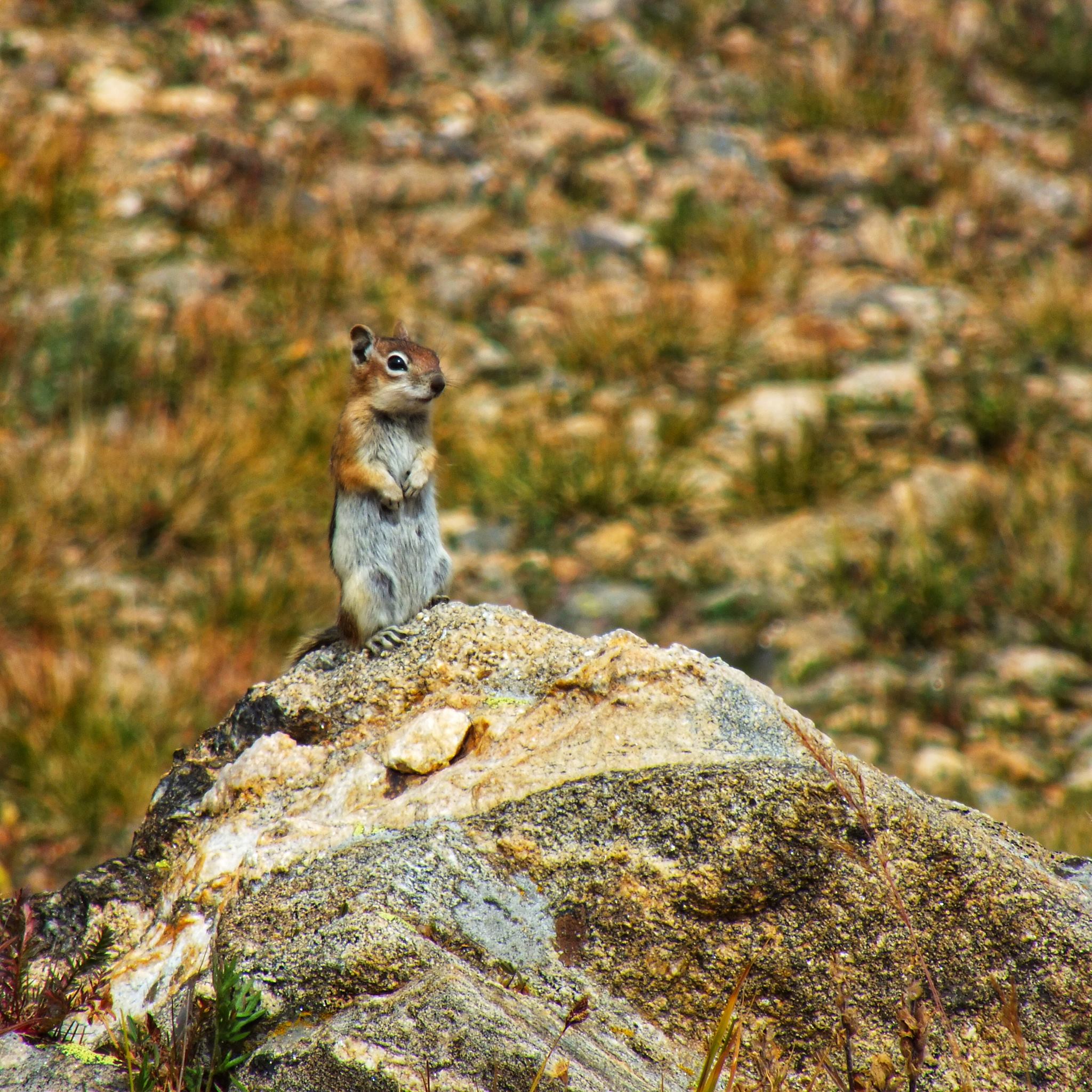
I drove the two hours to Loveland Pass west of Denver to look for White-tailed Ptarmigan, which have been seen there consistently throughout this year. I arrived a bit after 8:00 am and spent five hours hiking around at 11,900 feet. I had a great time, and saw some fun stuff, but didn’t get a whiff of a ptarmigan.
It doesn’t get a lot easier than this. Last night I saw a Colorado birding page on Facebook that somebody found a Mew Gull in second-summer plumage at Cherry Creek State Park. They posted several photos, linked to a map showing where exactly in the park it was seen, and mentioned that it was missing several tail feathers and, therefore, probably couldn’t go far.
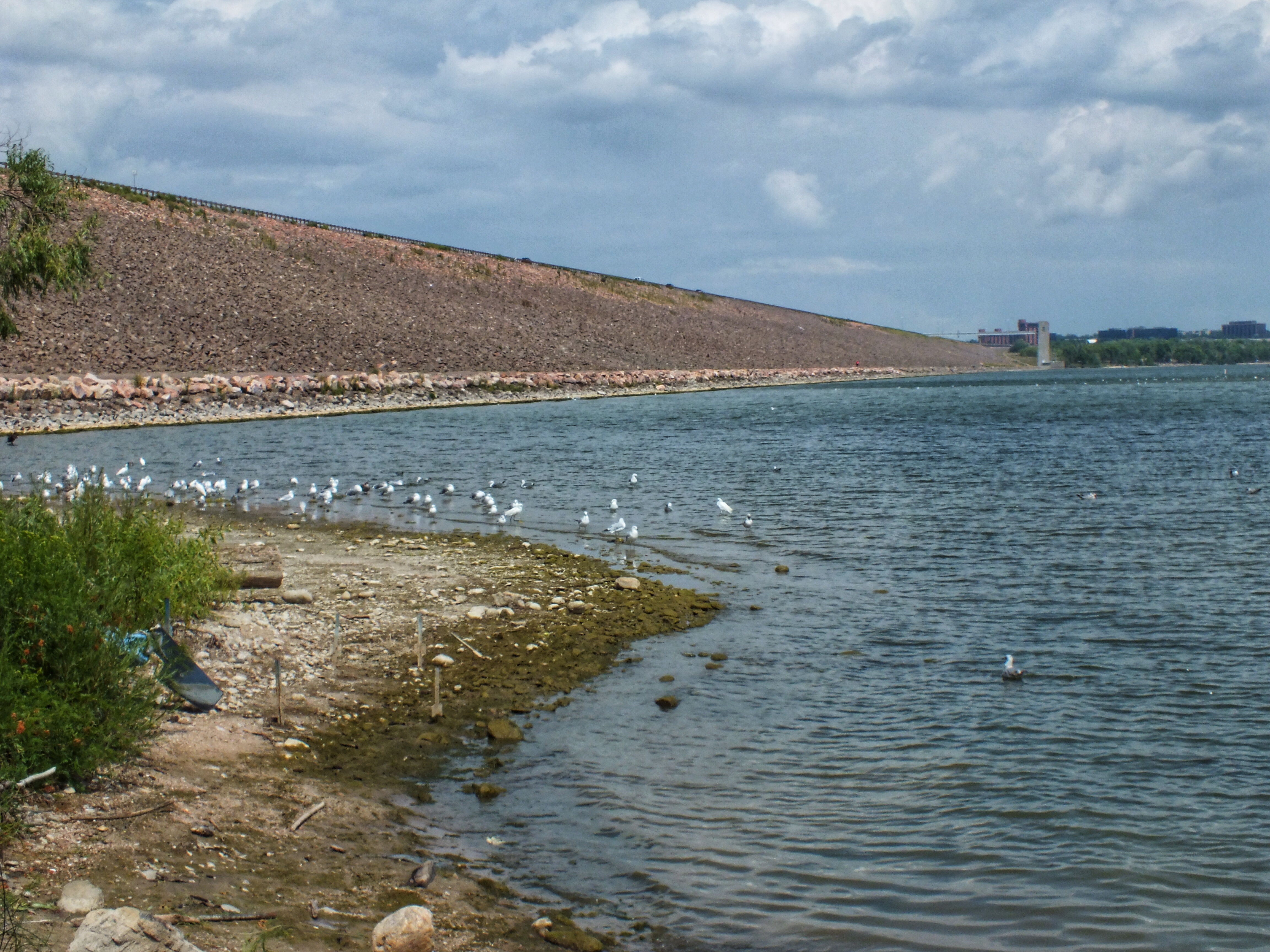
I drove up on Sunday afternoon, parked by the marina, and looked for a flock of gulls. There were about 50 along the shore beneath the dam in the extreme northwest corner of the lake.
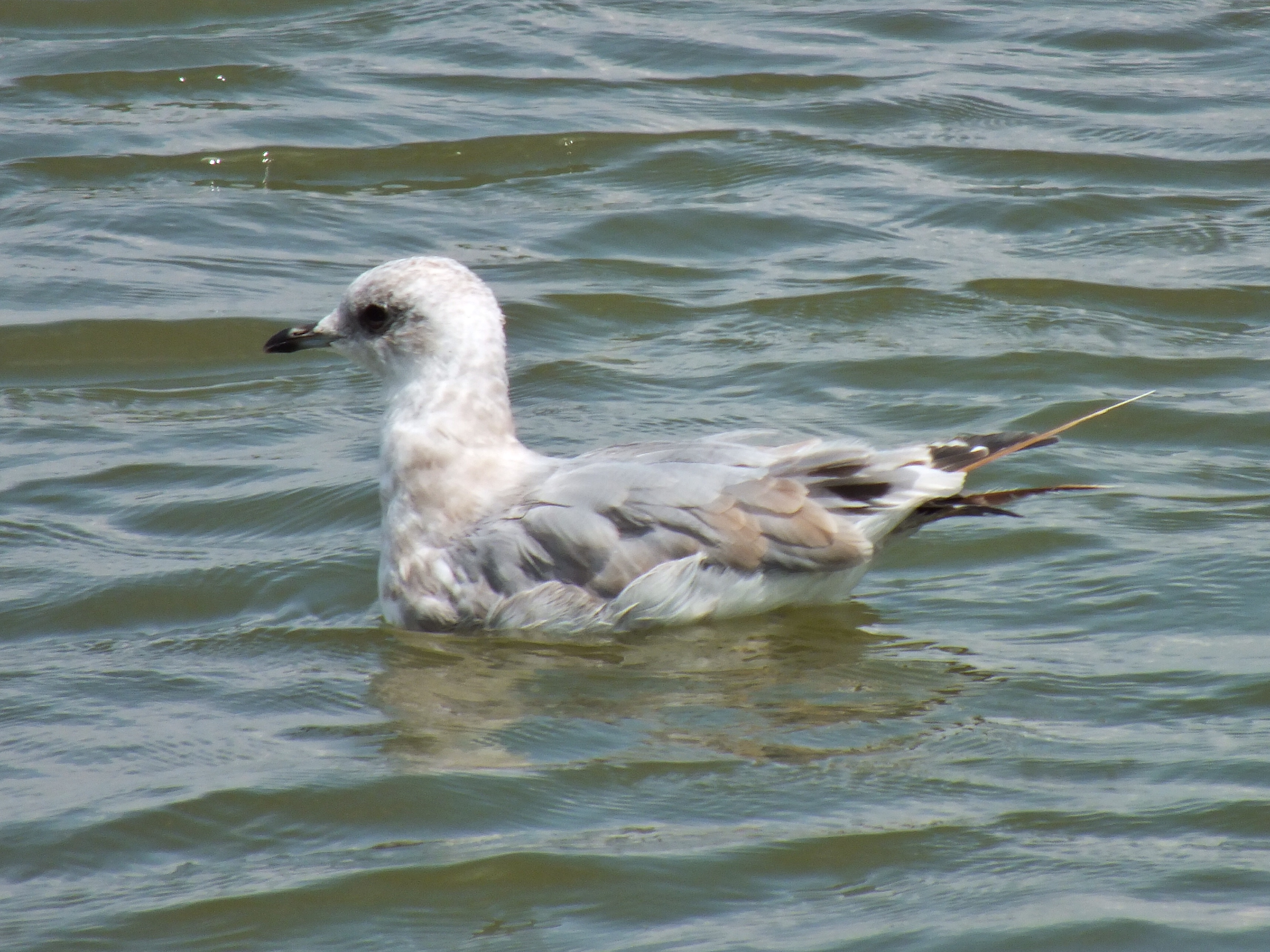
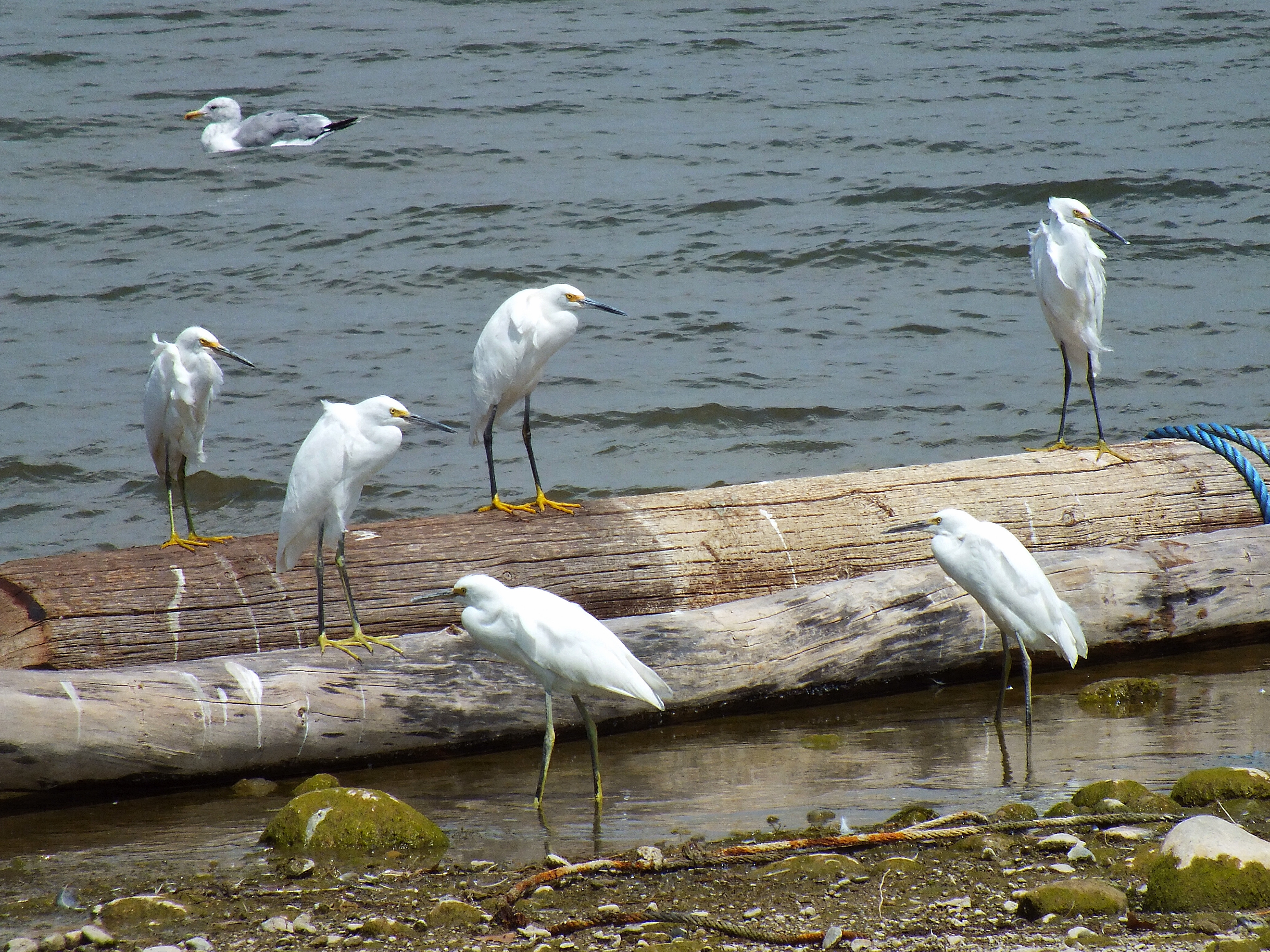
I was distracted for a bit by the several Snowy Egrets and Black-crowned Night-Herons that were wading with the gulls. But as soon as I started searching for the Mew Gull, I found it. It’s the bird closes to the camera in the photo above. It swam around the area, just off the beach for about 10 minutes while I watched, then headed in and stood in shallow water for about three minutes. It then went for another swim before coming back in and standing at the water’s edge about 10 feet from where I stood.
As you can tell from the photos, its back end looked decidedly chewed-upon. Either something (hawk? dog?) grabbed it, and it managed to get away, or it happened to molt a whole lot of important feathers at once.
The Mew Gull i.d. marks are it’s small size compared to other white-headed gulls, its round head with a gentle look, its small bill with a black tip, its grayish legs, and the fact that the few remaining tail feathers are brown and not black.
Here it is swimming next to a Ring-billed Gull for comparison. Note that the Ring-bill is larger, with a more substantial bill that’s pink at the base. Also, the Ring-bill tail feathers have black on them, not brown.
And here it is next to a first-year California Gull.
Mew Gulls breed in North America throughout most of Alaska and northwestern Canada. They winter along the Pacific Coast. But every year, a handful show up on larger lakes in Colorado. I had determined to go for it the next time I saw a report. It turned out to be a lot easier than I’d expected.
Other birds I saw at the park this day. An immature Black-crowned Night-heron with two Snowy Egrets in the foreground and three California Gulls in the background.
More Snowy Egrets
And in the cottonwoods in the wetlands at the south end of the park, a Great Horned Owl.
Posted inWildlife|Comments Off on Lifer #501 — Mew Gull
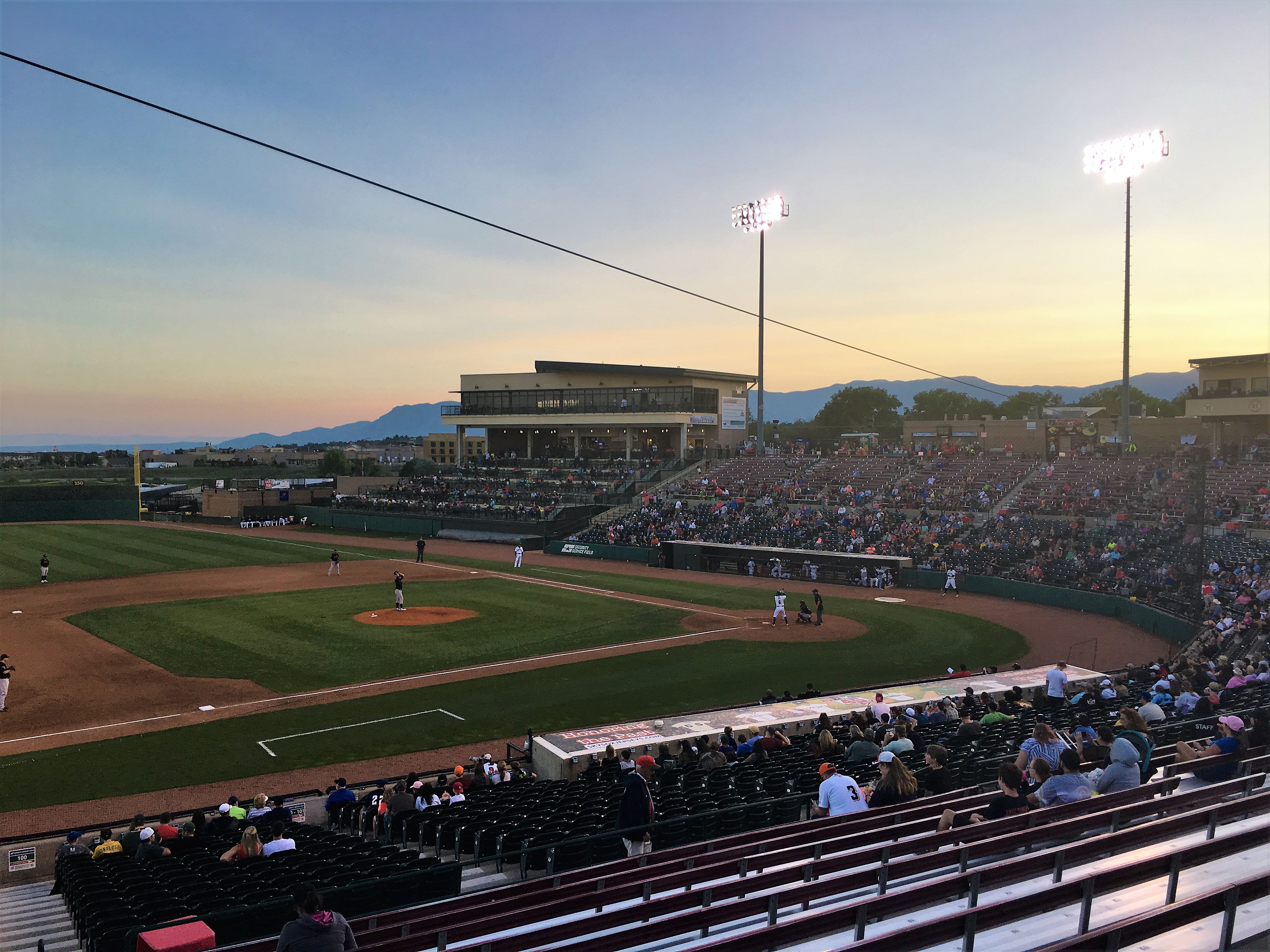
I wasn’t overly thrilled with my Sky Sox experiences last season. After two weather-related cancellations and two dull games, I wasn’t planning on going back. But then our church planned an outing, and we thought it might be a good way to meet some people.
Our seats were on the first base side, above the dugout. We were two rows above the actual chairs on a bench with a back. It wasn’t terribly comfortable for someone who was stiff and achy from a hike, but I got up and wandered every couple innings, so I managed.
There were maybe 30 people there from church. Most of them around us cleared out halfway through the game, so as a get-to-know-you function, it wasn’t great.
The game was entertaining to begin with, with some scoring and impressive fielding, but then it got dull. We stuck around to see the mediocre fireworks show afterwards and were home by 9:30.
The Sky Sox are moving to San Antonio, Texas, next season, and a short-season Pioneer League low-A team is moving in. There’s currently a contest to pick the name. The five finalists are:
Punchy Pikas
Lamp Chops
Happy Campers
Throttle Jockies
Rocky Mountain Oysters
I’m pretty sure I know which will win.
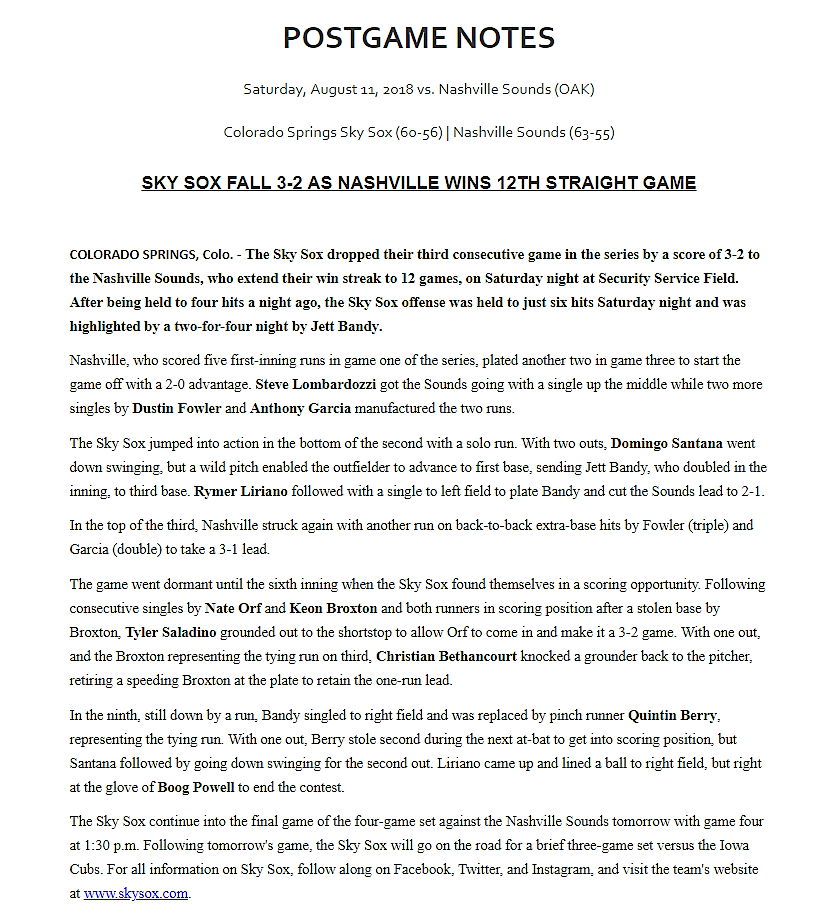
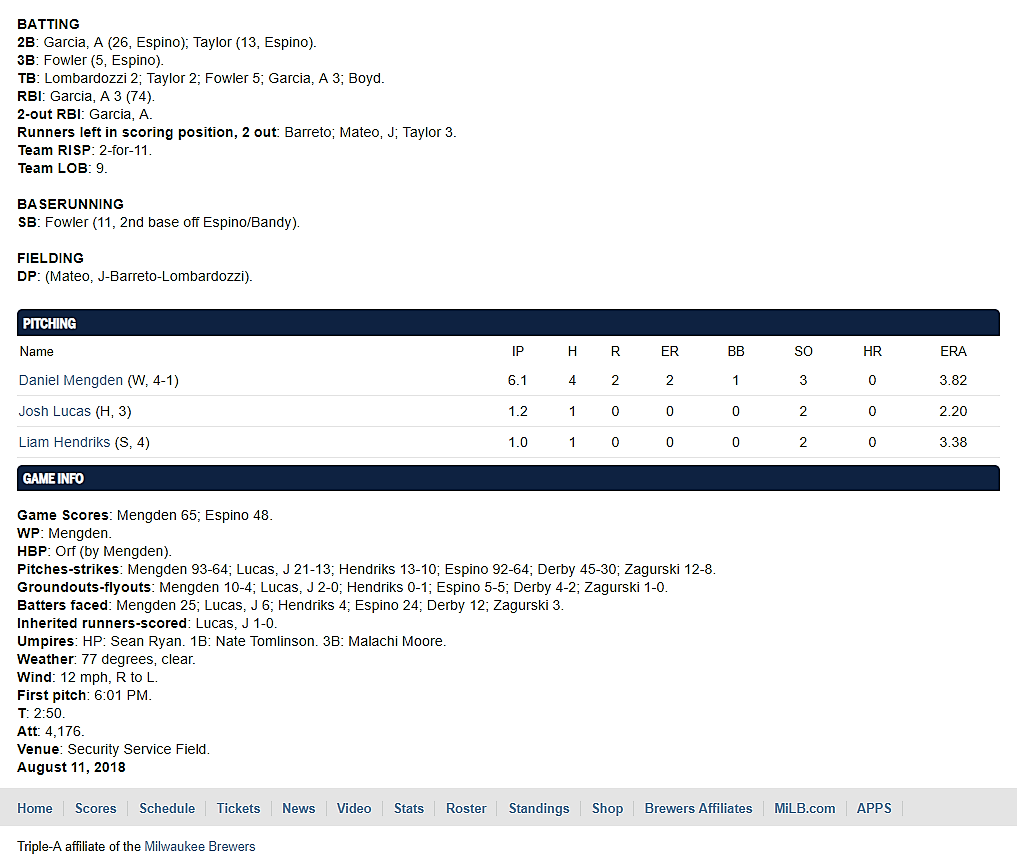
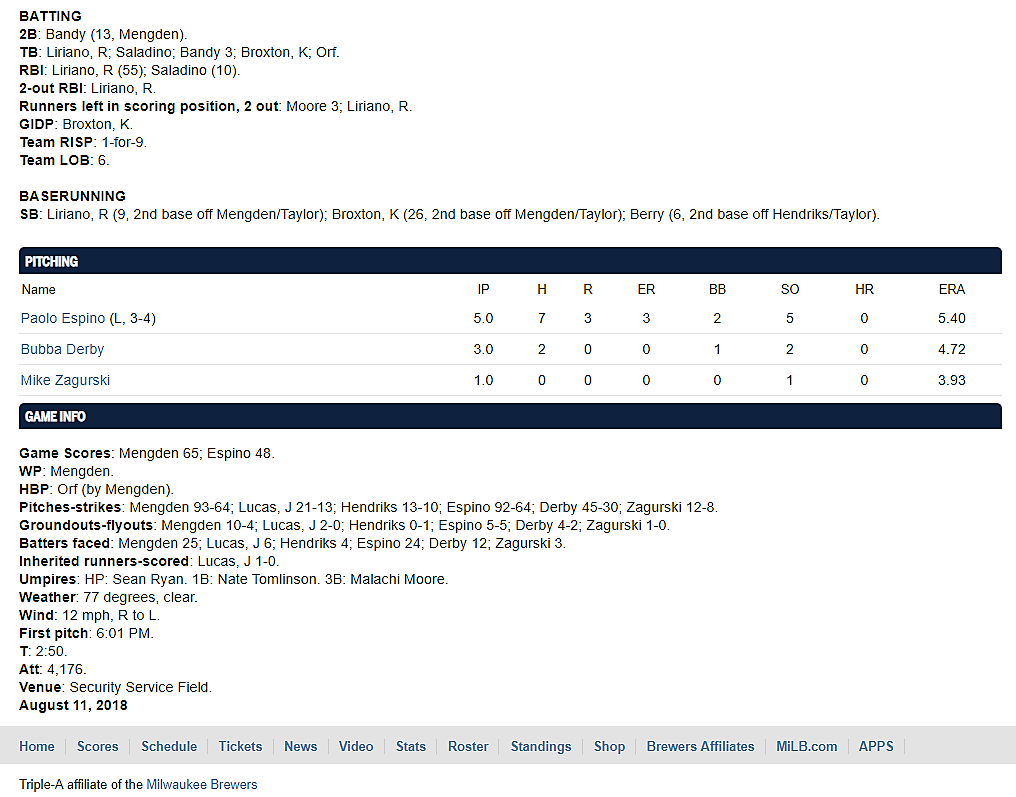
Here’s the game info:
We saw Boog Powell, the right fielder for Nashville, when he played right field for the Tacoma Raniers last season.
Posted inBaseball|Comments Off on Colorado Springs Sky Sox vs. Nashville Sounds
The Arkansas River Valley, where it cuts through the plains of southeastern Colorado, is known for melons. The farms are clustered around the small town of Rocky Ford. During late summer, Rocky Ford melons are available all over the state. And they are good.
On Sunday after church, we did our weekly grocery shopping. We bought two melons, a watermelon and a cantaloupe. More on this later.
On Saturday, a birder found two Zone-tailed Hawks in the Higbee Valley along the Purgatoire River south of La Junta. (The “junt” is pronounced like the “hunt” in hunter.) Zone-tails are generally found in southern New Mexico and Arizona. I’ve never seen one. They have a reputation of being unchaseable. In other words, after a birder finds one, the hawk almost never sticks around long enough to be seen by other birders. But there were two, which I thought doubled my chances.
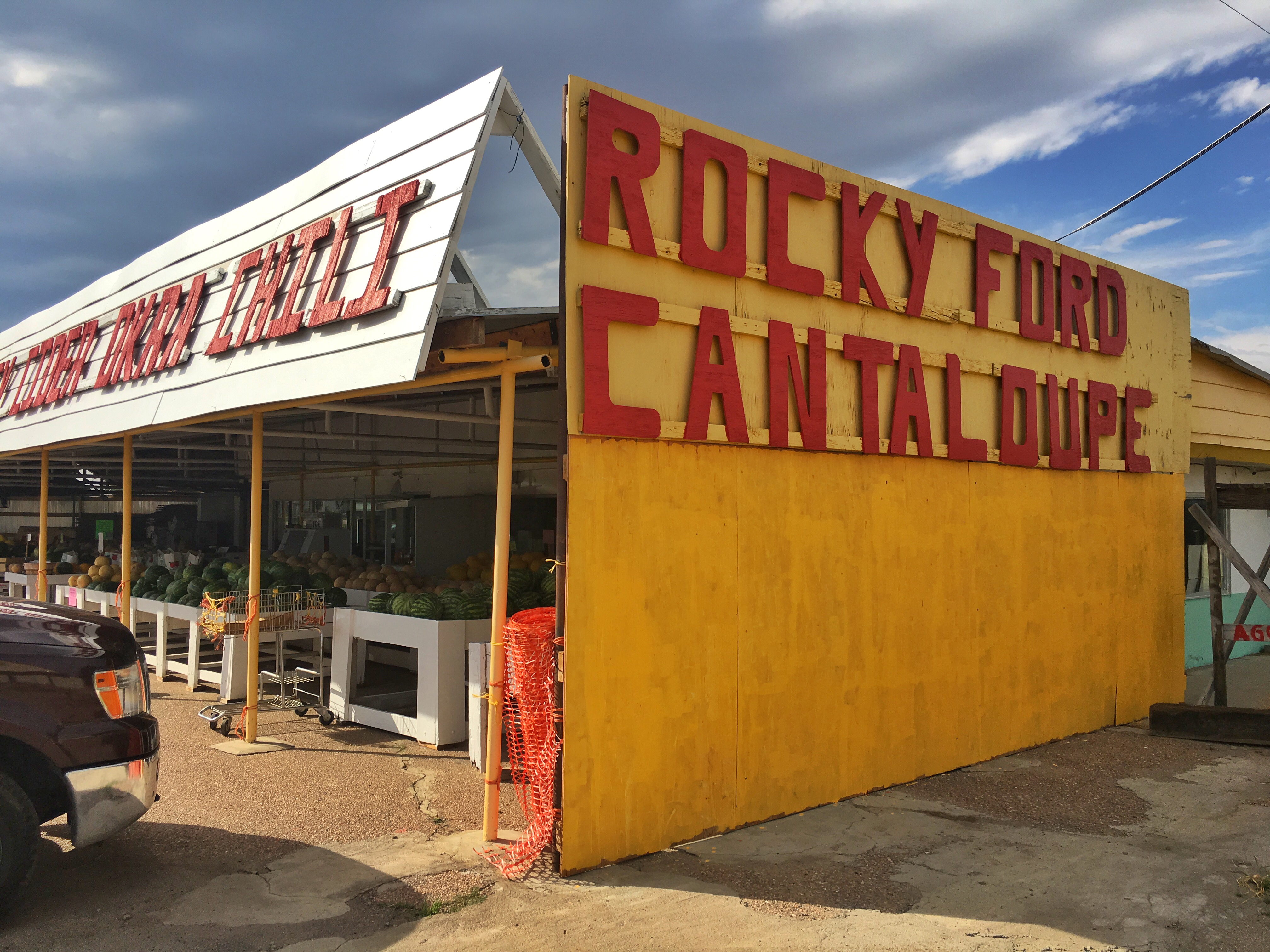
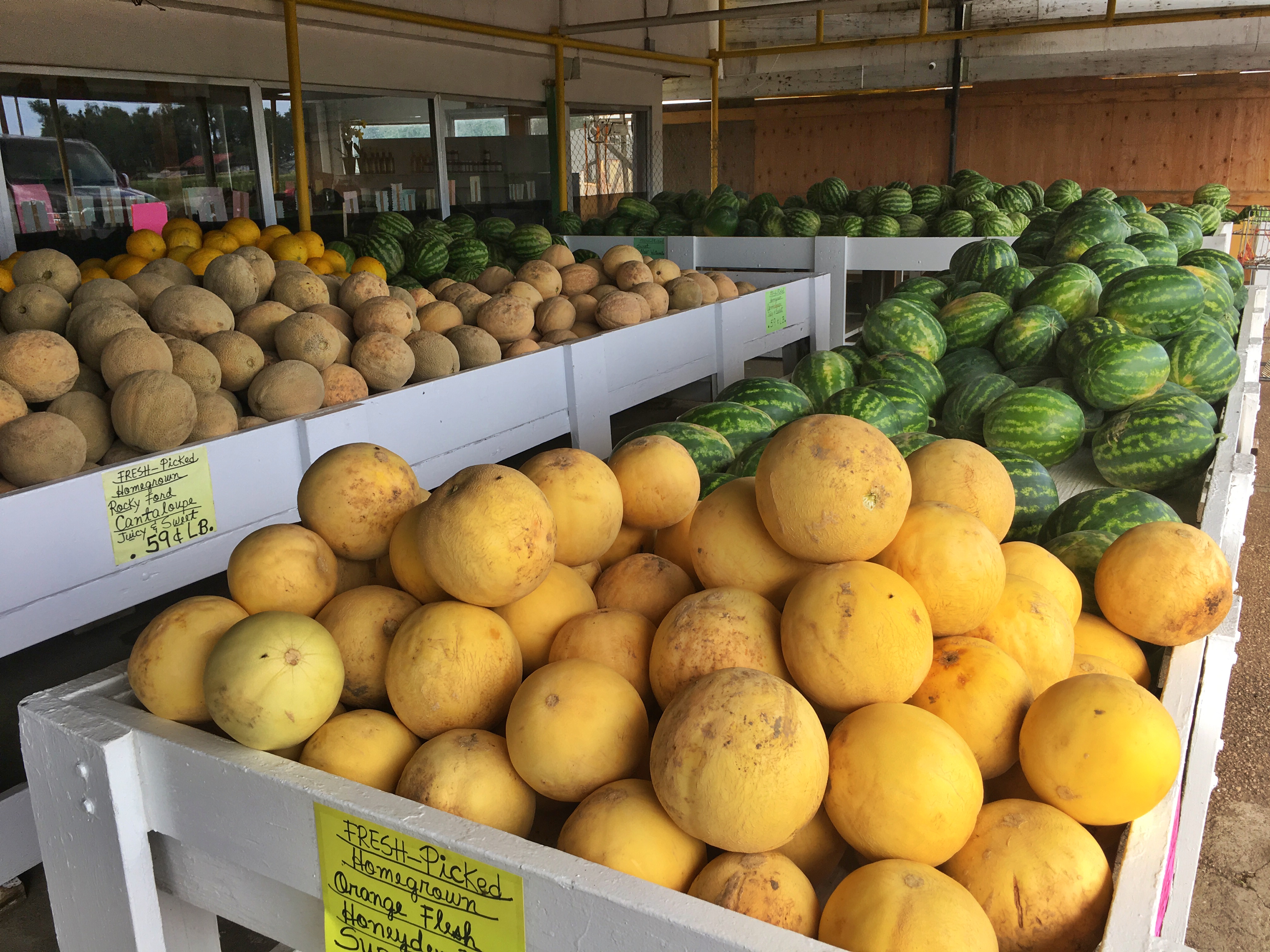
I left home around 12:15. My wife told me, if I saw a fruit market, that I should stop and buy a couple melons. As I drove through Rocky Ford, I saw a fruit market. I stopped. They didn’t have a lot of fruit on display.
The guy standing in the doorway in the photo came out to help. I told him I wanted a couple melons but didn’t know much about how to pick them. As I sorted through the melons in the big box, I noticed most of them had soft spots. The guy started taking them from me and tossing them. He said, “My rule is that if I leave fingerprints on the melon, it’s too ripe.” No joke. He finally took me to other bins, and we found a couple. He told me I should probably eat one of them that day.
Experience-wise, it just wasn’t very satisfying. Especially when I pulled back on the road and passed several other larger markets with great piles of melons. My car began smelling like cantaloupe almost immediately.
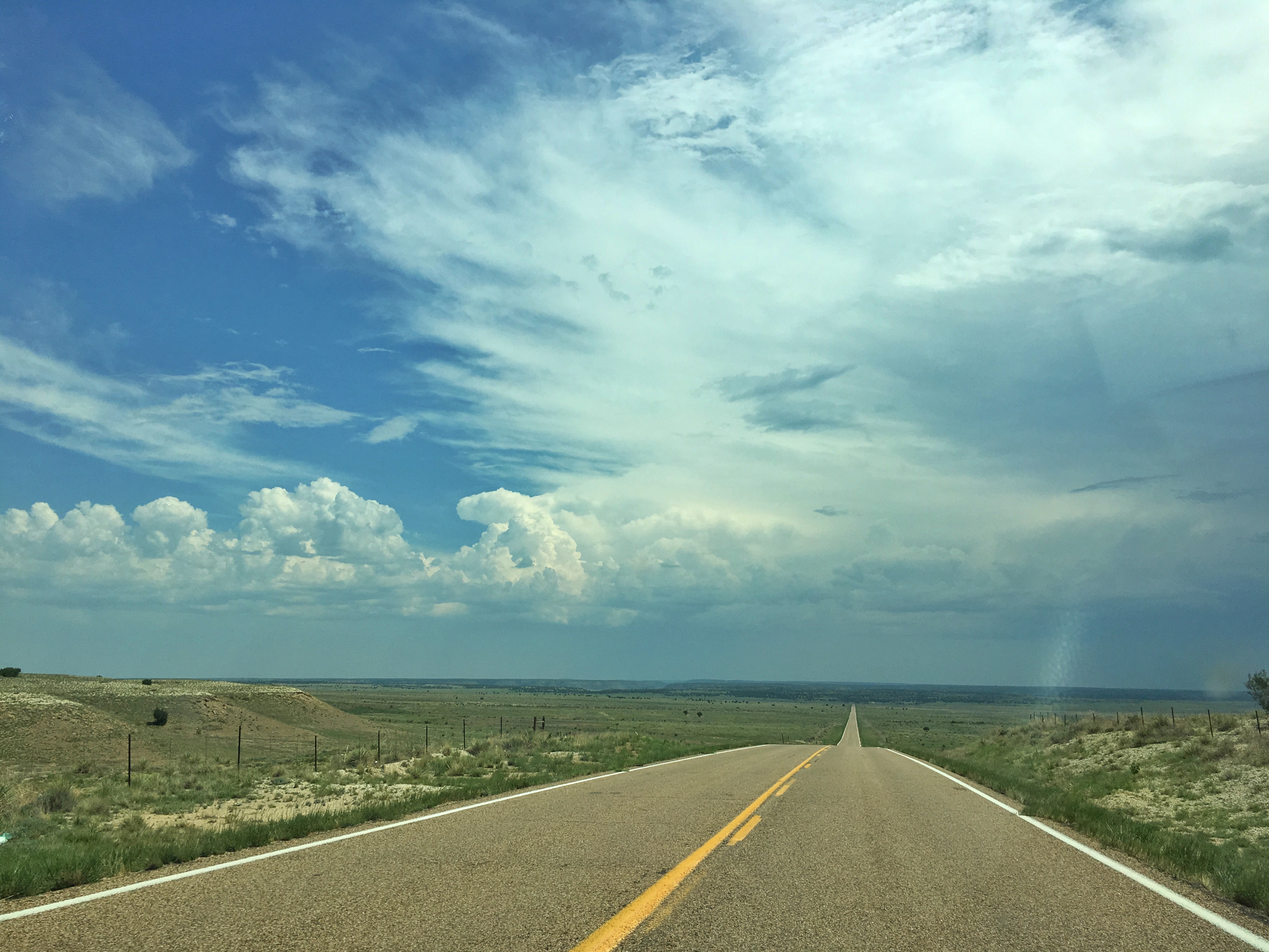
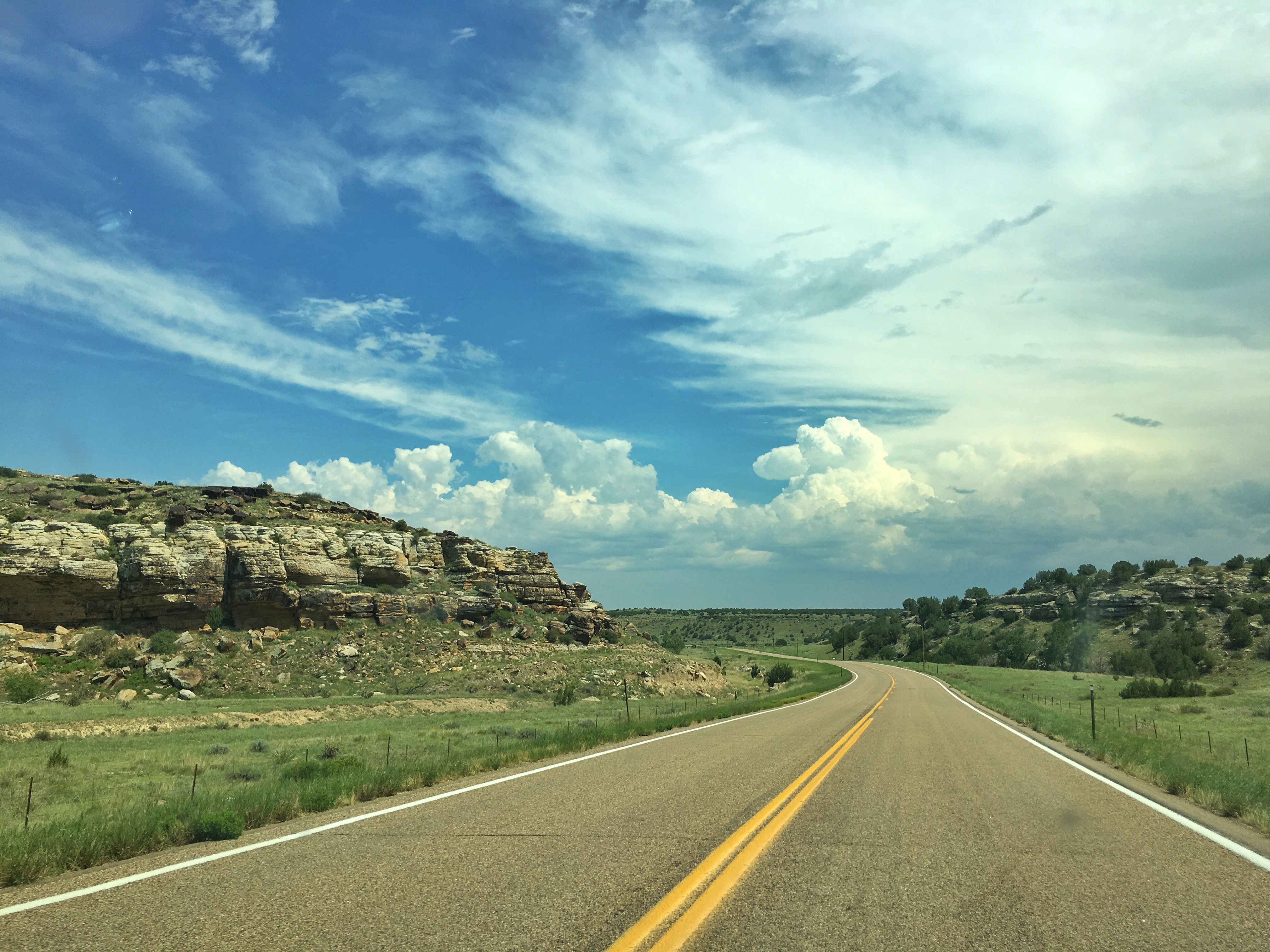
I got to La Junta a short time later and headed south into the dry plains.
The road cut across a corner of Comanche National Grasslands. As I drove, I noticed the sky getting a decidedly threatening look.
I found Higbee Valley Road and drove slowly, checking out all the birds I saw and especially the Turkey Vultures, of which there were many. (Zone-tailed Hawks look a lot like Turkey Vultures and often soar with them.) I continued for about six miles, then turned around and drove slowly back. I didn’t see any Zone-tailed Hawks. I did see a Mississippi Kite, several kestrels and Swainson’s Hawks, Blue Grosbeaks, and a pair of roadrunners.
One jumped on a fence post as I went by. I pulled my car at an angle across the road so I could get a photo looking back at it.
A second roadrunner popped out of the weeds and began walking toward my car. It passed right by me, not four feet from the window where I was taking photos. I never got close enough to one before to see the blue on the tail.
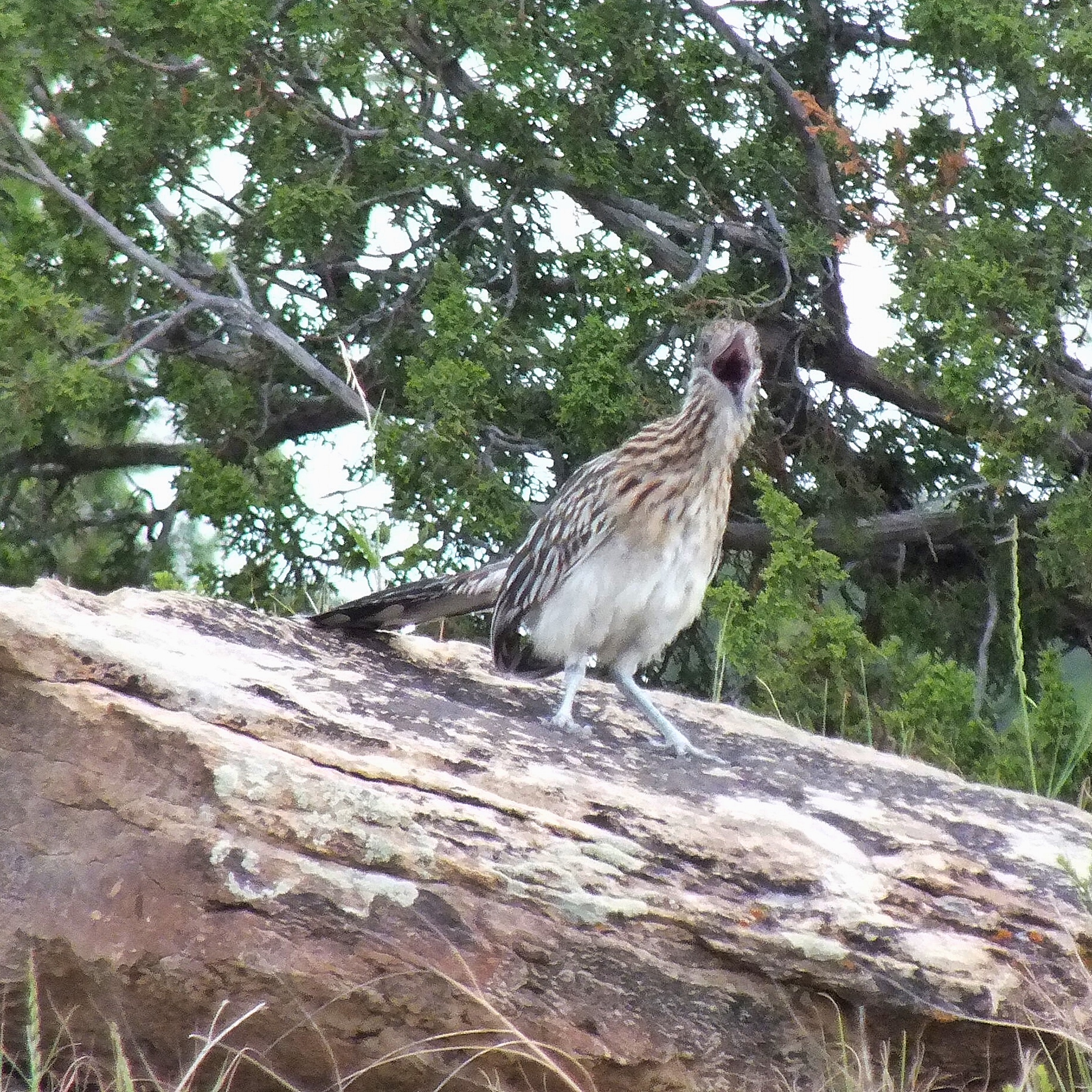
On my way back up the valley, I spotted one of them on a rock. As I watched, it yawned.
The storm disappeared after a mild ten-minute shower, and the sun came out. This brought out the Turkey Vultures, and I scanned them carefully. Some of them probably several times.
It was a fun road to bird, and I decided I wanted to come back sometime. But I had a long drive ahead of me, and I had to go to work in the morning. As I headed through Rocky Ford and passed one of the nicer market stands, I pulled in on impulse.
I bought a cantaloupe, a honeydew melon, and several very fuzzy peaches. We now had six melons. The ride home was uneventful (except for the smell of cantaloupes). I arrived around 6:30.
My wife cut up the one from the sketchy place that the guy said was should eat right away. It was green on the inside, and very juicy. It tasted a little like a honeydew, but with a squishier texture. It was good. The next day, she cut up two cantaloupe. They were also very good. The fourth cantaloupe I took to work and put on the kitchen counter for whoever wanted it. It went fast. We still have a watermelon and an honeydew to go.
Eight days later, I drove out to Higbee Road again to look for the hawks. I missed them again, but I did see a couple Chihuahuan Ravens up close. These grainy photos are screen shots from a grainy video.
Posted inColorado|Comments Off on On Melons and Roadrunners
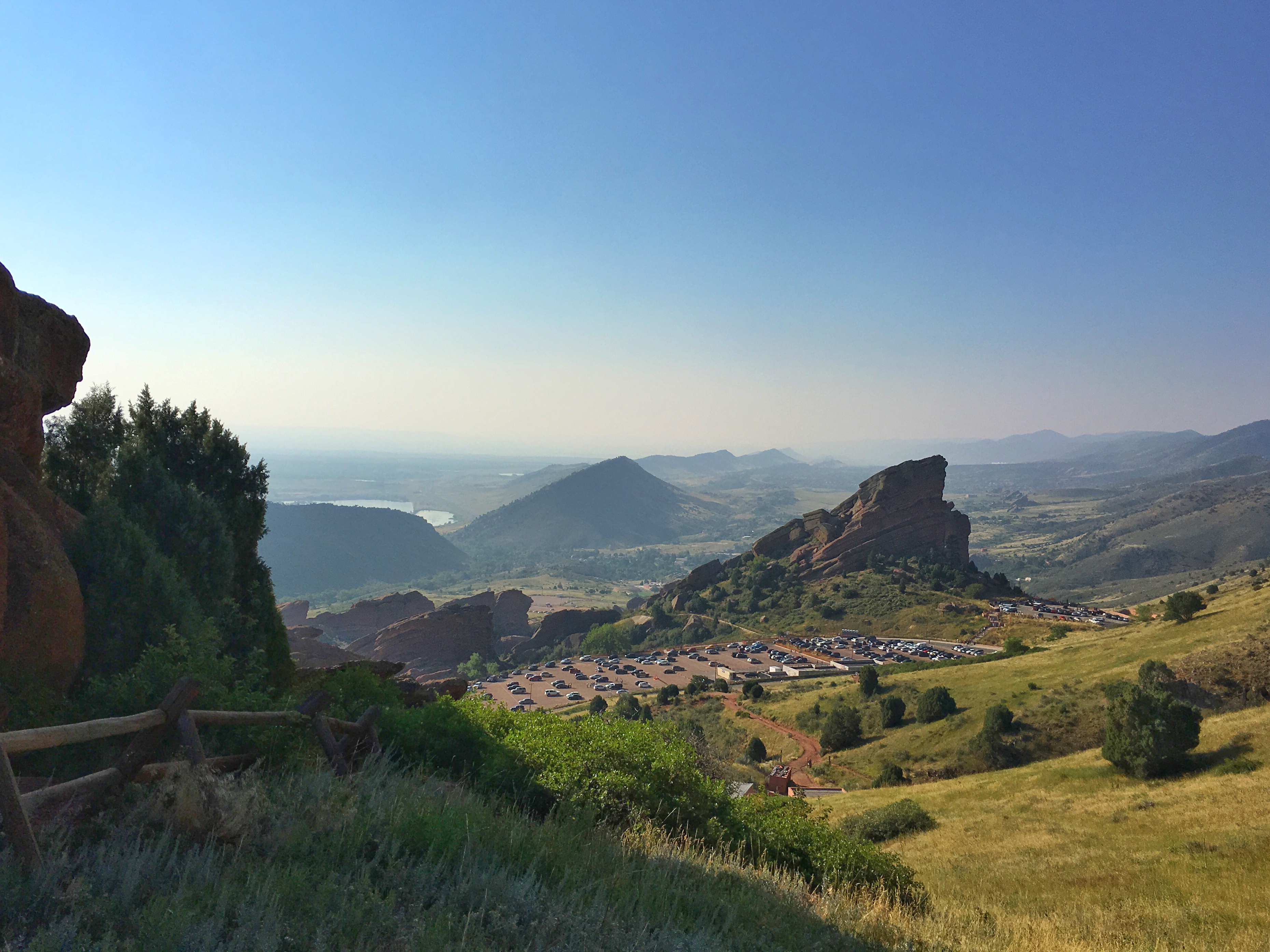
For the past week or so, birders have been reporting a Barn Owl nest at Red Rocks Park, west of Denver. Red Rocks is primarily a concert venue built into a group of sandstone rock formations in the foothills, but there are trails that wind all around the rocks.
All I had to go on were some close-up photos on eBird of a section of one of the rock formations. In them, you can make out some young Barn Owls tucked back in the shadows of a ledge with an overhang. The cliff in front of the nest is white with bird splash. I figured that if I walked the trails and looked for that whitewash on the cliffs, I’d find the nest.
I got to Red Rocks at 8:00 and parked in the first spot I found, a small pull-off by a trail head at the extreme south end of the park. I walked the Trading Post Trail, keeping my eyes on the cliffs. There were a handful of hikers on the trail, but it certainly wasn’t busy. This surprised me because, as I got closer to the amphitheater, I could see several parking lots, and they were all packed. I knew there wasn’t a concert, but something was drawing a crowd. I soon found out.
When I got to the gate, I had to wait 10 minutes while a long stream of people in exercise clothes, carrying rubber mats, strolled out. It turns out there was a ticketed group yoga exercise in the amphitheater. I don’t know how many people can do yoga at the same time in that space, but whatever that number is, that’s how many people were there doing it. I’d estimate at least a couple thousand.
When I was finally allowed in, there were still a lot of yogaers milling around. I crossed the arena and climbed the stairs. The trail at the north end of the park climbs a steep hill. I’m guessing it was at least 800 feet of elevation gain from the car. It was every bit as steep as Quandary Peak last weekend, but not as long, of course. I stopped regularly to catch my breath check out the rock faces for whitewash. I was pretty sure I was being thorough, but I wasn’t seeing much.
When I got back closer to the top of the amphitheater, I did spot a stick nest high on a cliff above the visitor center, but that obviously wasn’t a Barn Owl nest. I’m pretty sure it was a Peregrine Falcon nest, because I saw two of them flying around the area a short time later.
The forecast for Denver today was 90°, and it was heating up rapidly. I passed a maintenance worker and asked him if he knew where the owl’s nest was. He said, “Owl? Most people are interested in the falcons.” I also asked a parking lot attendant and he said, “I saw an owl behind the trading post once.” I was obviously on my own.
I walked down through the arena again and then took every path or road that gave me a good look at the cliff faces. I was walking past the final rock formation before I got back to my car when I spotted a patch of whitewash high up on the cliff. I pulled up eBird on my phone and compared it to the photos. Everything matched, but I couldn’t see into the shadows with my binoculars. At this point, my car was only 30 yards away. I pulled my scope out of the trunk and spent about 20 minutes looking at two baby Barn Owls. One was pretty much adult size and had feathers everywhere except for a remaining patch of gray down on its back and head. The other one was smaller. All I could see of it was the head and shoulders, and they were covered with white down. I could clearly see the classic Barn Owl “monkey face” on the younger one, but the larger one was hard to make out. I stuck with it and finally saw it turn its head enough that I could make out its face. (Or at least I thought that’s what I was looking at. When I got home and looked at the video I shot by holding my phone up to my scope, I see that there were at least two downy young and I’m not sure if the one with the feathers is the adult or not.)
I was finally satisfied — and hot, thirsty, and sunburned. I put my scope away and got in my car. When I looked up, I realized I could clearly see the nest — and the owls — through the windshield. If I had just know where to look, I wouldn’t have needed to get out of my car. (Well, OK, I still would have needed to get my scope to get good views, and it was in the trunk, but you know what I mean.)
Here’s a map of the park. The red X is where I parked. The red circle is where I was when I found the nest. The blue arrow points approximately to where the nest was.
Posted inColorado|Comments Off on On Barn Owls and Yoga