Quandary Peak (Summit County) — 14,265 feet — So named by miners who could not identify ore found on the mountain.
My friend and coworker organized a hike up this 14er for anyone who wanted to go.
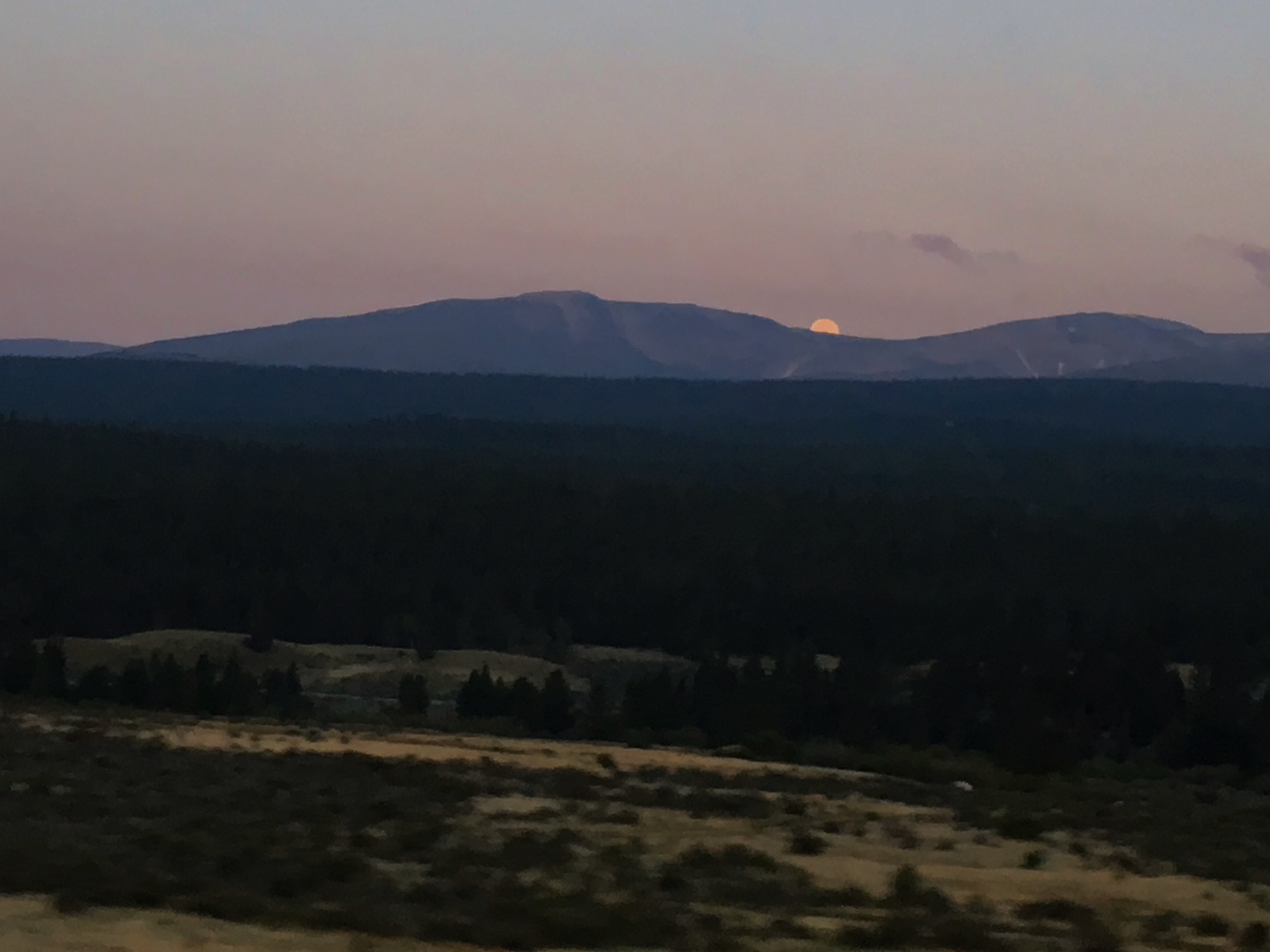
I met some friends at 4:15 am. We drove through Ute Pass and across South Park under the light of an amazing full moon.

Moonset
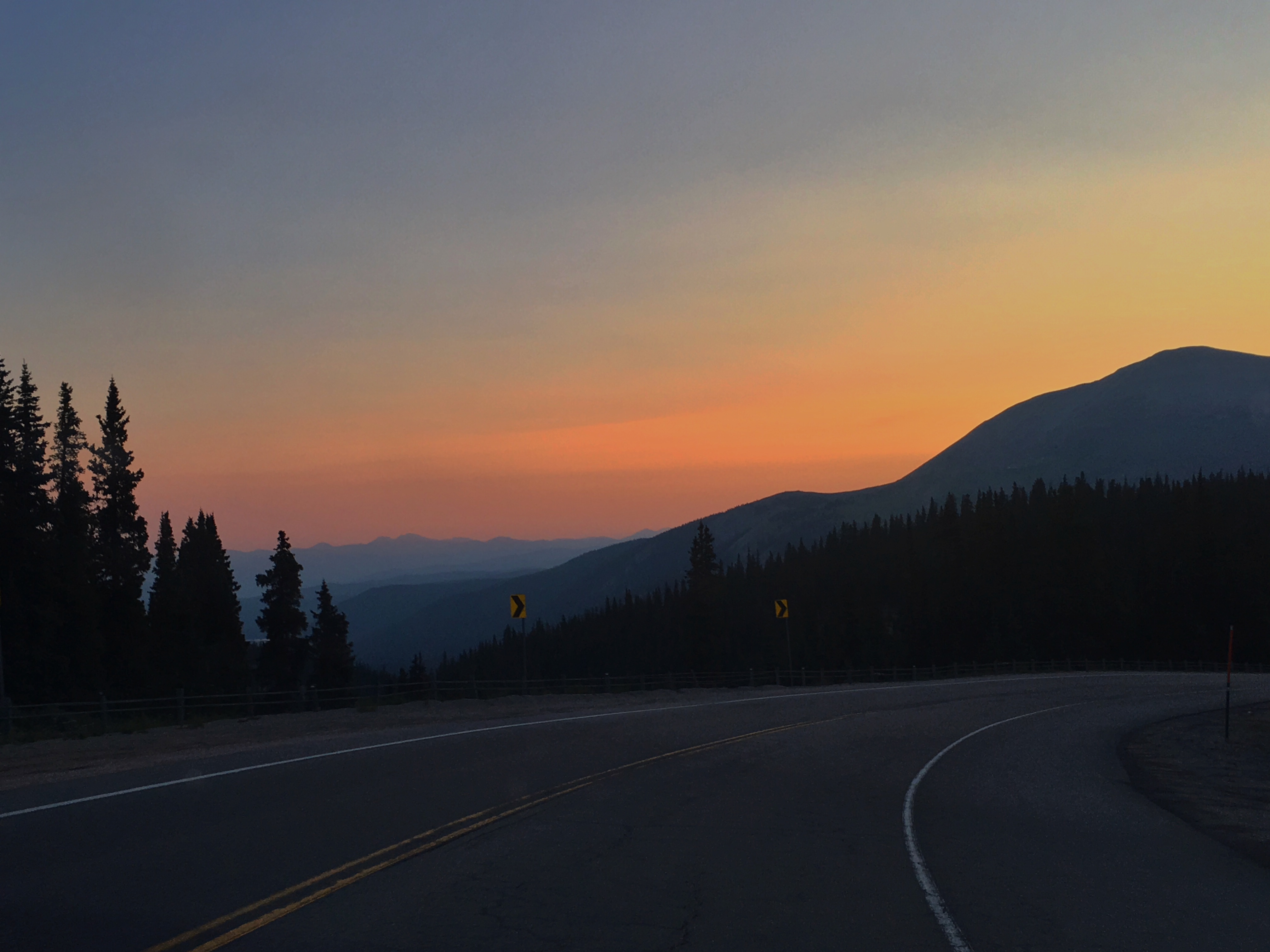
We crossed Hoosier Pass as the sun came up. We pulled over for photos.
That’s Quandary Peak in the left distance.
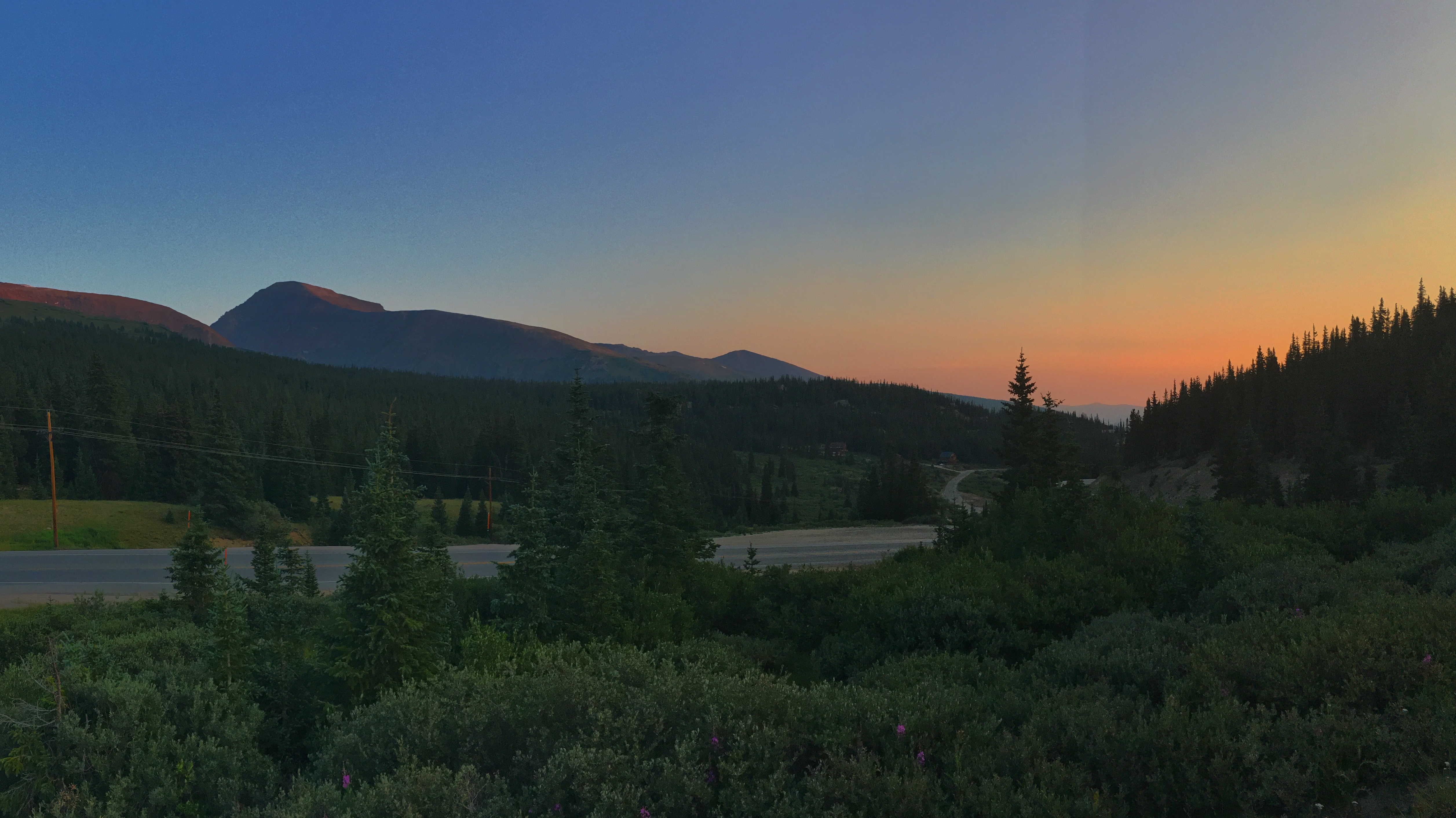
Another view from near the trailhead.

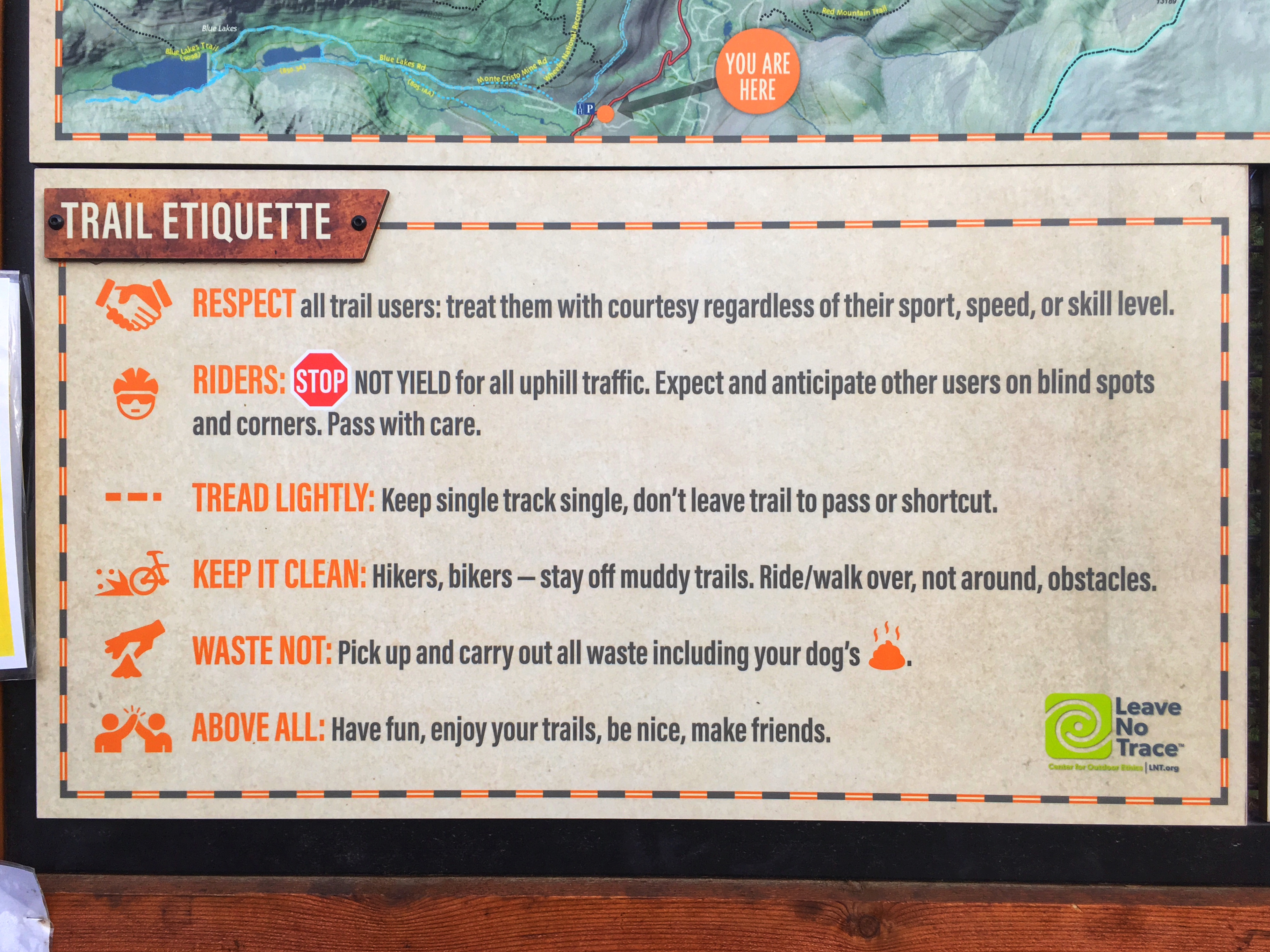
We arrived around 6:40 to find all the trailhead parking lots packed. We wedged into a spot along the road. As we waited for the other members of our group to arrive, I noticed this sign.
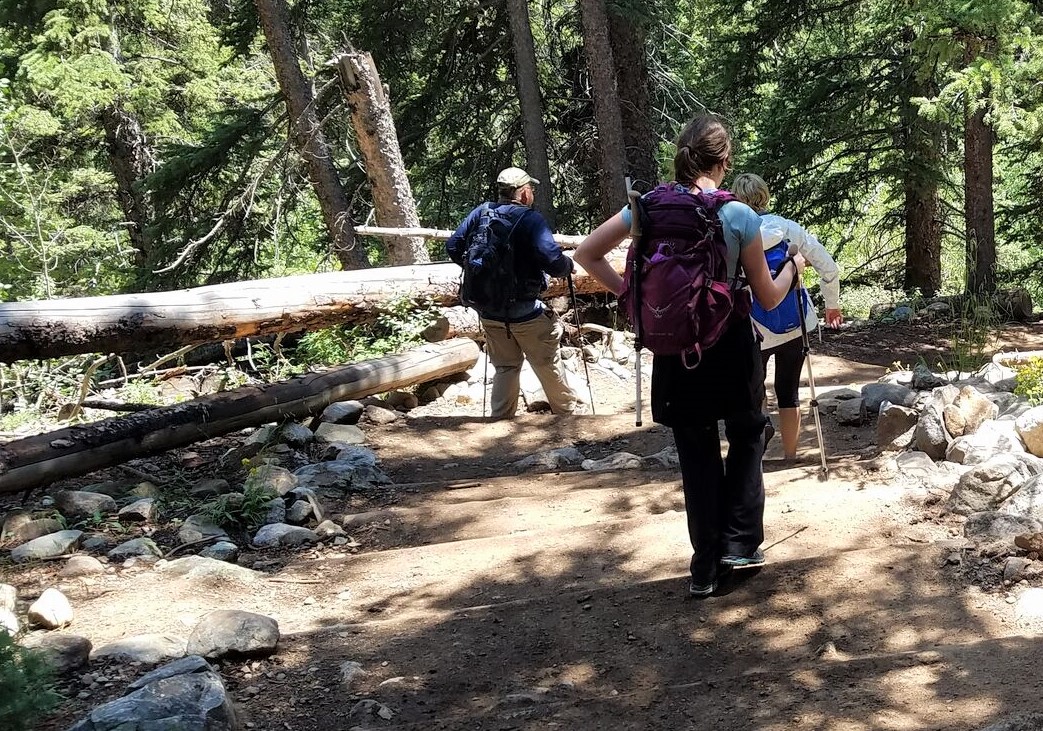
The trailhead was at 10,937 feet above sea level, which meant that I had 3,328 feet of elevation to climb. We finally got started a few minutes after 7:00. The first third of the trail ran through a pleasant pine forest.

I was feeling good at this point, and was actually quite a ways out in front of the group for much of the way. That’s Mount Lincoln in the distance. It’s another 14er that’s 30 feet higher than Quandary.

When the trees thinned out, we could see the peak of Quandary in the distance. Just kidding. The mountain has a false summit that’s a long, long way from the peak.
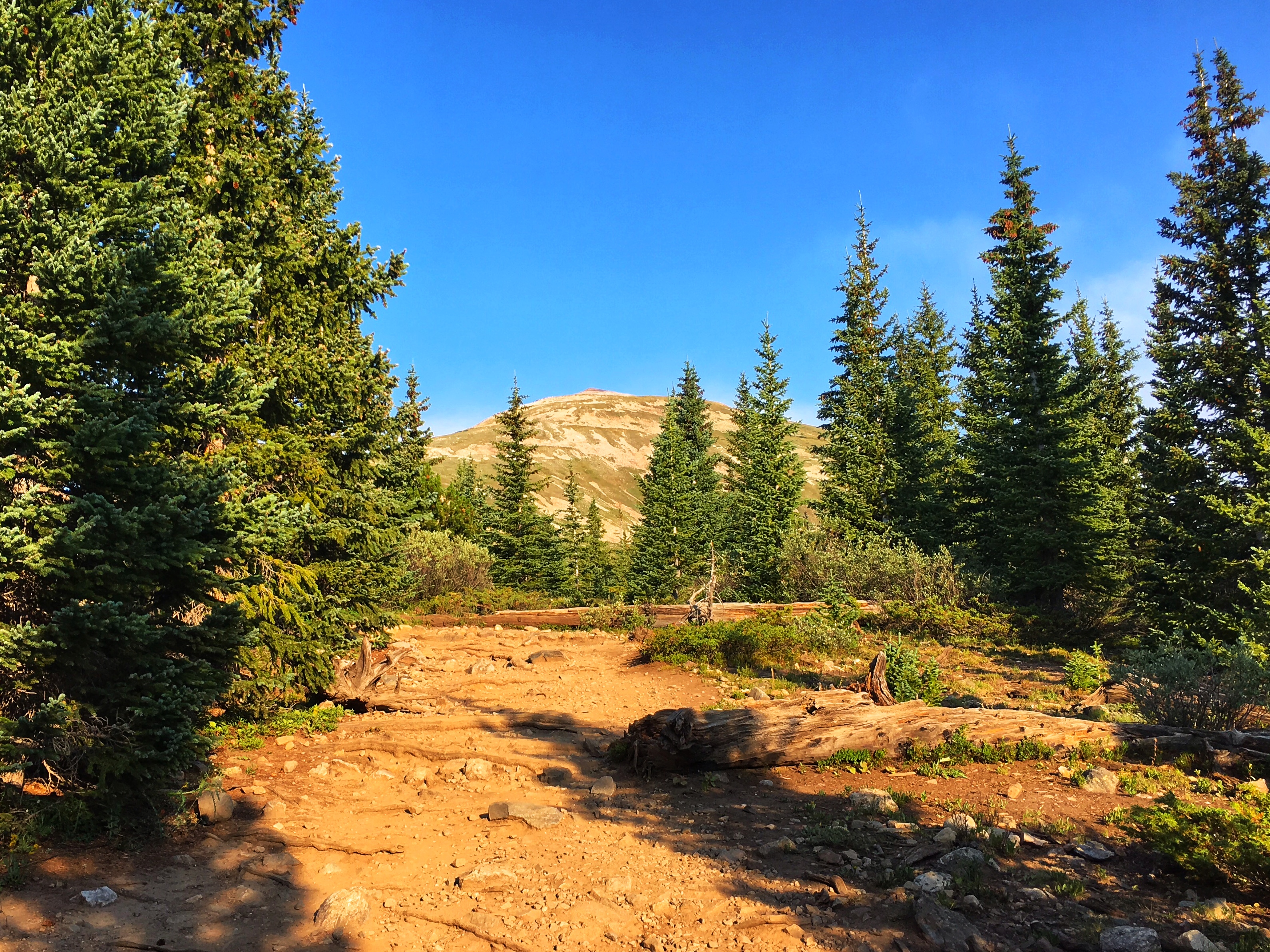
The false summit of Quandary is on the right. North Star Mountain, which reaches 13,614 is in the middle, with Mount Lincoln poking up in the distance. I think that’s Mount Silverheels (13,829 feet) on the far left on the other side of Hoosier Pass.

The false summit is out of view behind the trees in the next photo. The actual summit can be seen here. It looked and felt like it was a long way away. This shot also shows how crowded the trail was. It was pretty much like this from this point to the summit. I’m told it’s called a “conga line.” Most of the people were friendly and polite, so I didn’t really begrudge their presence. But Quandary on a summer Saturday is not the place to seek solitude.

I’ve been told that Quandary is one of the pretty 14er treks, and I can believe it. The trail looks over the Blue Lakes in the valley between Quandary and North Star Mountain.

The last section before we left the trees had a lot of steps made of uneven slabs of rock. These made for hard climbing. We were already close to 12,000 feet. On all my mountain climbs, I’ve had trouble with dizziness. I just can’t get enough air when I’m that high up, no matter what I do. The dizziness began as I climbed the steps, and I soon wasn’t having a lot of fun. This next photo is looking back to the northeast. The wiggly line is the road through Hoosier Pass that we drove this morning. In the hazy distance is South Park.

We finally made it out of the trees and found the surface covered with rocks.
As we approached the false summit, the sky turned gray. The one thing I’ve always been told about climbing 14ers is to definitely, absolutely NEVER be on the exposed face during storms. I was ready to turn back. I figured it was probably already dangerous and would only get worse. I could see how much mountain I had yet to climb and was not at all interested in climbing another hour and then having to turn back short of the top. But we decided to go a little further and see what happened. As it turned out, a few minutes later the sky was clear again.

I was no longer leading the pack.

I was feeling miserable and fine. Miserable because I couldn’t get air. Fine because that’s how I always feel at that altitude — it’s my mountain-climbing normal. When we climbed Mount Evans last summer, I was on my own for much of the way, so nobody could see how often I had to stop and gasp. This time there were people around.

When we finally crested the false summit, it was demoralizing. There was a long plateau and then a long, steep climb yet to go.

The trail, such as it was, was a barely discernible path where trail maintenance crews had dumped smaller rocks in between the larger rocks to smooth things out. We were still at just about 13,000 feet here.

We still had this to tackle. To get a sense of the scale, notice the chain of people all the way up.
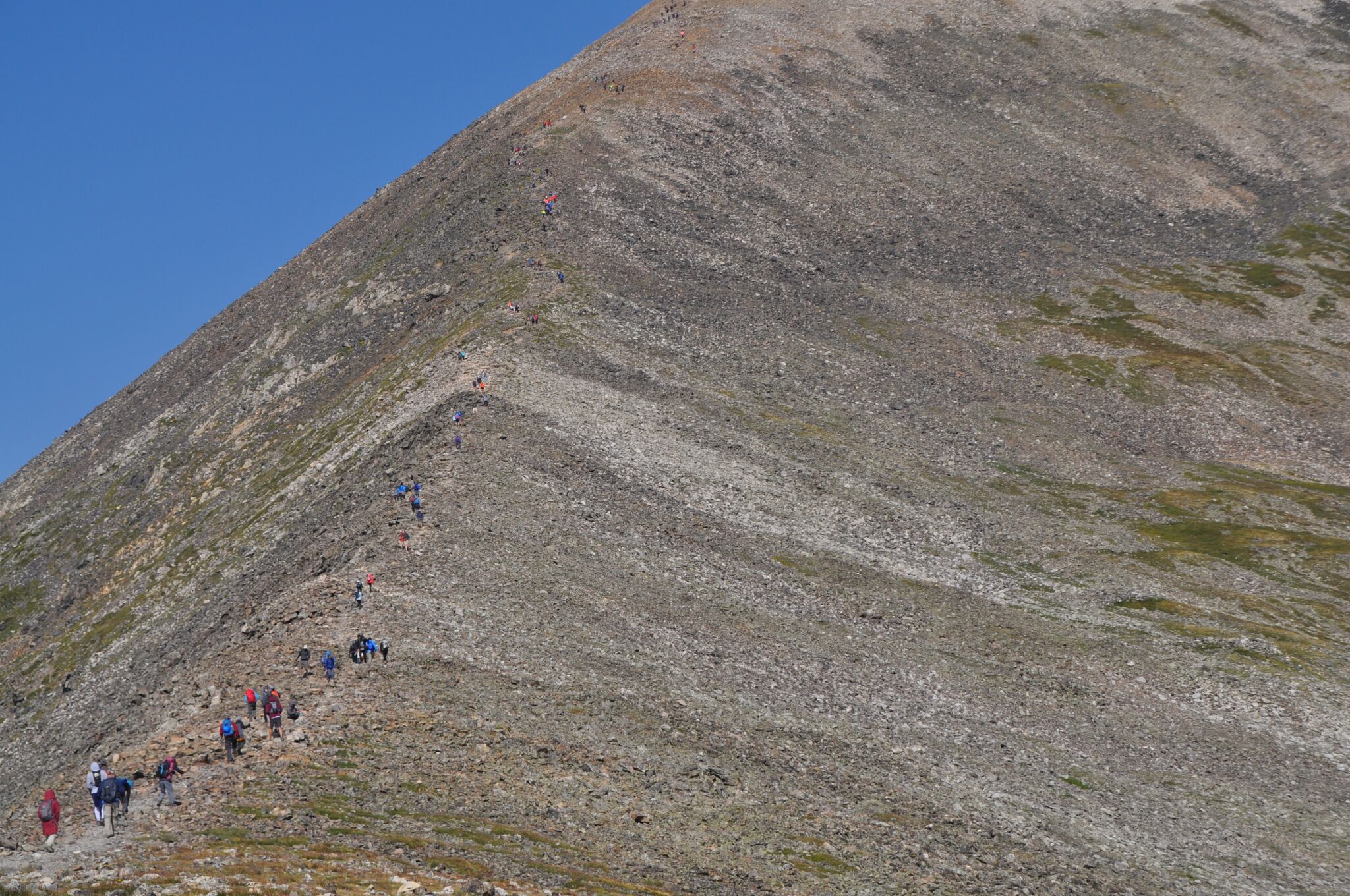
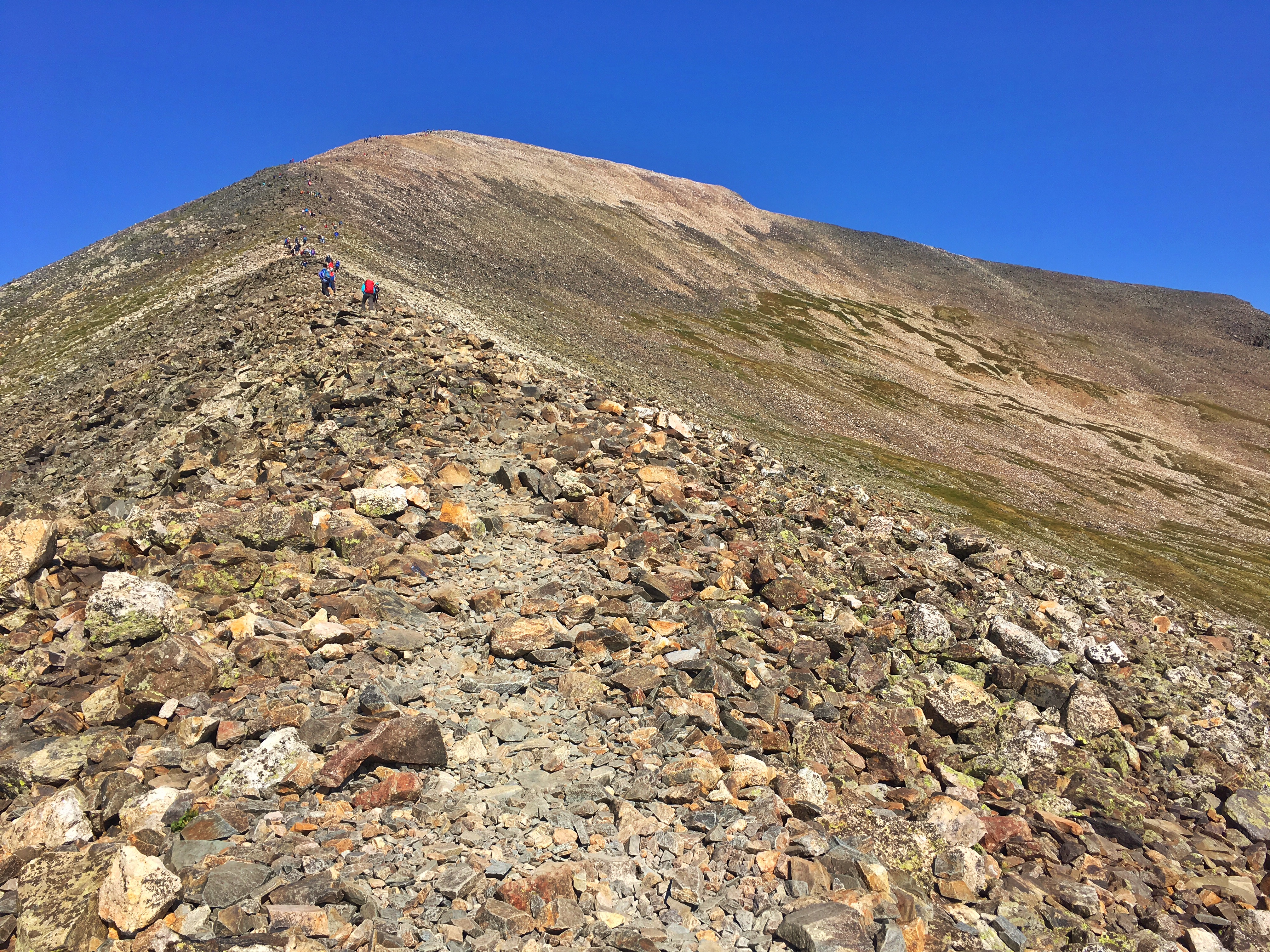
I had a method to my misery. I would set a goal up ahead — a particular rock or patch of color. The light gray chevron visible in the two previous photos was a big goal. When I achieved it, I would stop and bend over my hiking poles until the dizziness stopped, then I would look up, set my next goal, and climb. I felt great if I managed to go a couple feet past my goal.
I began noticing something around this point — drinking water made me feel sick. I was siphoning the water through tube from a bladder in my backpack. I think the lousy feeling came over me because, when I was drinking, I wasn’t breathing. My cohikers kept giving me slices of orange and fruit snacks “for an energy boost.” But energy wasn’t my problem. My legs were fine. I just couldn’t get air. I think they were surprised when I would stop for 30 seconds and then keep going. I’m sure I looked like I needed more rest than that.
The reason I kept going wasn’t fear of failure or pride. It was the realization that I had given up an entire Saturday and gone through a great deal of discomfort to get this far. I wasn’t about to go through all that without something to show for it.
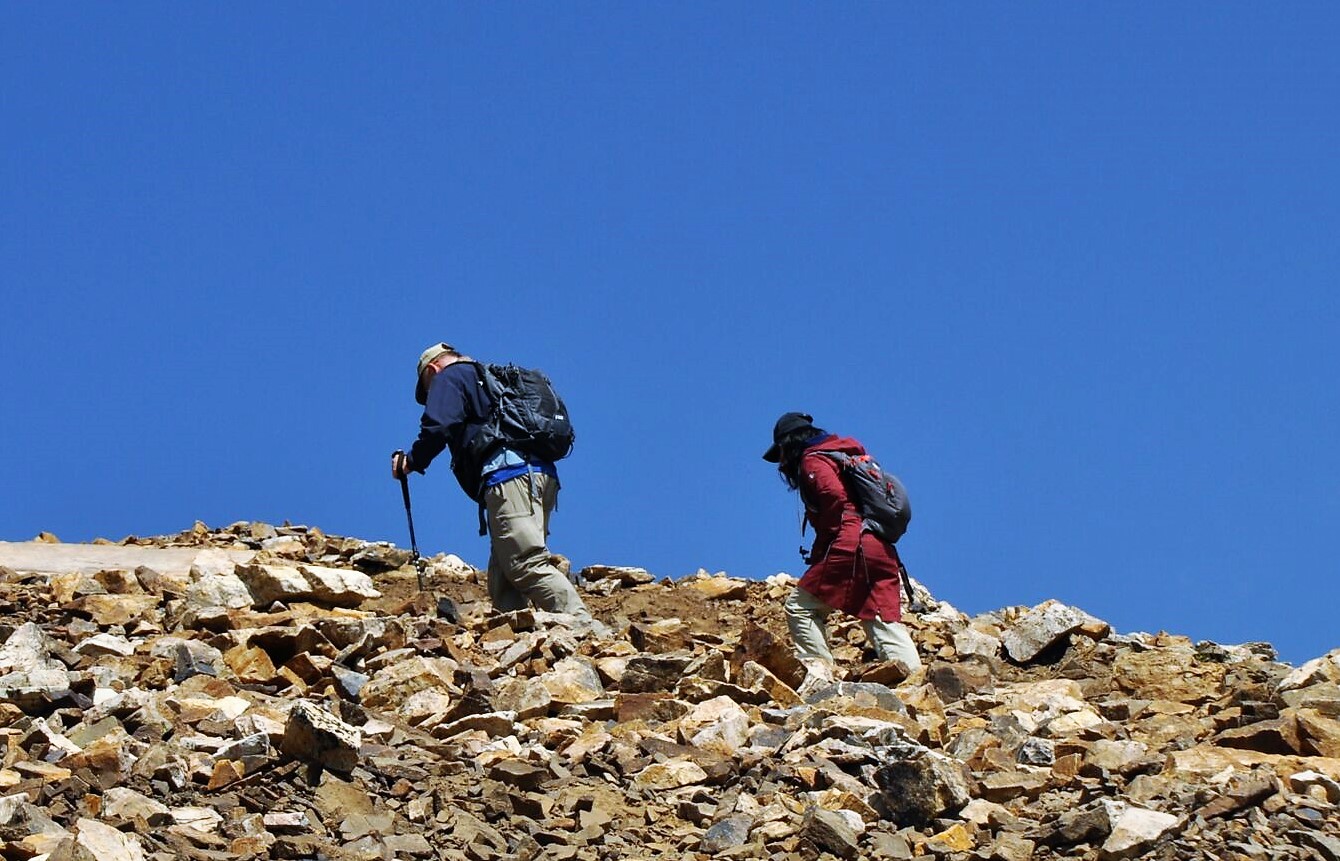
There was a summit. I finally reached it at 11:20, four hours and 20 minutes after I started.
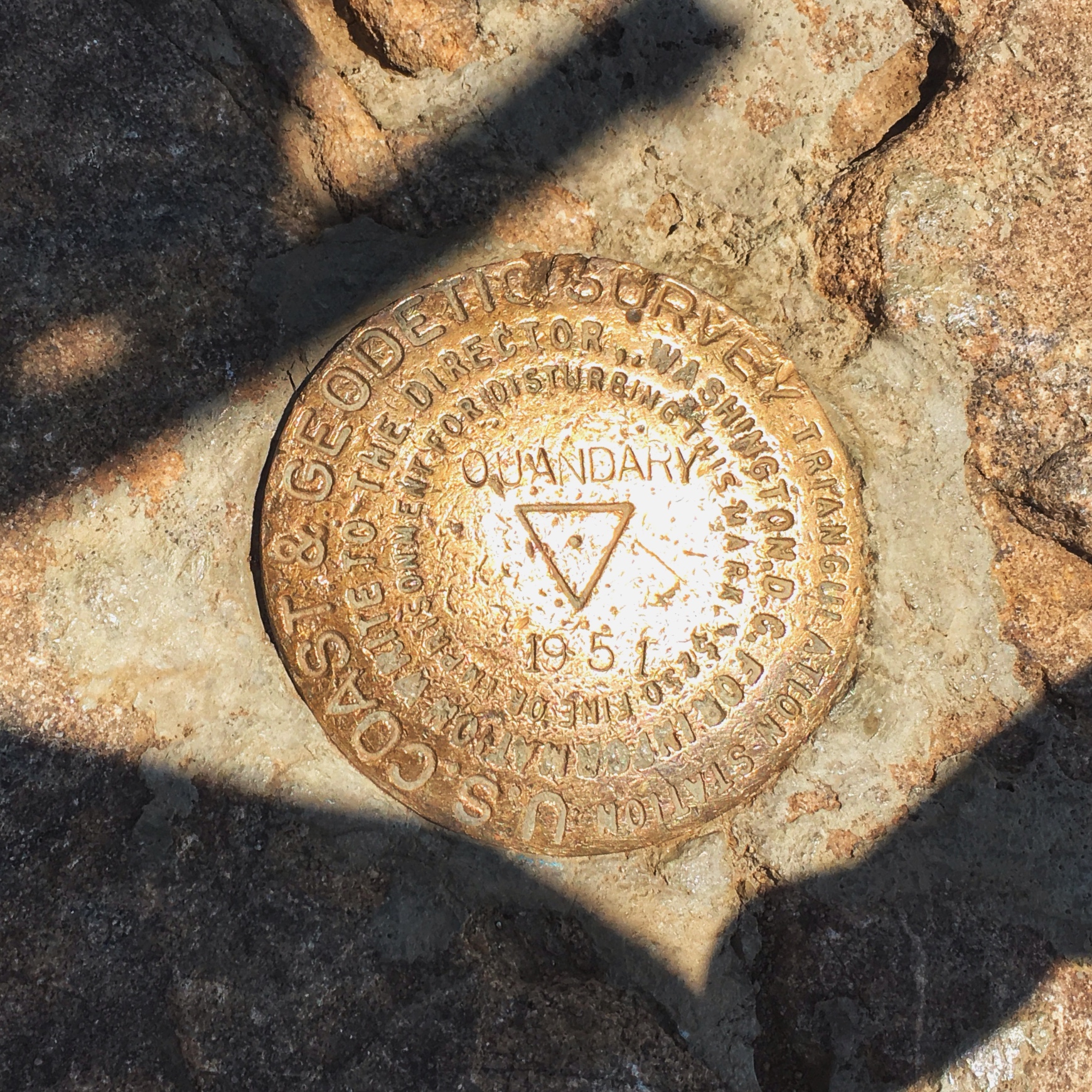
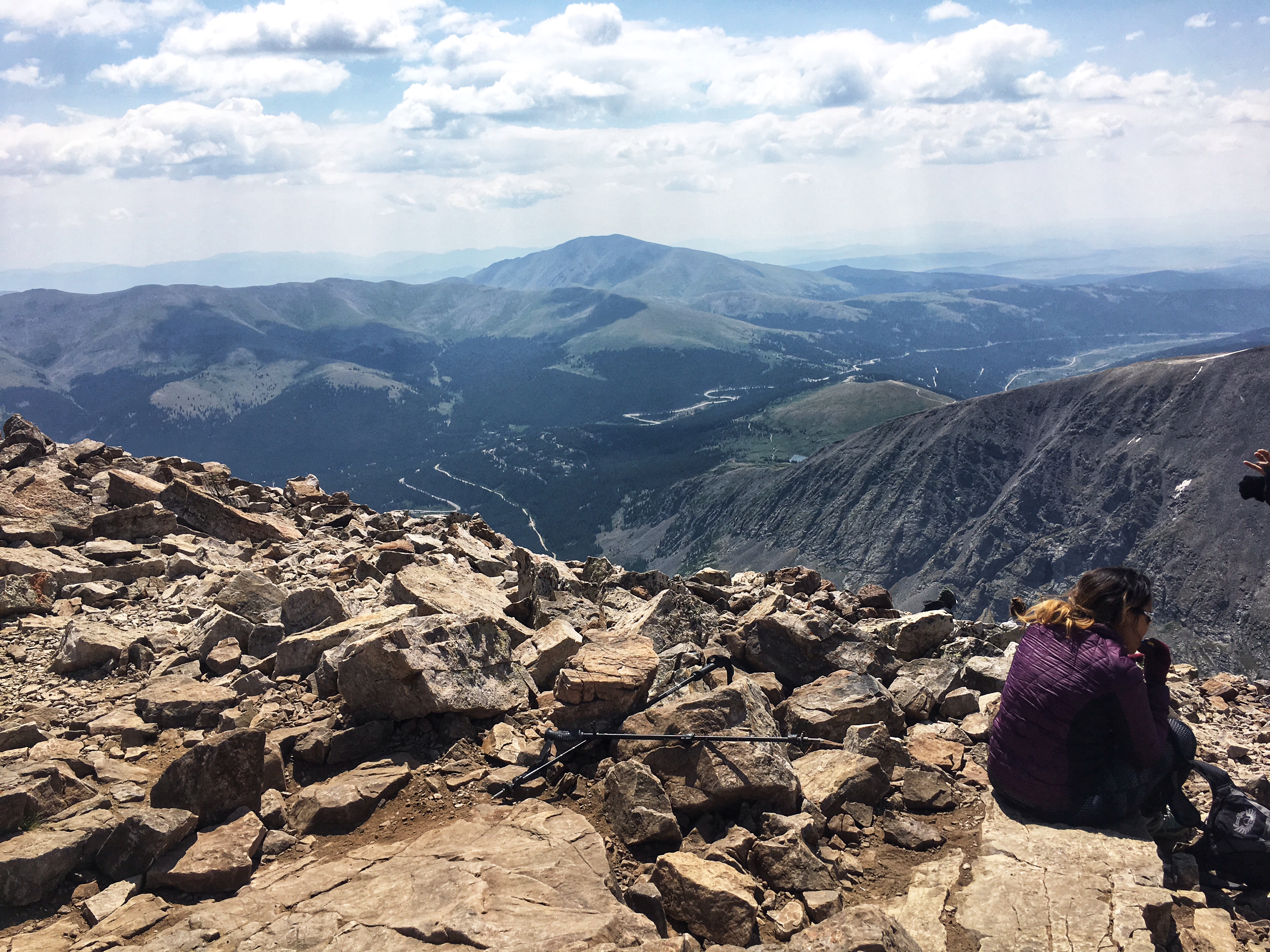
I found place to settle, took off my backpack, and rested. As soon as I stopped climbing, I felt fine. Here’s the view to the northeast.
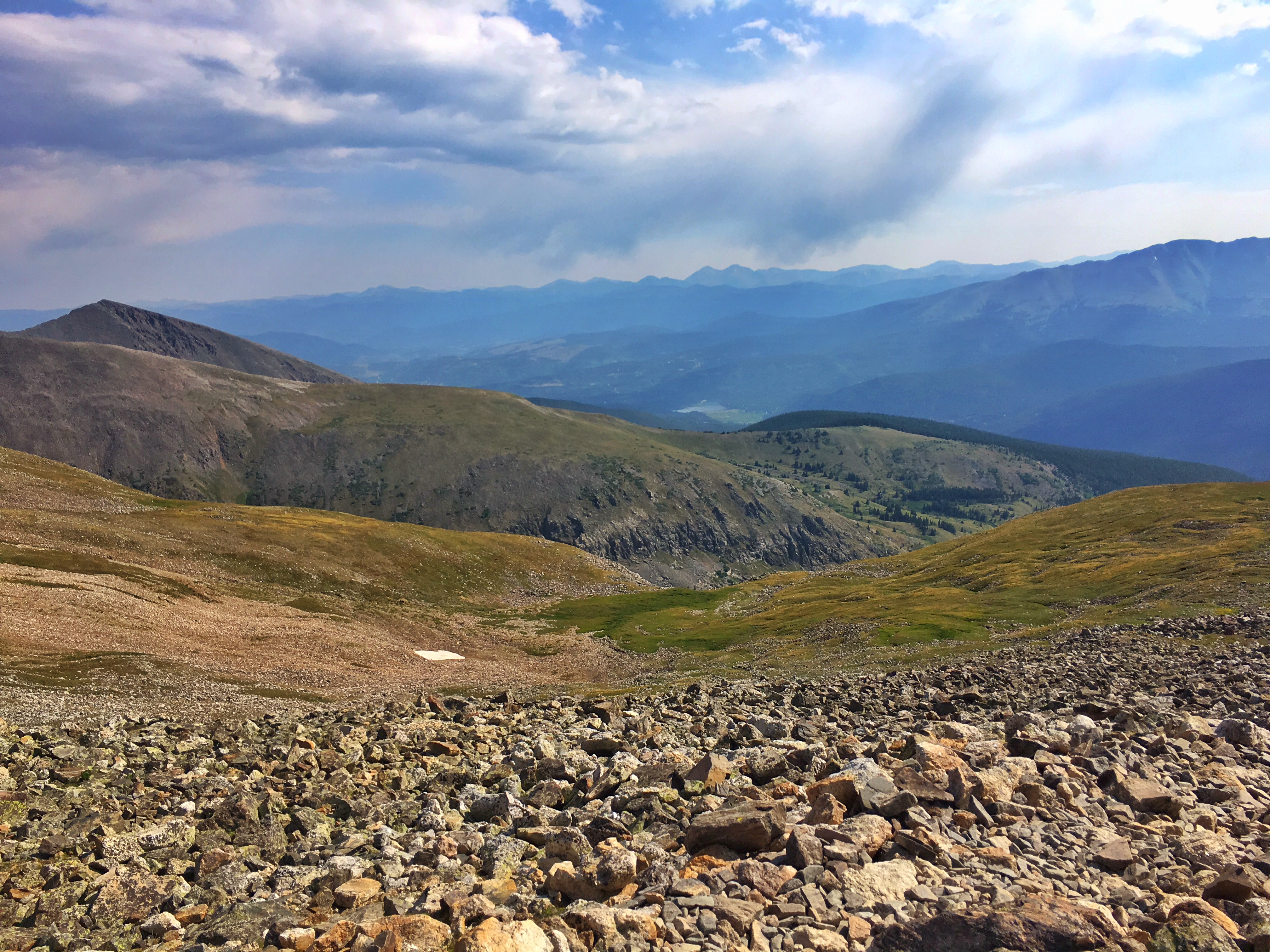
Looking west.

Looking north.
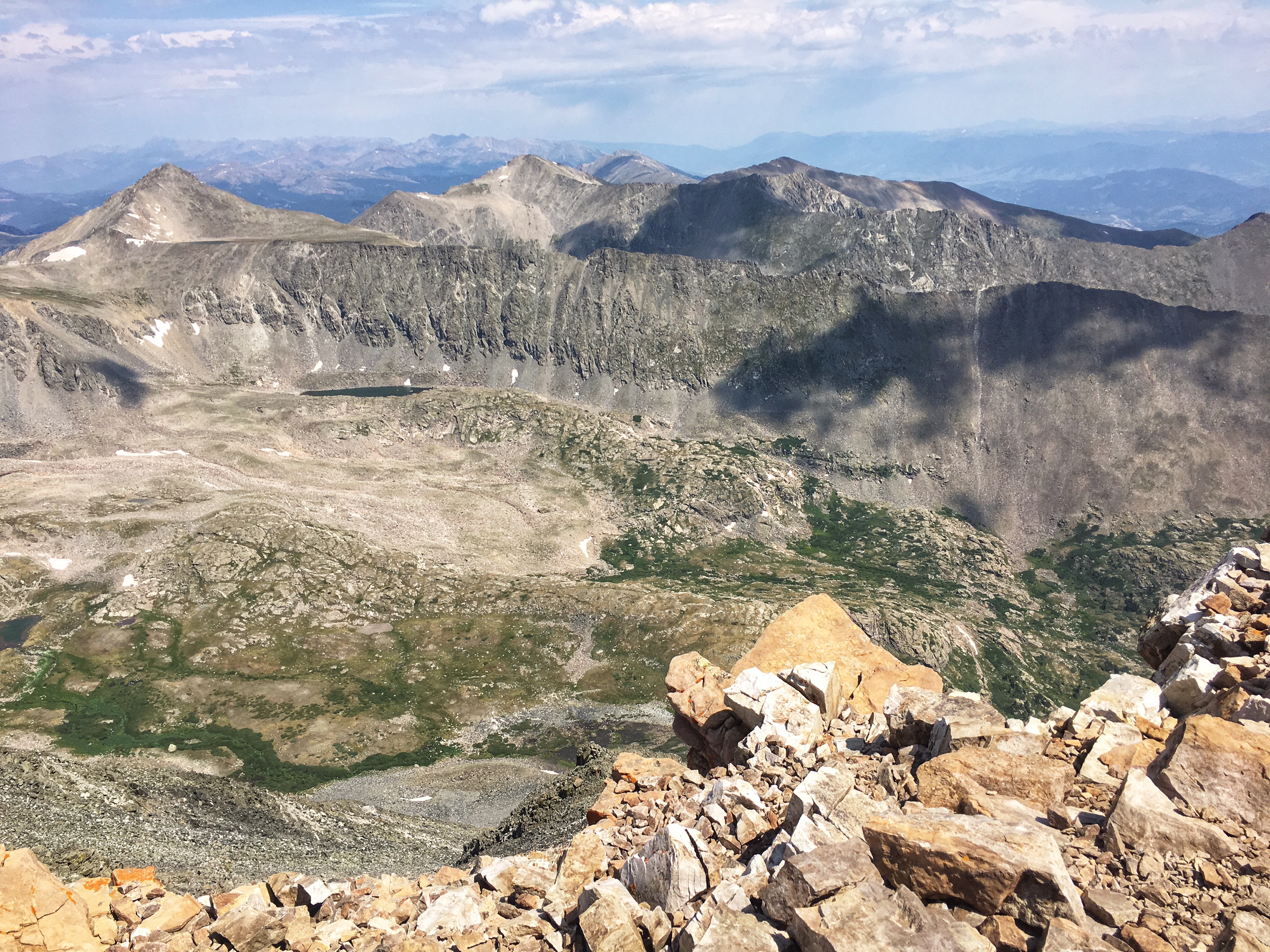
Looking southeast toward Hoosier Pass.
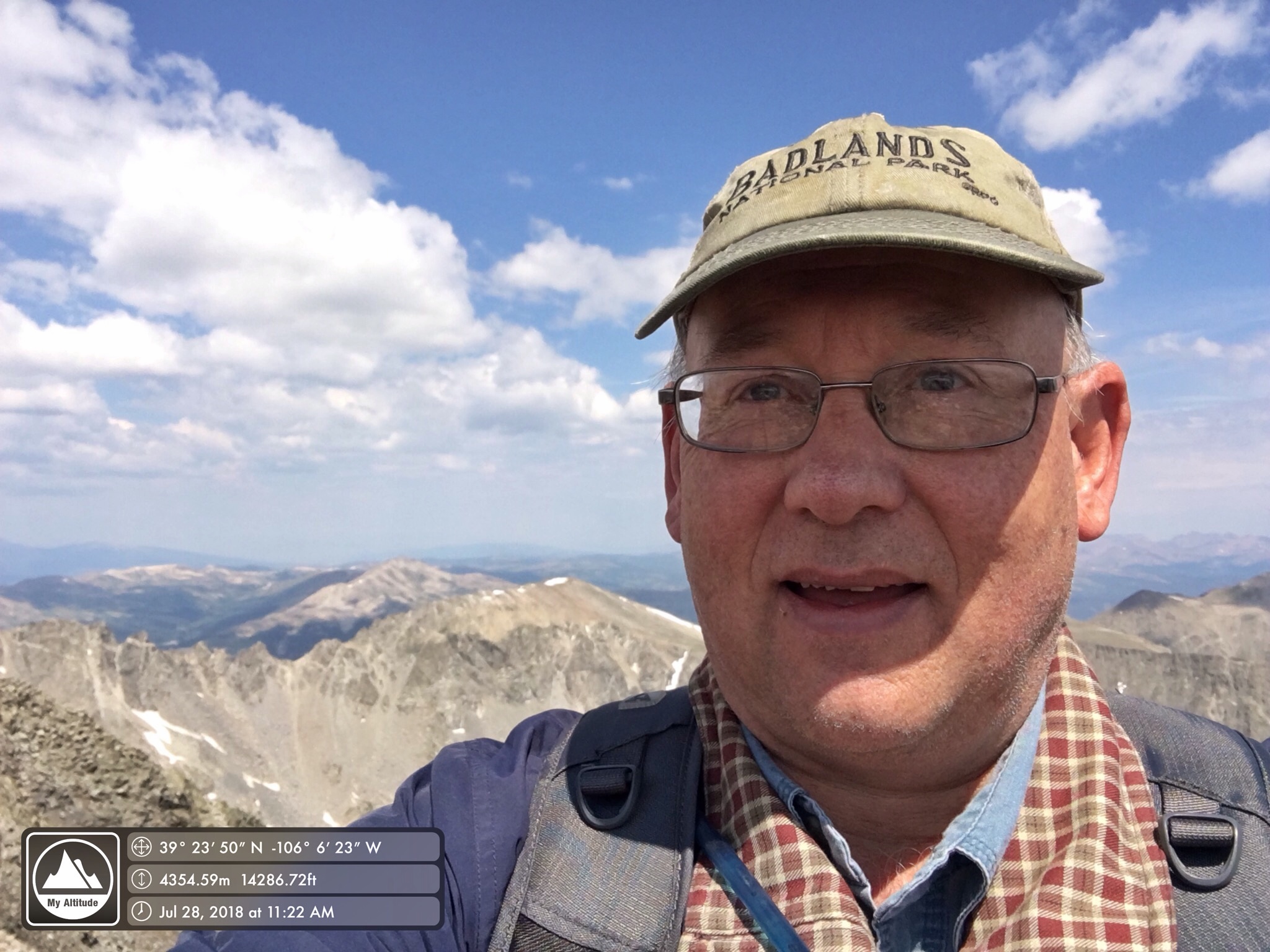
Proof I made it. I felt fine, except that I couldn’t bring myself to eat anything. It just wouldn’t go down.
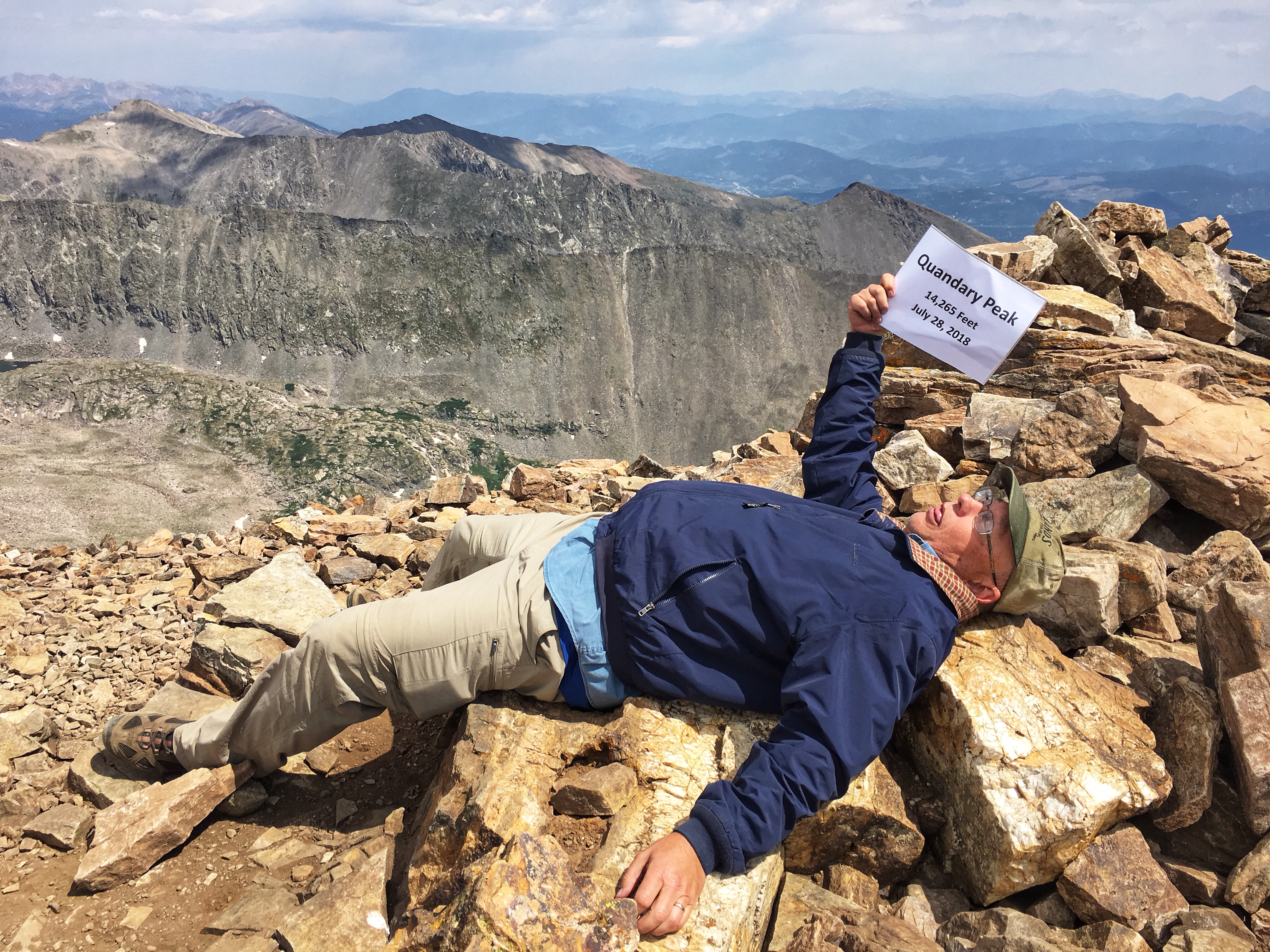
Young showed up with her sign and took photos of all of us.

After maybe 15 minutes, there were some clouds building in the area, but they didn’t amount to much yet. I put my backpack back on and was ready to go, but we hung around taking photos for another 10 minutes. I put a brace on my right knee because going down Mount Evans last year almost destroyed me.

We’d hiked for maybe 10 minutes when the cloud overhead turned black and it began to hail and thunder. This was a terrible feeling because we were at least 2,000 feet and a couple miles from any kind of shelter. All we could do was keep going.
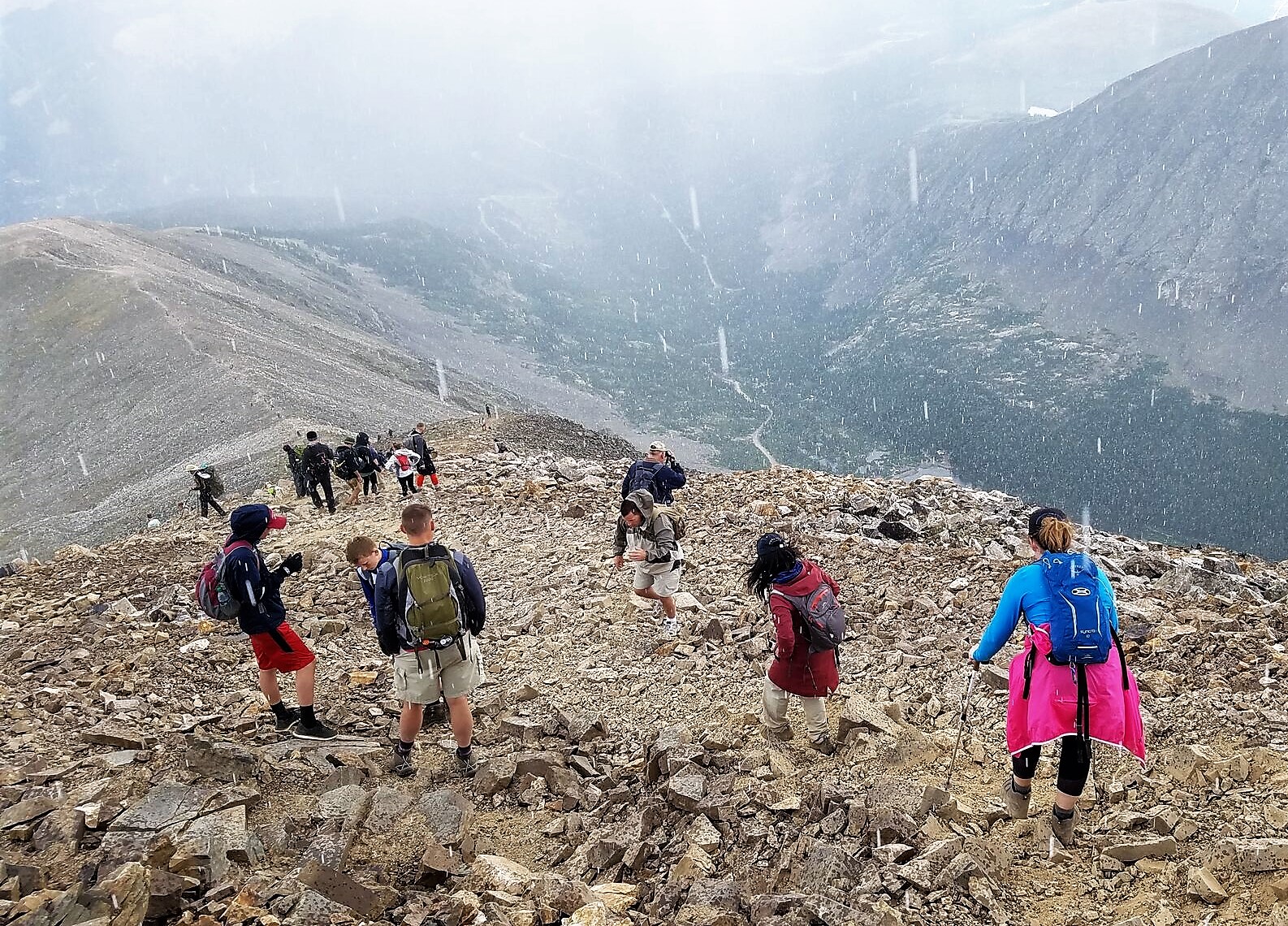
The air was soon filled with electricity. The current came through the button on the top of my hat and exited through my shoes. I could feel it running all the way down my body. It hurt to hold my hiking poles. I kept going and waited for the lightning to strike. The electrical storm probably didn’t last for more than three or four minutes, but it felt like a long time. To make it more exciting, the hail and rain kept up for about half an hour, which made the rocks wet and slippery.

Not long after the storm passed, my legs gave out. Both thigh muscles just quit. I had spaghetti legs. If I could lock my knees, I was fine. But that’s impossible to do when going downhill. I relied completely on my hiking poles. There’s no way I could have made it without them. It was brace, step, stumble, recover, brace, step, stumble, recover, repeat. All the way down the mountain. By this point, we were among the last people on the mountain. The photo below shows best what I was dealing with. I look crippled, and essentially was. Most of the group went on ahead.
I have always had reserves of energy I could tap into, but not this day. I was beat. It wasn’t just my legs. I had a sharp pain in my stomach. People kept giving me food to eat, but my body wasn’t digesting it. It was just sitting there. My hands were also tired and sore from gripping the poles and supporting my weight.
I’ve never been so frustrated in my life. I was weak, and I was slowing everybody down. I don’t generally picture myself as a hero. Maybe sometimes a sidekick. But NEVER as the person who needs to be rescued. The thing that kept me going was a lack of options.
When I finally got back to the trail head, it was around 2:30. It had taken me two-and-a-half hours to get down.
According to the Internet, the length is 6.2 miles, but nobody I talked to believed it was that short. Whatever the length, the altitude gain was 3,450 feet.
As we drove away, we took a look back at the mountain.

The ride home took forever. My muscles were hurting, but that was the least of it. I had to ask the driver to stop so I could use the bathroom in Fairplay and again in Florissant. When I finally got home around 4:30, I had to go badly again — and then again a little while later.
In retrospect, I realized my body simply wasn’t processing the water I was drinking or digesting the food I ate. I was bloated and dehydrated. (This was confirmed when the same think happened to me on a couple later high-altitude hikes. )That’s probably what caused my leg weakness. Or maybe I’m just old and out of shape.
An small Asian woman who was part of our group, is a cardiologist. She could see the condition I was in on the hike up the mountain, and without ever saying anything, she stuck close to watch out for me. When we got back down the car, I told her I knew what she had done and thanked her. She was cool about it. She said she and her friends all thought I was adorable for the way I kept on going. So I’ve got that going for me.
I went to bed for three hours, then got up and watched a movie. On Sunday, I took four naps. By Monday, I was feeling human again.
Last year, we started our climb of Mount Evans at 12,850 feet and hiked up 1,650 feet. Those who care say the altitude gain has to be 3,000 feet to count as an official 14er climb. I’ve now officially climbed a 14er. Never again. The dizziness that I always face is no fun. And I’m also not willing to risk the issues I faced this time.