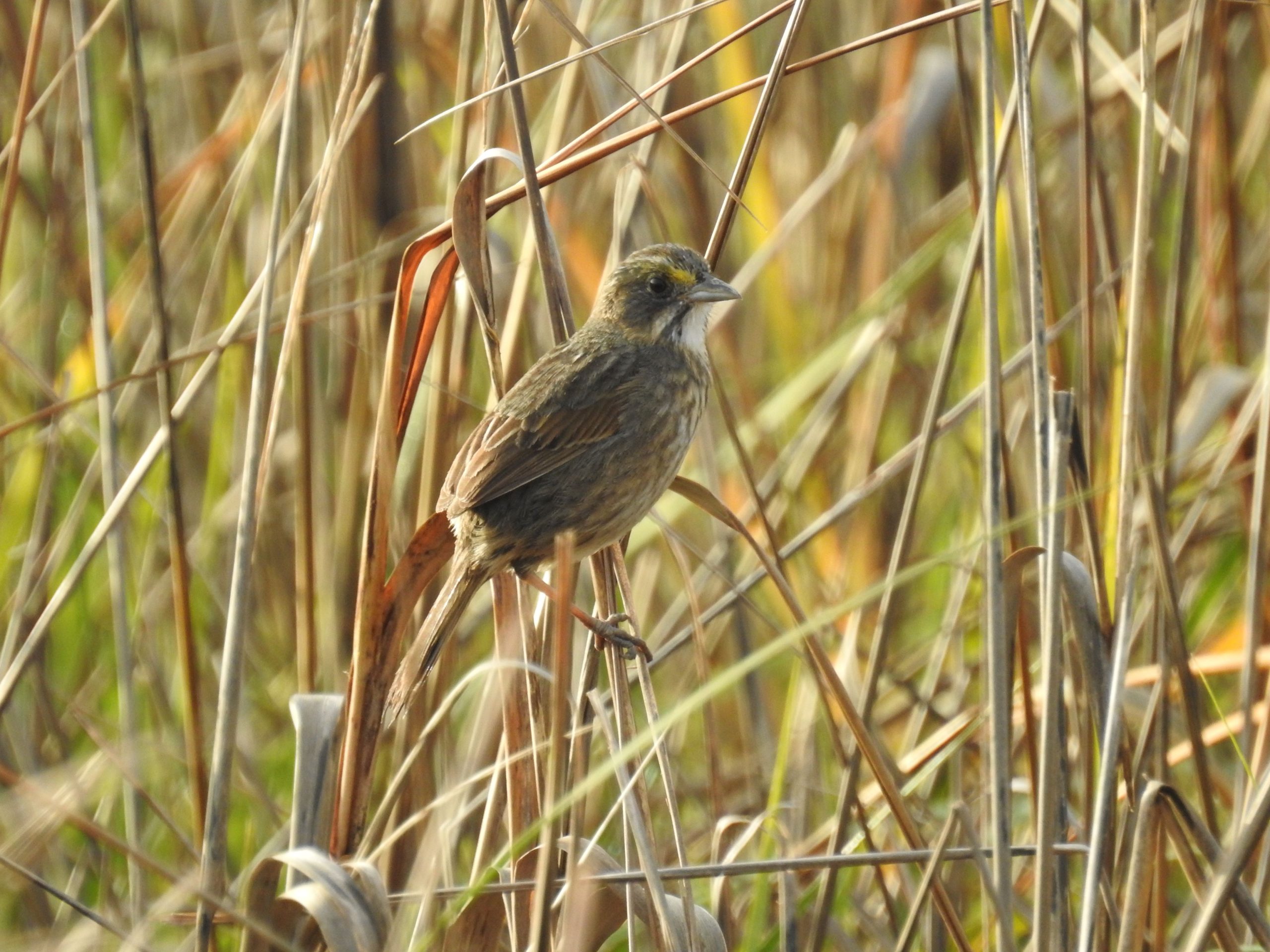
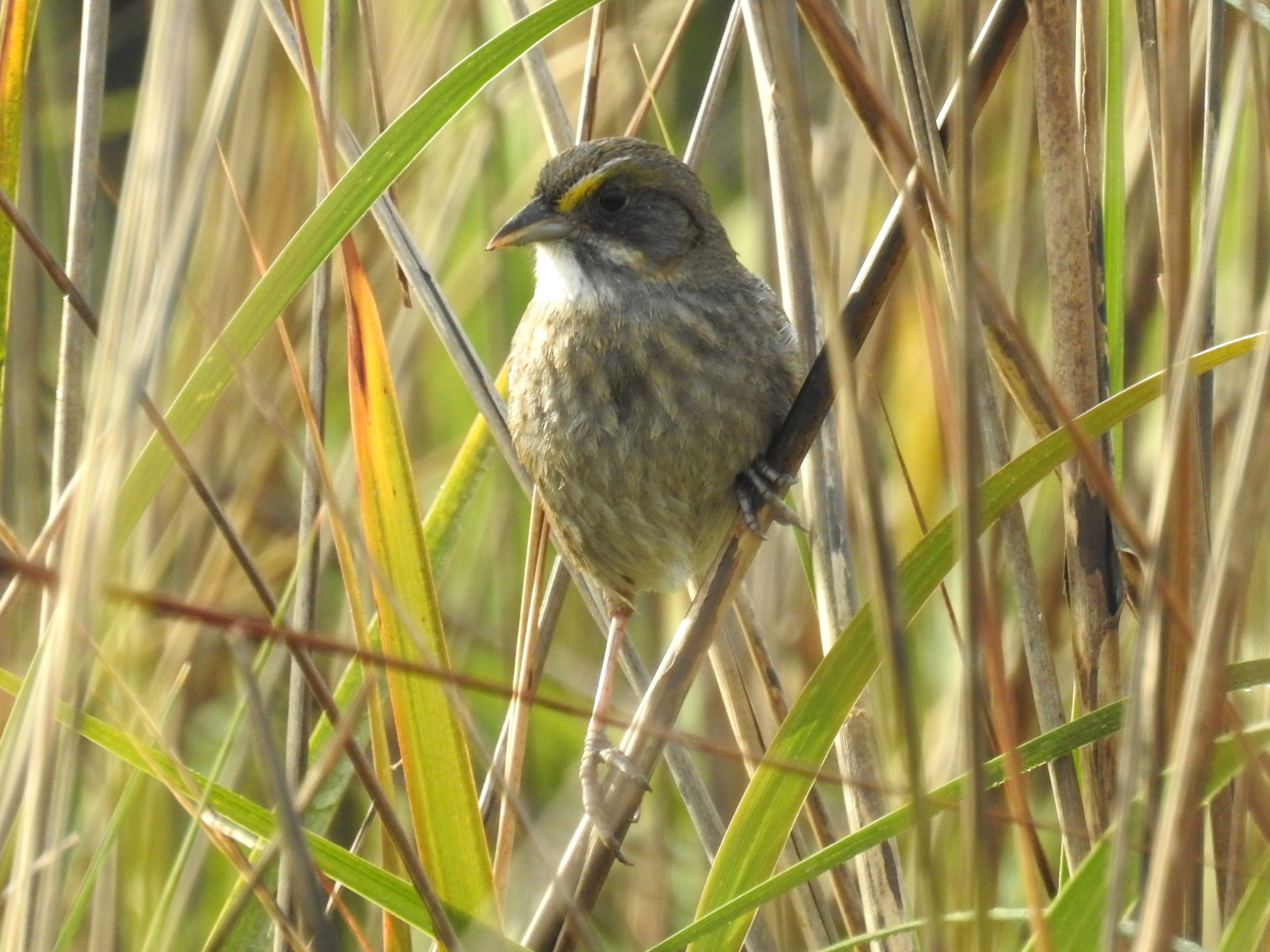
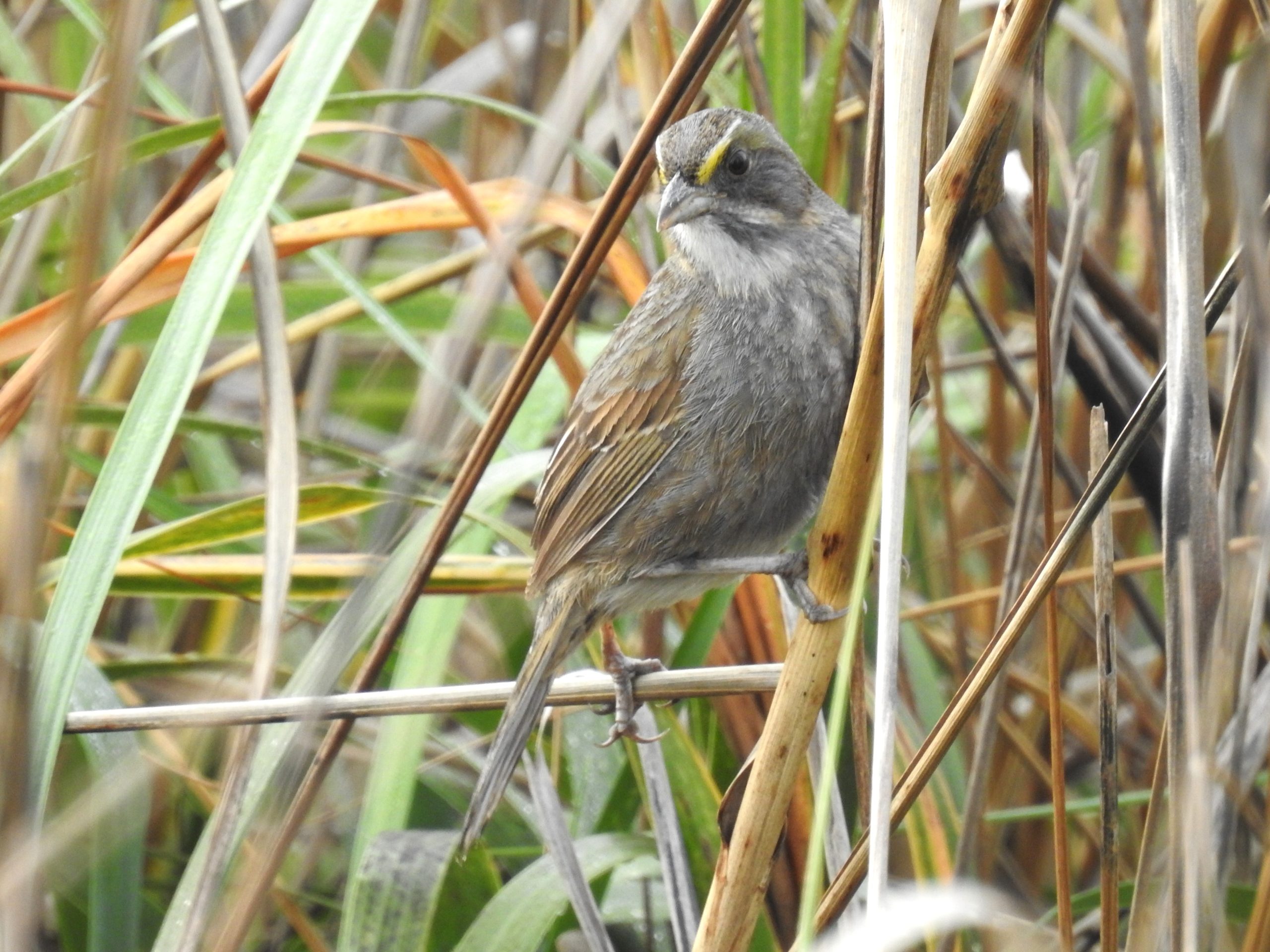
I took a 10-day trip by myself through Arkansas, Tennessee, Alabama, and Georgia, to Florida, and then back through Mississippi, Alabama, Louisiana, and Arkansas. My goal was birds — specifically 11-12 species I’d never seen before and another 10 or so that I’d only seen once or a few times and had never photographed.
SATURDAY
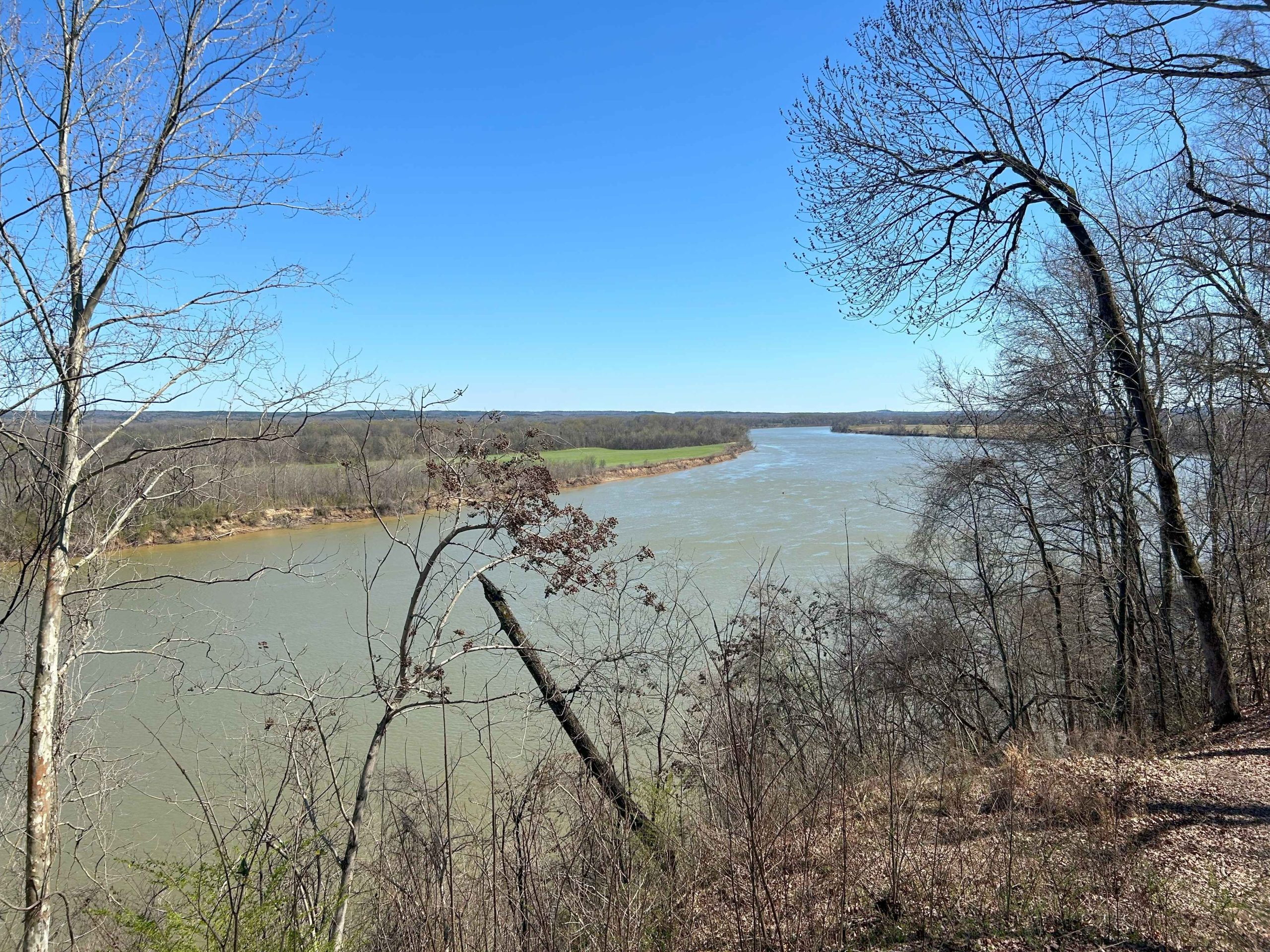
I left on Saturday morning and drove into Tennessee. I stopped at Shiloh National Military Park and drove the tour route, but even there my chief goal was birding. Unfortunately, there weren’t many to see. The place was pretty dead—in three hours, I saw 13 species and only 20 individual birds and most of them were in the national cemetery that overlooks the Tennessee River.
I drove back roads down to Muscle Shoals, Alabama. I’d seen on the Internet that a Hampton Inn there had reasonable prices, but when I asked at the desk, I was told $167 a night. I left and went to a nearby Comfort Inn. They quoted $124, which I was about to take until they said there was a $250 deposit against “incidentals.” In my wildest imagination, I can’t picture how I could spend $250 on incidentals at a Comfort Inn. I said no, thank you. I ended up at a Microtel for $114. The hotel was nice, although some of the cars in the lot were rather ragged. On the way, I’d passed an interesting looking drive-in called OK Corral BBQ. It got good ratings, and the young woman at the hotel desk said she went there all the time. I drove over and waiting in the long line of cars (drive-through only). The place is apparently operated by senior citizens. And the food was terrible. I only ate a little bit back in my hotel room before chucking the rest.
SUNDAY
I headed east on Sunday in no particular hurry. I had, or so my phone informed me, about four-and-a-half hours of driving to get to my brother-in-law’s house east of Atlanta. I stopped at Wheeler NWR, near Huntsville, for about an hour, but the birding there was unspectacular. I wanted to avoid Atlanta, so I asked my GPS for a route north of the city. It took me on every tiny little road it could find, and I was on none of them for more than a handful of miles. It felt like forever before I finally got to Cumming, where I stopped and birded for an hour along Lake Lanier, at the northeastern extreme of Chattahoochee River National Recreation Area. Again, the birds were scarce. I got to my brother-in-law’s a little before 5:00 and spent the evening chatting with him and his wife.
MONDAY
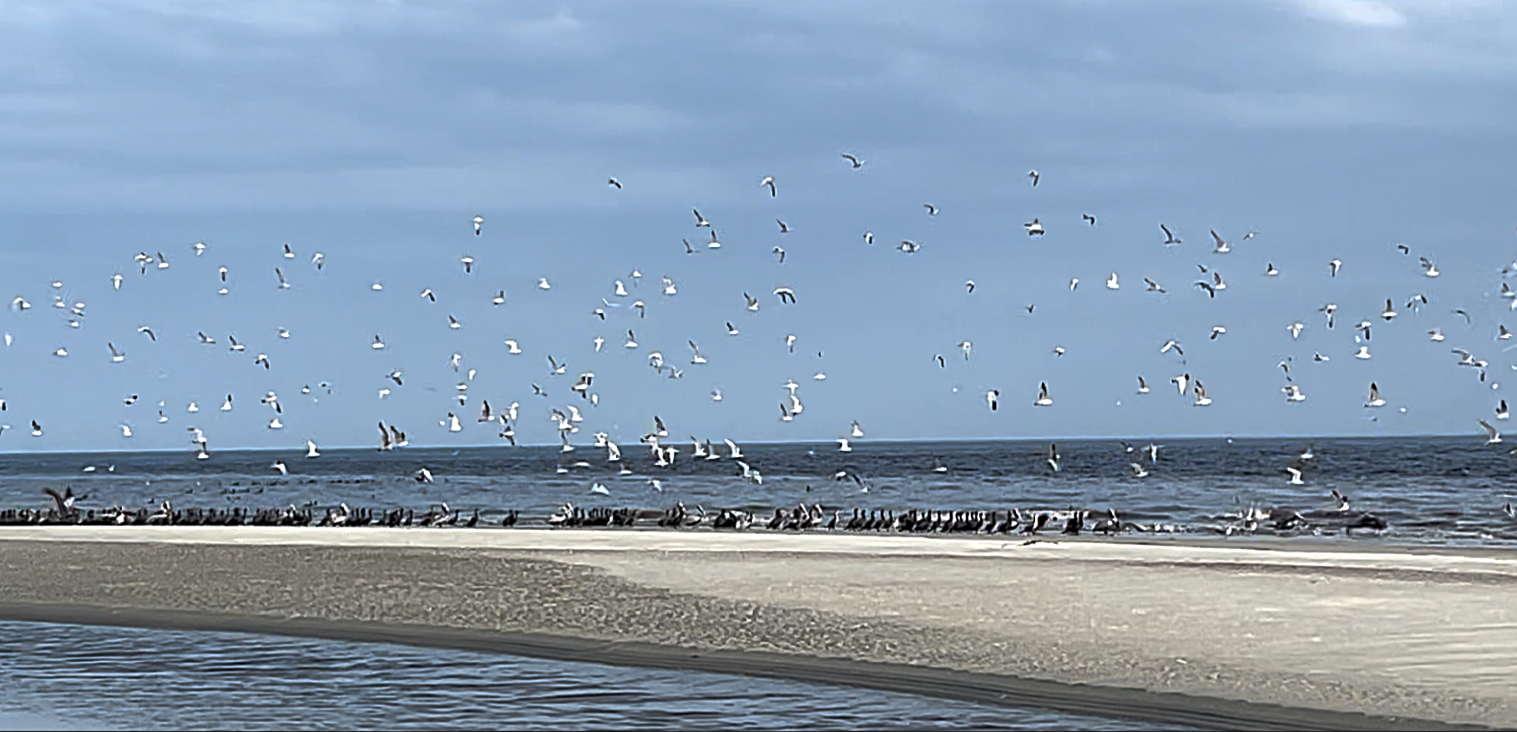
On Monday, I headed toward Jekyll Island. Again, I wanted to avoid cities—particularly Atlanta—so again I ended up on a lot of two-lanes. In the early afternoon, I checked into a Best Western in Brunswick and headed for Jekyll Island. At the visitor center, I climbed the deck behind the building and looked out over the extensive salt marsh. The tide was coming in, and many shorebirds were gathering on the nearby flats. Another birder showed up who described himself as a snowbird from Wisconsin. We chatted and birded. I spotted a Clapper Rail, one of my target lifers, dashing across a small channel, but I didn’t get a photo. I asked the birder about Seaside Sparrows, and he told me the tide this time of year isn’t nearly high enough. I still tried. I played a recorded of its song in a few spots, but got no response. I paid my $7 and headed onto the island. The best spot for birds looked to be South Beach. I parked and walked toward the southernmost point, but soon found my way blocked by driftwood and water, so I walked back and soon found another beach access. I walked about a mile along the ocean-side of the point. There were lots of birds of many species, including American Oystercatchers and Wilson’s Plovers, two more of my target lifers, both of which I photographed from quite close. The birder from Wisconsin that I’d met earlier showed up with a friend. He tried to convince me that he’d seen Northern Gannets way out to sea, but I was never convinced the little white dots were gannets. I don’t think he knew that I overheard him mutter to himself at one point, “they’re only terns,” because he never admitted to me that he could be mistaken. It was after dark when I got back to my hotel. I stopped at Chick-fil-A on my way.
TUESDAY
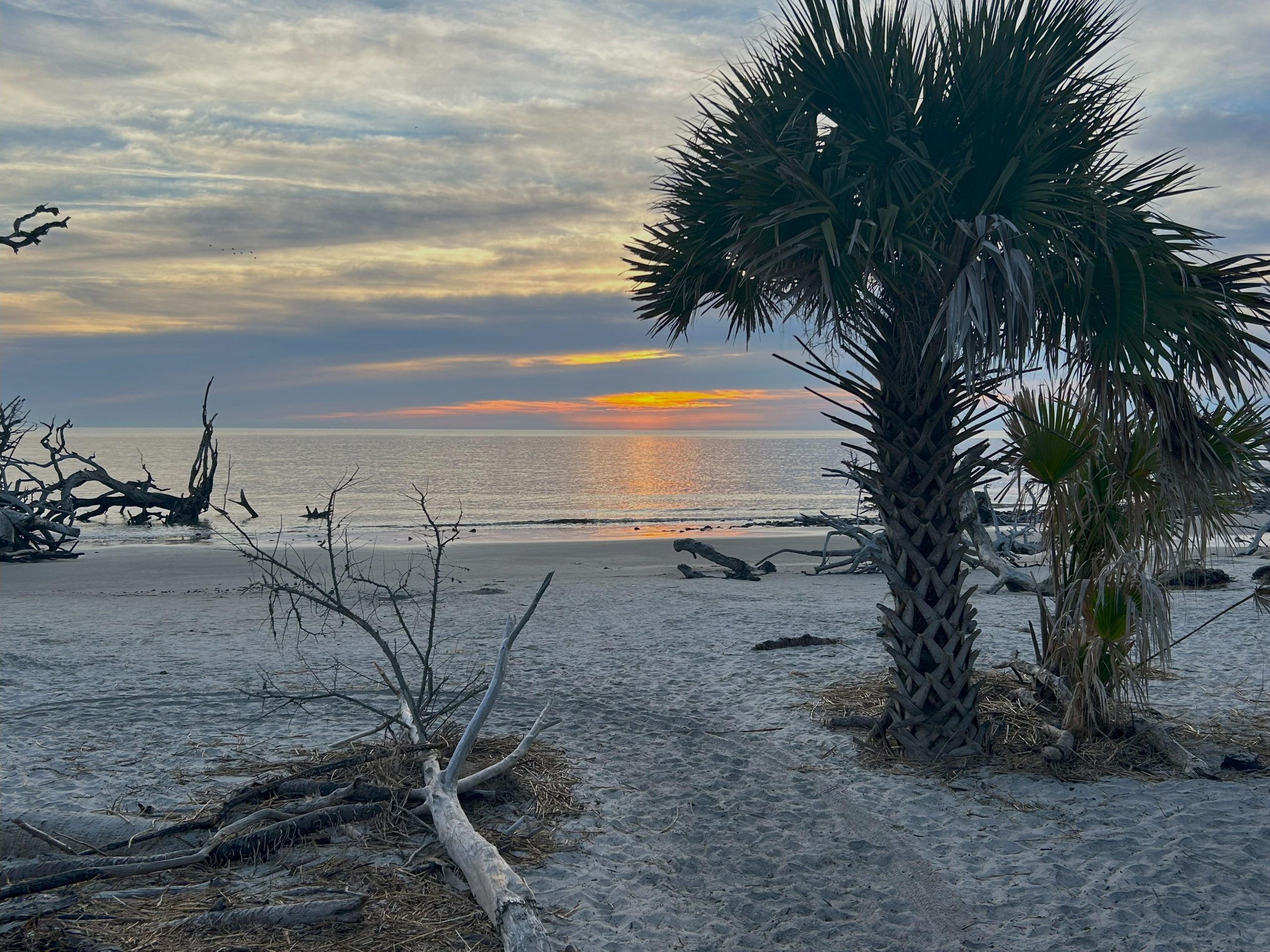
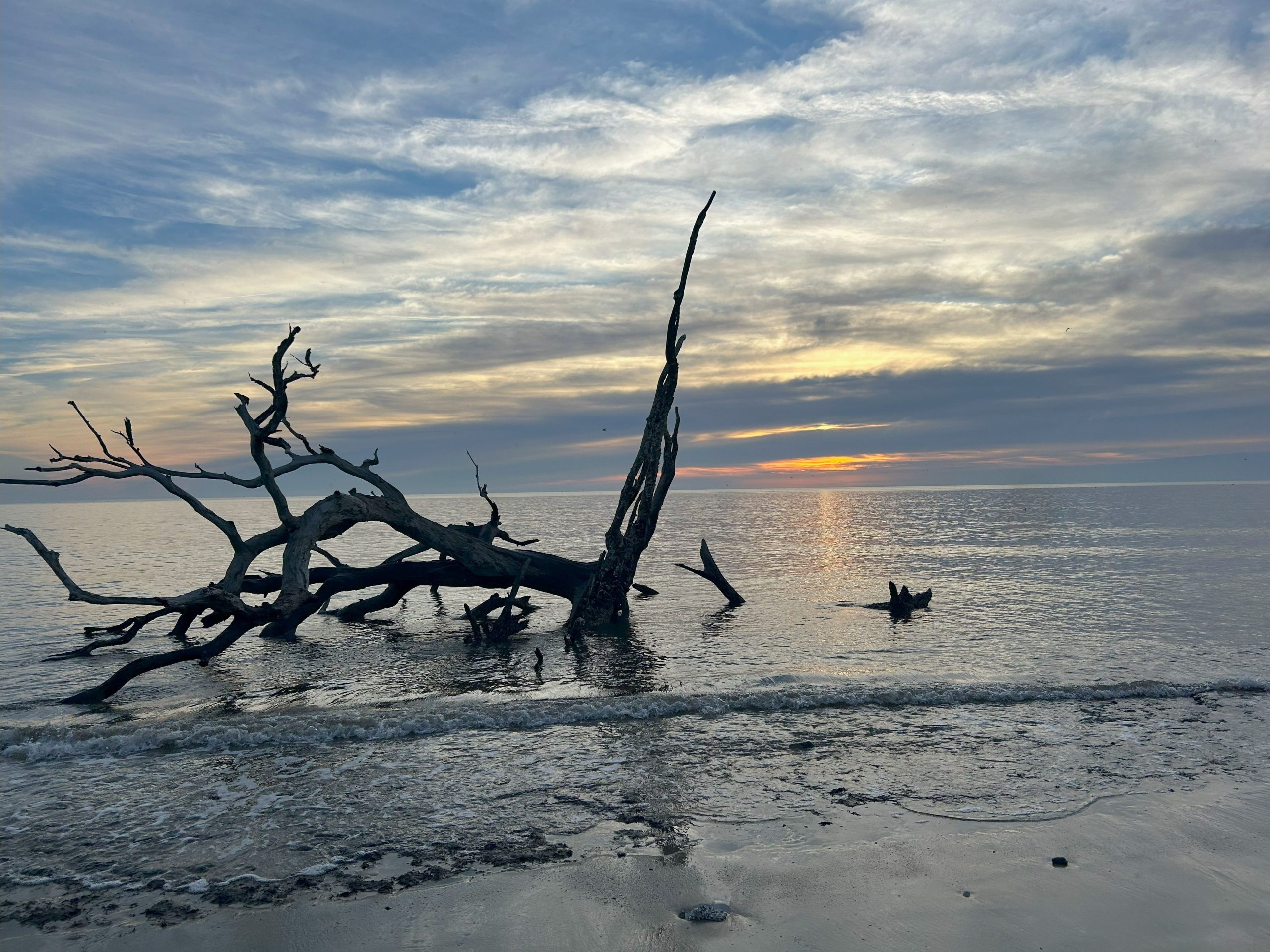
On Tuesday, I went back to the island, this time to Driftwood Beach. The Wisconsin birder had told me that was the place to photograph Clapper Rails, and he wasn’t kidding. I had just gotten out of my car when one ran across the road. I spotted three or four more in the next 45 minutes, and got good photos of a couple. The beach was beautiful in the sunrise, but the swarms of tiny, biting gnats were not. I would have stayed and birded the area more, but the bugs were unbearable. A photographer I chatted with said dozens of people had told him he absolutely had to go there to get photos, but not a single one of them had mentioned the gnats. My arms itched the rest of the trip. I am stunned that the swarms of bugs don’t show up in the photos.
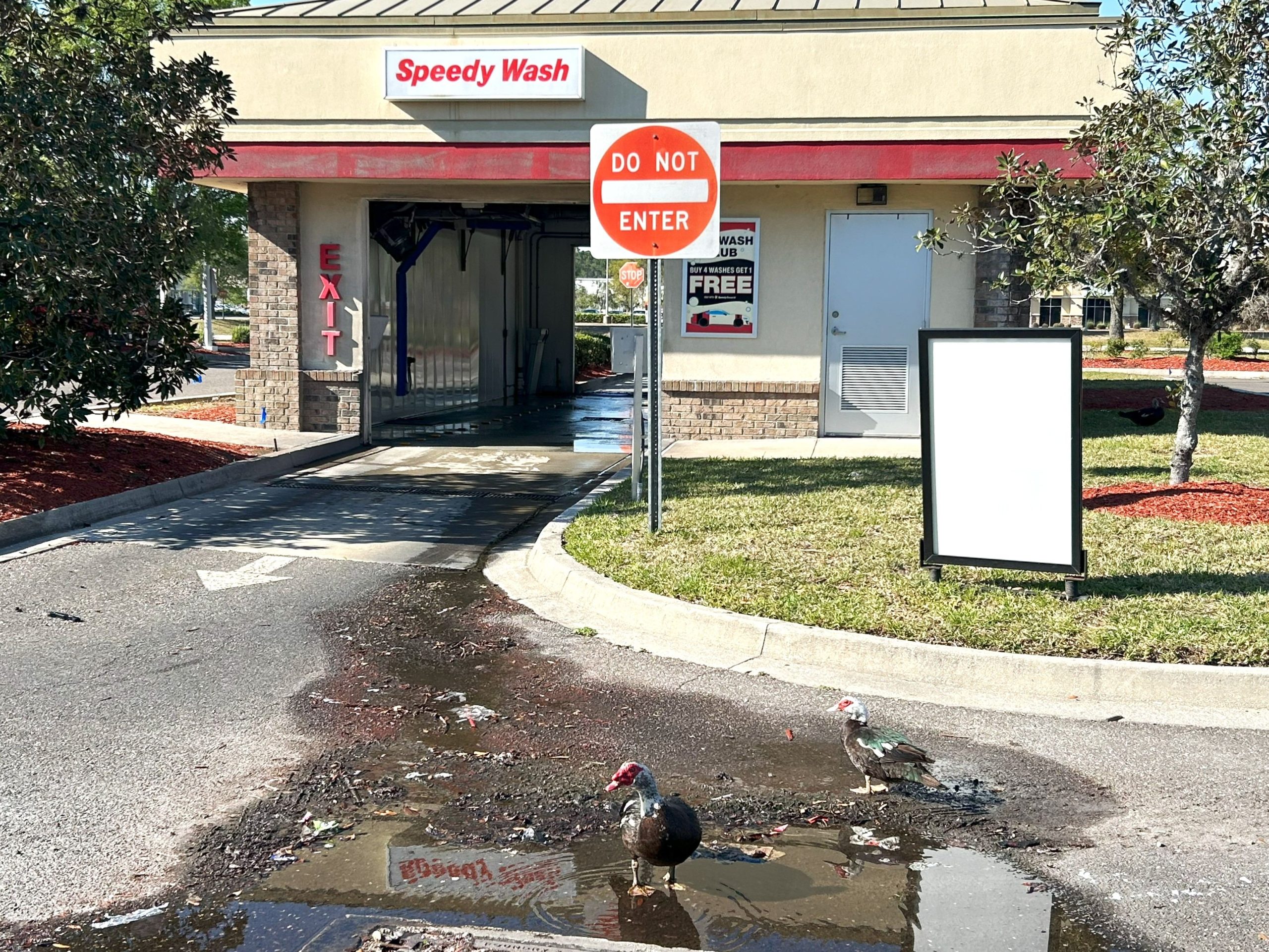
I headed south to Jacksonville. I stopped at Buc-ees on the way, my first visit to the mecca of junk shopping. I wasn’t planning on stopping at Fort George Island, on the coast, until the next day, but it was only mid-morning, and I had told my niece, with whom I was staying, that I’d get to her place after 5:00. My first stop was at the Ribault Club, a 1920s resort that has been restored as part of the Timucuan Historic Preserve. I was there to see an Indian Peafowl—a peacock—because they have established a self-sustaining population in the area, which makes them countable. As soon as I got out of my car, I heard one. I soon found it—on the roof of the resort. Half an hour later, I watched it stroll across the grounds and down to the shore. It passed within three feet of me. Lifer number 4, but not terribly rewarding. I paid my way into the nearby Huguenot Memorial Park and birded for a couple more hours. I saw a lot of birds, but the tide was out and the birds were a long way off. I took a ferry across the St. John’s River, then drove around the south end of Jacksonville to Orange Park, where my niece and her husband live. I grabbed a sandwich at Jersey Mike’s. On my way out of the parking lot, I saw two “wild” Muscovy Ducks at the entrance to a car wash. They are another non-native bird that has established a self-sustaining population and is, therefore, countable, although I’d seen them once before on a previous trip to Florida.
I still had a couple hours to kill, so I headed to the nearby Branan Field Wildlife Area to look for Bachman’s Sparrows, a species I’d seen years ago in Arkansas but which is now very rare in my state. There were several singing in the pine woods, and I finally got one to cooperate and give me good photo opportunities. I got to my niece’s a little after 5:00.
WEDNESDAY
While I was at Huguenot Memorial Park on Tuesday, another birder saw a Seaside Sparrow there, so I had to go back. I fought traffic around Jacksonville again, spent the entire morning searching for the sparrow in the park and at two other nearby places where they had been seen recently, and saw zero. It was only noon. I took the ferry across the St. John’s River again.
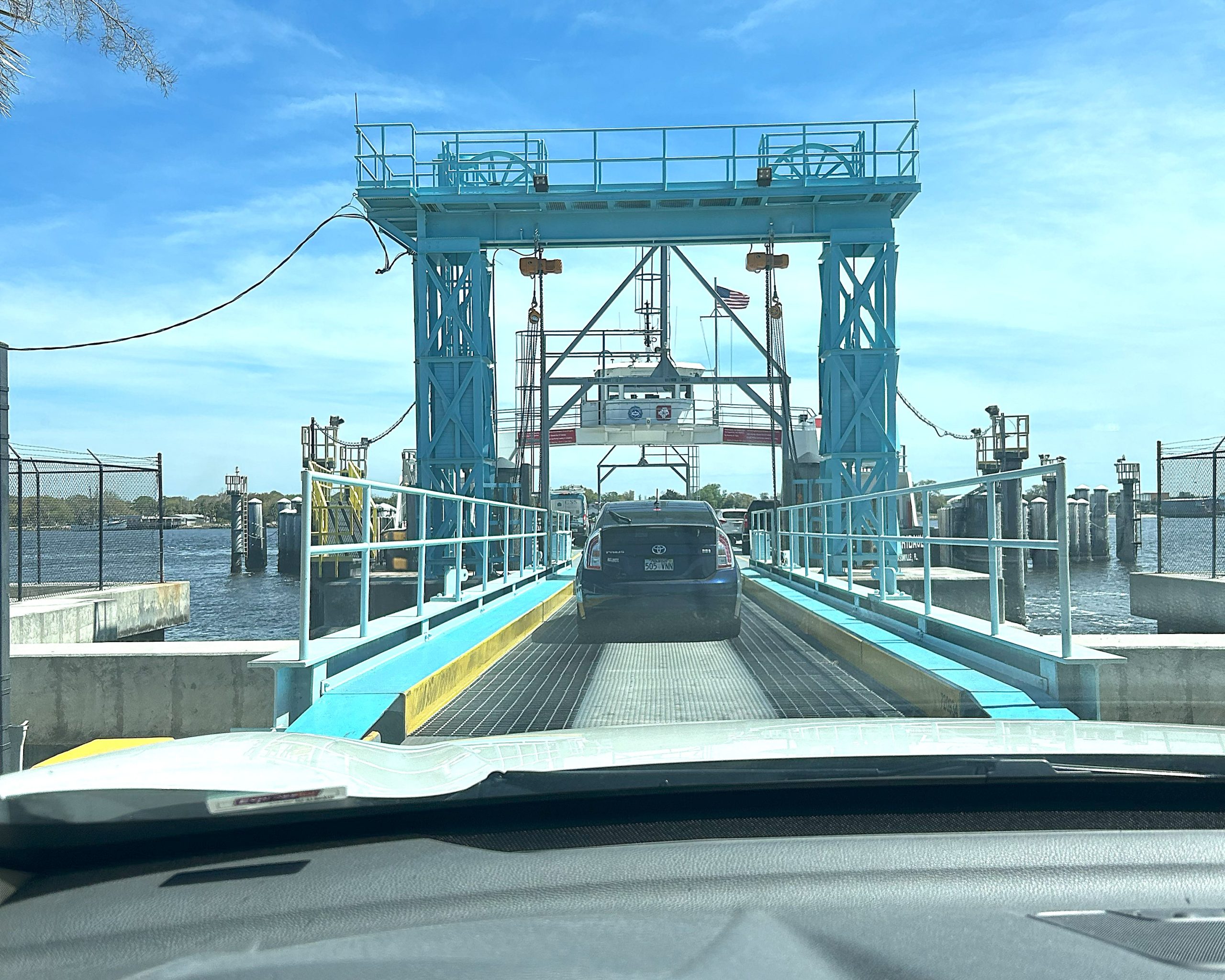
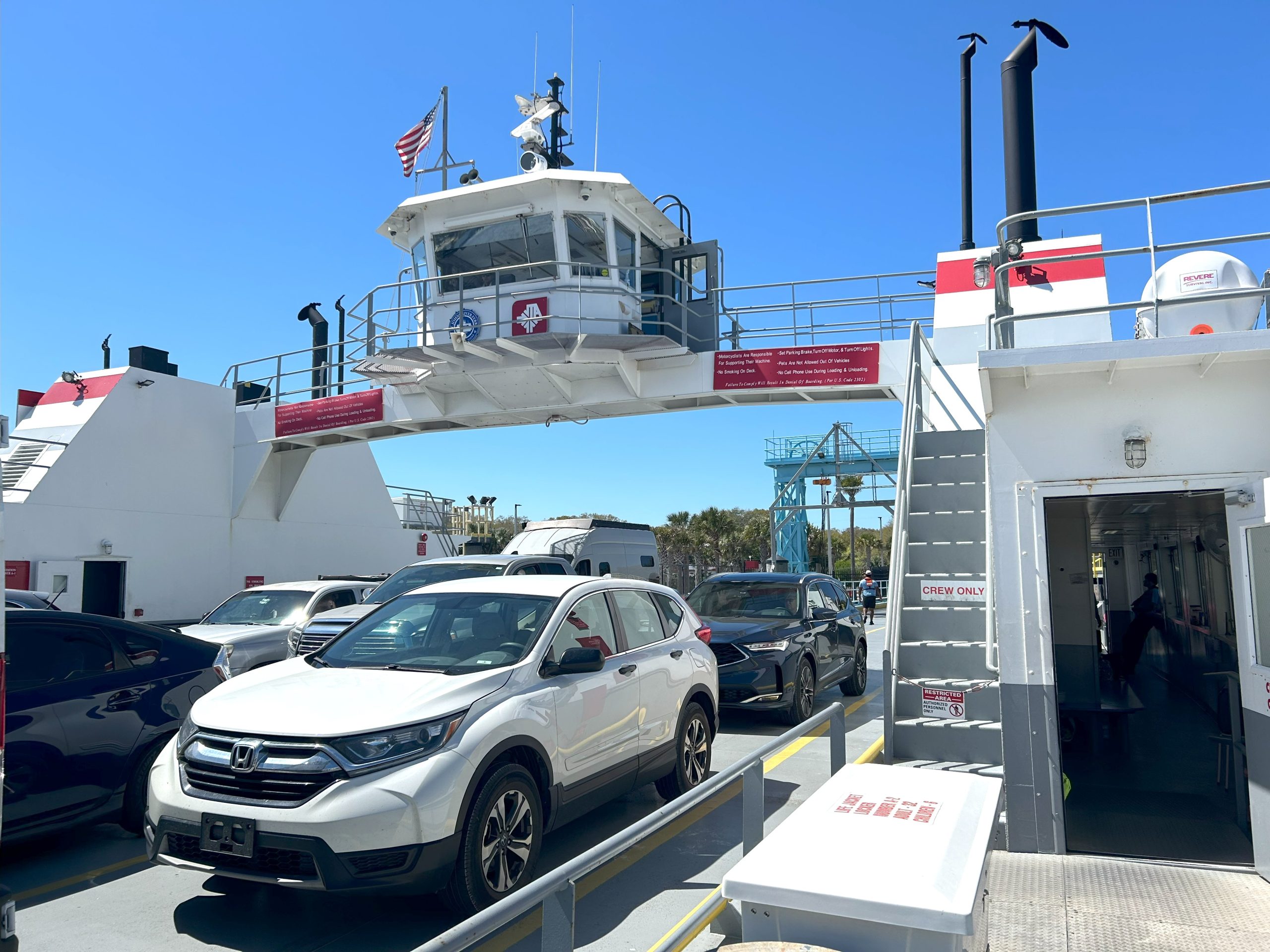
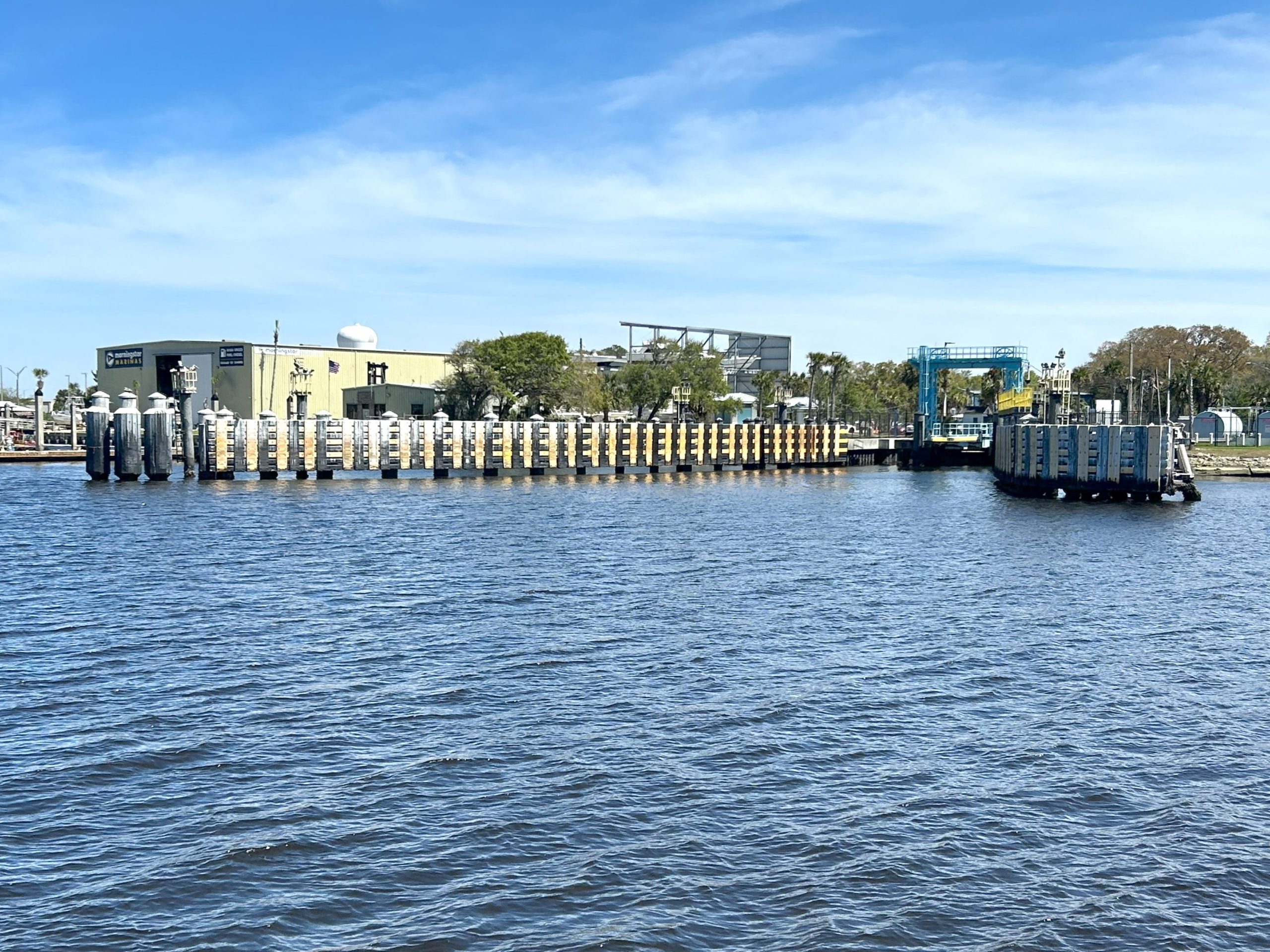
I spent the afternoon at Hanna Park, which my niece had recommended. The park is on the shore directly east of Jacksonville. Northern Gannet was one of my target species for the trip, although nobody had given me much hope of seeing one from shore. I set up my scope in a shaded picnic pavilion and spent an hour gazing out to sea, looking at every tern, gull, and pelican that flew by. I finally spotted a Gannet and got a five-minute, albeit distant, look at it. I saw it well enough to be sure of my i.d.—lifer five of the trip. I went to the inland part of the park and walked around the woods and lake for a couple hours. There were birds, the most exciting being a Cape May Warbler, an old friend from Illinois and Wisconsin that doesn’t show up in Colorado or Arkansas. I even managed to take a couple not terrible photos. I headed for my niece’s, and even though I specifically chose a route around Jacksonville, My GPS decided otherwise and sent me right through the city during rush hour. My route even took me onto city streets, complete with slummy neighborhoods, stop lights, and stop-and-go traffic. My niece and her husband ordered pizza for supper, and I chatted with them for a bit.
THURSDAY
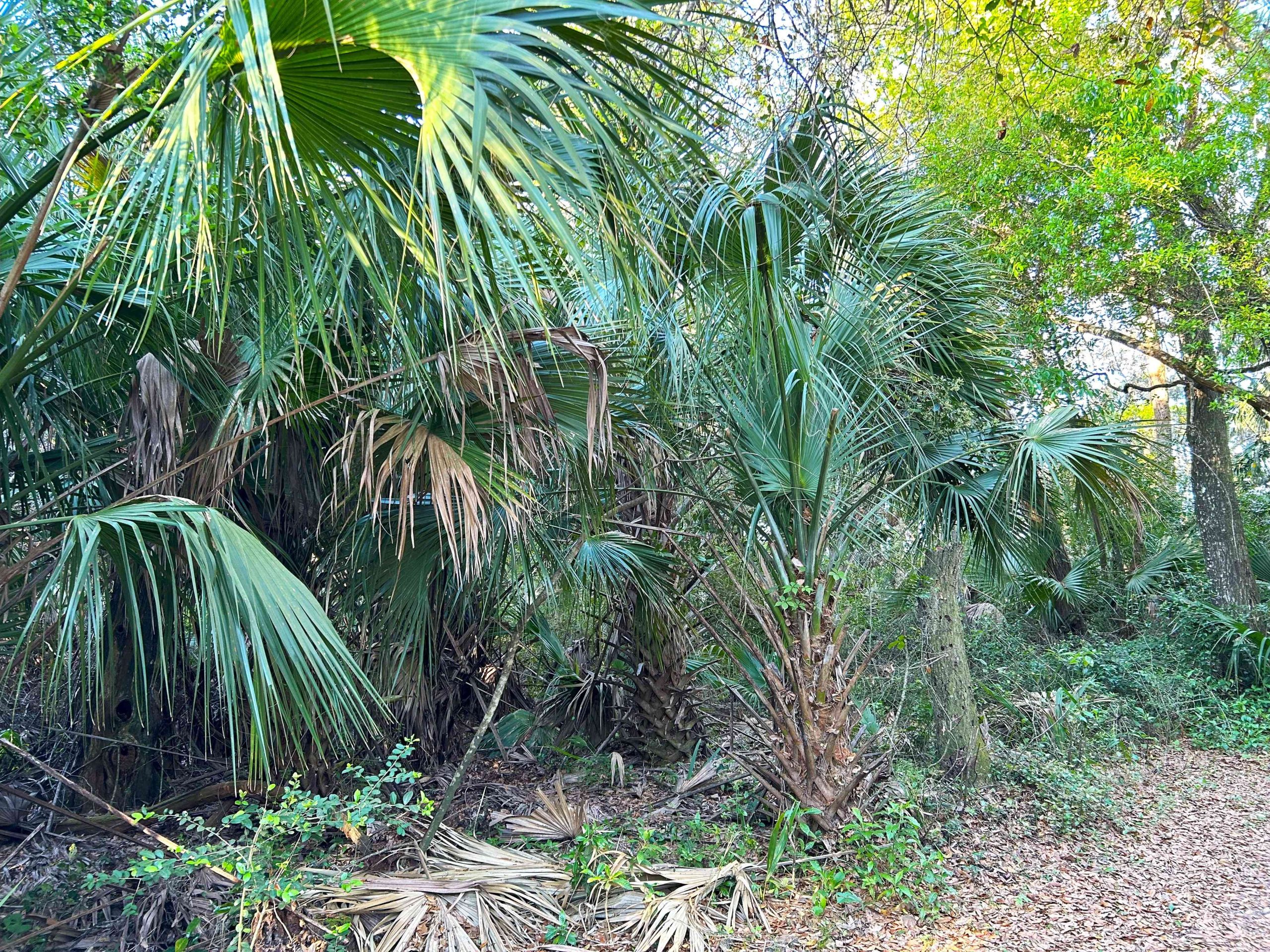
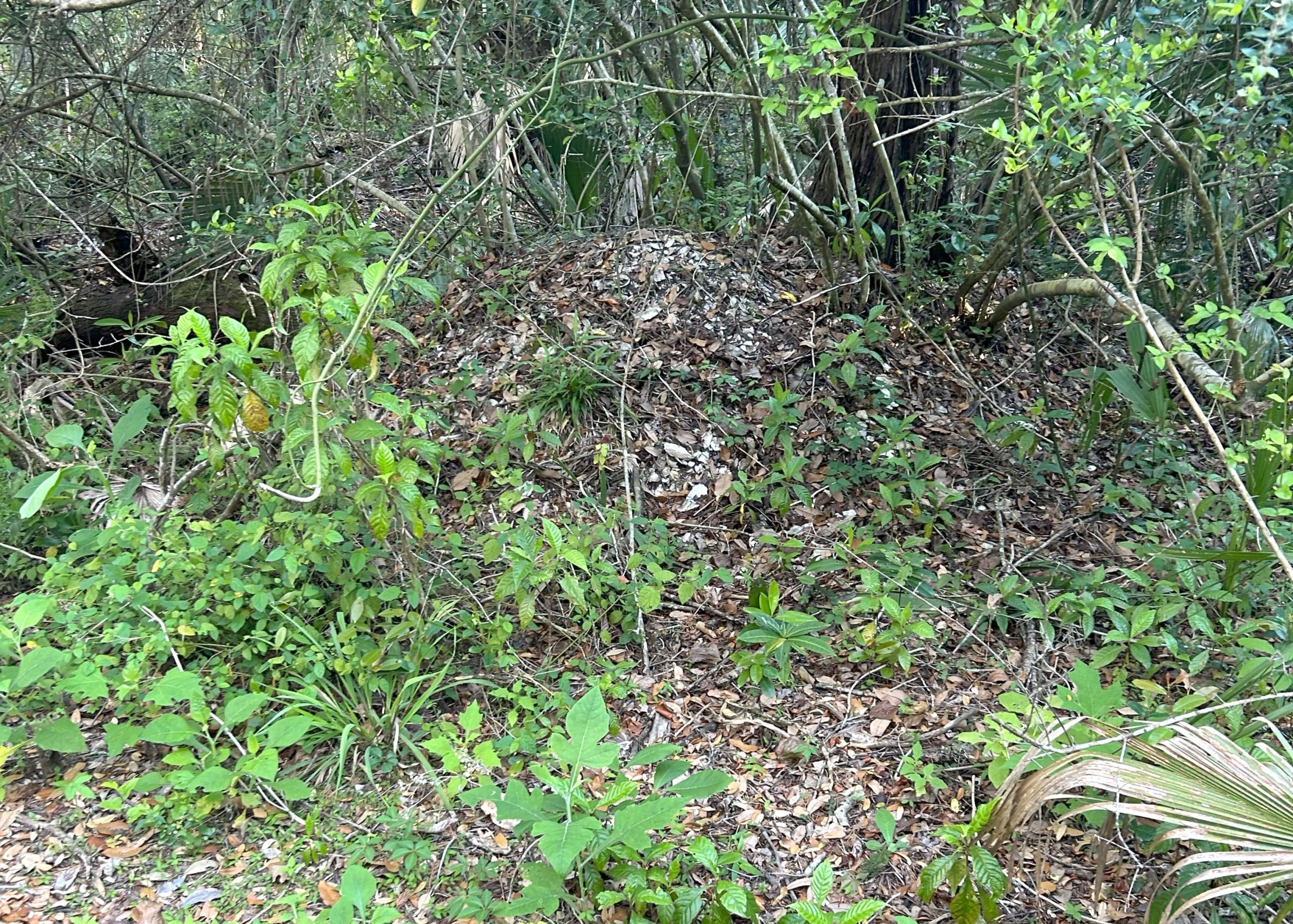
Thursday, I headed south. I hadn’t planned to this soon in the trip, but I’d been to the places and seen the birds I’d expected to find around Jacksonville—except a Seaside Sparrow, of course. I stopped in Marineland first, where Nanday Parakeets have established a home, but in an hour of walking all over the town, I saw none. In the River to Sea Preserve, I walked though a palmetto forest and saw several shell middens where Indians had piled their village refuse.
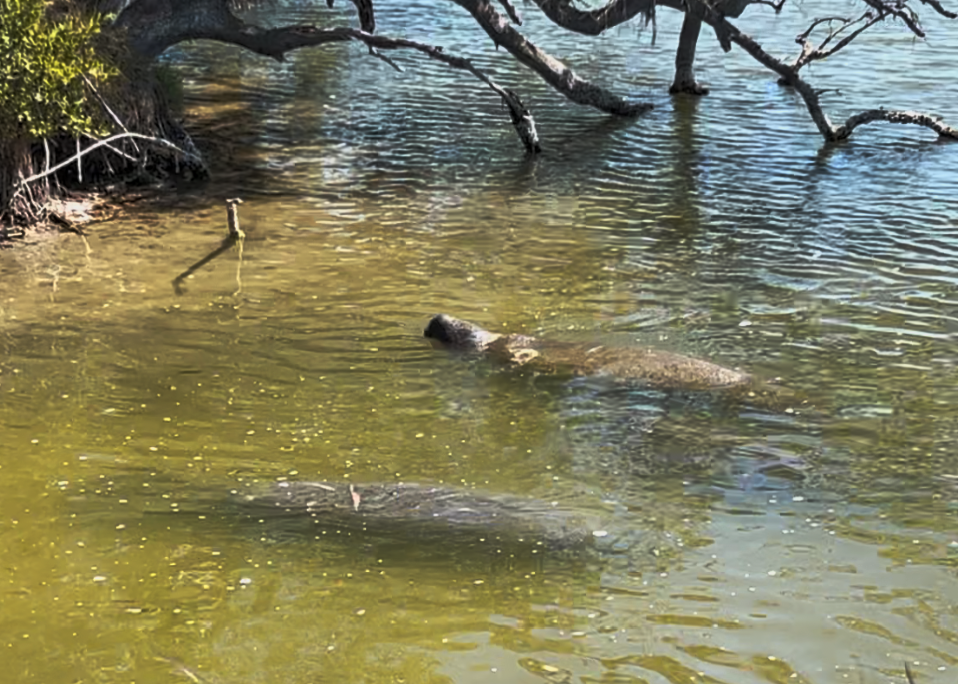
I drove down to Merritt Island NWR. I’d been there back in 1999 and had a great time. My goals were to get photos of American Flamingos (a flock of which had been hanging out in the Indian River for a couple months) Florida Scrub-Jays, and Reddish Egrets. Check, check, and check. To get close enough to the flamingos for a halfway decent photo, I hiked out to a point about 200 yards from the parking lot. The trace of a trail kept disappearing, and I finally had to wade in three-inch deep water, soaking my shoes and socks, of course. But I’d thought ahead and had spare dry ones in the car. The last time I was at Merritt Island, it was May—there were a lot fewer birds around this time. I saw several Manatees lolling about in the Haulover Canal.
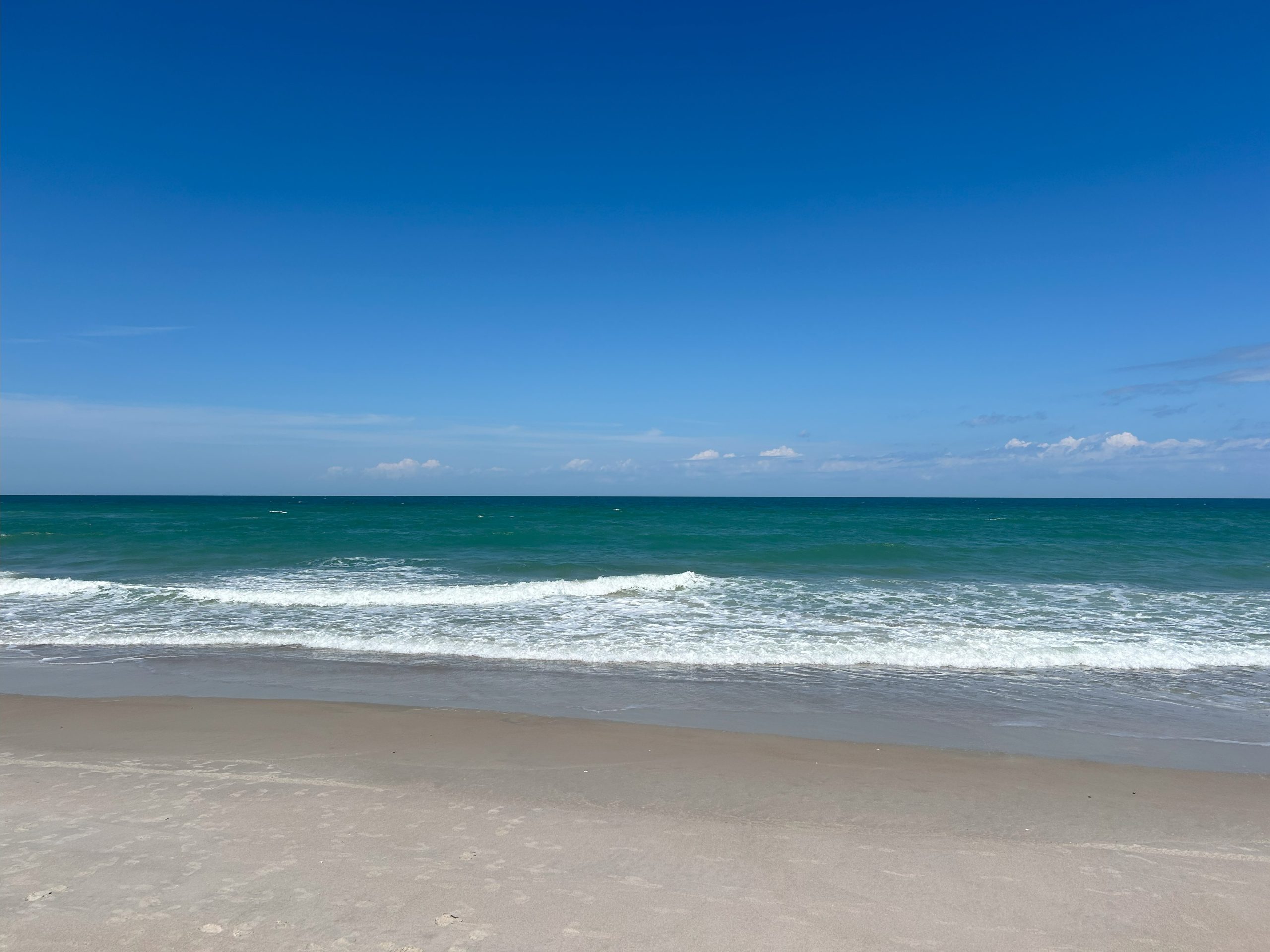
I drove out to Canaveral National Seashore and birded along the beach for a bit. I may have seen a Right Whale. They’re really rare, but they do occur along that coast. I saw something large break the surface about 300 yards out. It looked too big to be a dolphin, and there was no dorsal fin. But I didn’t see it well enough to be sure.

I headed for Orlando, and again, in spite of wishing otherwise, my GPS took me right through the city. I stayed two nights at a Hampton Inn. It was $127 for the first night and $180 for the second (because it was a weekend). But I’d had a frustrating couple of days and decided to indulge myself. The lady at the desk did upgrade me to a king suite at no extra charge because I’m a member of the Hilton Club. My room looked out across a lake, which was exciting later.
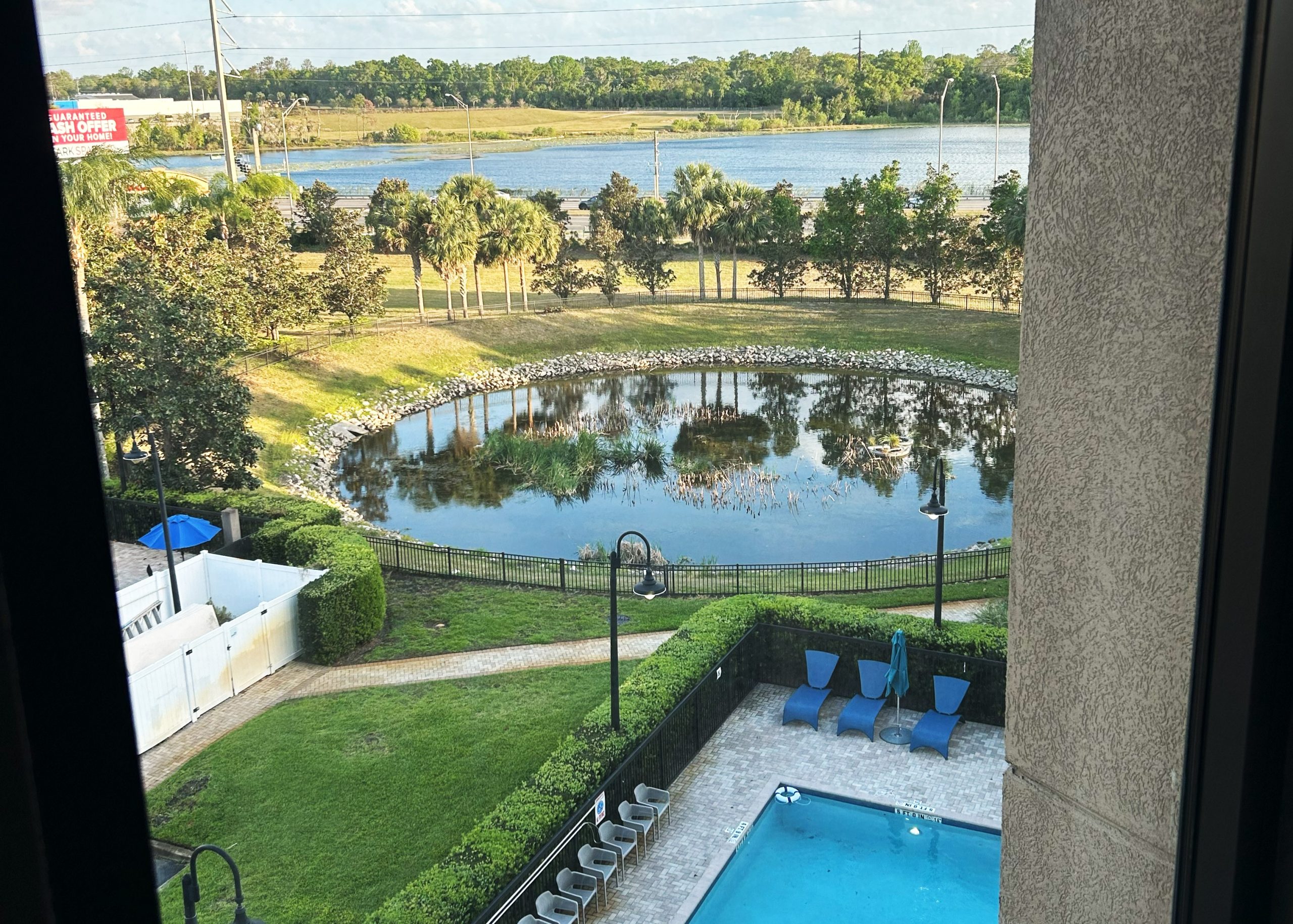
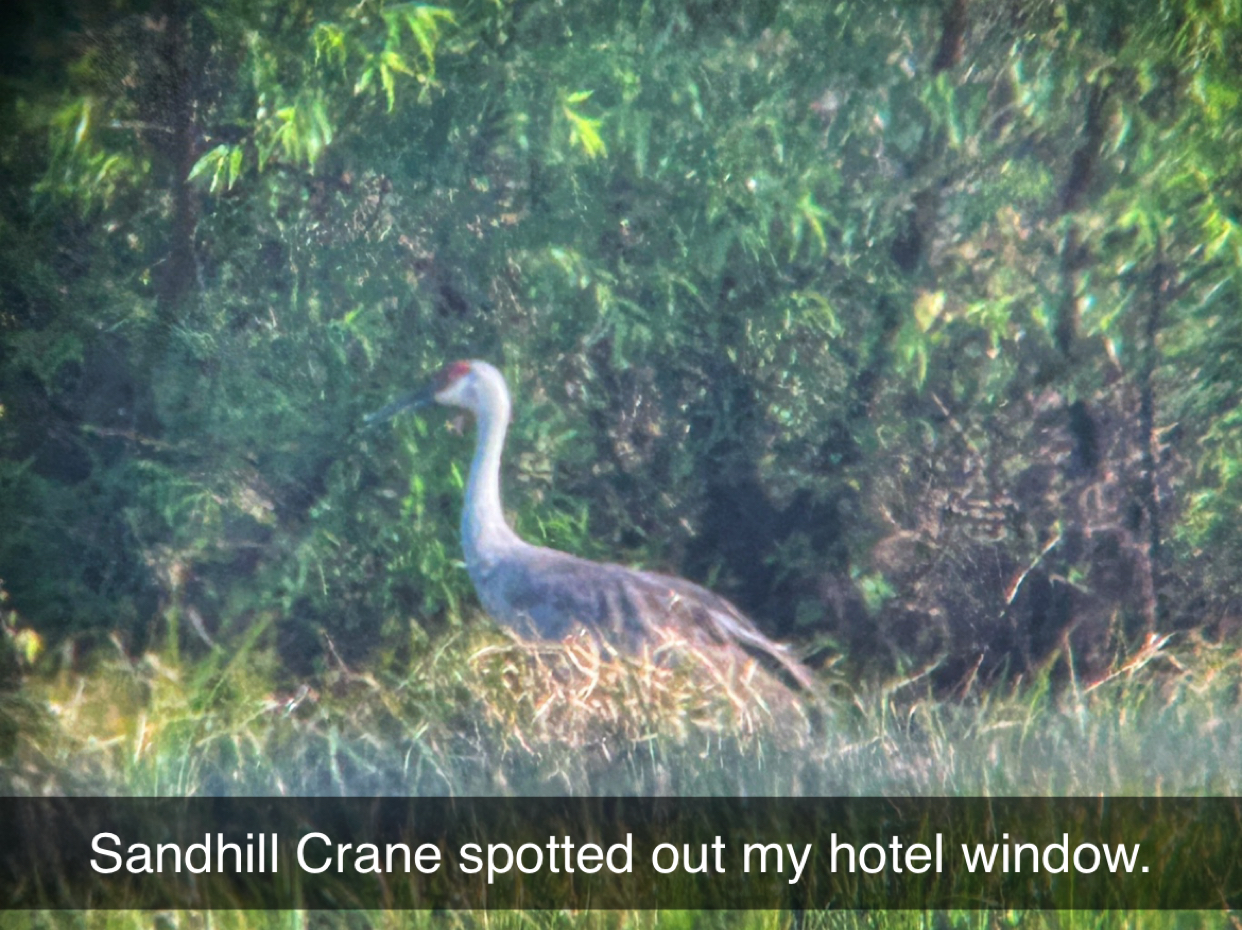
But first, I grabbed supper at a nearby Culver’s and headed half an hour south to Newton Park on Lake Apopka. I was there briefly one morning in January, 2020, while in Orlando for a convention with coworkers. My boss was a jerk and only let me off for one hour of the convention, but I used the hour to drive to the park at dawn and see two lifers and tons of other birds. What a difference a few years and a different time of day make. Much of the marsh has been cut down, and what is left is cluttered with trash. The park was crawling with people, including several guys showing off their fancy cars and demonstrating how loud they could be. I didn’t stay long, and the hour round-trip definitely wasn’t worth it. Almost back at my hotel, I spotted two Sandhill Cranes along a retention pond. The next evening, I spotted them from my hotel room as they foraged along the shore of the lake.
I also saw a hawk fly over. It was entirely black, so far as I could see, which made it a good candidate to be a Short-tailed Hawk, one of my target birds, but I couldn’t be sure. Somebody who birds and lives or works in the area reports them from around there regularly, but that’s not enough to go on for a lifer.
FRIDAY
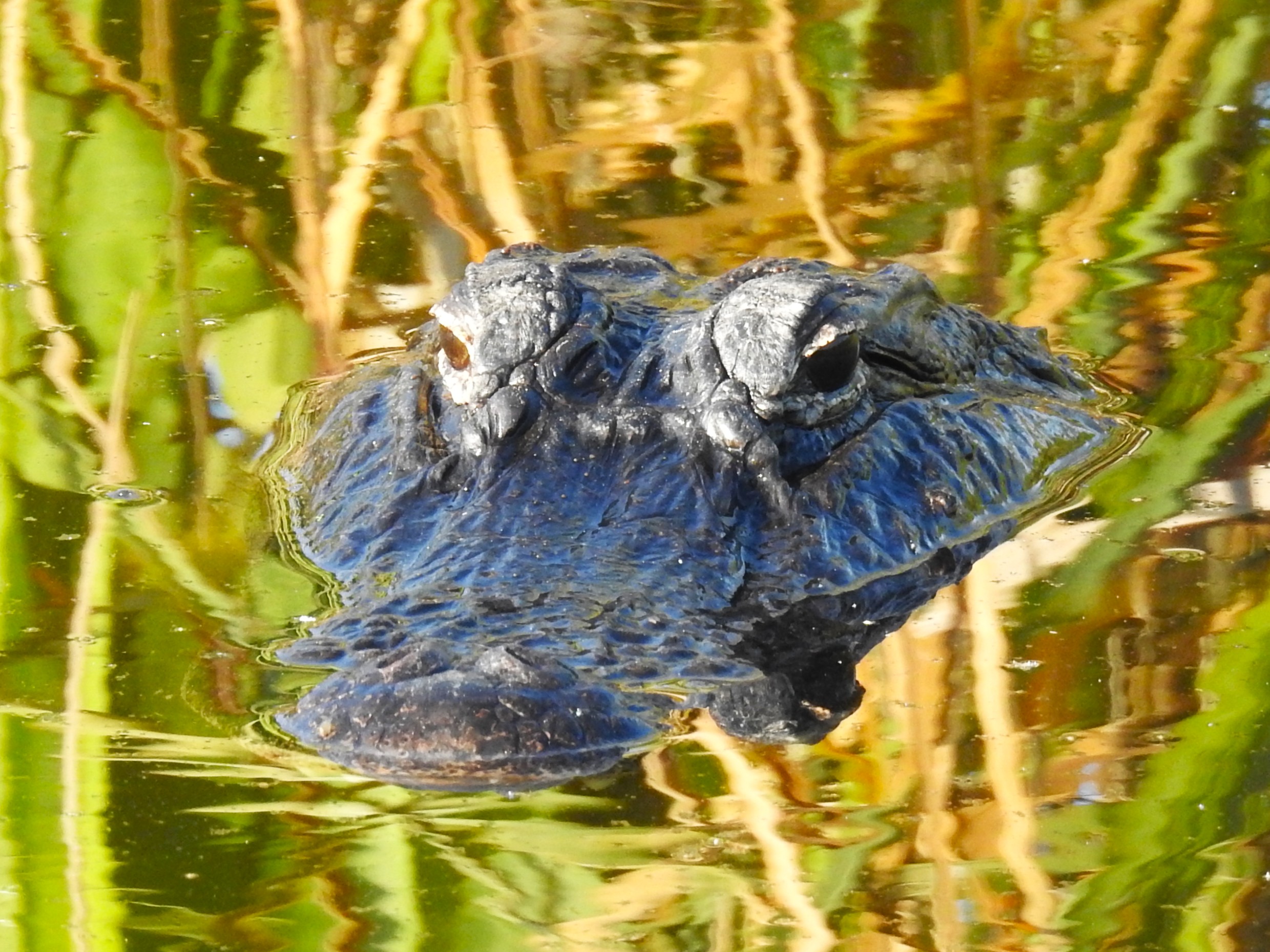
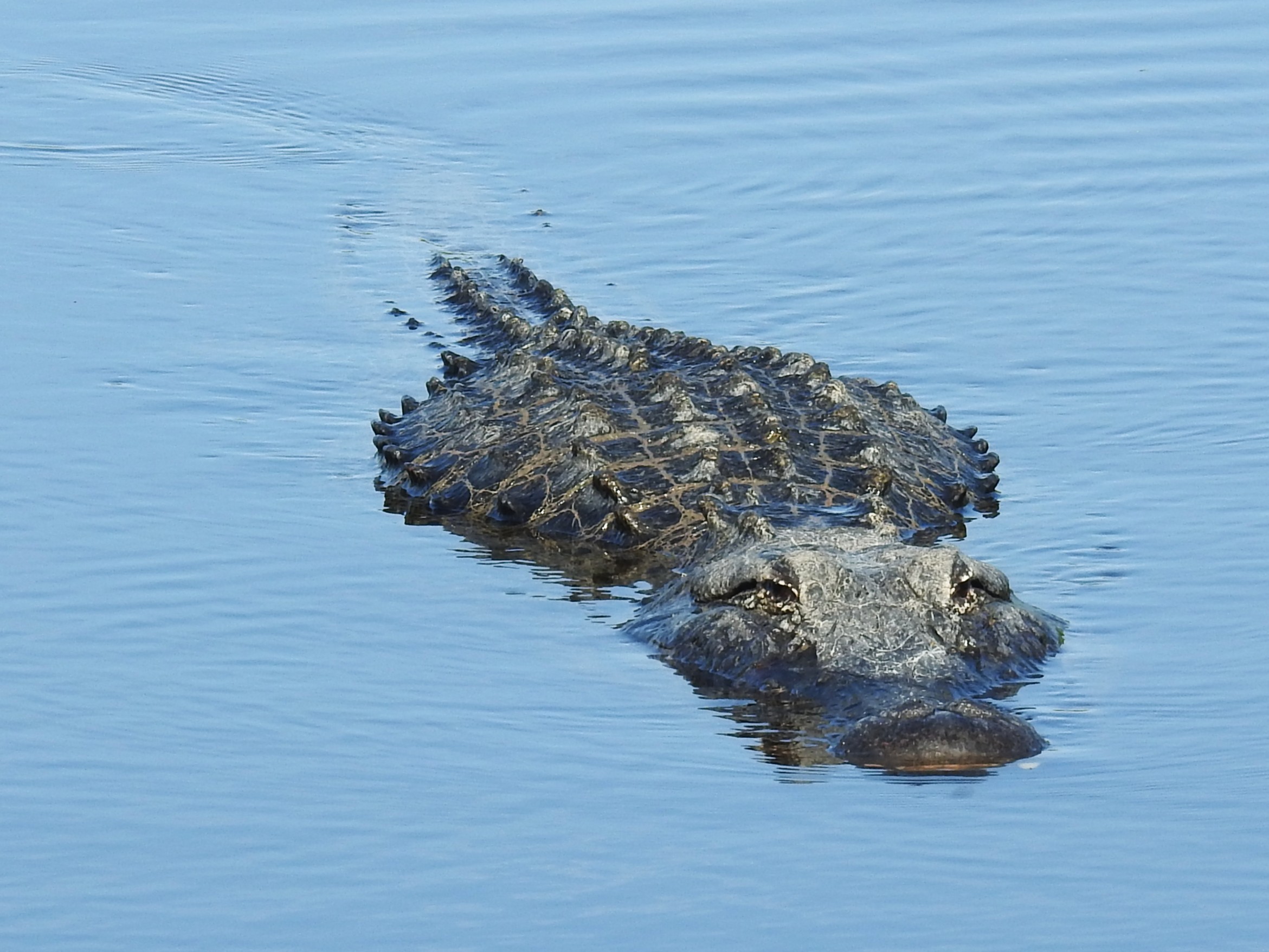
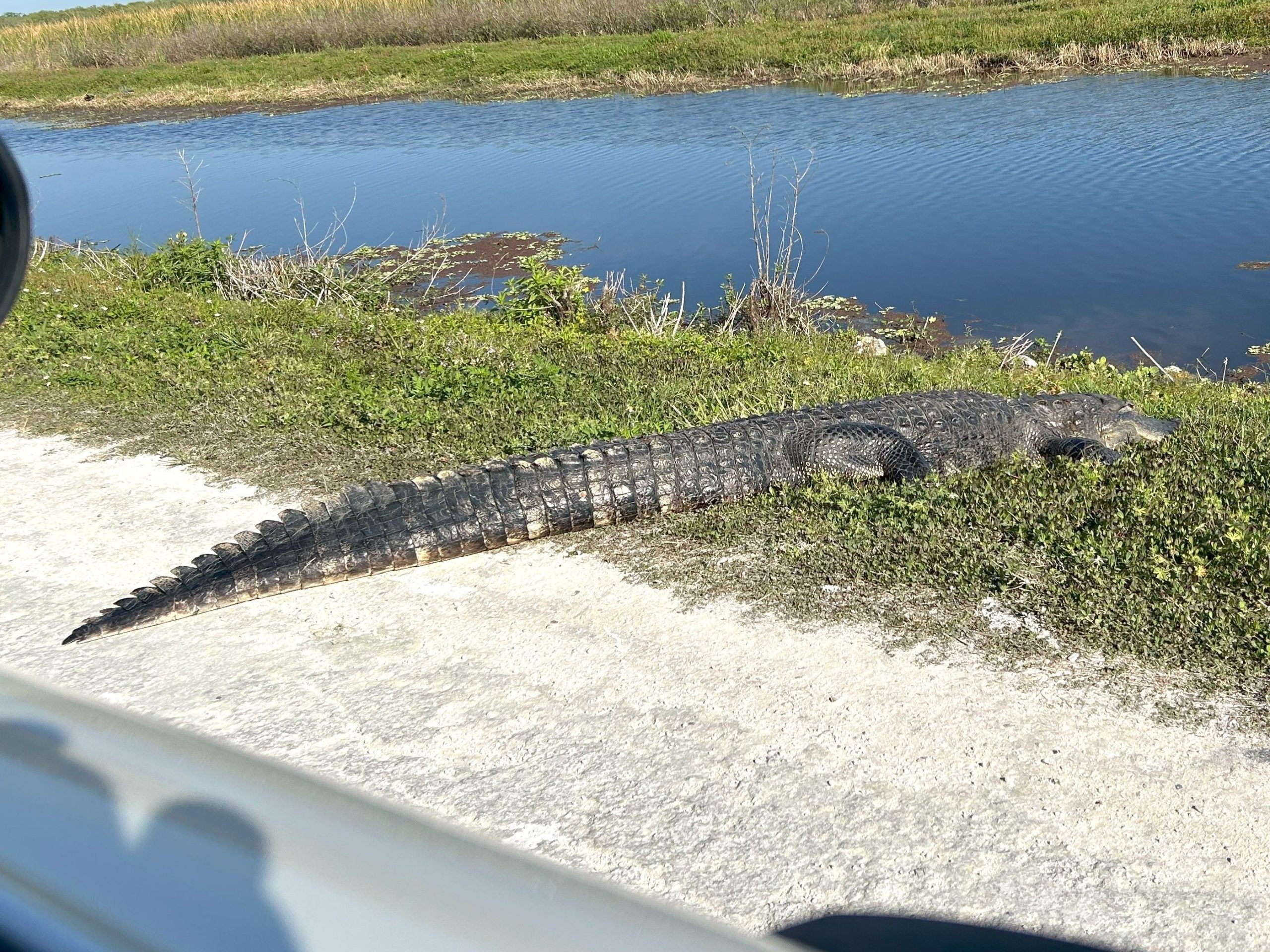
Friday I was at the entrance to the Lake Apopka Wildlife Drive right when it opened at dawn. I found out about this place back in 2020, but didn’t have time to go then. And I’ve regretted it ever since. This was one place that didn’t disappoint. There were tons of birds around, including Gray-headed Swamphens, another introduced species and another lifer. I saw lots of Alligators too, including some huge ones.
I met a local birder who was very friendly and eager to help. I told him about my failure to see a Seaside Sparrow, and he told me about a small park in St. Augustine that was the go-to spot for Florida birders. When I asked about Short-tailed Hawks, he phoned a friend who works at Disney, where they’re often seen. The friend told me exactly where to look, but warned me that Disney security would be on my tail. I drove down, stopping at a Skyline Chili on the way. Covid has robbed me of my taste for some things I used to enjoy and still crave. But I can still taste Cincinnati chili, and I still love it. Since I’d been warned about parking in Disney near where the hawks are frequently seen, I parked a mile up the road at Coronado Springs (where I stayed a couple times while at conventions). I walked down to a service area where there are martin houses. Short-tailed Hawks eat birds, so they show up near the houses, although the guy on the phone said they’re more regular when there are young out of the nest boxes. I stood there watching for hawks for about 20 minutes when … you guessed it. Security showed up. I walked up to the car and explained what I was doing. The guy believed me, and was understanding, but said that Disney didn’t like people staring into their behind-the-scenes areas. I mentioned that I’d been very careful not to walk past any signs that said I shouldn’t be there. He agreed, but said that if I stayed, his manager “would want to talk to me.” I walked back to the resort. Instead of going right to my car, I walked around the perimeter on the roadway. There were very few cars, but before I’d gotten all the way around, a bus stopped and the driver yelled at me. He told me I couldn’t walk where cars go, and when I didn’t immediately respond, he threatened to call security. I still hadn’t gone anywhere that was marked off limits. But Disney hates nonconformity. They can’t stand seeing people doing non-Disney stuff. It didn’t surprise me. I made sure they didn’t get a penny of my money. I drove up to Downtown Disney where, back in the day, I’d found some walks where I could stroll and see some birds. But the area is changed. The “nature” sections have been replaced by a golf course, and there are fences where there didn’t used to be so they can corral visitors to the authorized spots. One Disney staff member saw my binoculars and told me where to go to see an eagle’s nest. But when I went there, another staff member told me I couldn’t be there. Both were nice about it. Of the four people who talked to me, three were friendly, I’ll give them that. But this was ridiculous. I gave up and headed back to my hotel. I saw there was a state park, Wekiwa Springs, just a few miles from my hotel, so I drove over. This turned into another frustrating story. At the entrance booth, a guy told me I needed a reservation to get in. He gave me a brochure that explained how to make a reservation and told me I’d have to leave the park, make a reservation, and come back. I pulled around the booth and parked in the grass along the road. I tried to make a reservation, but first had to set up an account. This took a long time on my phone and included my credit card info. I finally got it all in, then went to the other site and made my reservation. Half an hour later, I returned to the booth. The guy looked up my reservation and let me enter the park — which was nearly empty. Reservations for weekends and busy days, OK. But on days when the park isn’t busy, they should let people pay at the booth and go in. Stupid system. At the second place I went, by the springs, I spotted a Swall0w-tailed Kite circling low over the trees. It popped into view every few seconds, giving me great looks, but I only managed one lousy photo. I walked all around the springs, dodging people in swim suits who would have been better off not wearing swim suits, but I didn’t see the kite again, or much else.
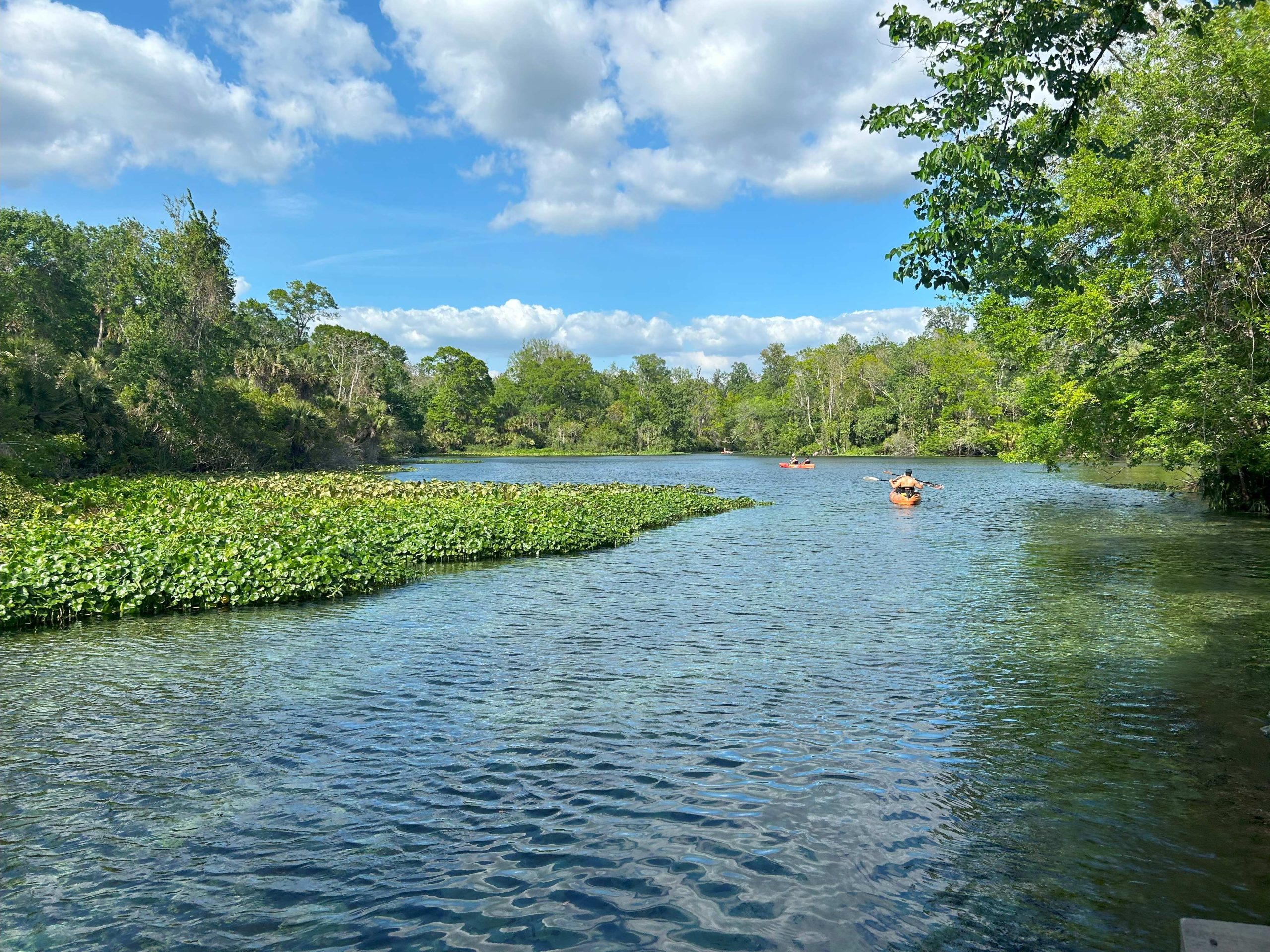
I headed back to my hotel after buying some yogurt and other stuff at a Walmart. I spent the evening looking out the window through my scope, hoping to see a Short-tailed Hawk. I finally gave up and took a shower. When I returned to the window, a hawk was perched on a tree stump across the lake. My quick view convinced me it wasn’t a Red-tail or a Red-shoulder, which made the most likely candidate a Short-tailed. I grabbed my phone and tried digiscoping it, but just then some guy came by with his large dog and scared the hawk off. I still think it may have been a Short-tailed, but I didn’t see it well enough to count it.
SATURDAY
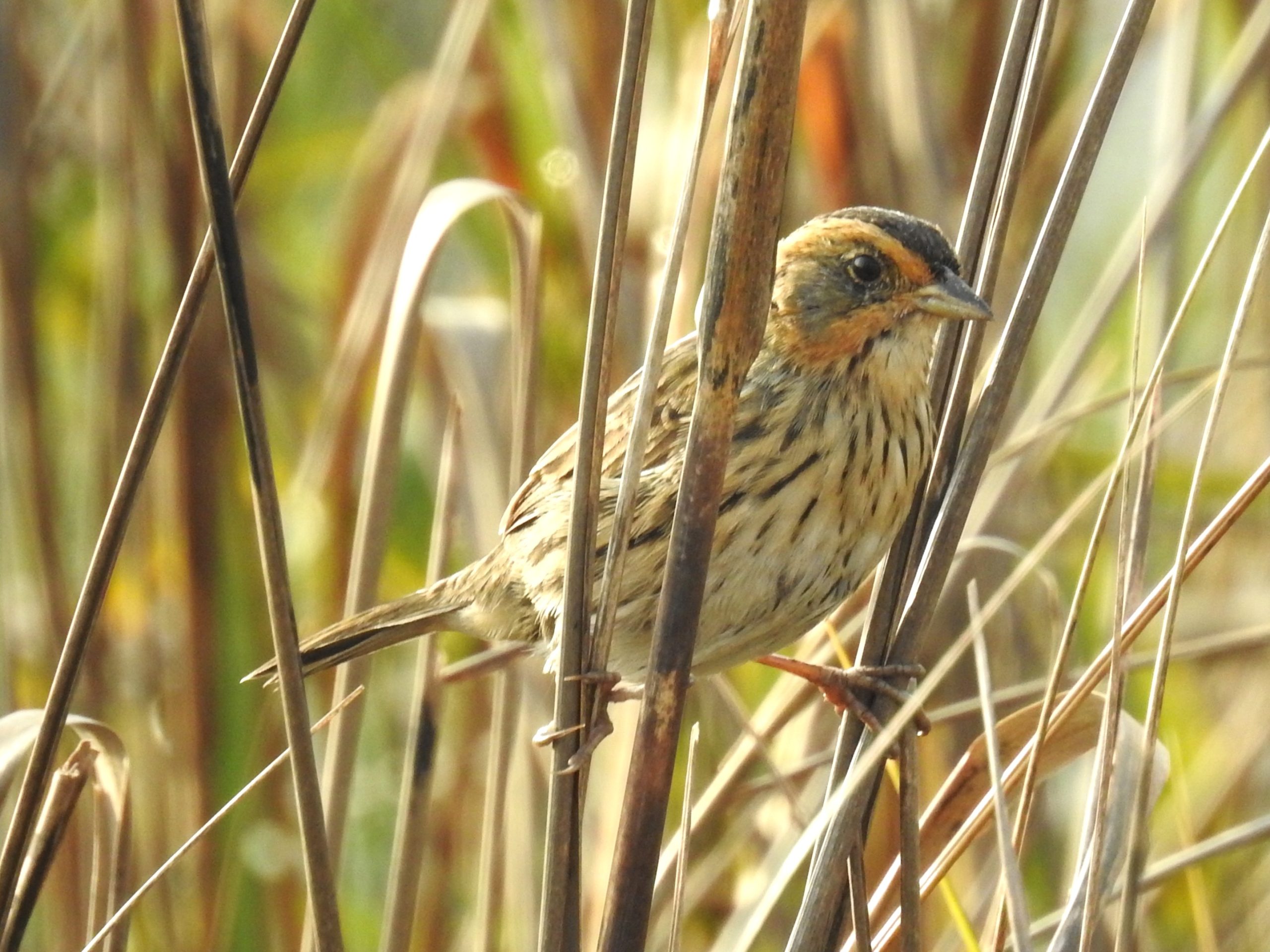
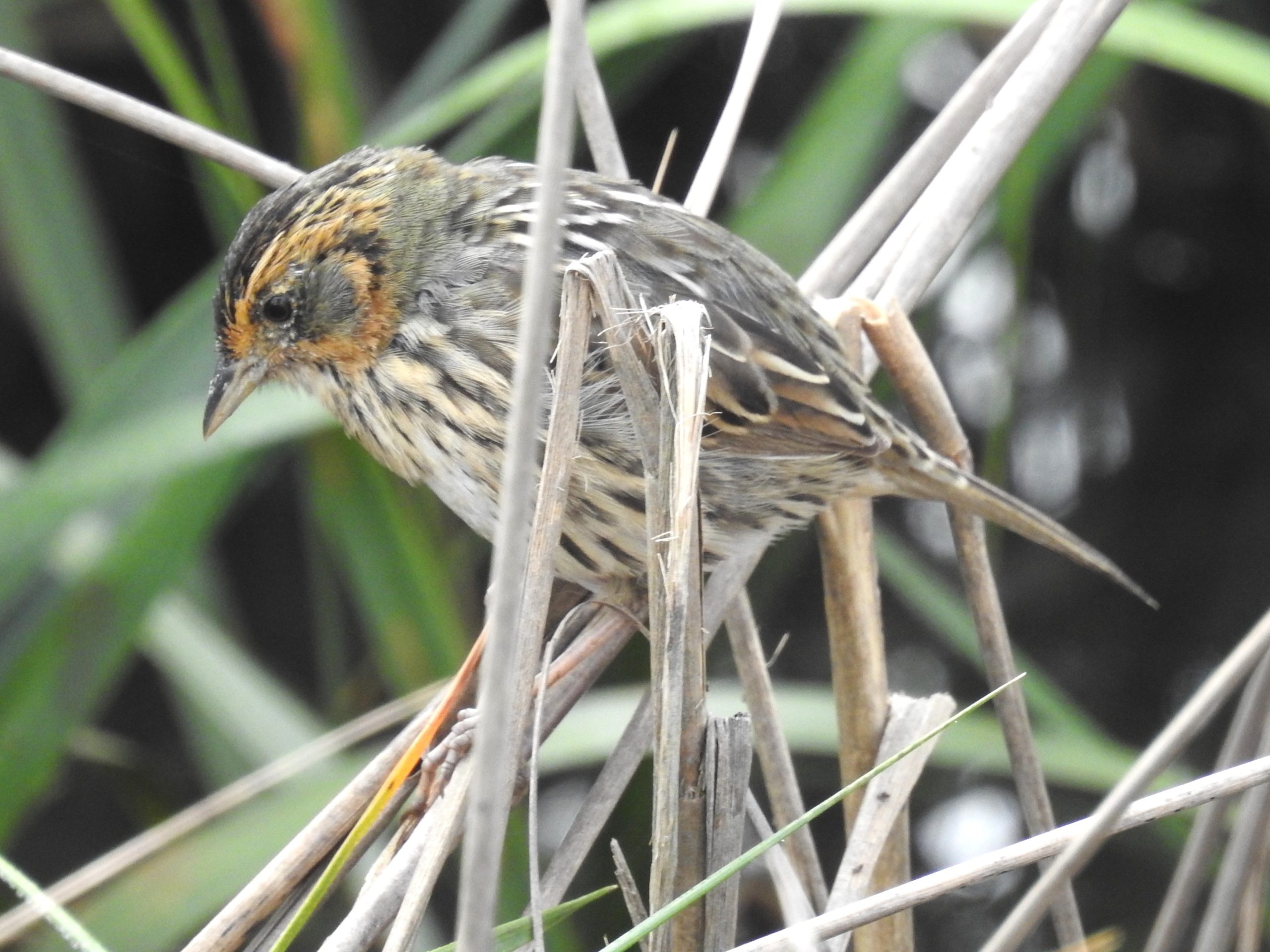
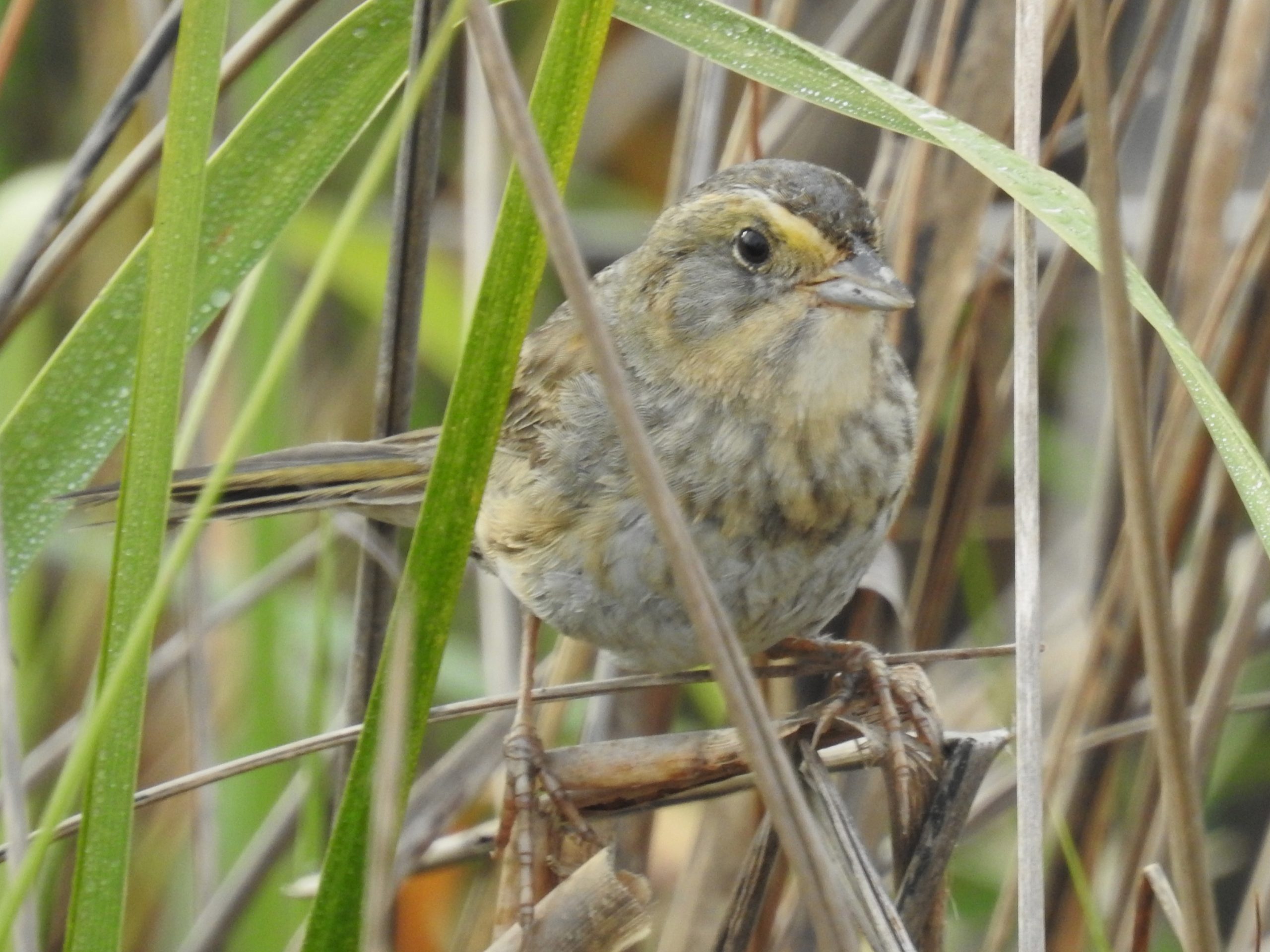
Saturday. I got up before dawn and headed back north to St. Augustine. High tide at the park was 9:11, and that’s when marsh sparrows are easiest to find, so I had to be there by then. I ended up getting there an hour earlier and before long heard, and then saw, a Seaside Sparrow, lifer number 7, and the bird that, for some reason, felt like the make-or-break species for the trip. For good measure, several Nelson’s Sparrows were chasing through the grass and giving me good views. Nelson’s wasn’t a lifer, but I’d seen one only once before. Since I’d seen two of the marsh sparrows, I decided to go for the trifecta. I played the song of a Saltmarsh Sparrow and soon had lifer number 8. I watched them for about 20 minutes, then left, still before high tide. I stopped at a nearby Buc-ees for breakfast, then headed west. My next stop was a park near Gainesville where Short-tailed Hawks are frequently seen. I wandered and watched for about two hours, but didn’t see one. I did spot a far-off Peregrine Falcon. I continued west to Tallahassee. This had been my end goal for the day, but it was only 3:00 when I got there. I stopped at a Firehouse Sub and considered my options while I ate. I decided to drive another three hours to Pensacola. The price at the Hampton Inn there was ridiculous, so I went to a nearby Radisson, which was a little ragged, but I didn’t die. It rained in the evening and was forecasted to rain in the morning.
SUNDAY
Sunday I drove an hour and a half west and then south to Dauphin Island. The causeway out to the island was an odd place to be on a cloudy morning.
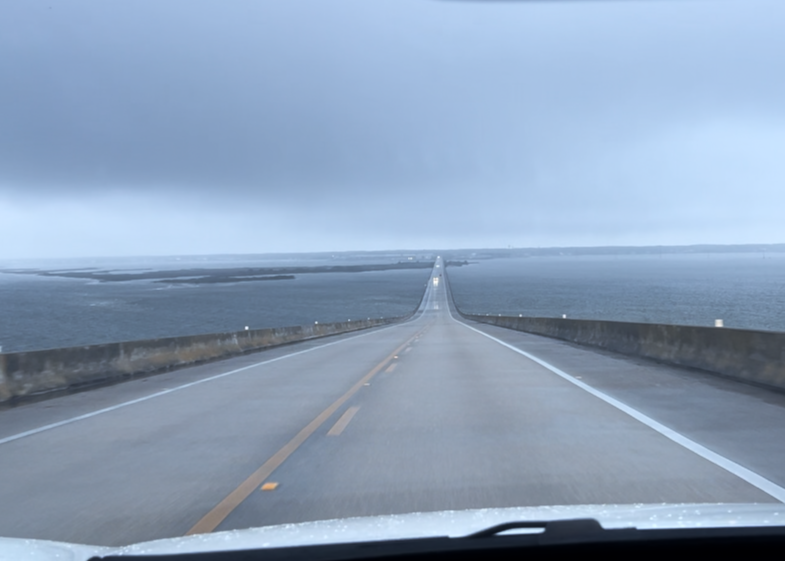
A rare Gray Gull had been seen there for the past week, but it was gone by this day. The last time it was seen was Friday morning. I hung around looking for a Gull-billed Tern, the last goal lifer I had a shot at. A few had been seen recently. I met a couple from Indiana there to see the gull. I mentioned the tern to them and asked them to let me know if they saw one. After an hour or so, I went across the street to Fort Gaines, a Civil War fort that saw action in the Battle of Mobile Bay—the “damn the torpedoes, full speed ahead” battle.
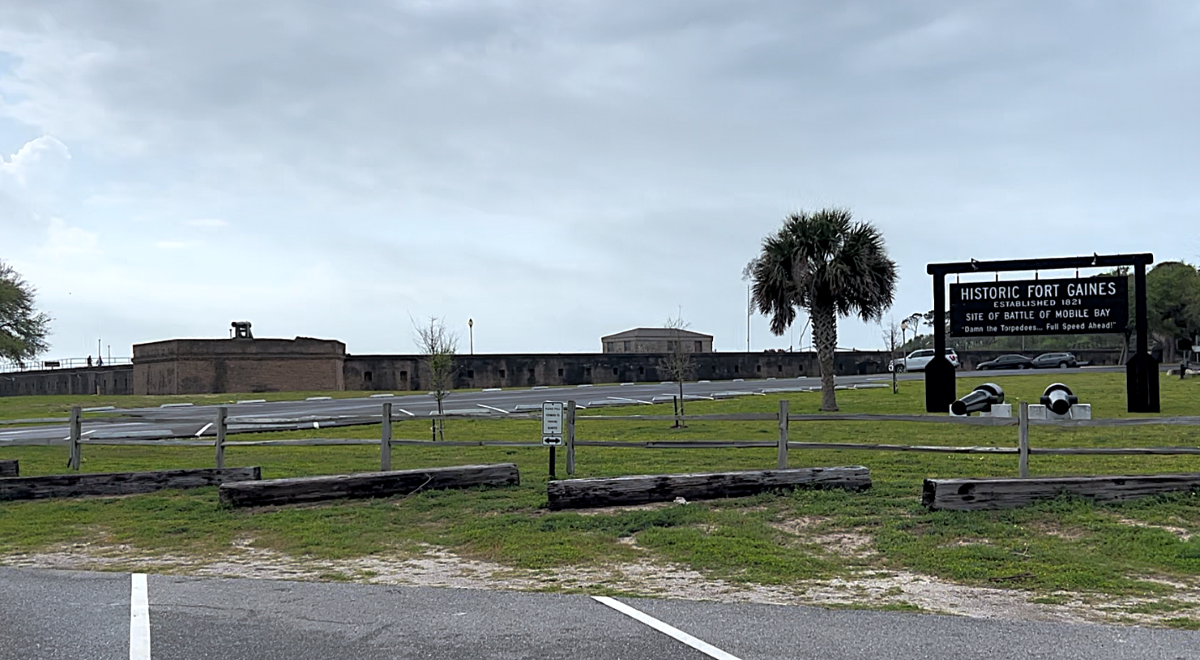
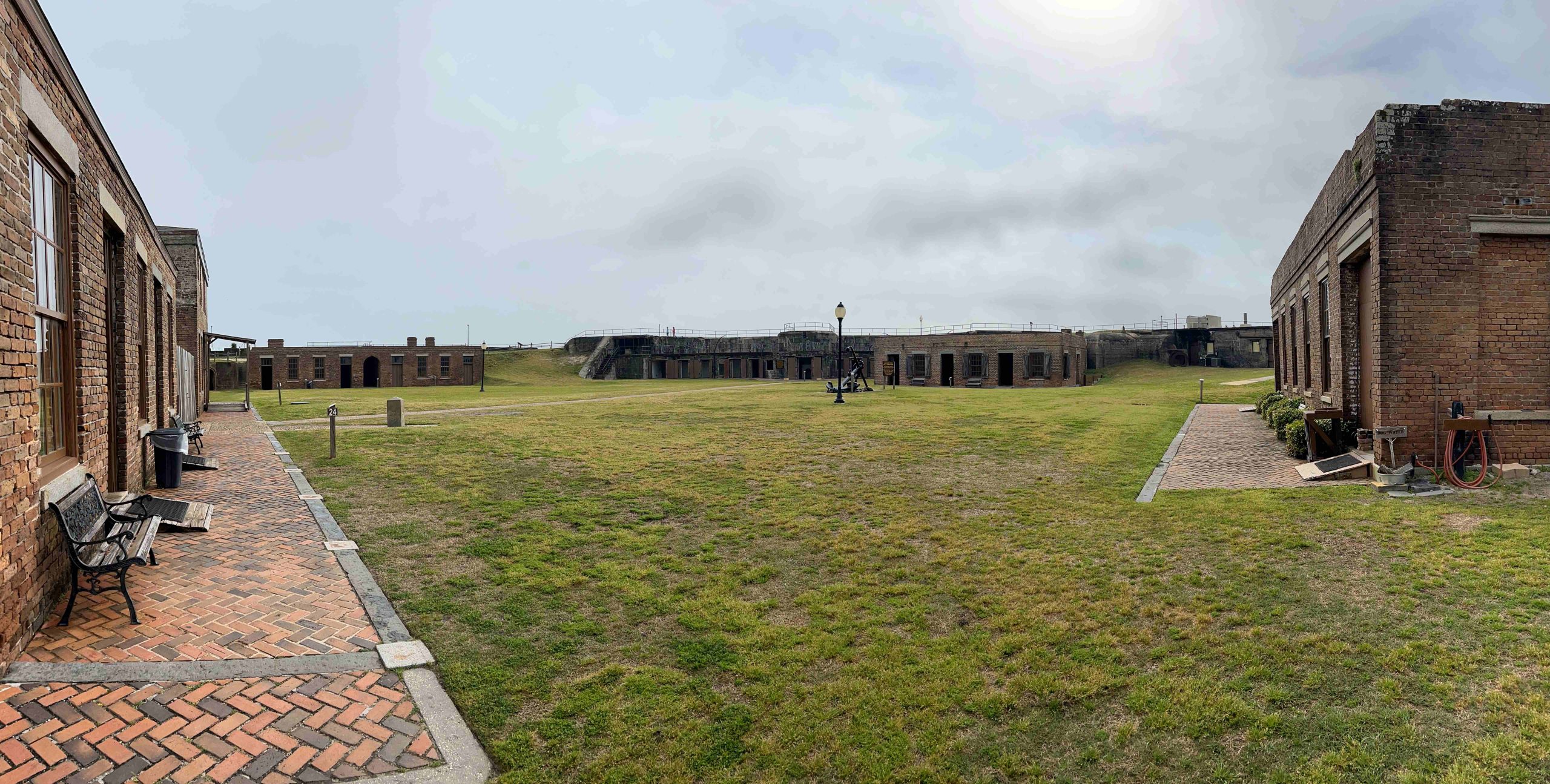
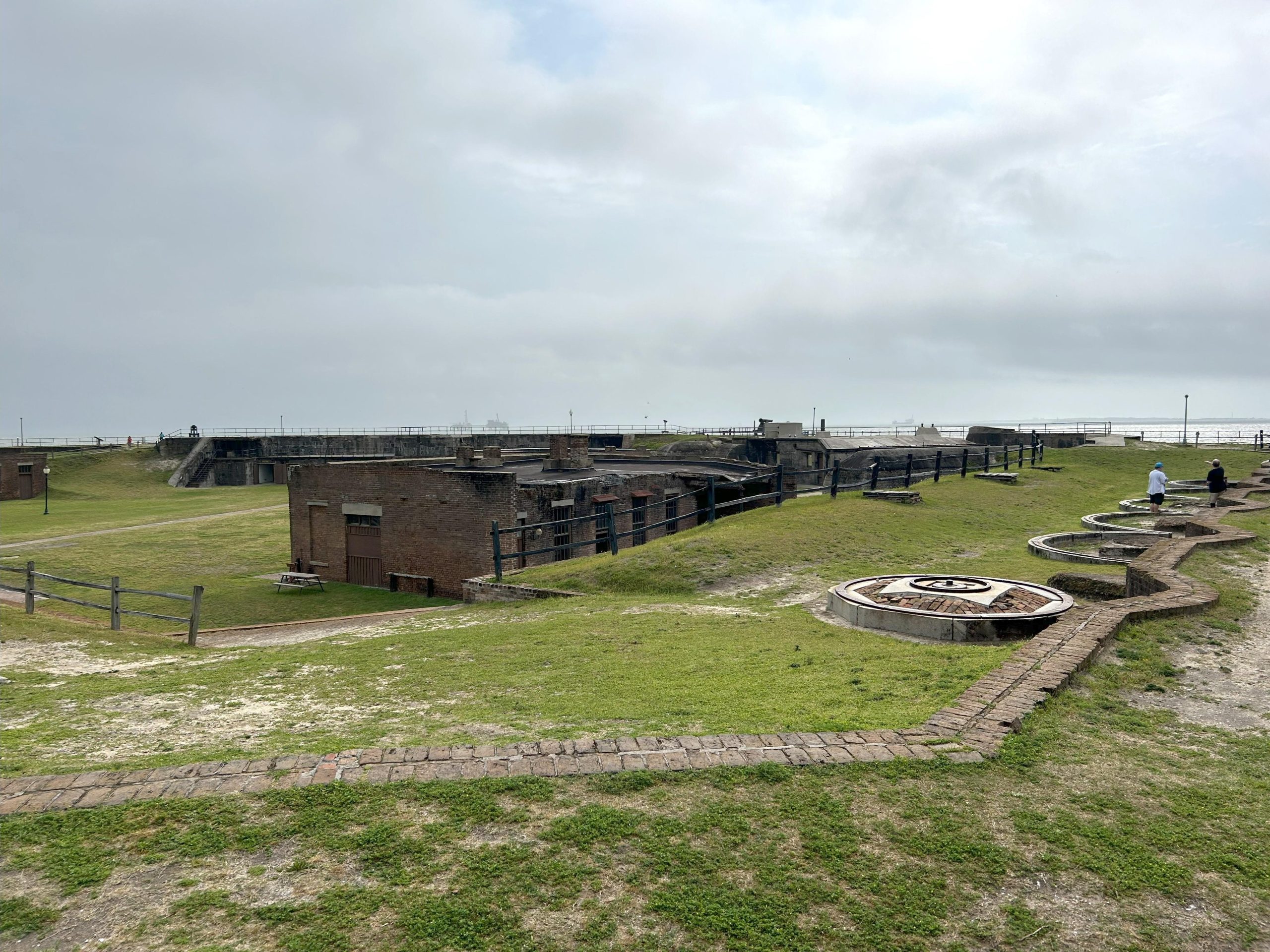
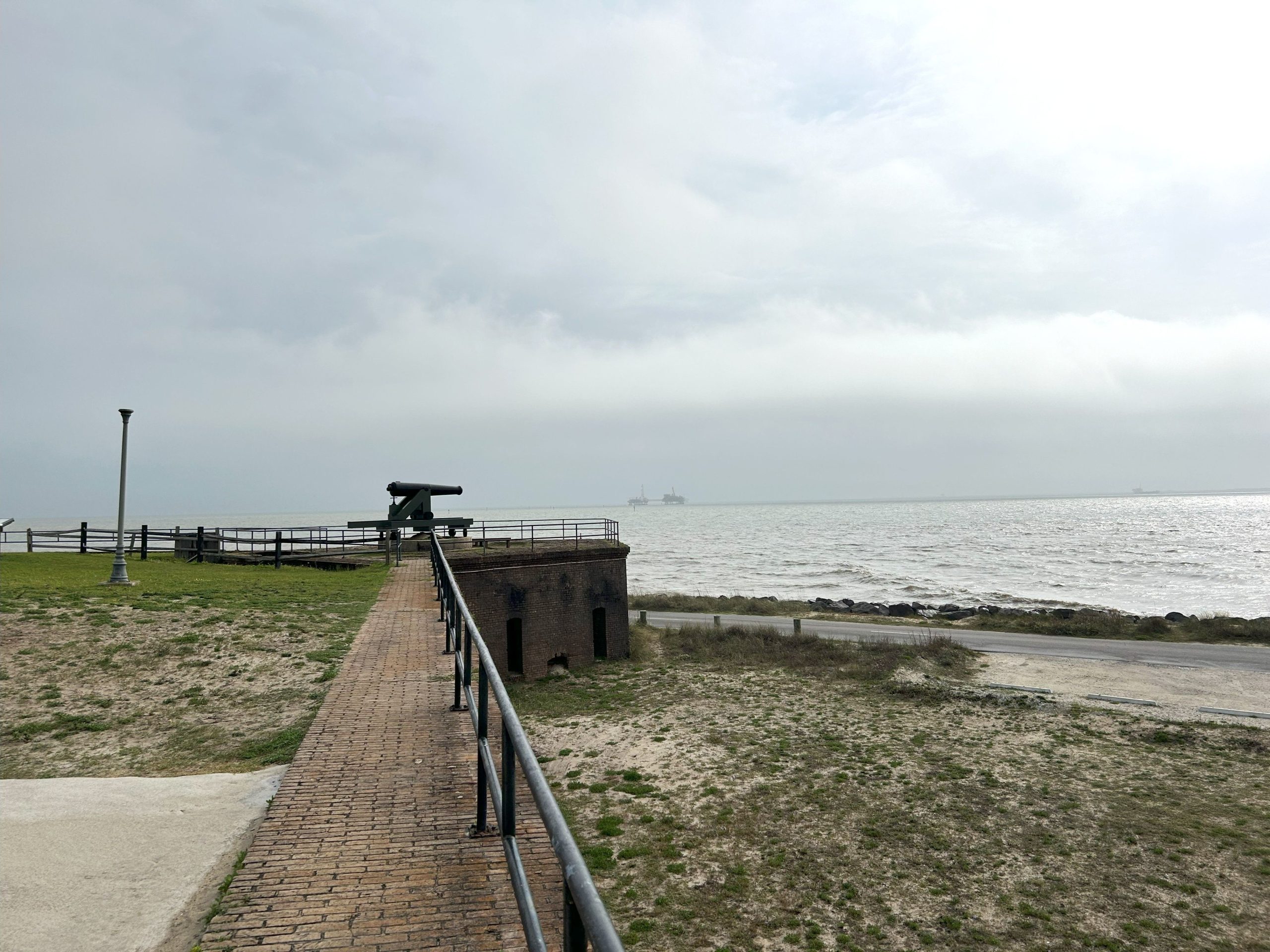
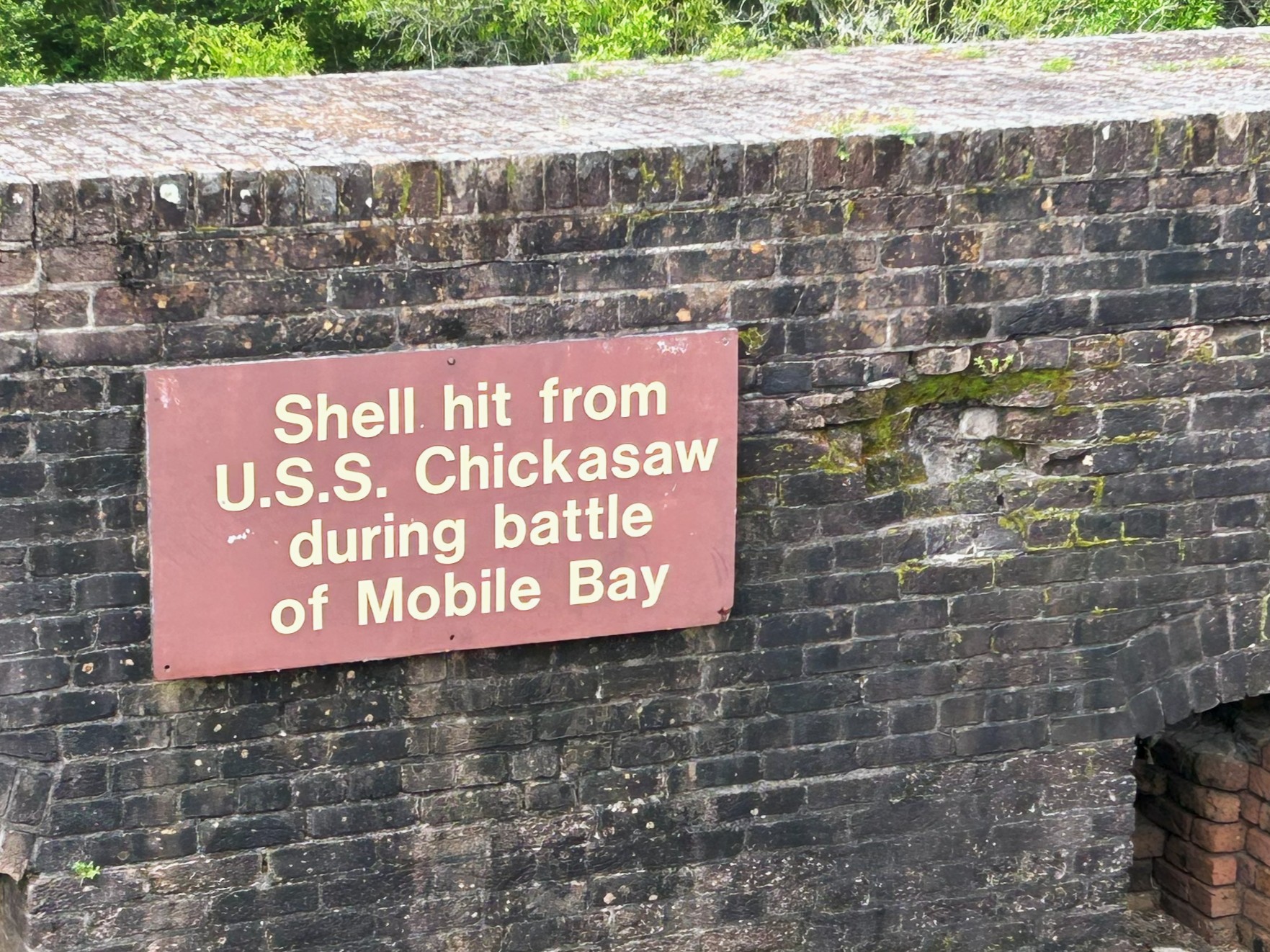
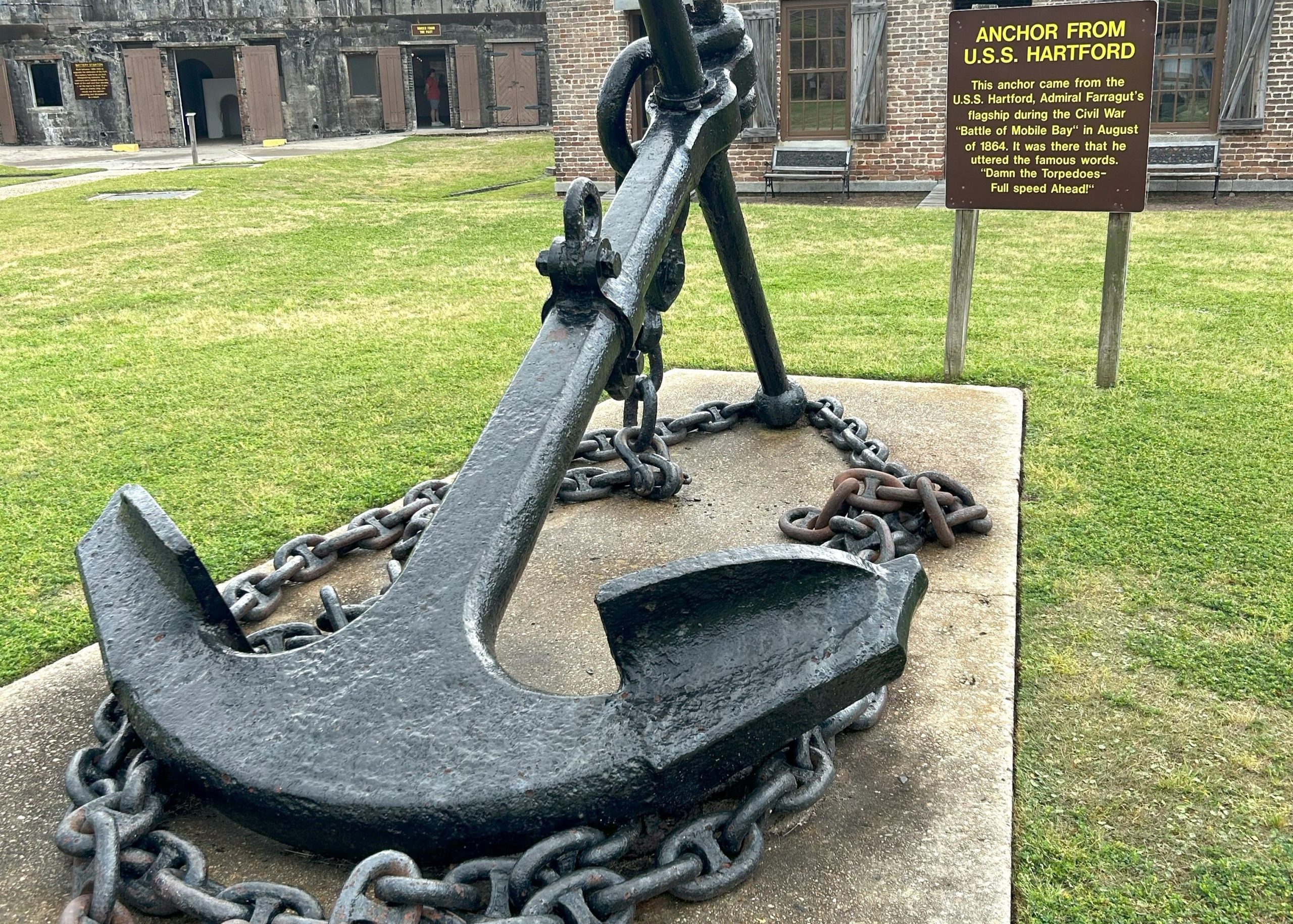
I didn’t stay long, and when I went back across the road, the couple from Indiana told me I’d just missed two Gull-billed Terns. I watched for another hour without seeing any, then drove around the island looking for other beaches where they might be. I finally ended up back at the original spot where the couple from Indiana told me I’d just missed another one. I hung around for another hour, then gave up. I don’t know if I really kept missing Gull-billed Terns, if the couple were being jerks, or if they were mistaking Sandwich Terns for Gull-billed Terns—I suspect the latter, or at least that’s what I decided to tell myself. Shortly after I got off the island, I passed a local produce stand that advertised boiled peanuts. I’d seen signs for them all over the south, so, on a whim, I decided to see what all the hubbub was about. I told the lady who greeted me inside that I wasn’t from the south but I wanted to know what the big deal was. I expected her to offer me a sample, but she sold me a pound in a plastic bag inside a paper bag ($4, so no big deal) and gave me detailed instructions on how to eat them. I wasn’t to try to crack them and pick out the kernels. I should pop the entire peanut, shell and all, in my mouth and open them with my teeth. She showed me how to discard the shells into the paper bag. She also warned me that boiling gave peanuts the texture—and the after-effects—of beans.
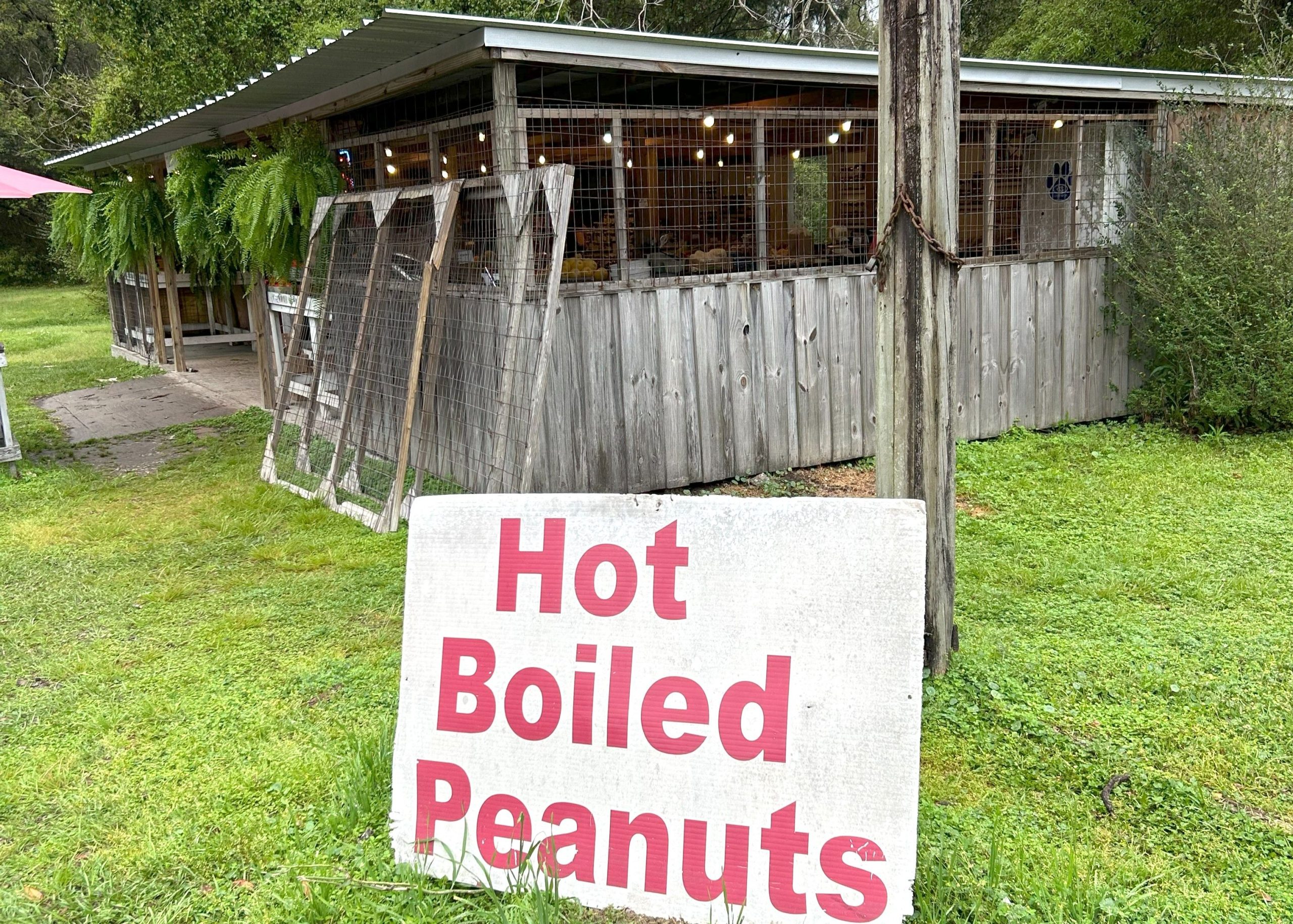
They did, indeed, look, feel, and taste like cooked pinto beans. I ate perhaps eight of them but threw most of the bag away. They were better than pork rinds, that other odd cuisine of the deep south, but they weren’t great. I drove across Alabama and Mississippi, listening to a John D. McDonald book on Spotify. I ended up at a Best Western in Vicksburg that was old and shaggy and in a weird spot back off the road. The woman told me it was $119 a night. I asked for a discount, and she gave me the room for $117 and made sure I knew she’d done it for me. I drove around looking for supper on a Sunday night, but everything good was closed so I ended up at Burger King. Nothing was exciting about the evening except the bed. It was amazingly comfortable, and I got my best sleep of the trip.
MONDAY
Vicksburg National Battlefield didn’t open until 8:30. I drove around town looking for somewhere to bird while I waited. I discovered that Vicksburg is essentially a slum. I ended up in a cemetery in a sketchy neighborhood, but that wasn’t very exciting. I got to the park just as it opened. It turns out that much of the tour route has been closed, and it looks like its been closed for a long time. Even the visitor center was closed on this day. This made me angry. Having found out recently about all the absolutely ridiculous things the government spends money on, it angers me that it doesn’t spend money to take care of National Parks. I got out wherever it looked like there might be birds, but there weren’t many. My other goal was the U.S.S. Cairo, a Civil War ironclad that has been dredged up from the bottom of the Yazoo River and partially restored. I saw this, and the park, way back in 1988 and remember it as being amazing. I wasn’t as impressed this time. Maybe I’ve become jaded or maybe I was just tired.
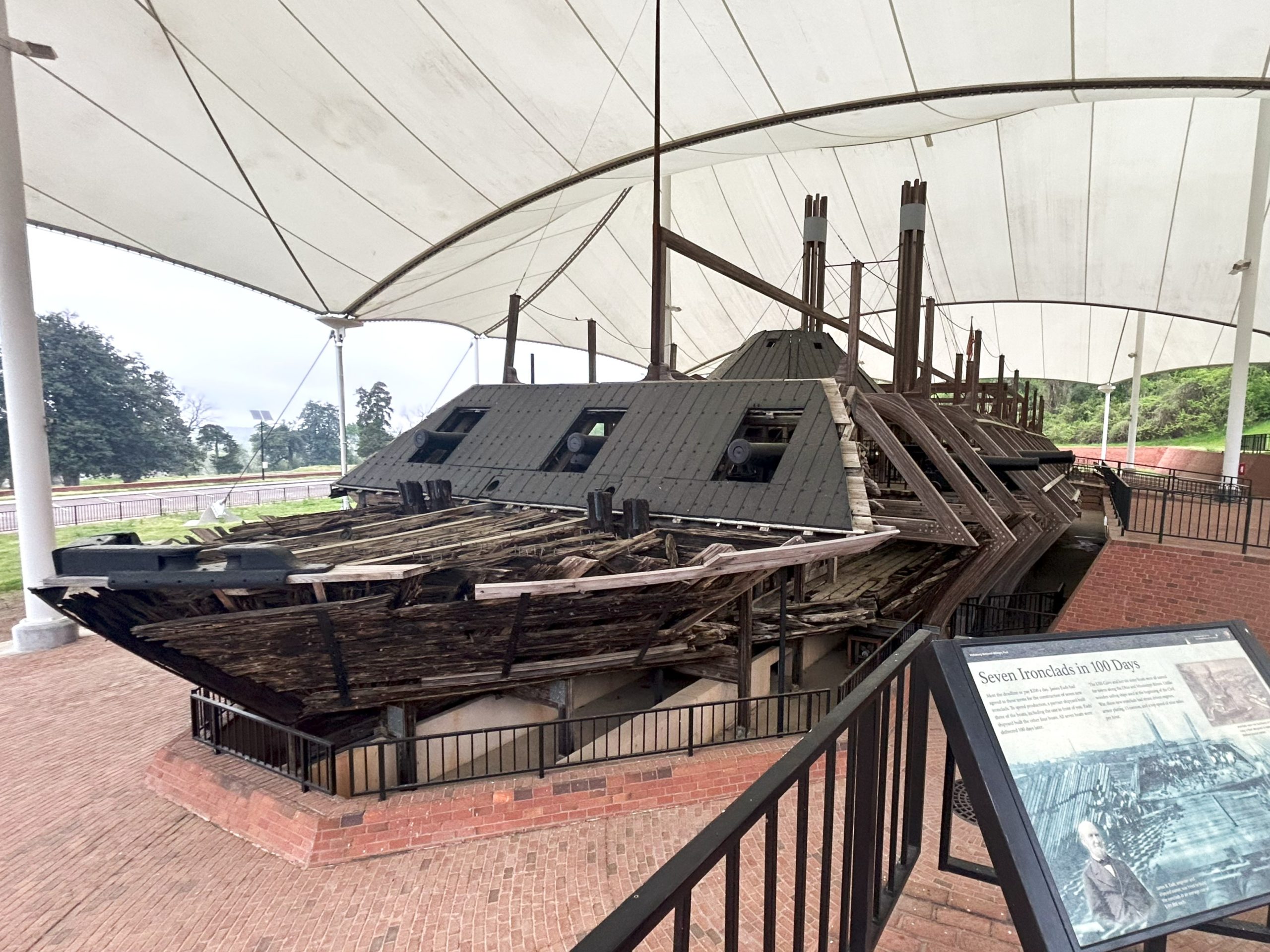
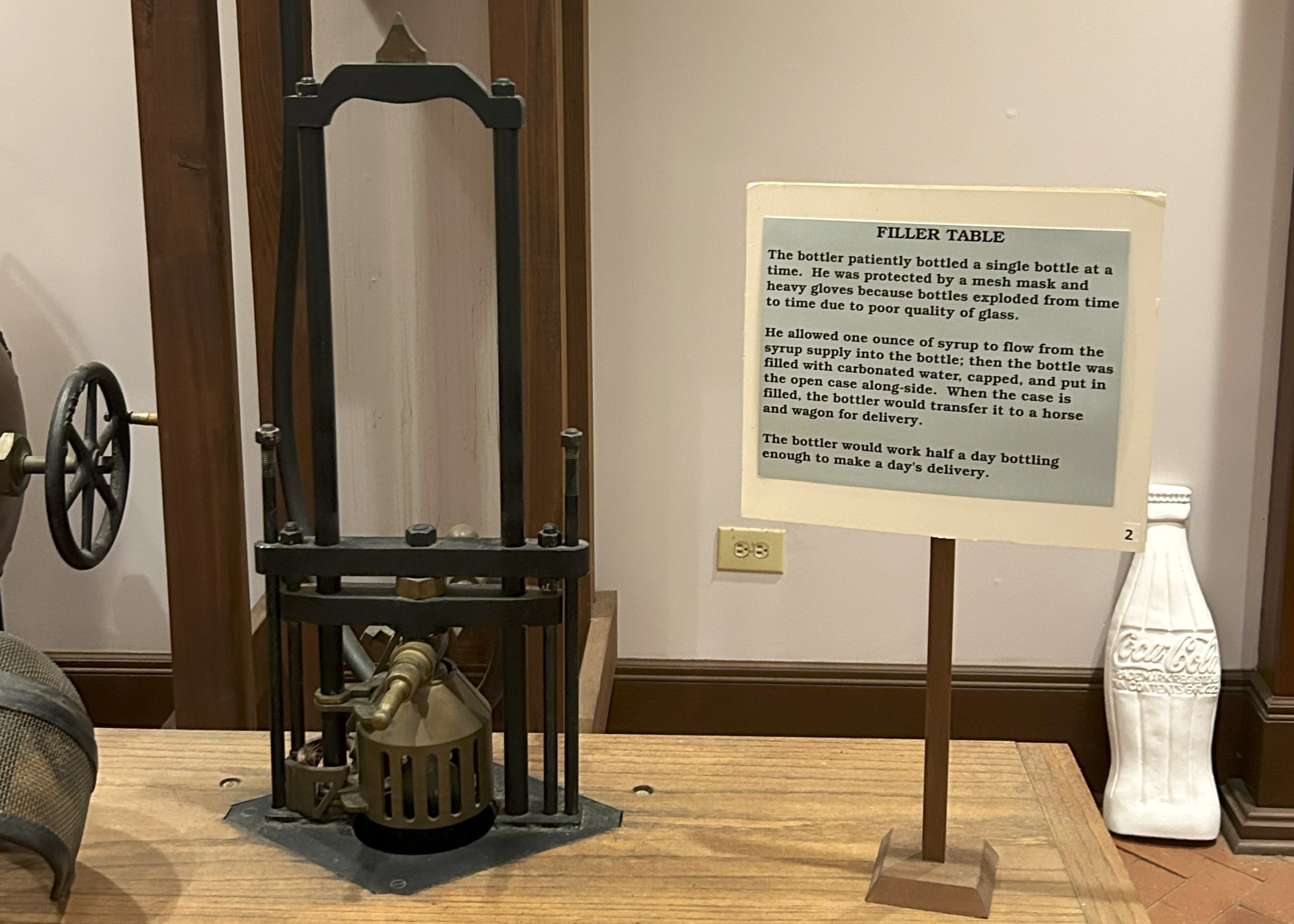
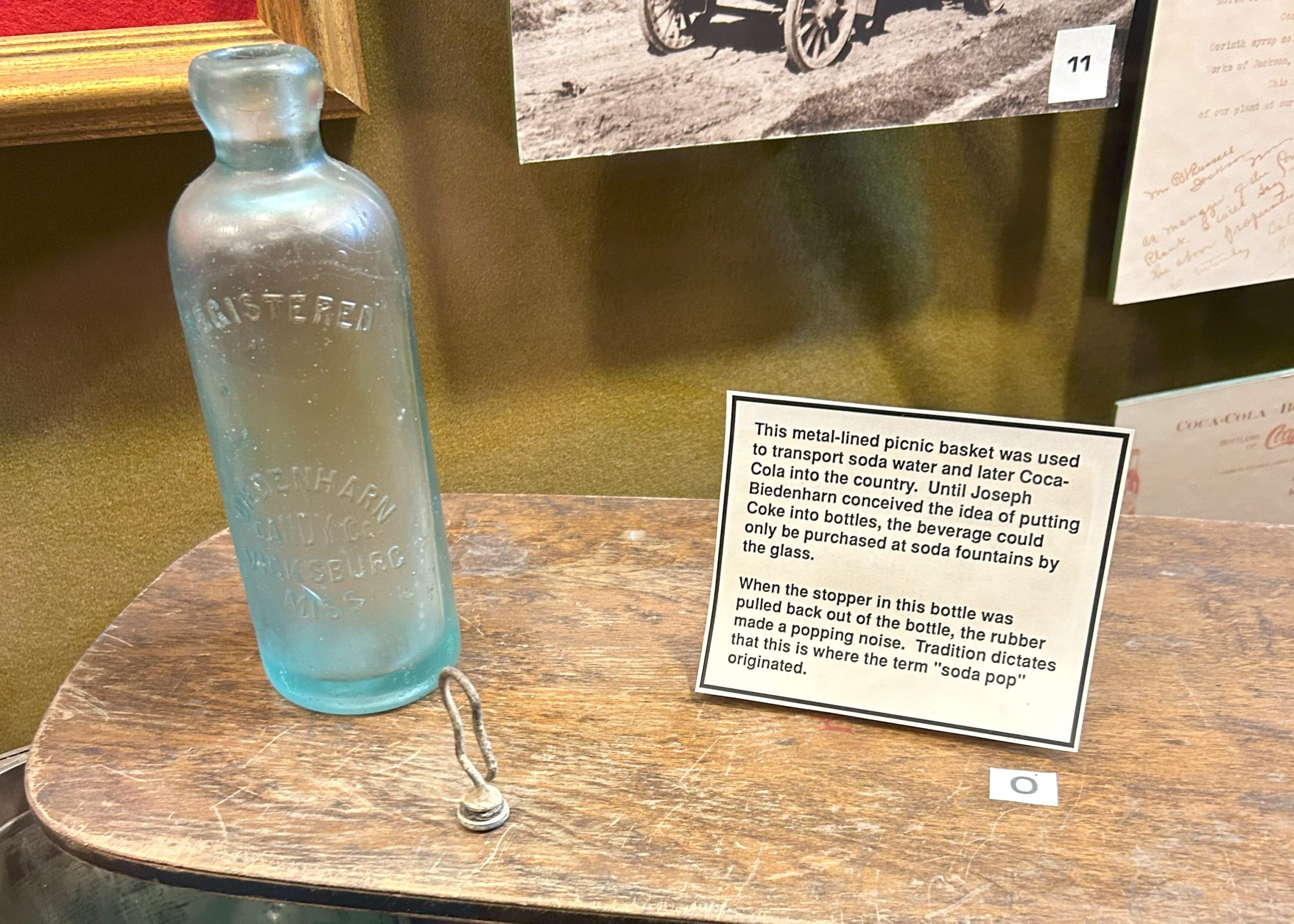
I asked in the museum gift shop if they had models of the Cairo. The guy said yes, but they were sold out. It was raining, there were no birds, and I had a long drive home. I did stop in downtown Vicksburg at a Coca-Cola museum, where Coke was first bottled. Three dollars got me entrance into one room where there was old-time bottling equipment, which was interesting, and several cases of random Coke merchandise, which wasn’t so interesting. The whole thing took me about 10 minutes to see.
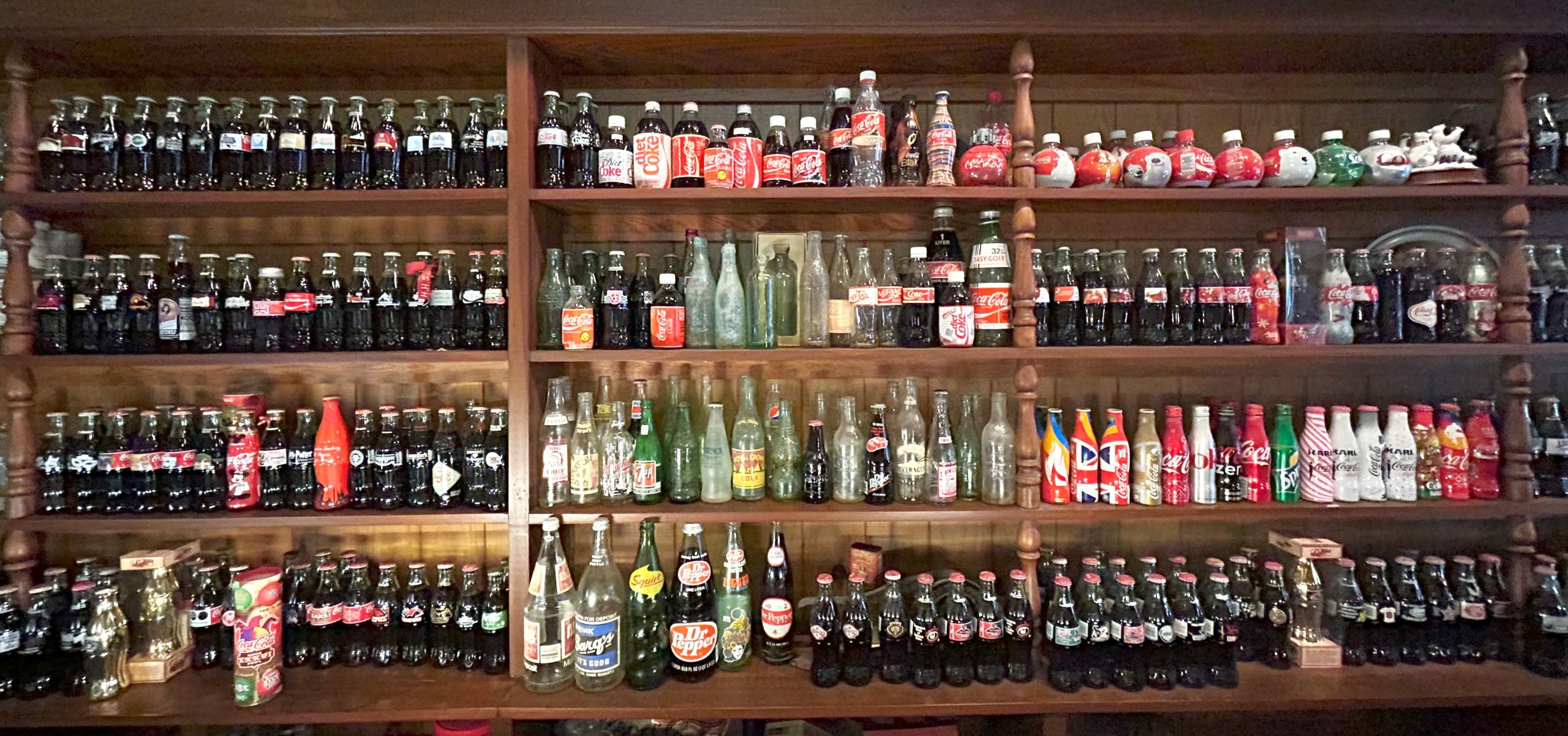
I stopped at a Whataburger, then headed west into Louisiana and north into Arkansas. The trip was uneventful, and I got home mid-afternoon. On the trip I’d seen eight of my eleven target lifers and several other birds I’d only seen once or twice before. In spite of all the driving I did alone, there were no moments of danger or near-danger. The biggest drama was caused by the Disney security guards.