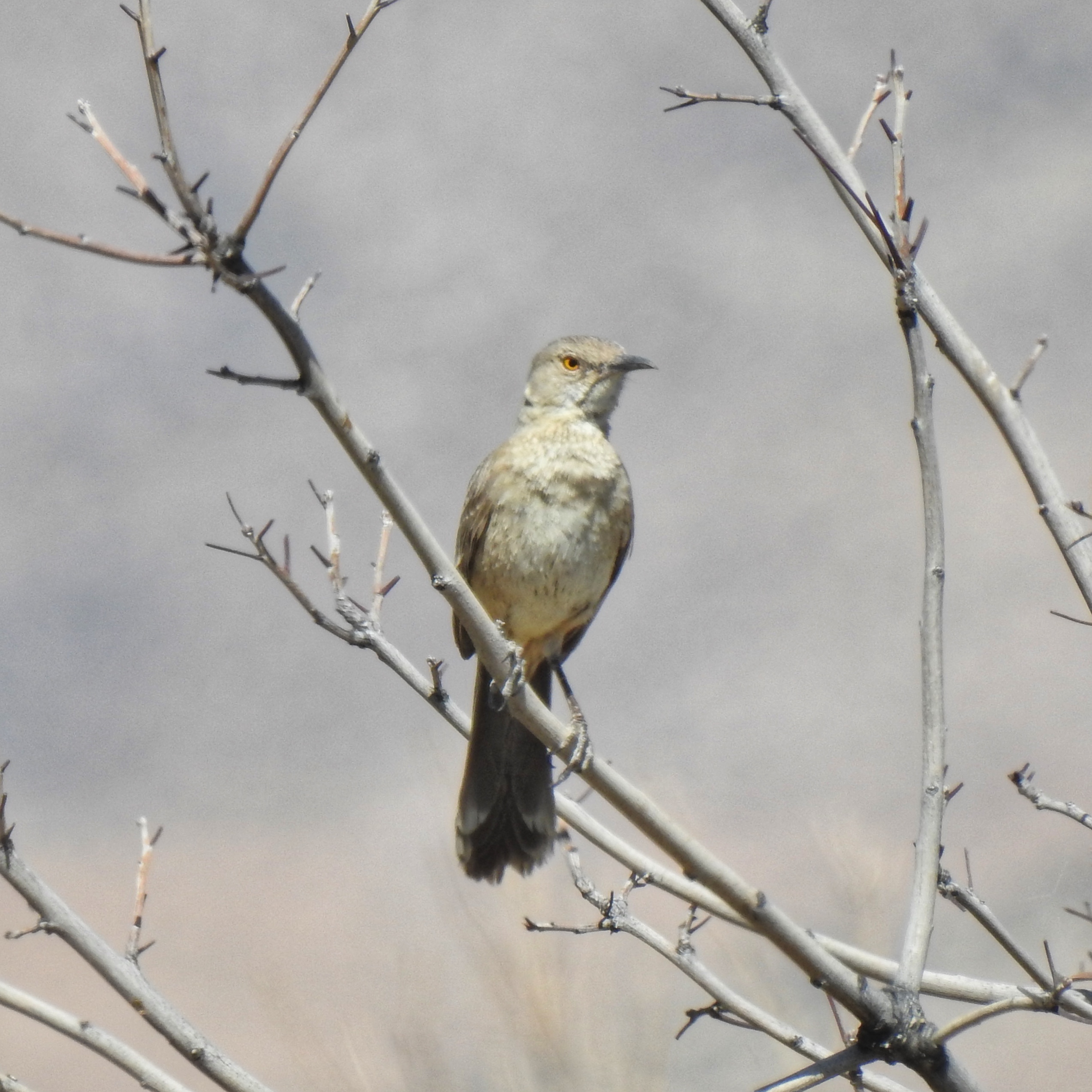
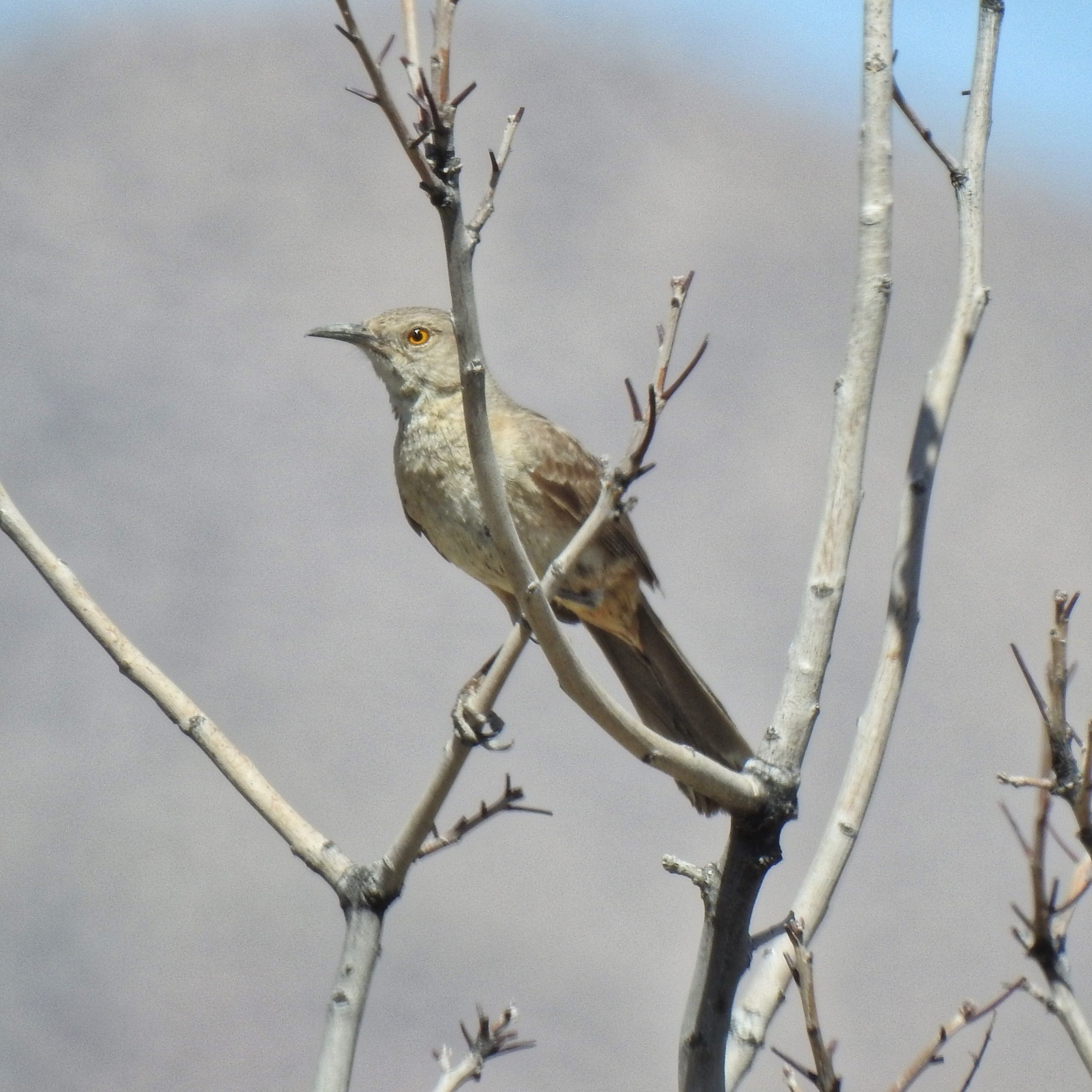
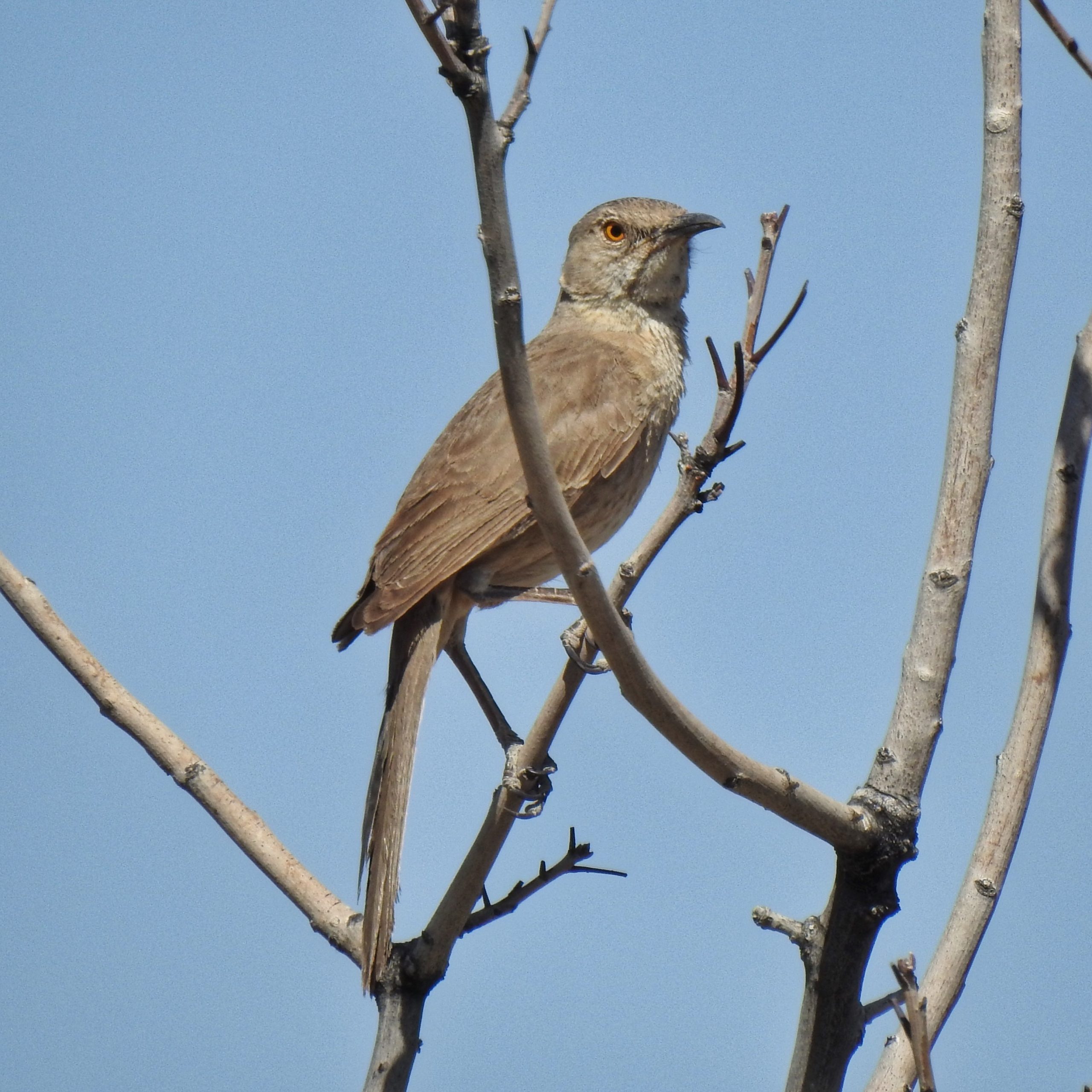
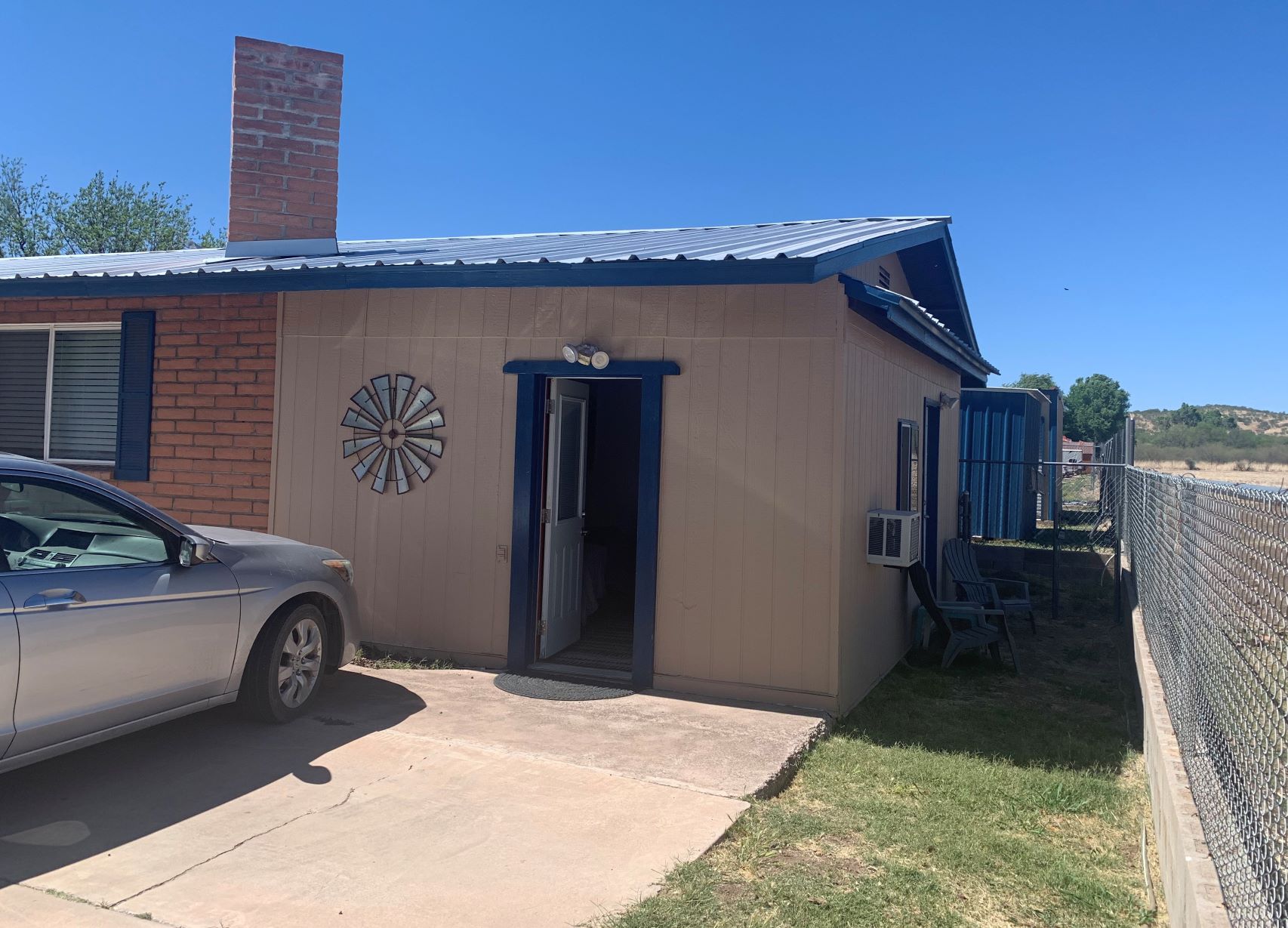
I spent three nights birding around Portal, Arizona. When I searched for a place to stay, the nearest cabin I could rent was in Rodeo, New Mexico, about 10 miles east. The cabin was in the desert behind the Chiricahua Desert Museum and included a free admission. I unpacked my stuff and then walked over. The museum itself was basically a display of the owner’s snake-related collection — live rattlesnakes, pictures of snakes, the “world’s largest collection of snake bite remedy kits.” I didn’t stay in the museum for long before I walked out into the walled garden attached to it. There were several bird feeders, and quite a few birds, including a couple Curve-billed Thrashers that obviously considered themselves the kings of the joint.
When I’d planned the trip and made a list of birds I might see, I saw that Bendire’s Thrasher was often seen around Rodeo and, in fact, if you were to direct someone to the place most likely to see one, it might be the museum I was staying at. Bendire’s is a little-known bird, often overlooked because of its similarity to the closely-related Curve-billed Thrasher. But I was paying attention.
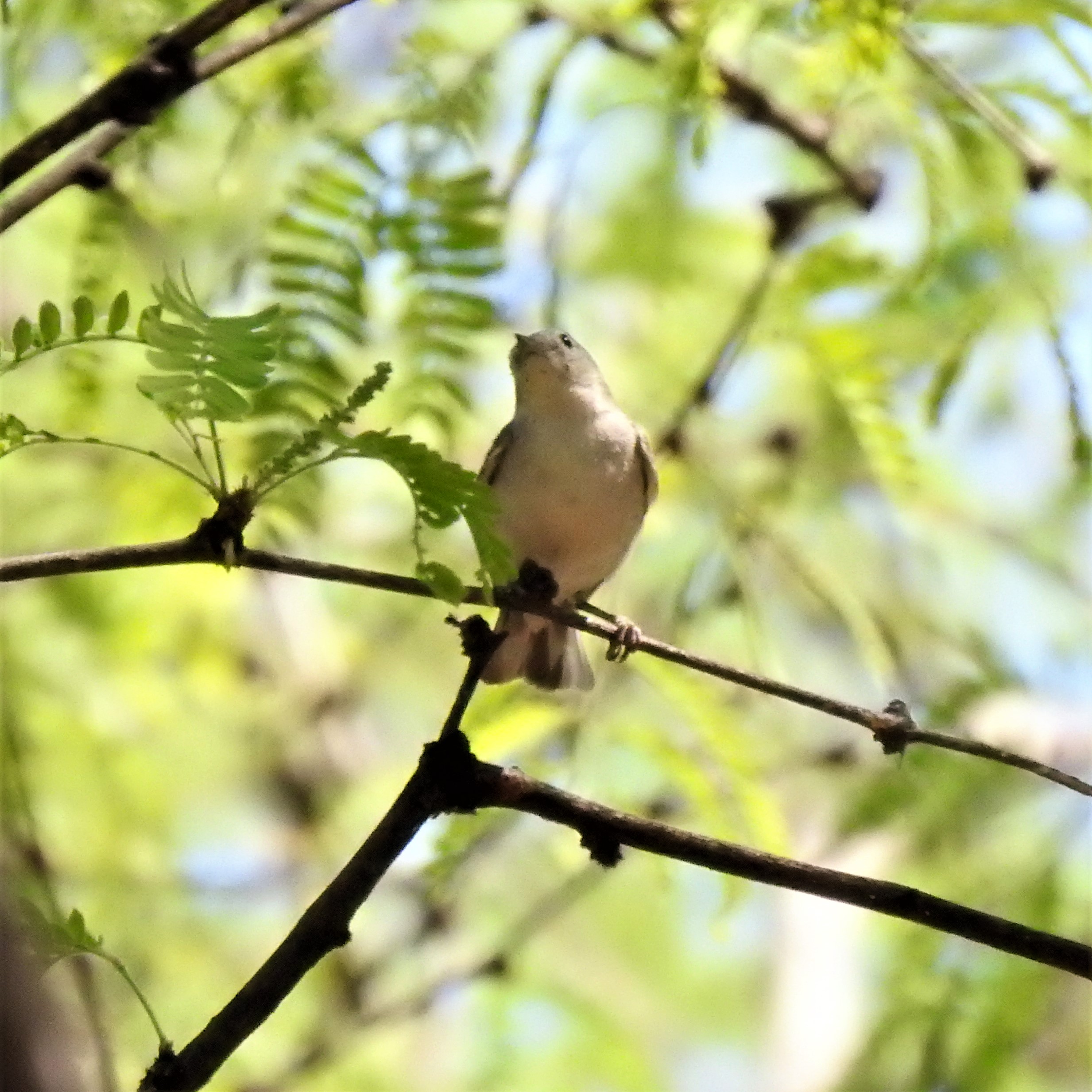
I’d been there maybe 10 minutes when I noticed a thrasher perched in a dead tree in the tortoise enclosure next to the garden. Because I had just been looking at Curve-bills, it was obvious to me that the bill on this bird was shorter. Through my binoculars, I could also see that the base of the lower mandible was pale.
It changed position a few times as I moved around in the garden to get some different camera angles. I was about 60 feet away from it. After about five minutes, it flew off into the scrub outside the garden walls, and I didn’t see it again.
Posted inWildlife|Comments Off on Bird #570 — Bendire’s Thrasher
Bosque del Apache National Wildlife Refuge, New Mexico
Thursday, May 5, 2022 — 6:45 am
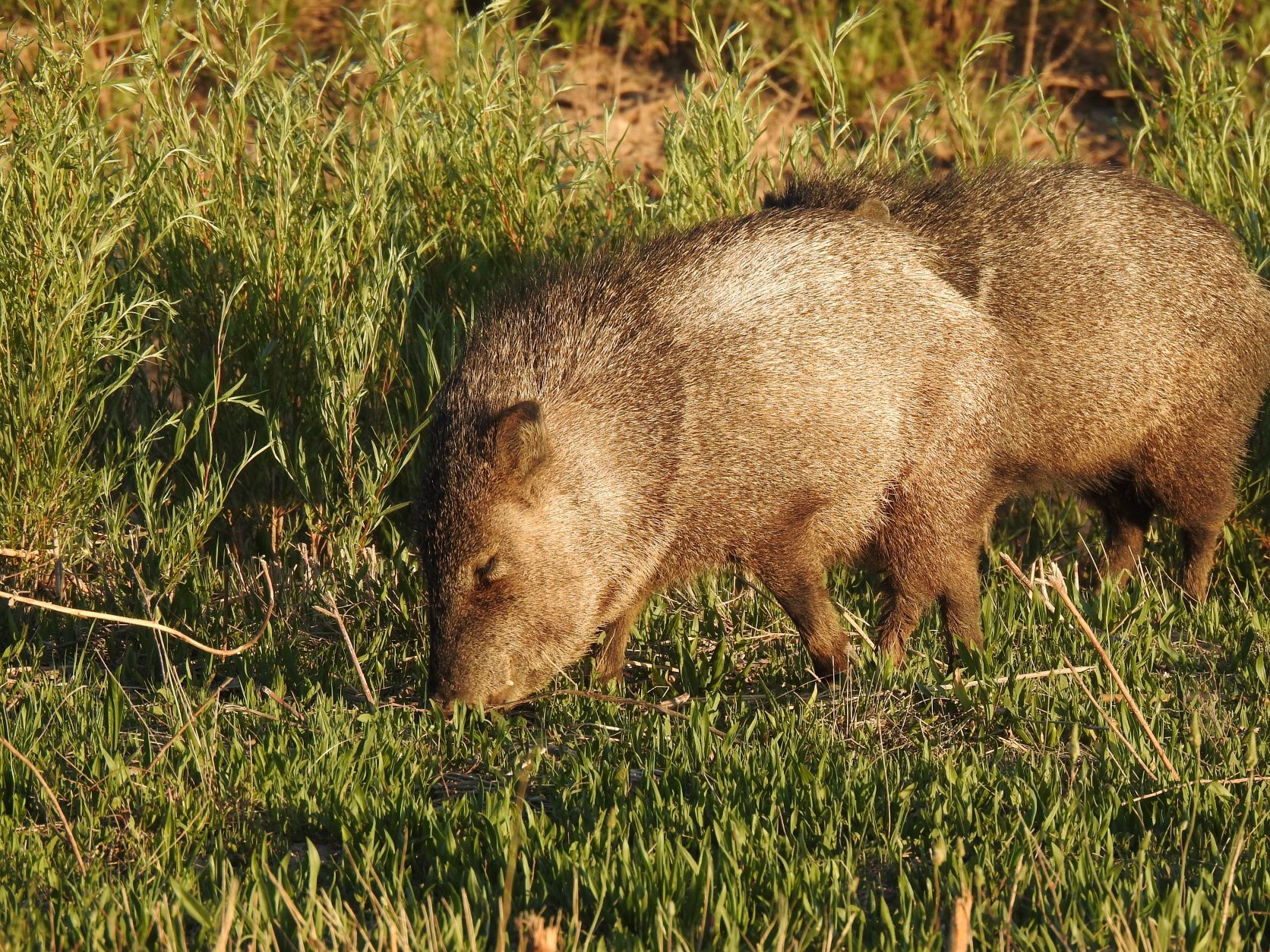
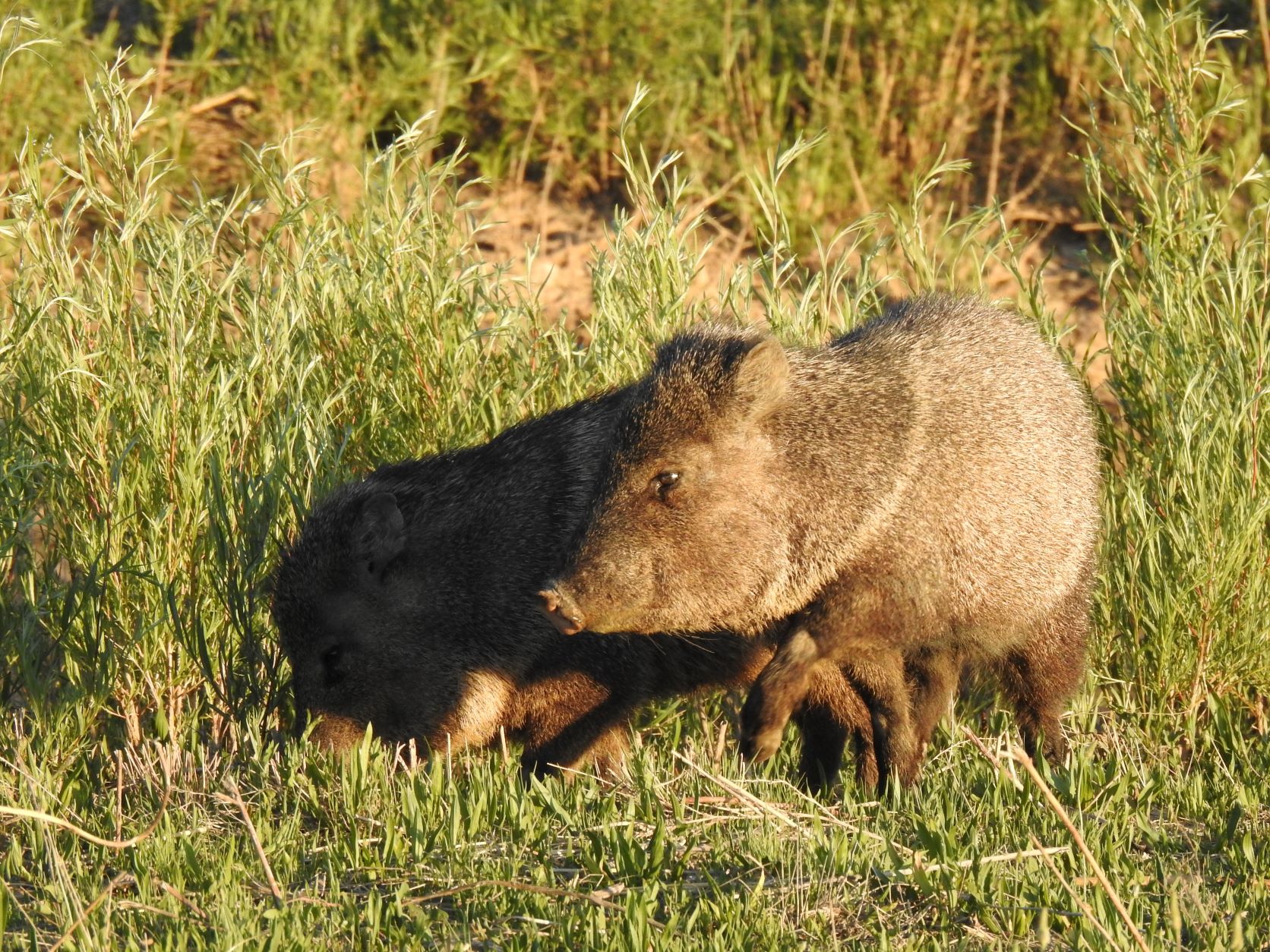
I had just reached the refuge for some early morning birding and was checking in at the self-pay station when I spotted four dark animals about 70 yards away, partly hidden by vegetation. For one brief second, I wondered if they were small bears, but once I looked through my binoculars I knew they were Javalinas.
I finished paying, then pulled around on a road that ran right next to the animals. I was within 50 feet of them now. There were six or eight of them strung out almost single file and they seemed to be grazing on the grass. There was a half-grown young one, colored like the adults. They were aware of me and kept moving, but they didn’t panic and run off.
A few hours later, I saw a herd of perhaps 30 grazing through the grass along an open field.
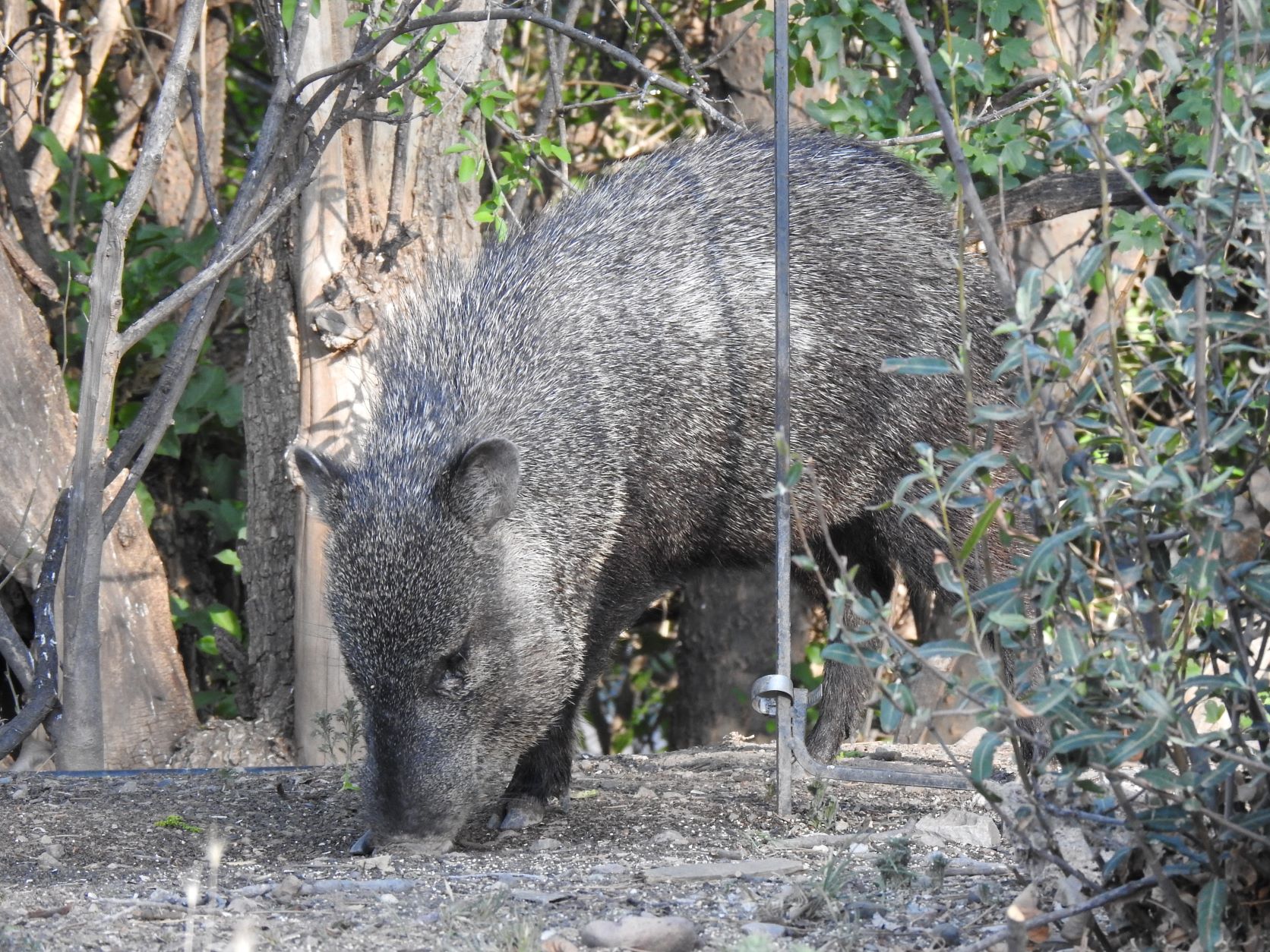
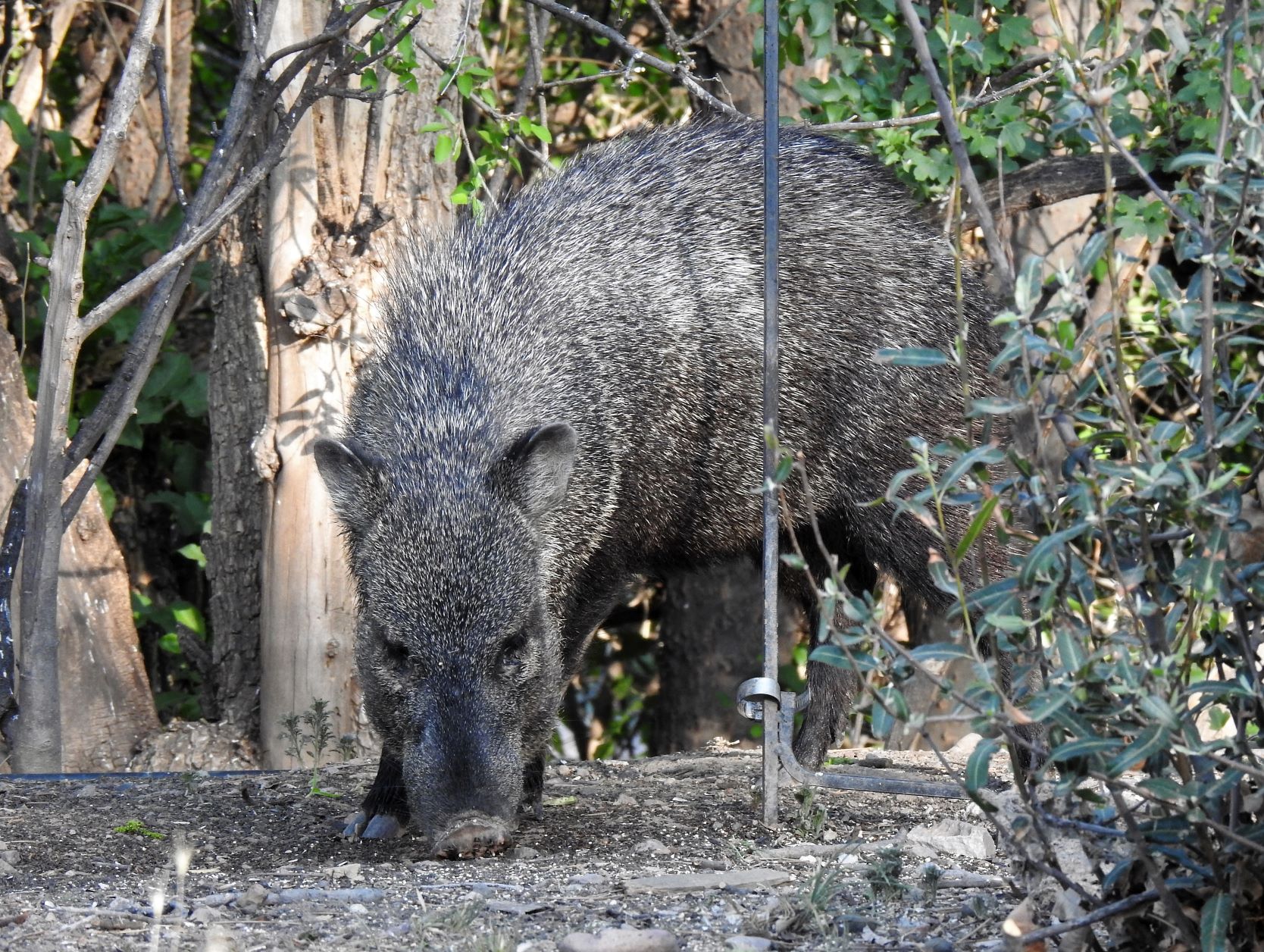
At Paton’s Center for Hummingbirds in Patagonia on Sunday evening, one came out of the brush along the creek bed and fed under the feeders, not 30 feet away.
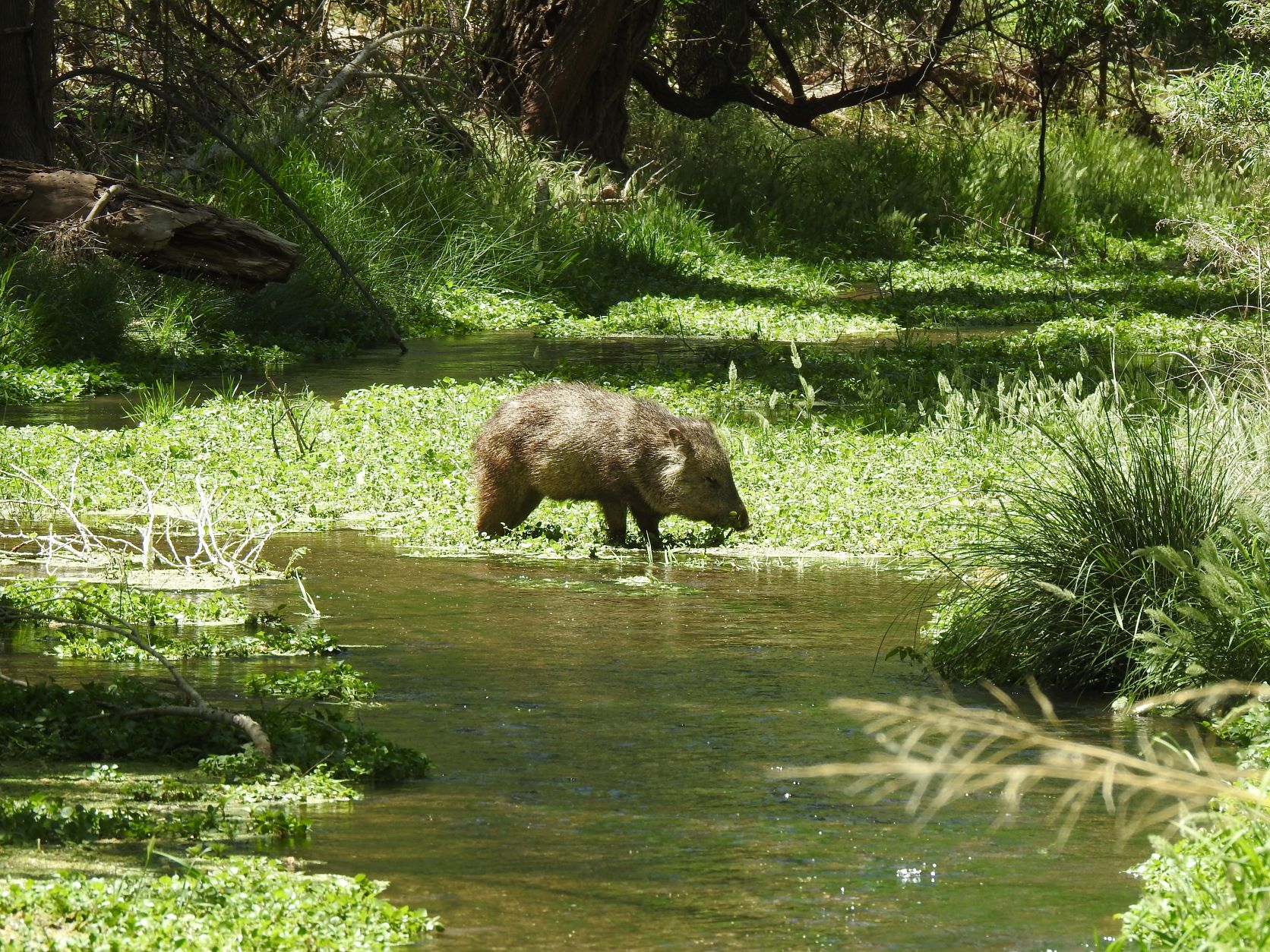
And on Thursday, at Patagonia-Sonoita Creek Sanctuary, I saw two wading in the creek and eating vegetation.
Posted inWildlife|Comments Off on Animal #76 — Collared Peccary
I had been birding for five years back in 1984 when my wife and I spent a week in Tucson with my parents. They liked birds, although they weren’t hard-core listers. On many of the days during that March/April trip, we visit prime birding spots and I ended the trip with 64 lifers.
That was 38 years ago. I knew there were birds in southern Arizona that I hadn’t seen, and many of the ones I had seen were just vague memories because I’d not seen them since. It’s a 12-hour drive from Colorado Springs to Tucson, and I determined to go one more time. There were seven or eight birds in Arizona this spring that repeatedly showed up on the U.S. rare bird report, giving me extra incentive.
Twelve days of travel isn’t cheap. I sold the last of my good comic books to finance the trip and found what turned out to be two excellent Air B&Bs that were far cheaper — and nicer — than hotels would have been. My car is 14 years old and has nearly 190,000 miles (it just crept past that mark on my drive home), but it’s been running well.
I made a list of Arizona specialties, checked eBird to see what time of year they were most likely to be found, and planned accordingly, which meant that I left home on Wednesday, May 4. With extraordinary luck, I had an outside shot at 30 new birds. I figured 15 lifers would be a successful trip.
Wednesday, May 4
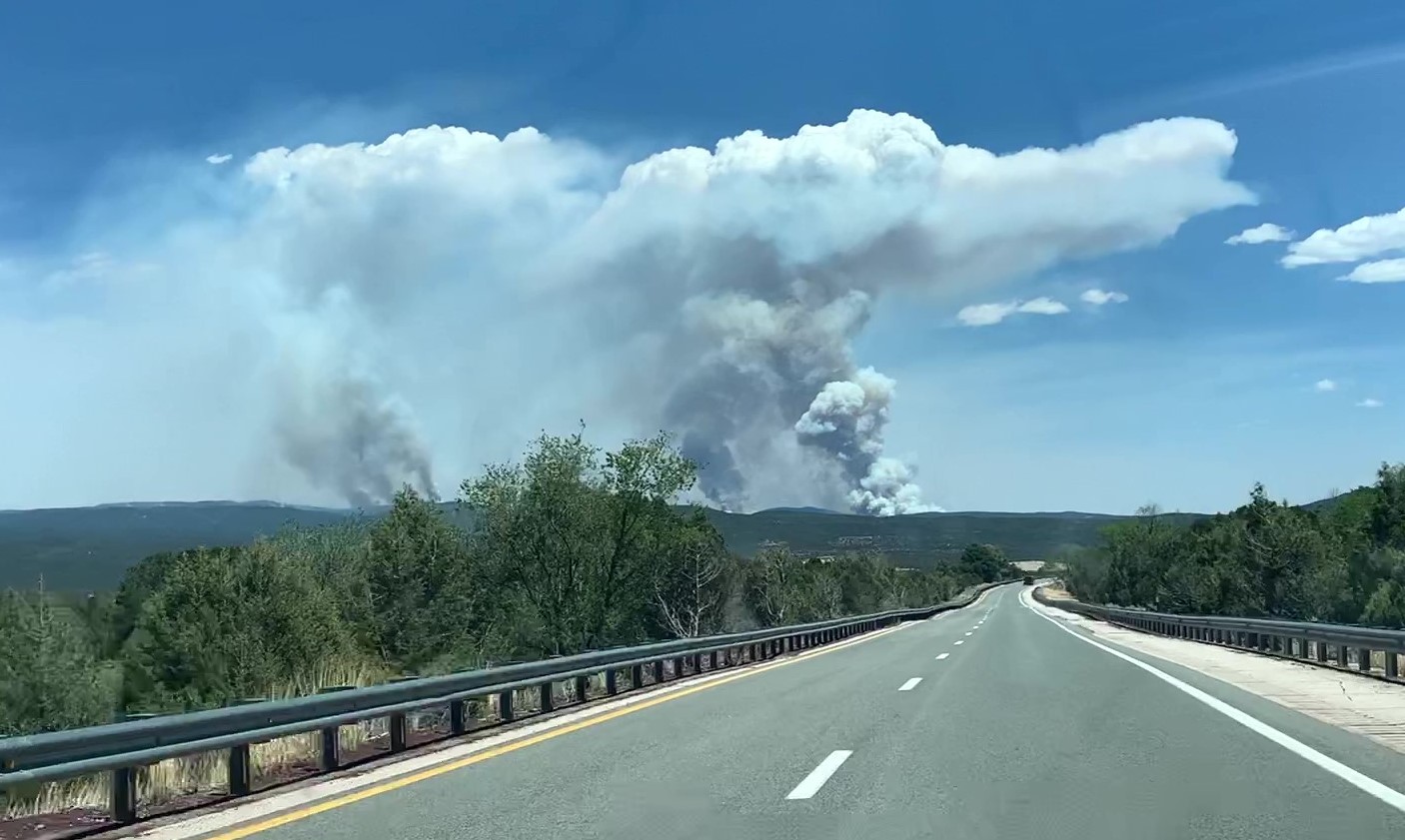
I left home around 6:00 am and began counting birds immediately for my trip list. I had American Robin and Black-billed Magpie before I left town. My plan was to stop on the way to Arizona at Fort Union National Monument and then walk the battlefield trail at Glorieta Pass in Pecos National Historical Park. The universe had a different plan. I pulled off the Interstate at the turn-off to Fort Union and saw a crudely made sign that said it was closed. A little further on, and I saw smoke from a wildfire near Las Vegas, New Mexico. When I got to Pecos, I was informed by a ranger that the battlefield trail was closed “because of fires in the area.” He told me that it was OK, though, because there was nothing to see on the trail, no artifacts or anything, just some signs that explained the battle. I was upset — this was somewhere I’ve wanted to go for years. But there was nothing I could do about it. Later I learned that the fire had been burning since April 9. (It was still burning 12 days later when I drove through the area on the way home. By that time, it had consumed 465 square miles — a quarter of the area of Delaware — and was the largest fire in New Mexico history.)
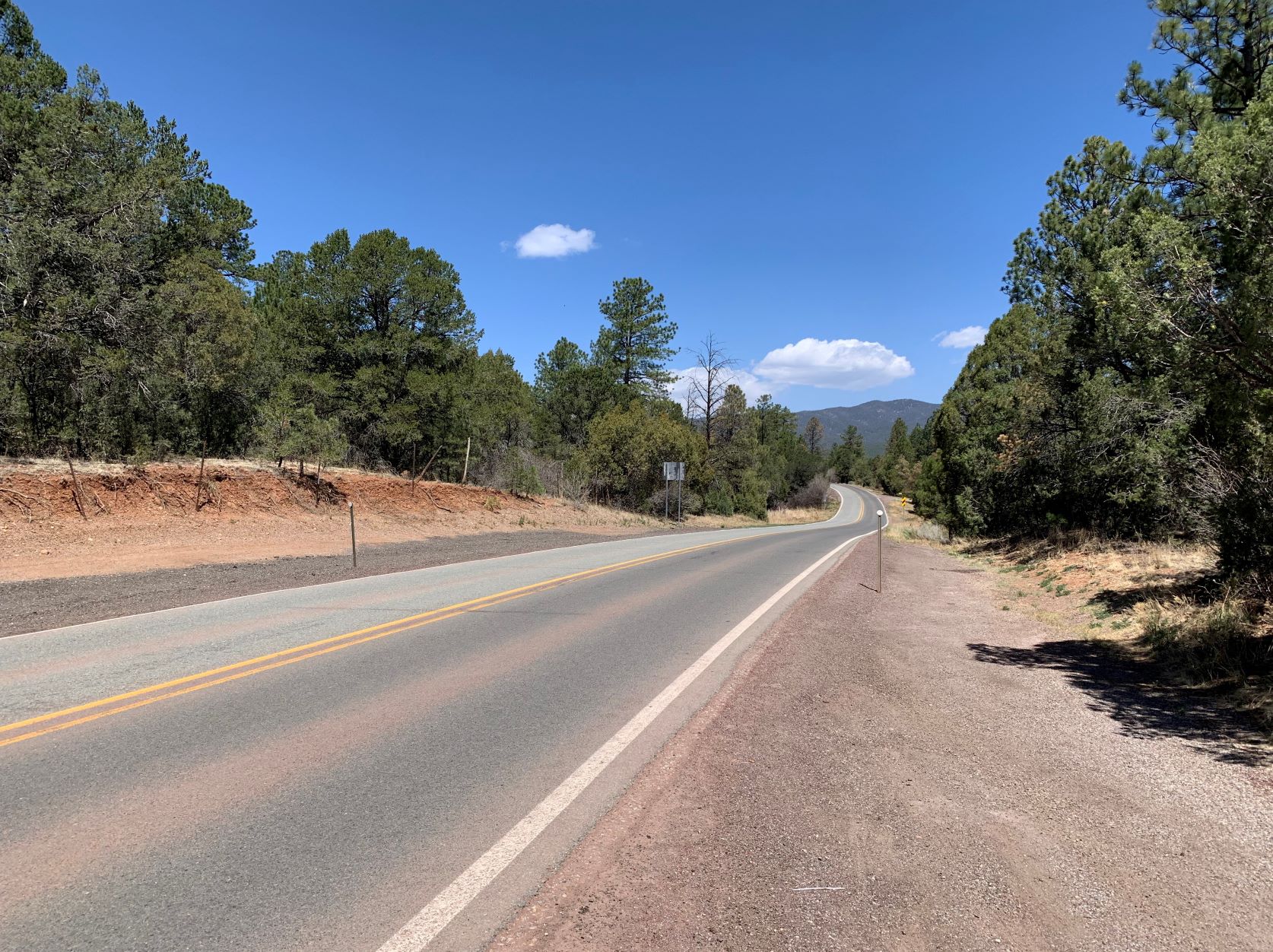
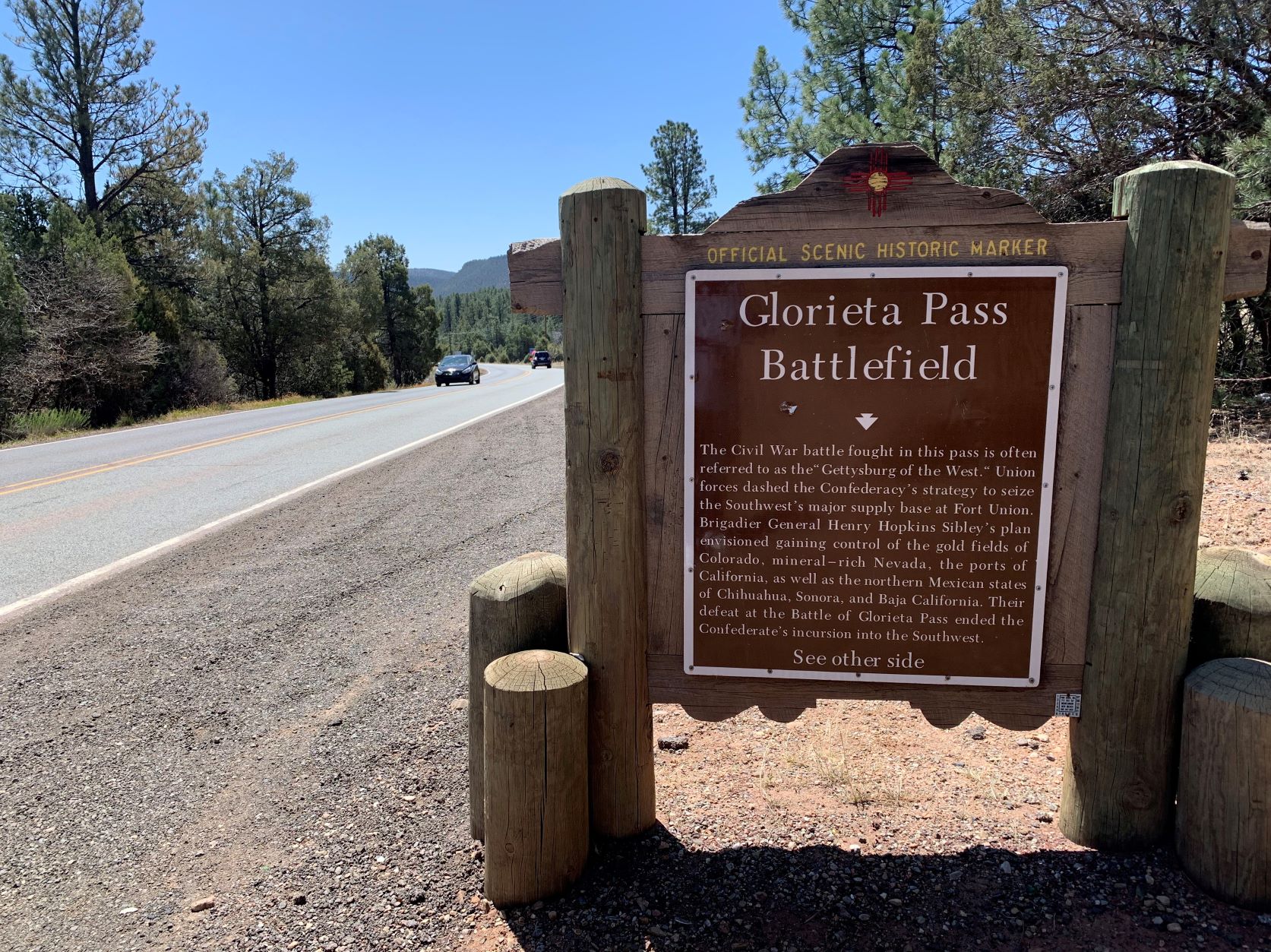
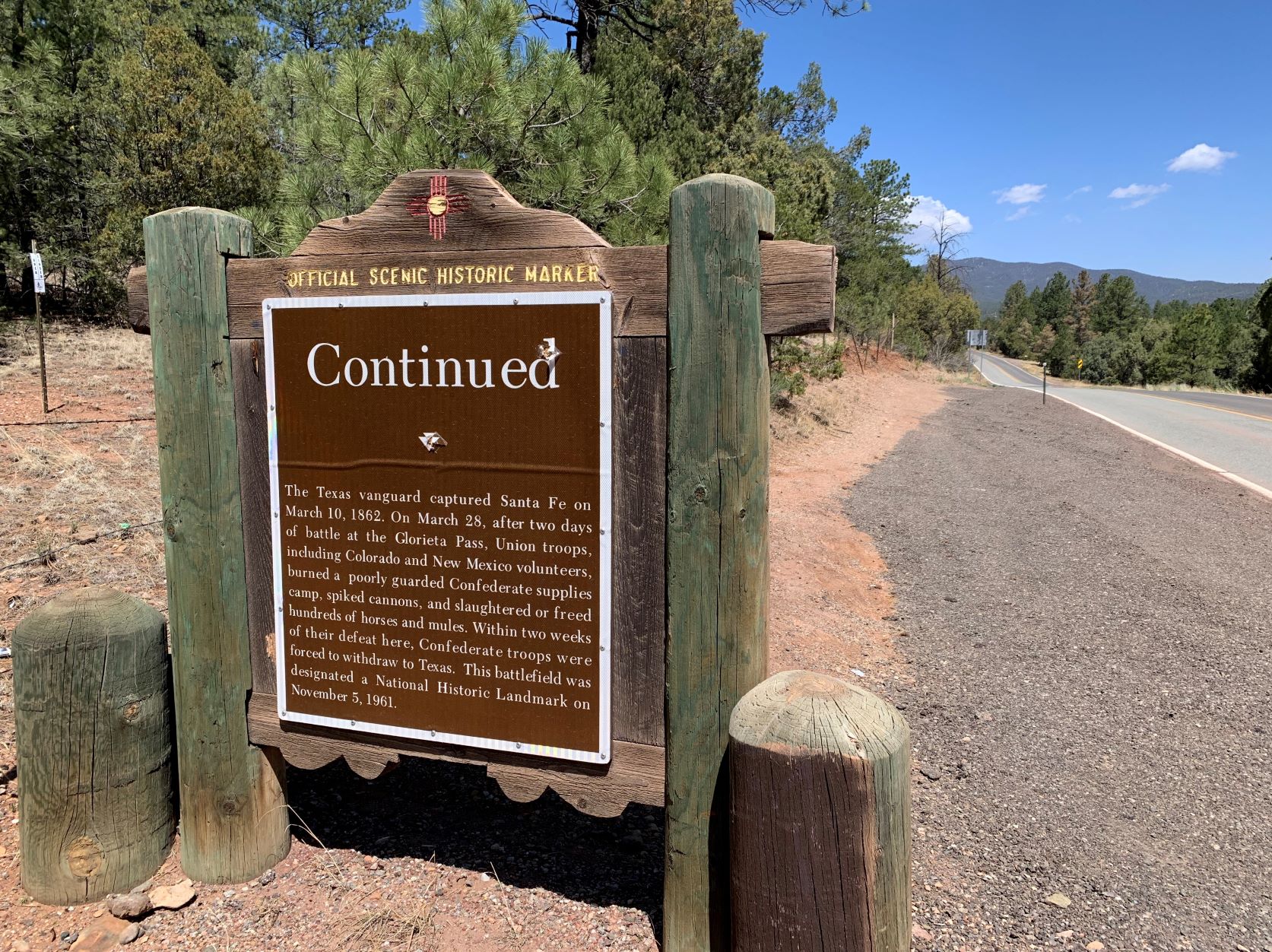
I was able to drive through Glorieta Pass, but I had to be satisfied with a roadside marker.
It wasn’t even noon yet, and my plan was to spend the night just south of Albuquerque, which was only an hour away. On the spur of the moment, I searched online and found a place called the Randall Davey Audubon Center in Santa Fe. I spent an hour walking the trails and standing by the feeders. I saw 17 species, including my first Evening Grosbeaks and Juniper Titmouse of the year.
On to Albuquerque. When I drove through the city in 1984, I was impressed — I think because of the proximity of the mountains, which were snow-capped at the time. I was not impressed this time. It seemed run down and dirty. I cleared the city, and it was still just mid-afternoon. I decided to continue for another hour and stay in Socorro, New Mexico at a ridiculously priced hotel. Since the trip was all about birding, I found a nearby park along a golf course and spent an hour and half seeing 26 species, including a pair of Phainopepla.
Birds seen today — 46
Lifers — 0 (total for the trip — 0)
Thursday, May 5
On my 1984 trip, we drove my parents from Tucson to Albuquerque, then drove their van home while they stayed for a week of work. On the way up through New Mexico, I talked my Dad into letting me stop at Bosque del Apache National Wildlife Refuge. At that time, efforts were under way to put Whooping Crane eggs in Sandhill Crane nests in hopes of growing the population of the rare bird. The effort had failed, but a few Whooping Cranes still wintered at the refuge, and I had vague hopes one might be around. But Dad didn’t want to stay long. I got a little ticked off because the place was swarming with birds, but it was his car, and so on we went.
Bosque del Apache is about half-an-hour’s drive south of Socorro. I got up early and spent four-and-a-half hours in the refuge. It was hard to leave. I was greeted at the entrance by a herd of Collared Peccaries, or Javalinas, a lifer animal.
Even after I’d been there a while, I kept seeing new things. But I had a four-hour drive ahead of me, and there were new birds to be seen where I was going too. Four hours of driving through southwestern New Mexico feels like a lifetime. The state is brown, bleak, dry, and hot. I stopped for lunch in Truth or Consequences and for gas in Deming (a city that actually brags about being in the middle of nowhere).
The community of Rodeo, New Mexico, my destination, is unincorporated. There are a few Mexican art shops, a market of some sort, and the Chiricahua Desert Museum. There’s no gas station — the nearest one is 34 miles to the north at a place called Roadforks.
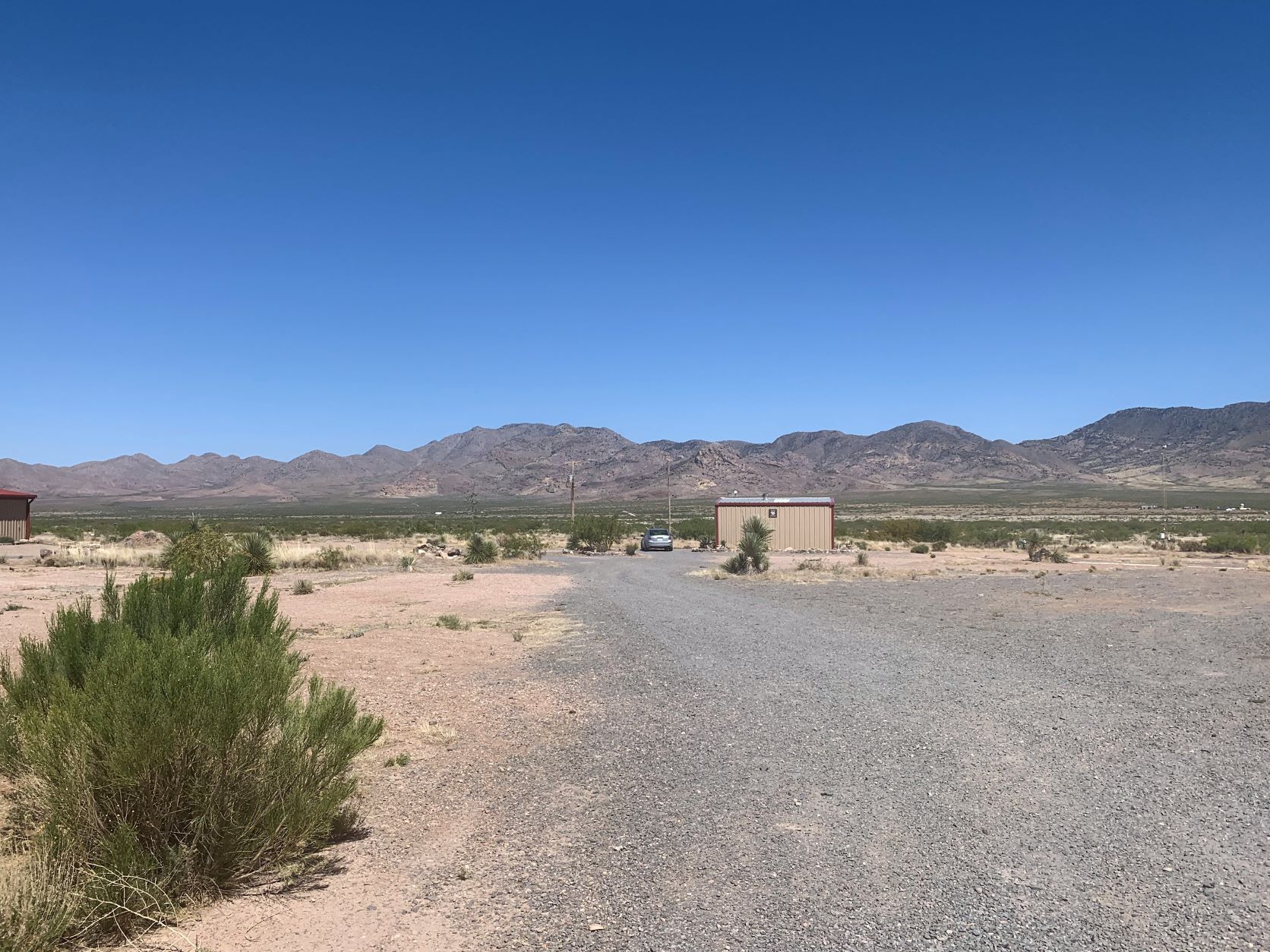
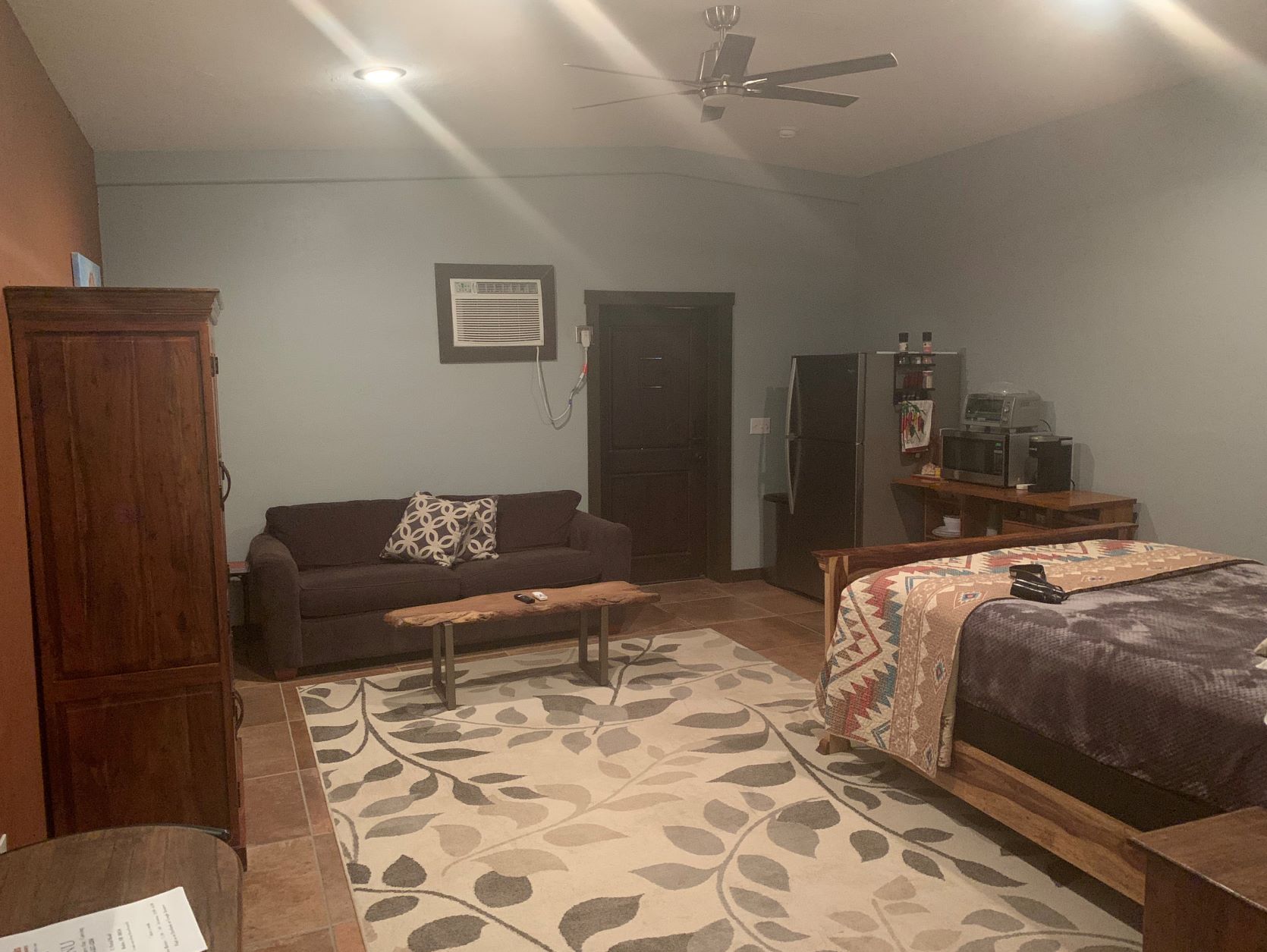
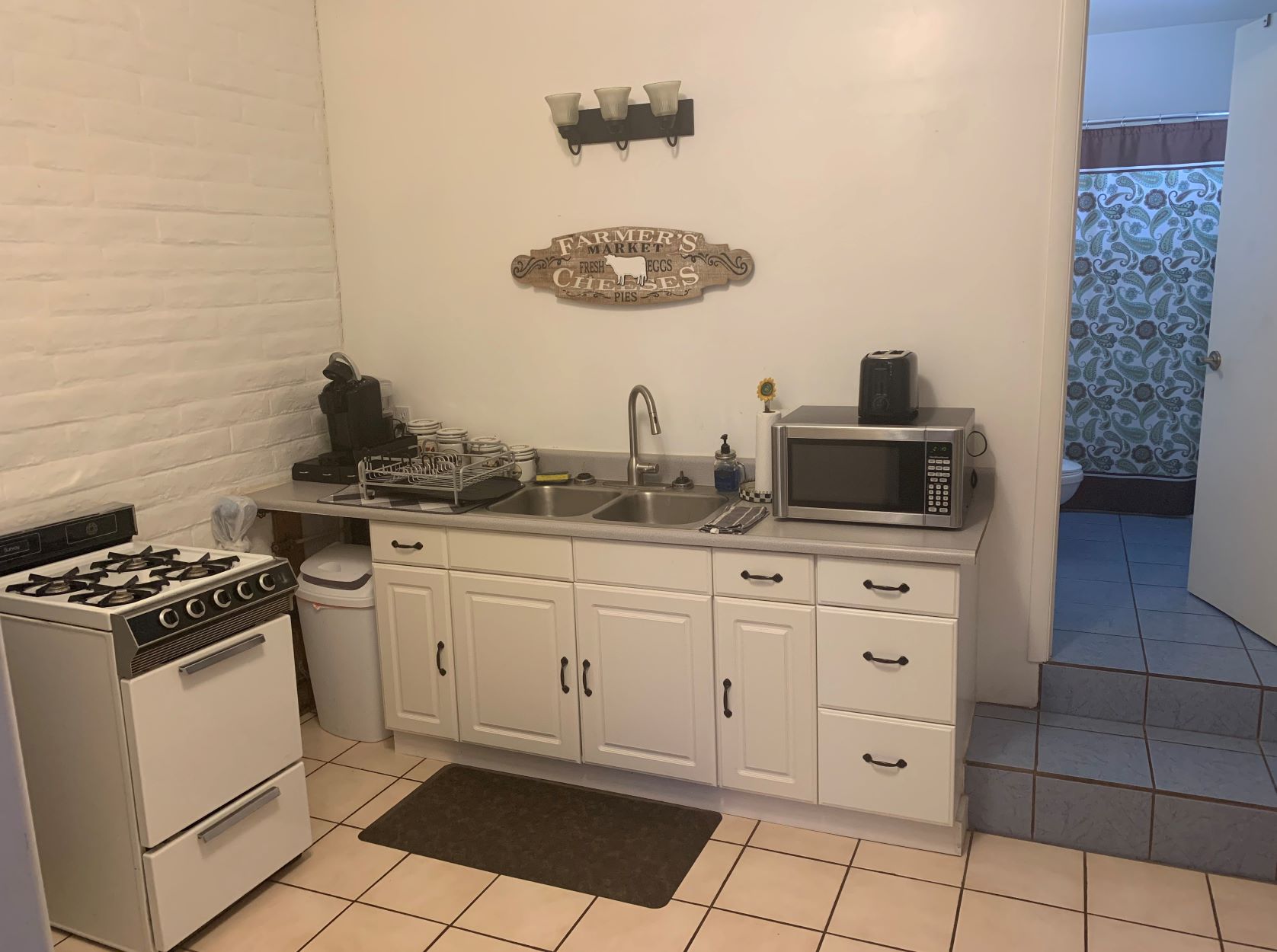
My Air B&B was behind the museum, out in the middle of the desert.
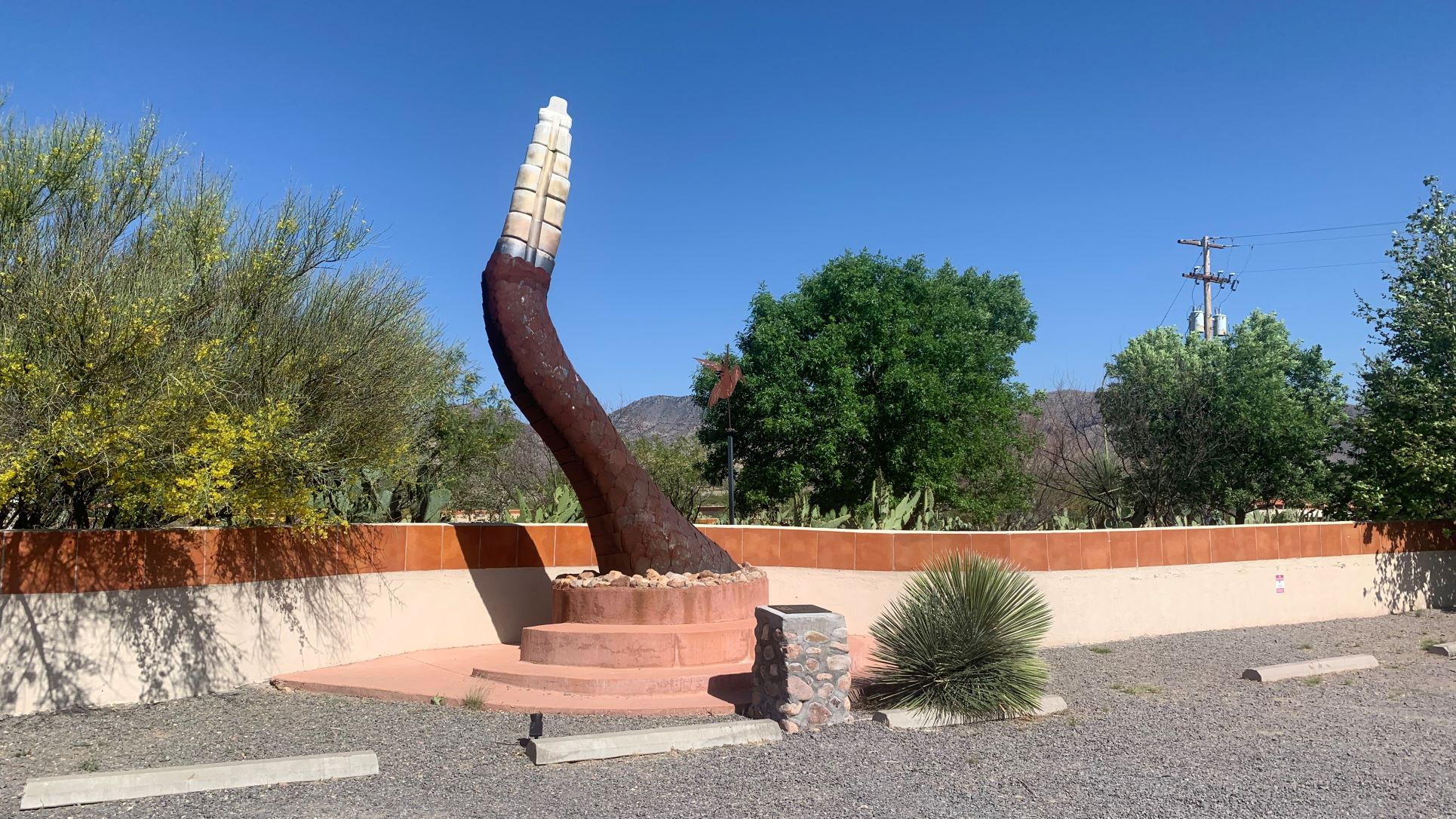
I unpacked and headed over to the museum (for which I had a free pass). It turned out to be an excuse for some guy to display his collection of live rattlesnakes and snake-related things (like the world’s largest collection of snake bite remedy kits). I shouldn’t have been surprised — this was in the parking lot.
I didn’t stay long in the museum itself, but the garden (behind the wall in the photo above) next to it was impressive. There was water — a big draw for birds in the desert — and several feeders. In 45 minutes, I saw 17 birds, including my first lifer for the trip, a Bendire’s Thrasher.
My cabin was half a mile from the Arizona state border and 10 miles from the community of Portal, Arizona, which is maybe even less impressive than Rodeo. Let me say here that I didn’t realize for a few days that Arizona doesn’t observe Daylight Savings Time. Because I was so close to the border and in an area where cell coverage was spotty, my phone sometimes switched times and sometimes didn’t. This meant that for three days, I was constantly confused about what time it was.
My destination for the next few hours was Cave Creek Ranch, a resort of sorts at the mouth of Cave Creek Canyon. It’s a huge draw for birders (but much more costly than my cabin). They have a big feeder station by the lodge and scattered feeders by all the cabins. I wandered around for an hour or so, then sat on the porch with a couple other birders and watched the show. I used the opportunity to talk to them about where to find various birds I was hoping to see. This became a regular thing for me on this trip — asking random strangers for information. When did I become a guy who talks to people? I don’t even know who I am anymore.
I was back at my cabin as the sun was setting. I wanted to get in a little more walking for the day, so I set off into the desert on a dirt track behind my cabin. Before long, I saw a Lesser Nighthawk, my second lifer for the trip. Before going to bed, I sorted out my bird lists for the day and made plans for Friday.
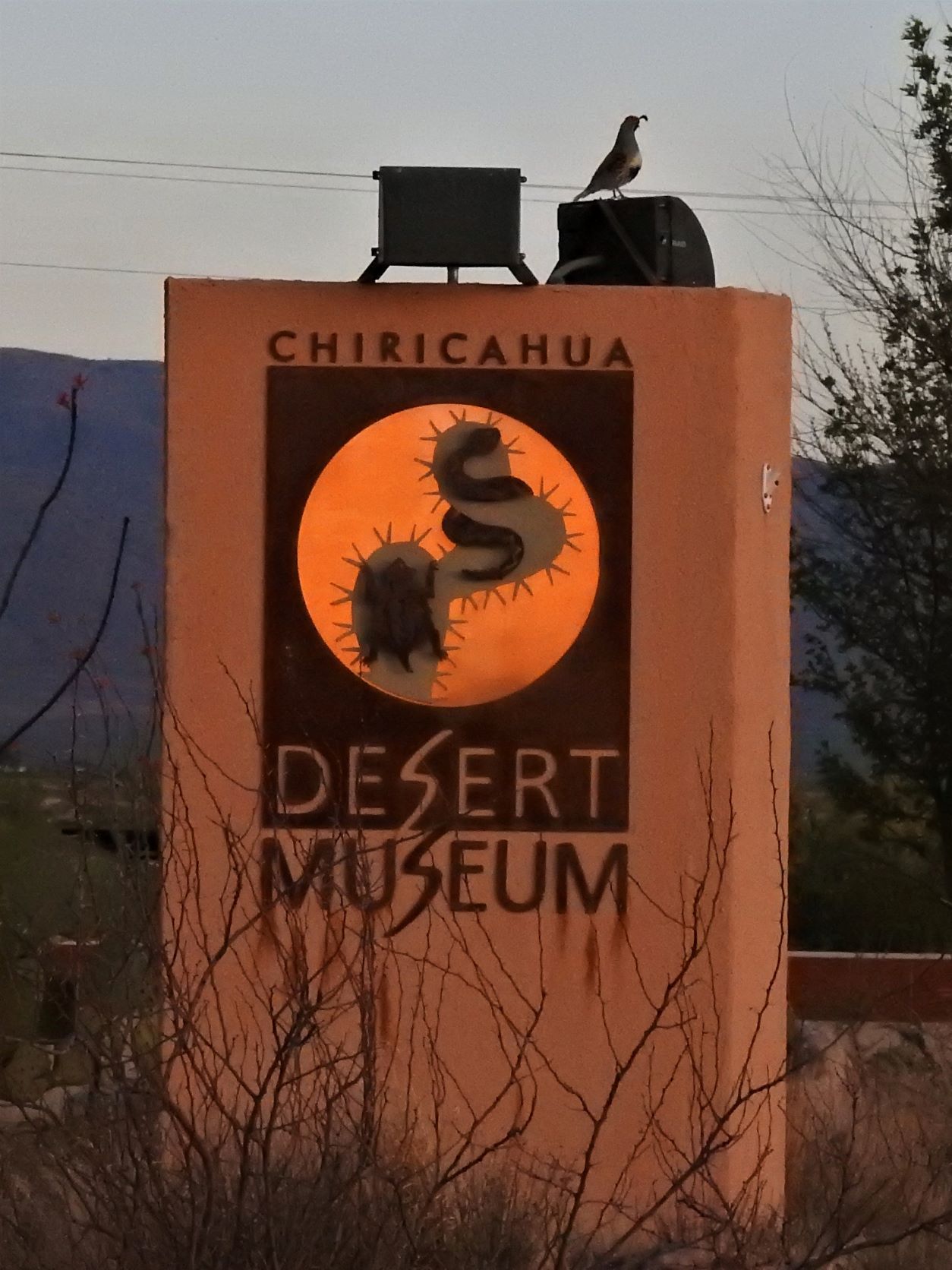
I thought the wild Gambel’s Quail on top of the museum sign was a nice touch.
Birds seen today — 93
Lifers — 2 (total for the trip — 2)
Friday, May 6
Another cool “feature” about the Rodeo/Portal area is that there’s nowhere to get breakfast before 11:00 am or to get food of any sort after 7:00 pm. I lived largely on Pop Tarts and cheese and cracker packs.
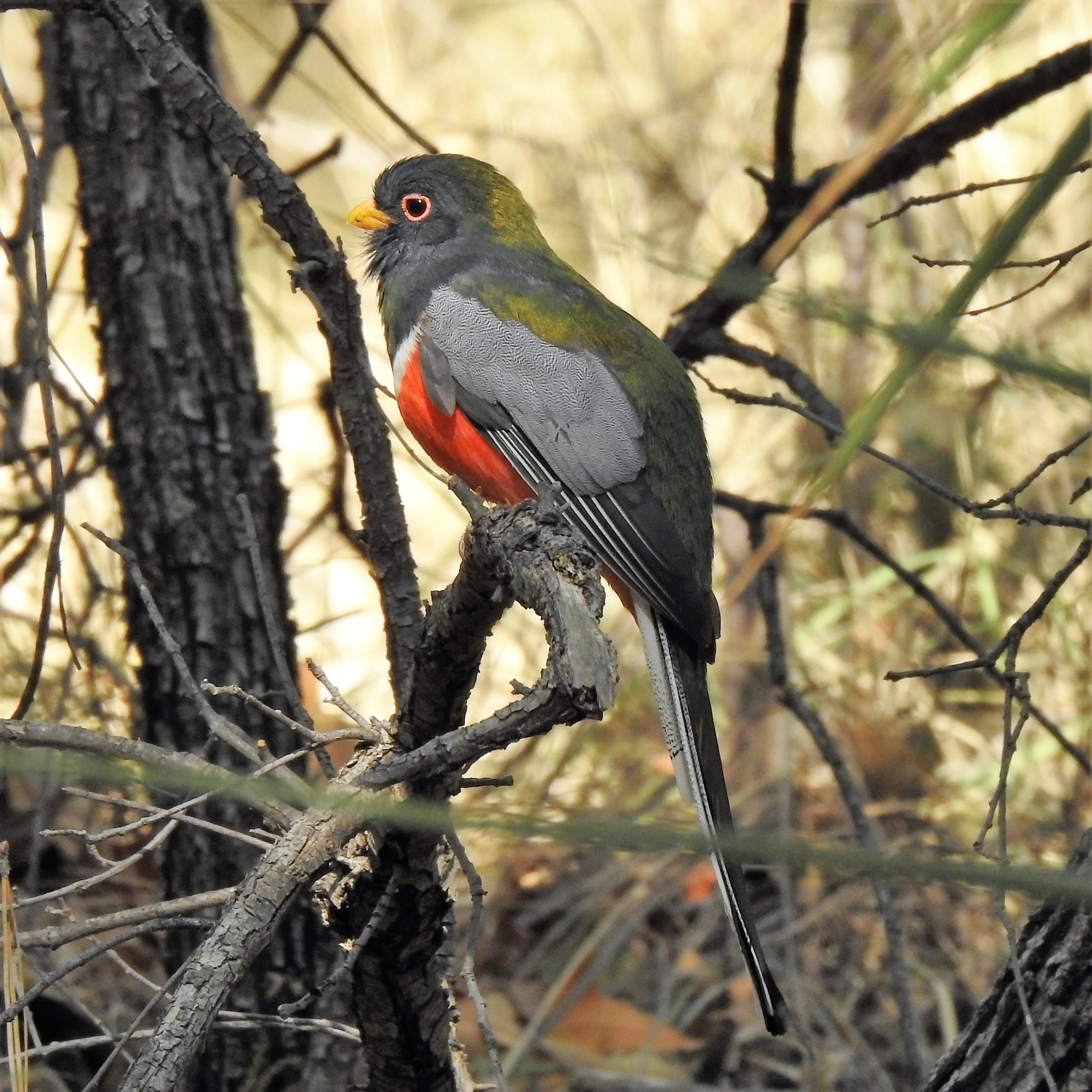
I got up early (I have no idea what time it really was) and headed to South Fork Road, a mile long dirt road that runs through the bottom of Cave Creek Canyon along the South Fork of Cave Creek. The draw here is the Elegant Trogon, an exotic Mexican species that reaches the far northern edge of its range in the small mountain ranges of southern Arizona. I was told by one of the birders the night before that they’re easy to see along this road, and that he and his wife had just seen a pair that morning. I was the first one on the road this morning, and I have to say it’s one of the prettier places I’ve been birding.
I walked up and down the road, watching and listening for trogons. More birders came — there were probably 40 during the course of the morning. But the trogons weren’t cooperating. People began leaving. I saw the guy who’d seen one the day before and asked him where. He said it was half a mile down a trail past the end of the road. So why were we looking on the road? I headed down the trail and soon heard a trogon. A short time later, I found it. It’s an extraordinary bird.
I drove back to the main canyon and stopped at a place called the Southwestern Research Station. I never bothered finding out who they were or what they researched, but they put out hummingbird feeders and welcomed birders. I saw five species of hummingbird in the next hour. I also met three birders from Denver who were about to drive further up the canyon to Rustler Park. We ended up going at pretty much the same time. The road was 10 miles of dirt and rocks, and I took it slowly. I spent about an hour birding in the pine grove in the picnic area at the top of the mountain and saw two more lifers, the Red-faced Warbler (one of my target birds for the trip) and the Mexican Chickadee.
It was early afternoon when I drove back down into the canyon. I stopped at the research station again, but action at the hummingbird feeders had slowed down. I decided to eat an early supper, drove to the one place in Portal that served food, and ordered a cheeseburger. I met the birders from Denver who I’d already seen at the Research Station and at Rustler Park. And it turned out we’d both decided to spend the late afternoon birding along South Fork Road again. That got me two more lifers — Mexican Whip-poor-will and Dusky-capped Flycatcher — and another look at the trogon.
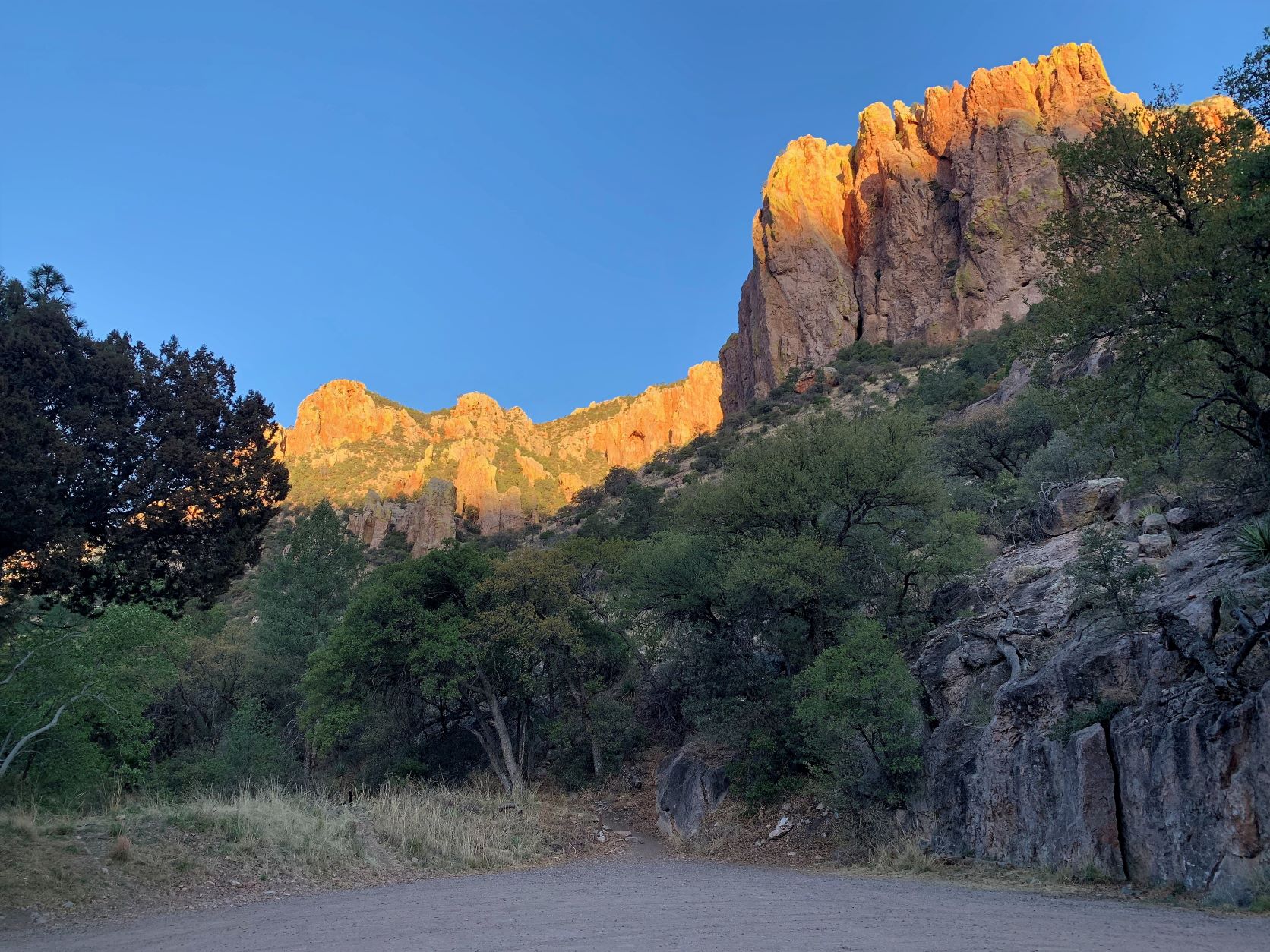
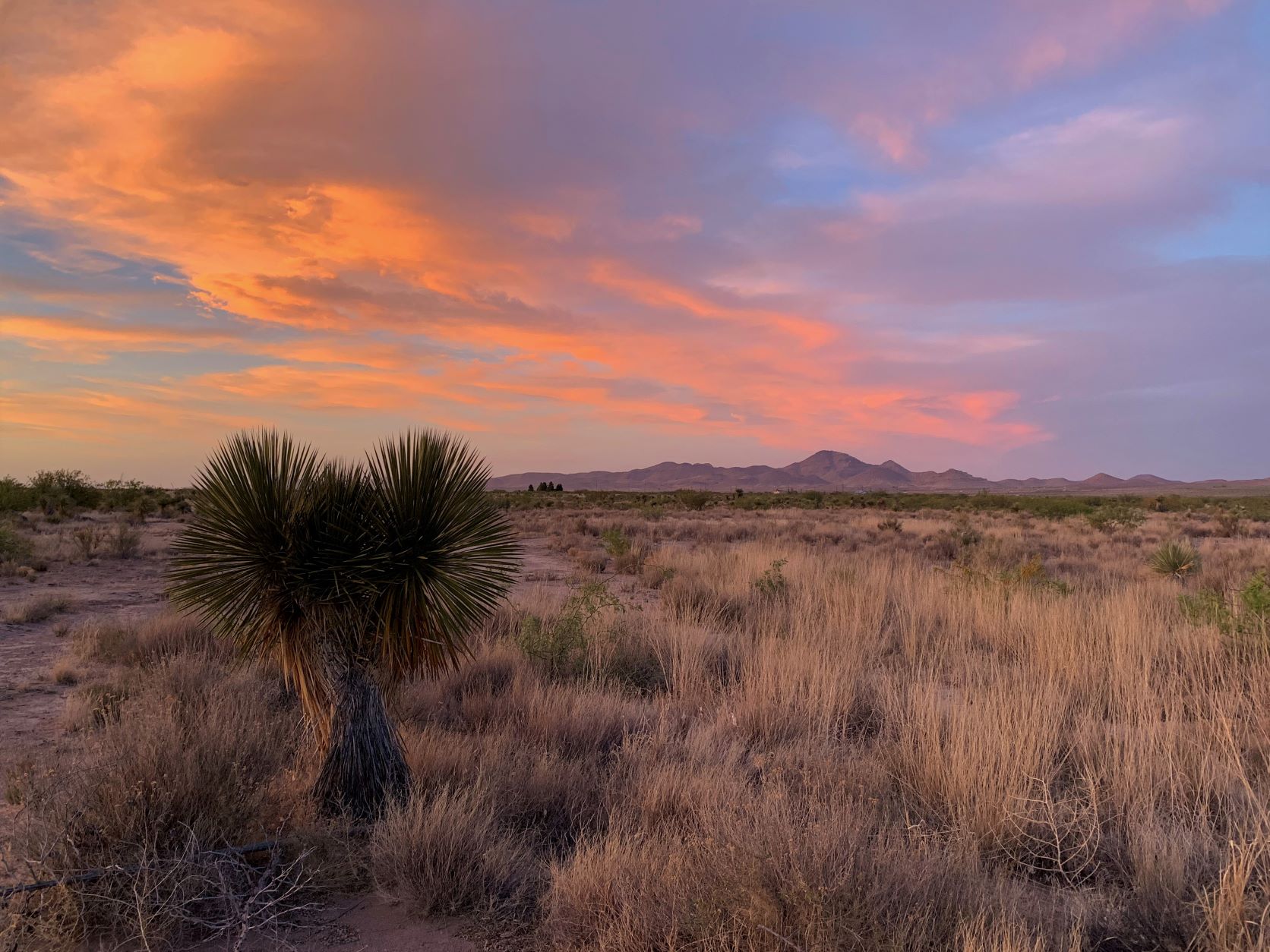
The Chiricahua Mountains from my cabin.
Birds seen today — 55
Lifers — 5 (total for the trip — 7)
Saturday, May 7
I woke up at some time or other and went back to South Fork Road because I liked the place and because birders kept telling me Arizona Woodpeckers were easy to find there and I hadn’t seen one yet. I finally did just as I was leaving. I also found the trogon again, or rather, it found me. On a couple of occasions during the morning when I was looking for other birds, it flew into view
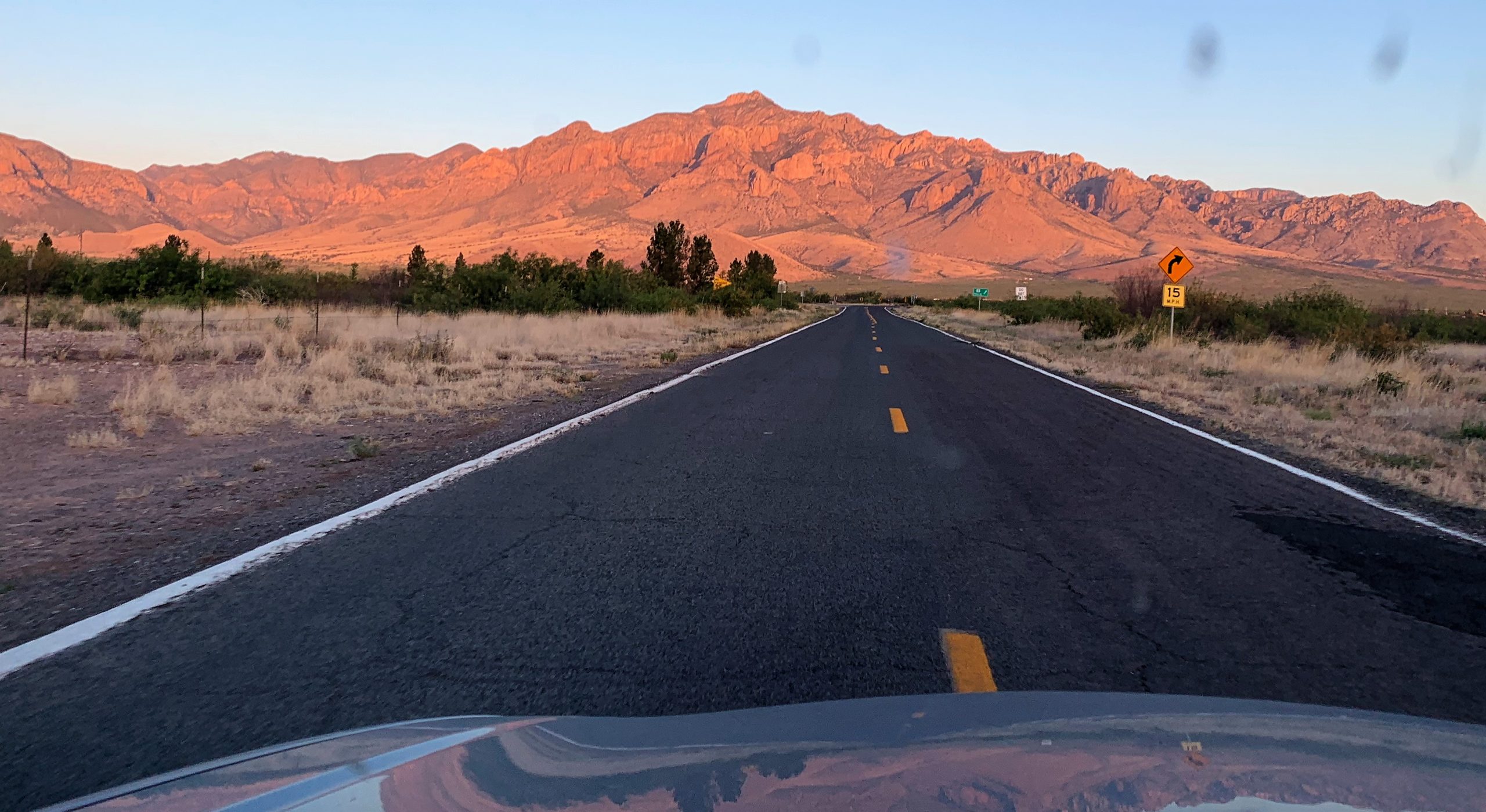
My early morning drive from Rodeo to Portal.
There’s this odd birding culture in southern Arizona. People set up a lot of feeders in their yard, invite birders to come, and charge admission. You can see some nice things, but it can also get expensive. I needed a Crissal Thrasher for my list, and one of the very few places where you’re likely to find one without a great deal of searching is in a specific yard in the mesquite desert just outside Portal. The bird wasn’t as cooperative this day as it often is, and it took me two and a half hours of waiting to see it. But still, it was only midday and I had to find somewhere to bird the rest of the day. There weren’t any lifers to be seen close to Portal/Rodeo, but there was one about 40 miles away — 20 miles out of Rodeo on a paved road and then 20 miles up into the Chiricahua Mountains on a gravel road. The bird was a Tufted Flycatcher, and there may only be two of them in the entire United States at the moment. My quest led to the adventure of the flat tire, which you can read about on the flycatcher post.
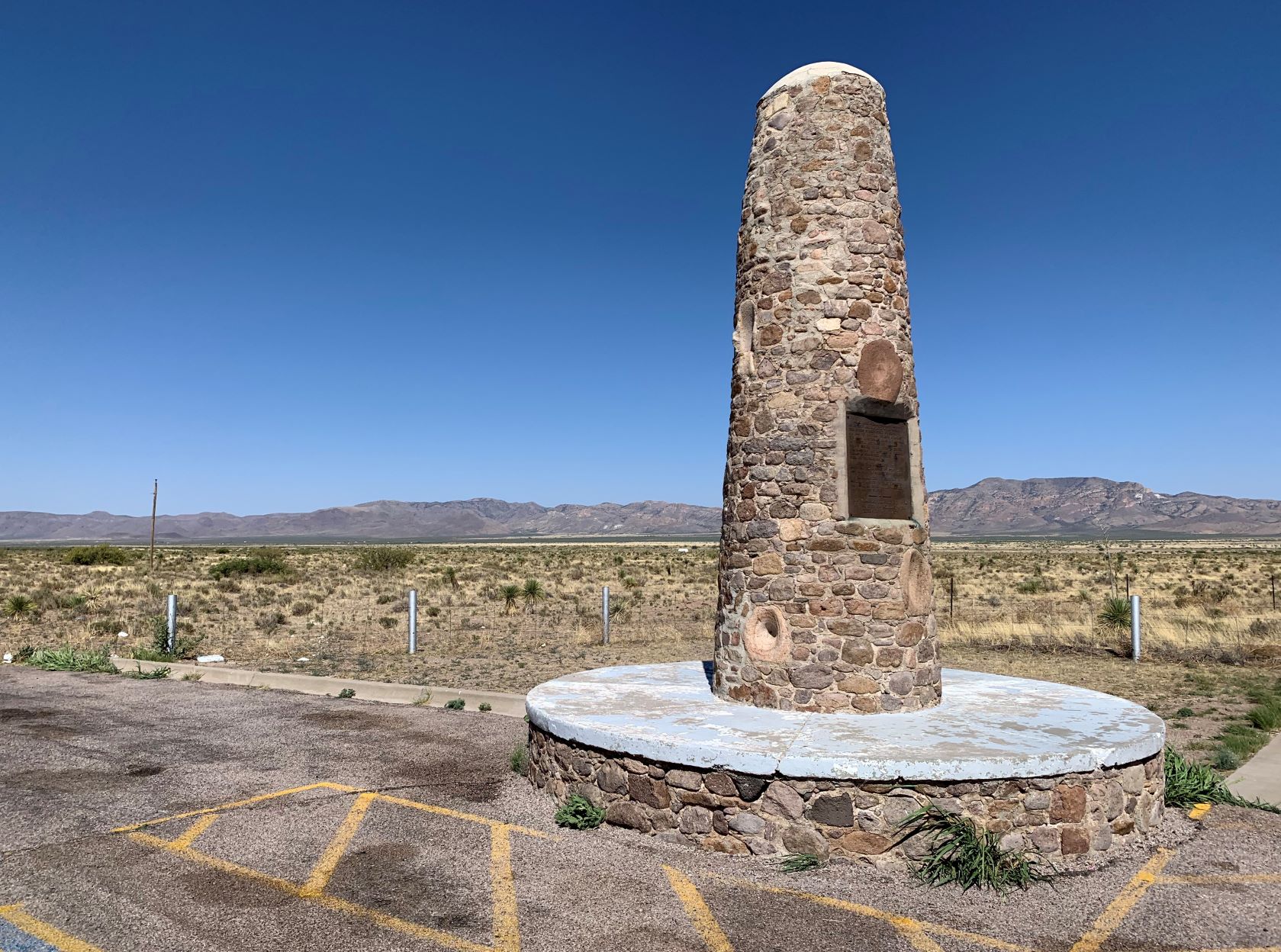
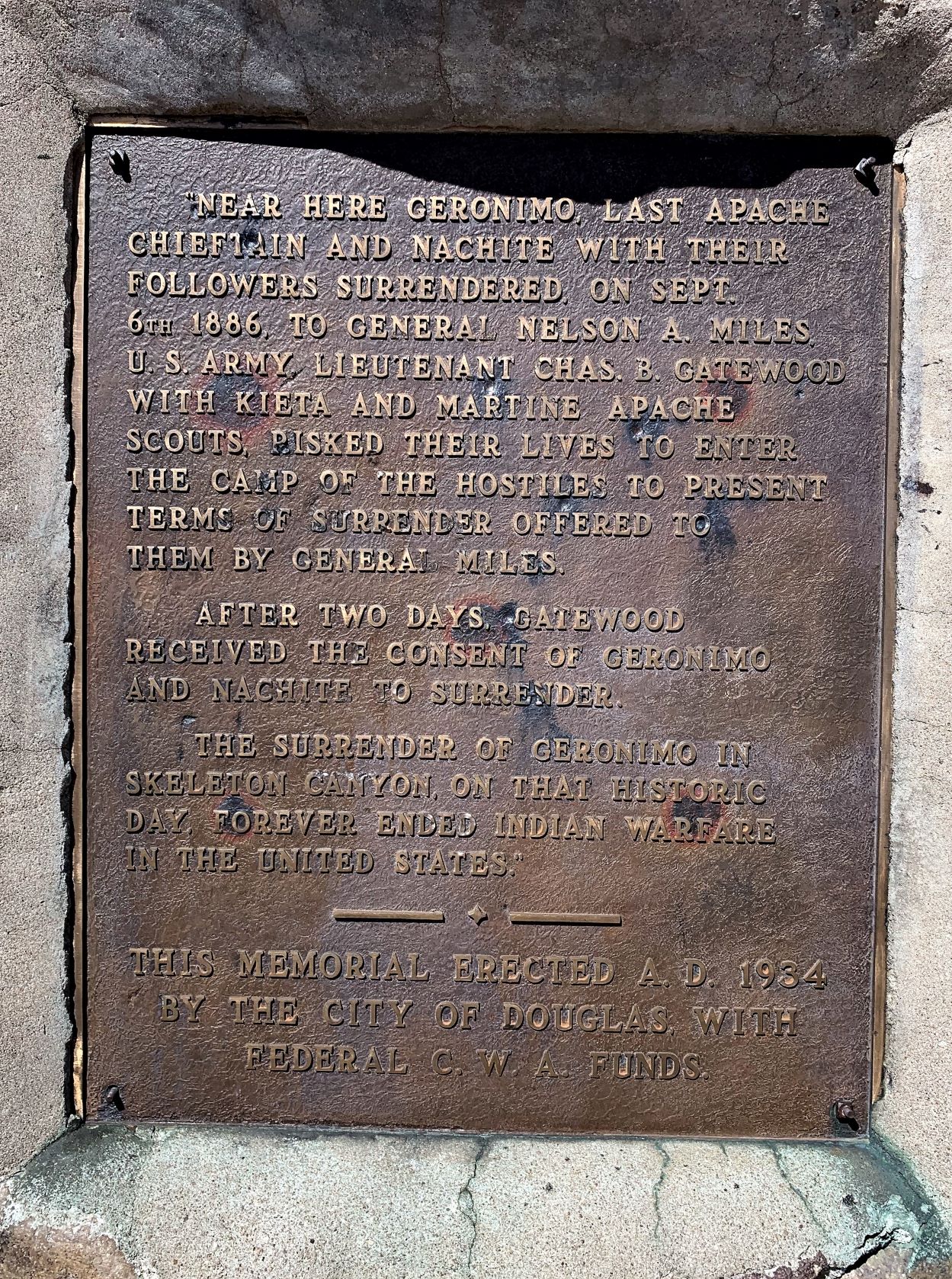
On my way back to the cabin, I pulled over to take a brief look at this monument.
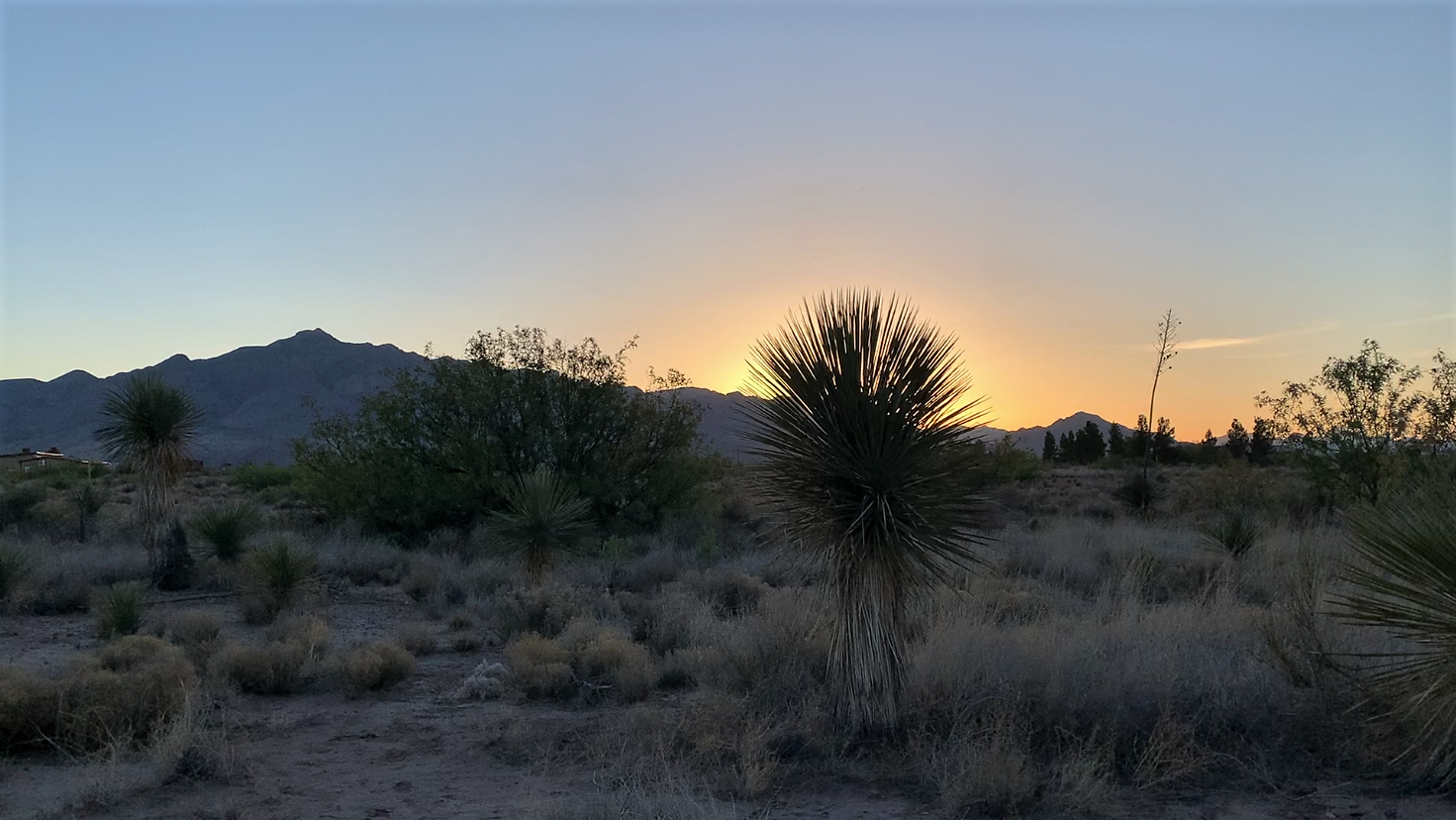
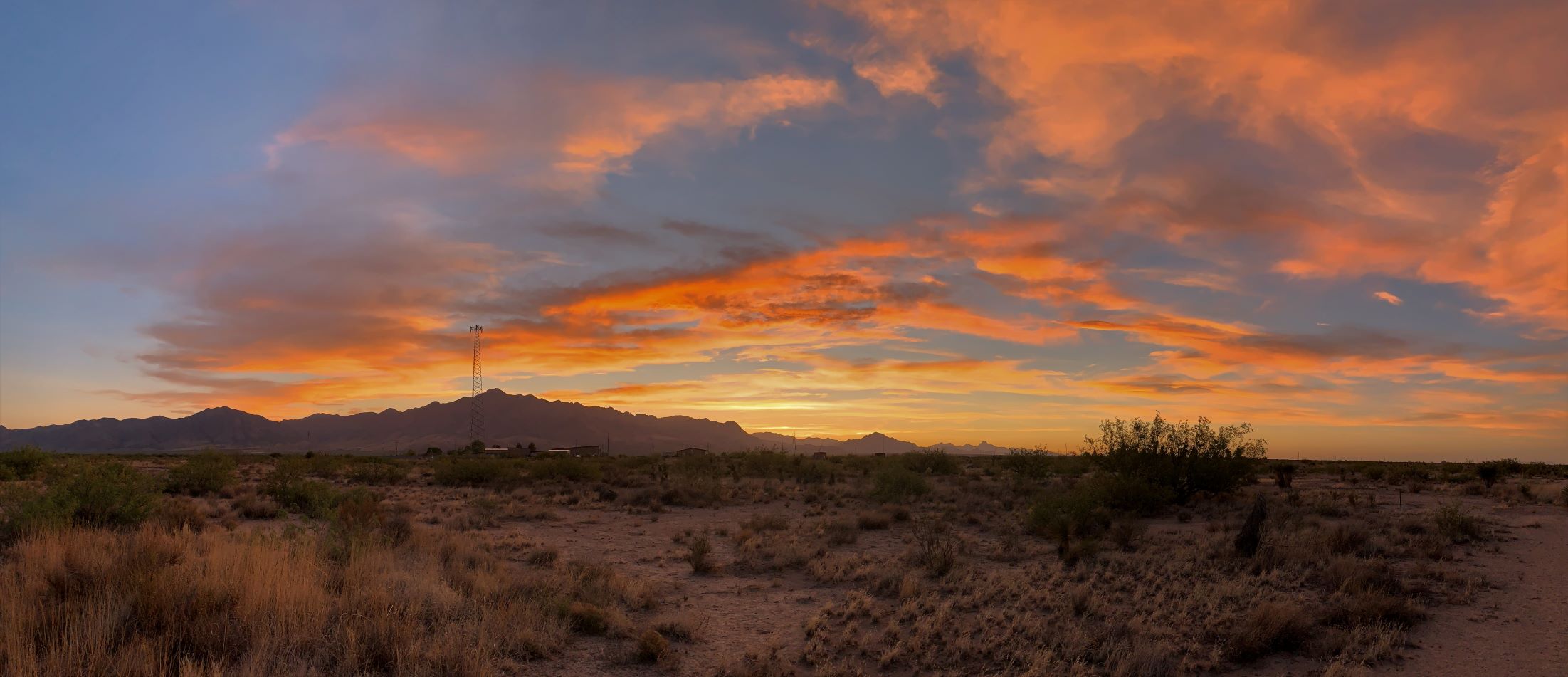
When I’d limped back to Rodeo, it was about 5:30 in the evening. I didn’t want to go far on my donut tire. It was early in the day to quit birding, but that meant that it was still early enough to buy an actual meal. I drove slowly to a restaurant/store half a mile away and bought a tasty cheeseburger. At dusk, I wandered out into the desert again — enjoying the sunset and experiencing the novelty of being absolutely alone.
Birds seen today — 56
Lifers — 3 (total for the trip — 10)
Flat tires — 1
Sunday, May 8
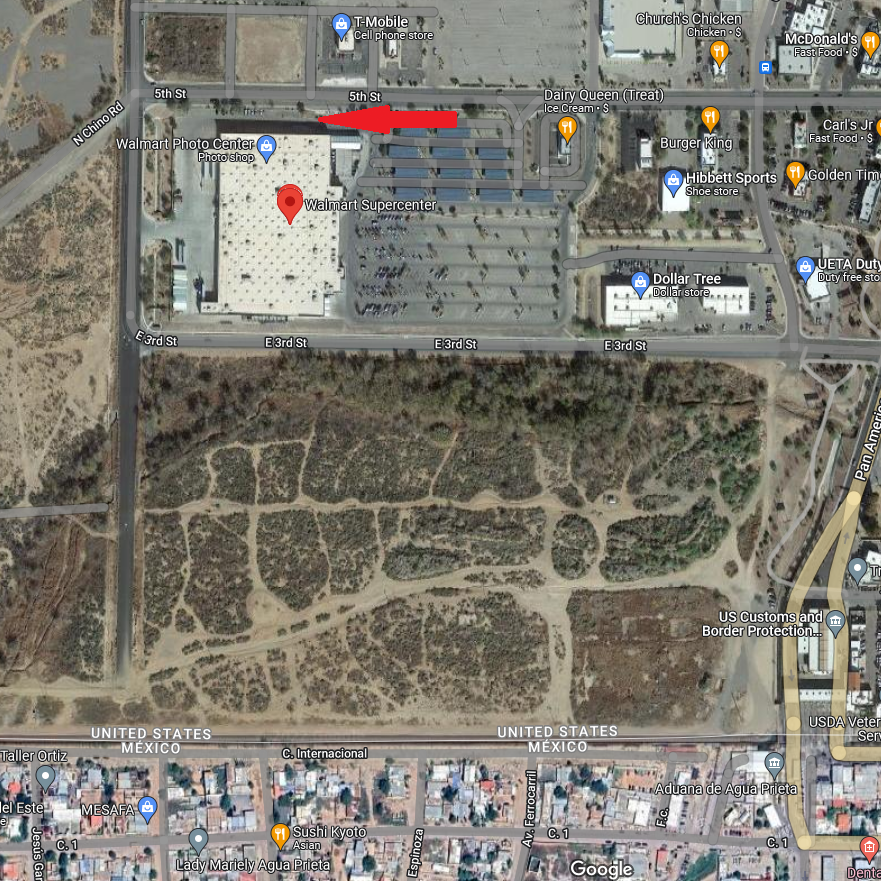
I got up at 5:00 (at least I think that’s when it was) to make the 68-mile drive at 45 mph to the Walmart in Douglas, Arizona to get a new tire. Of course I still hadn’t figured out the time thing, so I arrived an hour and a quarter early, and then the auto shop at Walmart opened 15 minutes late, so I sat in the parking lot, half a block from the Mexican border, for a long time. But eventually I was on my way.
This is how close I was to the Mexican border.
On my way west, I made two stops, about two miles apart, in two separate canyons of the Huachuca Mountains. Each place featured a rare hummingbird — Lucifer Hummingbird in Ash Canyon and White-eared Hummingbird in Miller Canyon — that I needed for my life list, and I saw them both with little trouble. At the second stop, Miller Canyon, I hiked a mile up the canyon from the hummingbird feeders to take pictures of warblers. Read here for my adventures with a local moron.
I stopped at a third place in the Huachuca Mountains — Ramsey Canyon Preserve. When I was in Arizona in 1984, this was my favorite stop. I added a bunch of lifers in a short time, and the place felt remote and beautiful. The area has been built up a lot since then. And on a Sunday afternoon, it was basically the hiking trail for residents of Sierra Vista. It didn’t feel at all like the place I remembered, and I didn’t stay long.
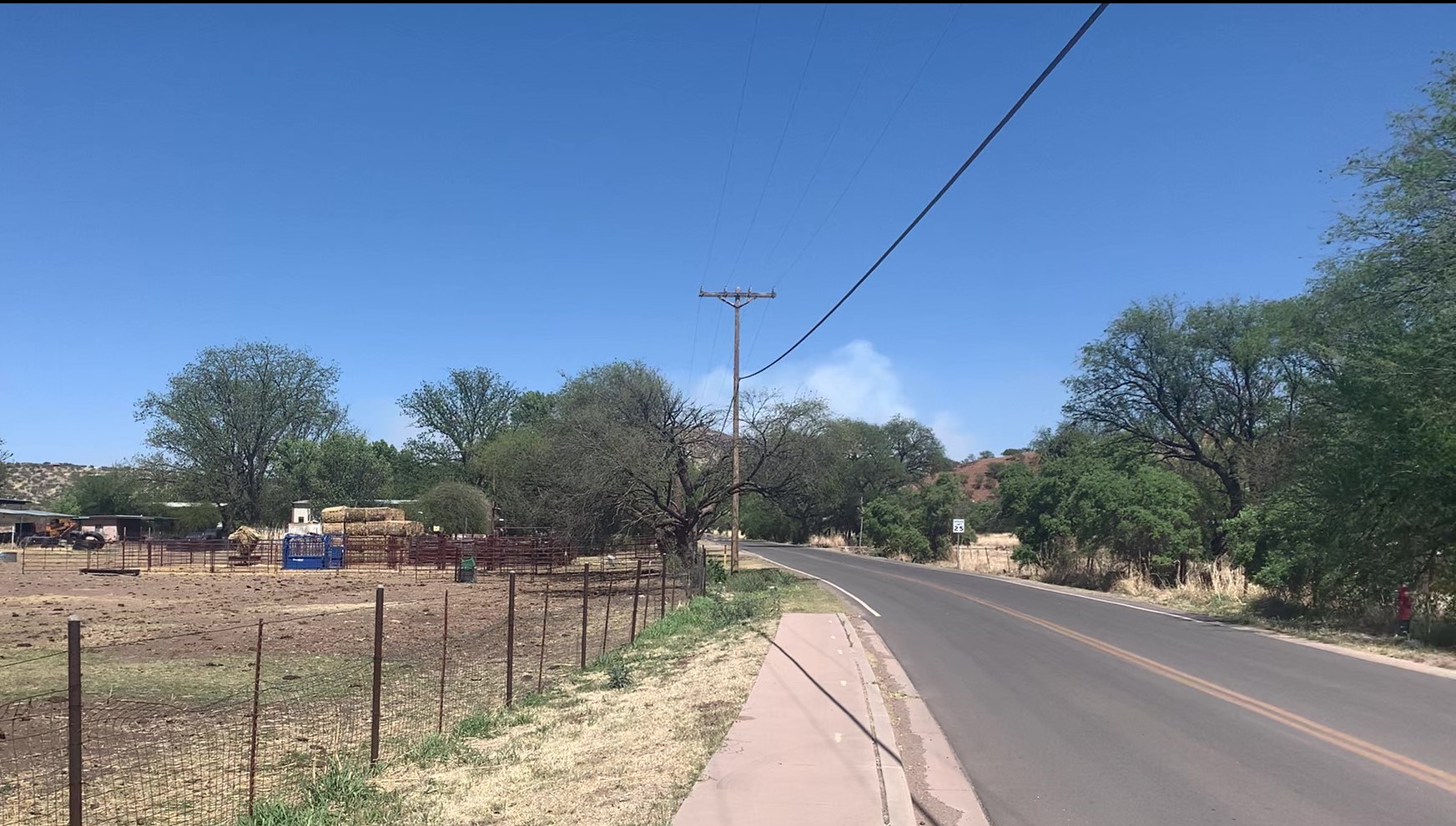
There was a fire west of Sierra Vista, and my route to Patagonia, my next stopover, went around three sides of it. When I got to my next Air B&B, it looked like the fire was right over the hill. I took this photo from the driveway.
I shortly got a message from my hostess saying that the fire was right over the hill but that the wind was blowing it away from me. I didn’t hear a thing about it the rest of the time I was there, so …
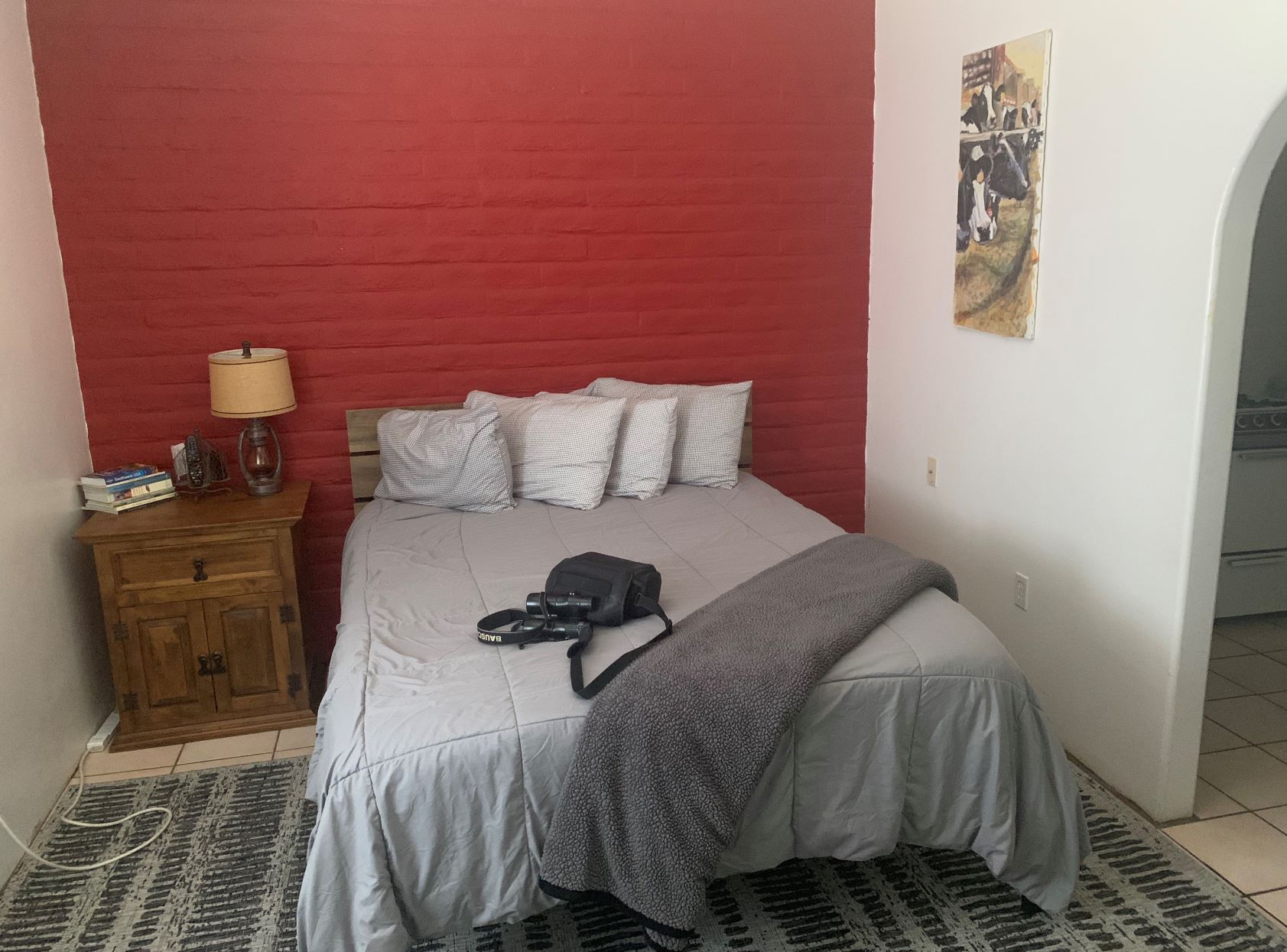
Anyway, my Air B&B was a small attachment to a house (which was a larger Air B&B). It was right up against a cow pasture.
I unpacked and headed for Paton’s Center for Hummingbirds. This is another yard set up with feeders. In this case, the owners have died and a local group bought the land and runs the sanctuary. I visited five or six times during the four days I was in Patagonia. Birders were constantly coming and going, and I met several of them multiple times.
A 22 mile drive west of Patagonia, the Santa Cruz River runs through the towns of Rio Rico, Tumacacori, and Tubac. Several lifers were waiting for me along the river, so I headed over early in the morning. Unlike my time in Rodeo/Portal, this area had civilization, complete with fast food restaurants and shopping malls. The De Anza Trail runs along the river and is the corridor birders use to get to the birds. I made two stops along the trail this day and came away with four lifers — Brown-crested Flycatcher and Green Kingfisher at Rio Rico and Rose-throated Becard and Northern Beardless Tyrannulet at Tubac.
I spent some time at Paton’s when I got back to Patagonia, then headed back to my place. At 7:30, a guide named Matthew picked me up. I’d hired him (for $25/ hour plus gas) to show me the local owls and nightjars. Three hours later, he dropped me back off, two lifers to the good — Elf Owl and Whiskered Screech-Owl. I didn’t bother telling him that the Mexican Whip-poor-will that I asked him to show me, and which he spent so much time and effort finding, was no longer a lifer. I’d heard one in Portal. But it was cool to see the one that responded to Matthew’s recording. During the three hours, we met four cars — all of them border patrol officers. They didn’t find us suspicious, but they did warn us that they’d seen a lot of snakes on the roads. I forget exactly why, but Matthew suggested that, now that I knew where the owls could be found, I could come out by myself the next night. I laughed and said, “I’m a suburbanite. Between illegal immigrant smuggling (there were signs warning that it could be encountered in the area), border patrols, and rattlesnakes, going out here at night by myself is waaaaay out of my comfort zone.”
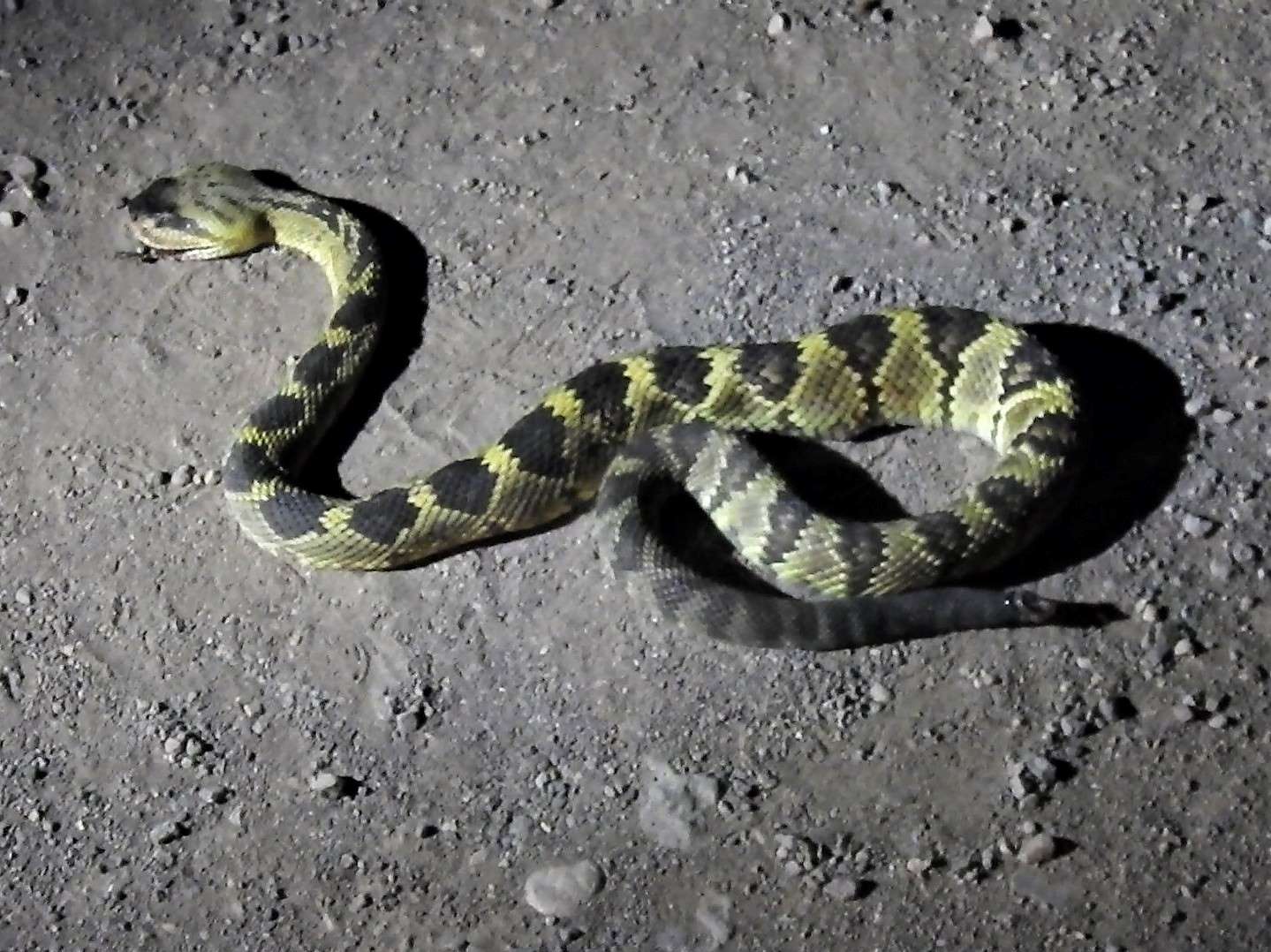
We did see a Black-tailed Rattlesnake on the way back to my cabin. It’s head had been crushed by a car so recently that the body was still moving.
Birds seen today — 59
Lifers — 6 (total for the trip — 21)
Tuesday, May 10
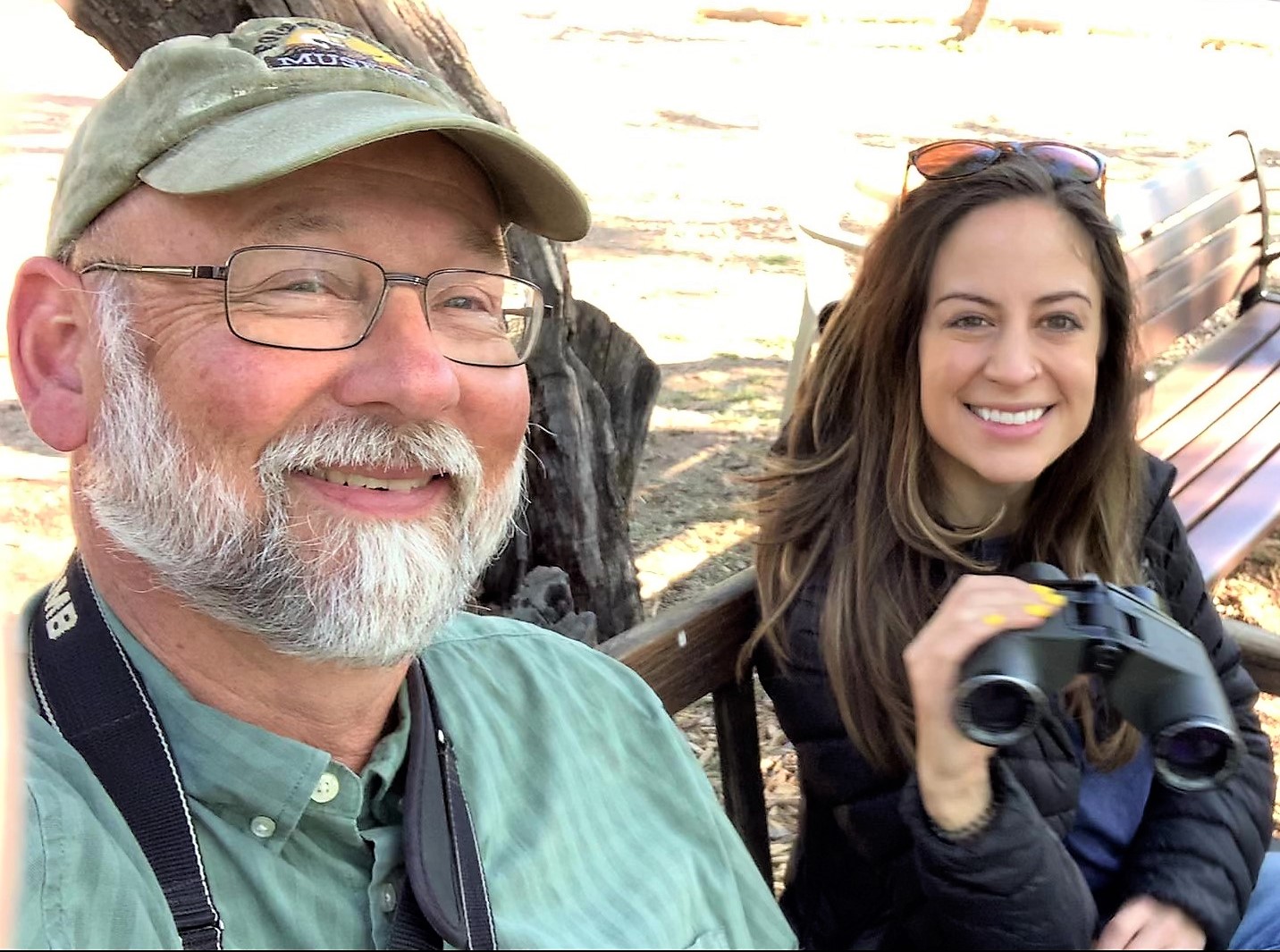
I’d been birding hard every day pretty much from sunup to sunset, for five days, and I’d been out owling until almost 11:00 pm on Monday. I needed a break, and today was it. Maddie, former coworker and good friend, moved to Tucson recently. She drove the hour down to Patagonia and met me at Paton’s. We spent a couple hours sitting and chatting and watching birds come to the feeders.
We then ate brunch at a local cafe. She asked what my plans were for the rest of the day, and I told her I was going to visit the Patagonia Picnic Table.
Some background here. Back in the 1970’s, some birders were eating lunch at a roadside rest area about four miles south of Patagonia. They saw a pair of Rose-throated Becards, Mexican birds not known to breed in the United States. When word got out, birders came from all around to see it and, in the process, found some other rare birds at the rest area. This phenomena became know as “the Patagonia Picnic Table Effect,” which means, essentially, that a rare bird sighting brings birders to an area which, in turn, results in the finding of more rare birds. Anyone who’s been birding for long has heard about it. Studies have shown that it’s not really a thing, which is disappointing, but it’s still fun to talk about and the name is cool.
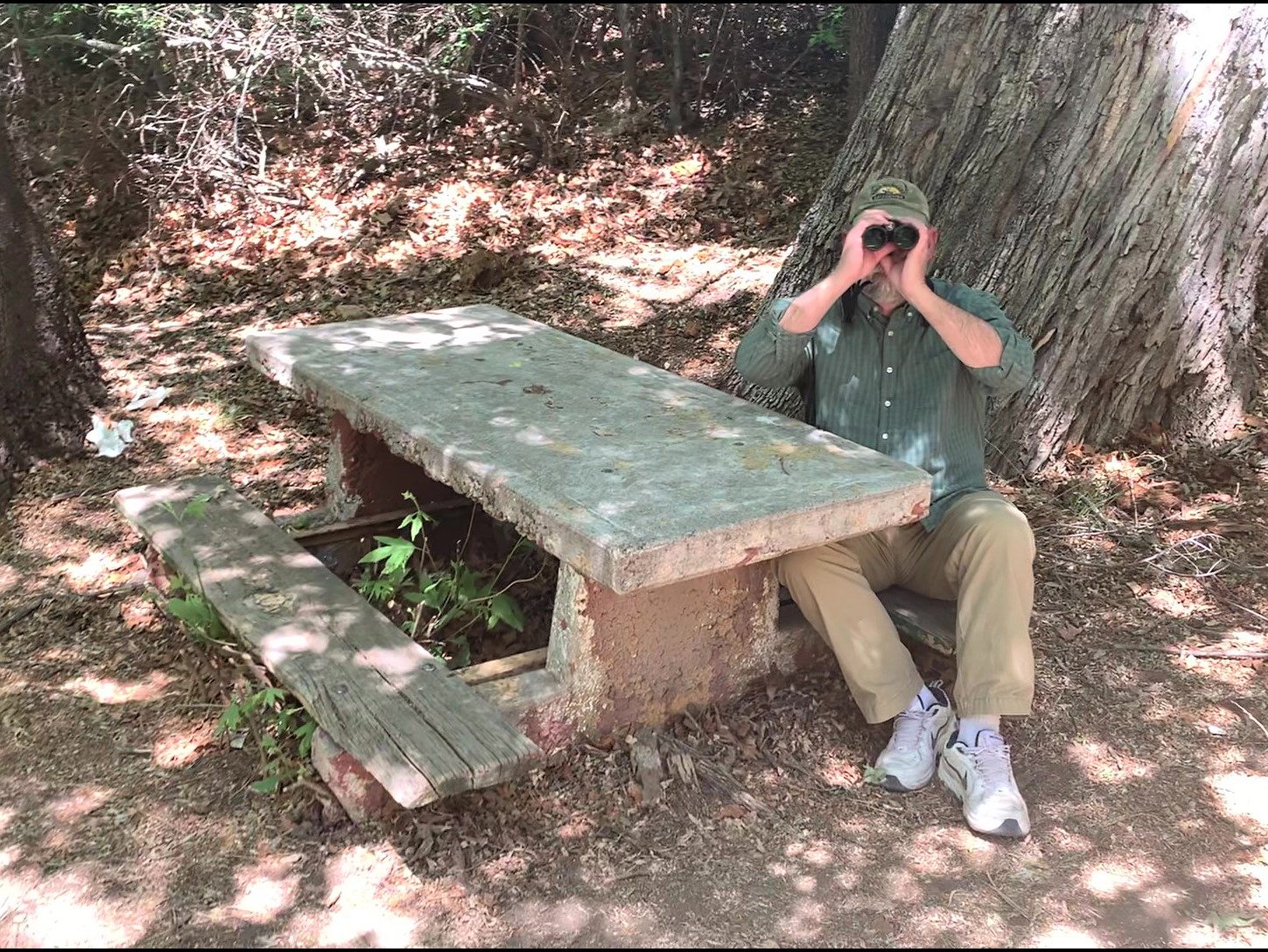
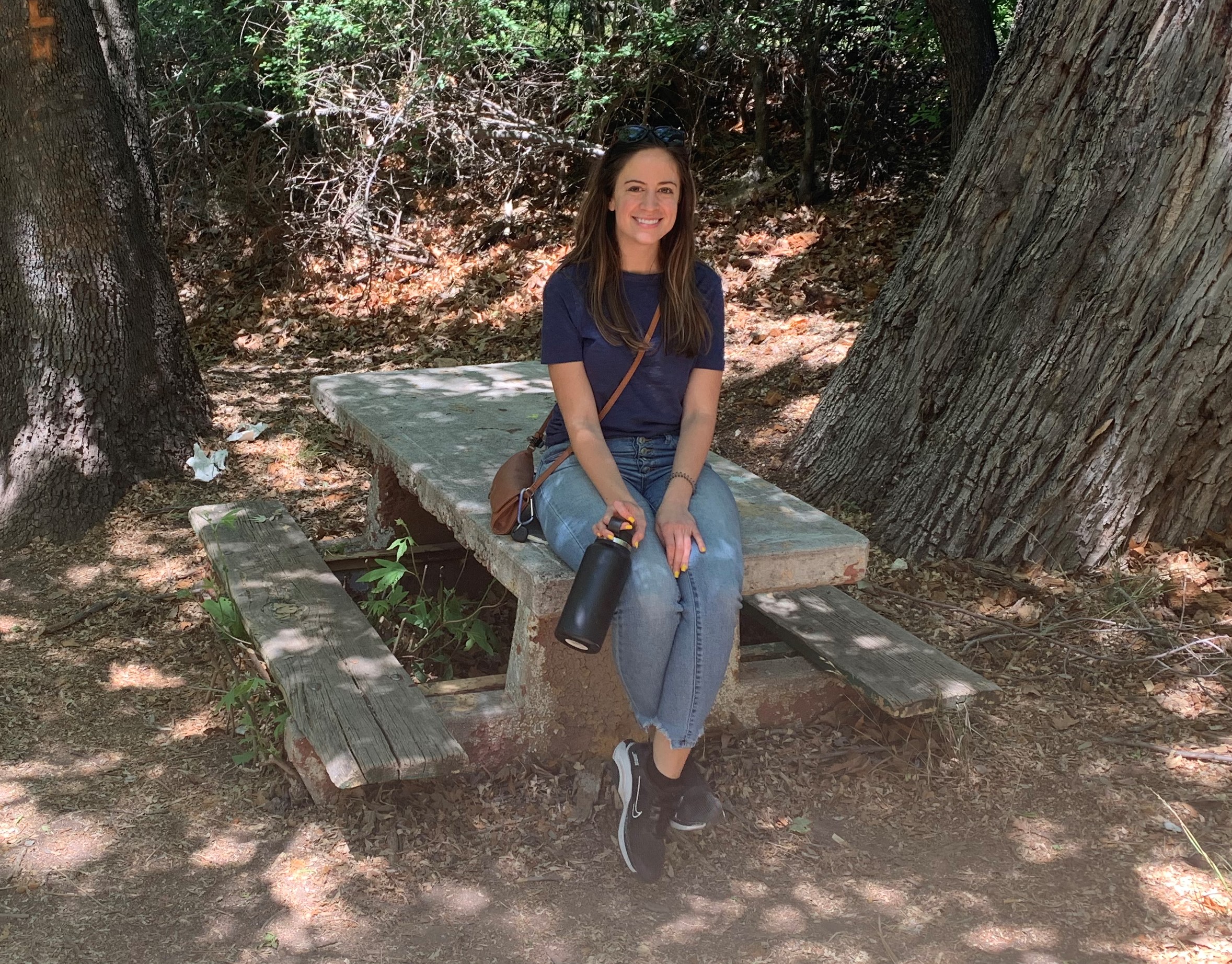
Apparently, at some time in the past, I’d mentioned the Patagonia Picnic Table Effect to Maddie, and she immediately said she’d like to see it. So we hopped in my car and drove south and took photos by the famous picnic table — a Mecca of sorts for birders.
After Maddie left, I went to Patagonia Lake State Park, where Varied Buntings had been seen recently. I found the mulberry tree where they were seen, but didn’t find any. They were found there again the day after I visited, so I probably wasn’t patient enough. This is my one regrettable miss of the trip. Only one isn’t bad.
I also saw a band of Coati rooting in the grass in the woods along the lake. I’d seen one briefly back in 1984 when it ran across the road in front of our car. I saw three climbing the canyon wall in Portal on Saturday but didn’t have a chance for photos. I thought this was something special, but soon I began seeing them everywhere — Patagonia Lake, Madera Canyon, Sonoita Creek Sanctuary. I’ve compiled all the video into one.
I spent some time at Paton’s again in the late afternoon.
Birds seen today — 57
Lifers — 0 (total for the trip— 21) I think this is the first day I’d ever been in Arizona since I began birding in 1979 when I didn’t see a lifer.
Wednesday, May 11
I drove back over to the Santa Cruz River and birded another section of the De Anza trail, bagging two lifers — Rufous-winged Sparrow and Thick-billed Kingbird — within 20 minutes of each other, all by 6:30 in the morning. I drove north to Rucker Canyon in the Santa Rita Mountains to search for a Five-striped Sparrow, another bird on the U.S. rare bird report. There were about 25 birders there looking for it, and it was eventually seen by most of them including me.
I drove out of Rucker Canyon and into Madera Canyon, another spot I birded back in 1984. I didn’t see any lifers, but I got some nice photos at the feeder station at Santa Rita Lodge (another must-do destination for birders).
Birds seen today — 53
Lifers — 3 (total for the trip — 24)
Thursday, May 12
When deciding what to do today, I looked at my list of target birds. I’d seen everything (but the Varied Bunting I missed at Patagonia Lake) except for a few rarities that were a long way away at the end of long drives on dirt roads — and a Botteri’s Sparrow. These were being seen with some regularity at the base of Madera Canyon, where I had just been on Wednesday. That meant a two-hour round-trip drive, but I’ve gone a lot longer than that for a lifer, so I decided to go for it. The sparrow wasn’t easy to find, but I persevered and got great looks.
I also visited the Patagonia-Sonoita Creek Sanctuary, where I’d seen nine lifers in about an hour back in 1984. It was a hot afternoon and not much was stirring, but at least I didn’t get the negative vibes here I got at Ramsey Canyon.
I spent a couple hot hours in the afternoon in a mesquite grove near Paton’s trying to get a decent photo of a Lucy’s Warbler. The photos I got are lousy. I told some other birders that I was assembling the world’s finest collection of photos of branches that Lucy’s Warblers had recently vacated. They knew exactly what I was talking about. These birds are tiny, they move fast, and they don’t stay in once place — or even one tree — for more than a few seconds. Here’s the best photo I got after two hours of trying.
I went back to the Patagonia Rest Area to compile an actual list at the famous picnic table. It wasn’t an impressive list — I only saw two birds — but it’s in the records.
Birds seen today — 34
Lifers — 1 (total for the trip — 25)
Friday, May 13
I drove north to Tucson in the morning to visit the Arizona-Sonora Desert Museum, another memory from 1984. And as in 1984, I arrived early and did some birding in the Tucson Mountain Park that surrounds the zoo. This netted me a great photo of a Lesser Nighthawk, a bird I’d seen twice on the trip but hadn’t gotten a photo of. That meant that I had a photo (of one quality or another) of every lifer on the trip.
I was at the zoo gate when it opened and spent nearly three hours looking at the exhibits while birding. The museum is about 70% desert botanical garden and 30% zoo, and it attracts a lot of wild birds.
When I was planning this trip, I didn’t plan on the heat in Arizona. This day got up into the high 90’s and it did so with gusto. When I wasn’t enjoying myself anymore, I left. I made a loop through Saguaro National Park, but barely got out of the car. Then I headed toward Phoenix where I’d made reservations at a grungy Comfort Inn in Chandler (but to be fair, the bed was comfortable). It was even hotter in Phoenix, and I didn’t really want to go anywhere.
The reason I went by way of Phoenix was the Rosy-faced Lovebird, an African species that has escaped into the wild and established a self-sustaining, and therefore countable, population in and around the city. I thought it would be fun to add a parrot to my list. But again, I hadn’t counted on the heat. Still, I was there. I checked eBird and found that the lovebird was nesting in a palm tree in the parking lot of a CVS Pharmacy just down the road. I summoned the necessary energy and saw it.
I then birded for a couple of hot hours at a place called a Riparian Reserve, which consists of several pond, filled with recycled water and surrounded by trees. It looked like a great place to bird … when it wasn’t 100°. I spotted and photographed a Semipalmated Plover and got my name on the Phoenix rare bird report.
Birds seen today — 47
Lifers — 1 (total for the trip — 26)
Saturday, May 14
This day was a weird one. I had a dilemma. A month or so before, on a whim, I’d checked to see if the Diamondbacks were in town when I was in Phoenix. They were, and they were playing the Cubs. The odds of that seemed so extraordinary, it felt like a sign. I bought a ticket, planning on spending the day looking for the lovebird. Well, I’d already seen the lovebird the night before. It was forecasted to be 104° (and the forecast was correct). I had to be out of my hotel by 11:00 and couldn’t get into the ballpark until 3:40 when the gates opened. What to do in the meantime?
I looked on eBird for places to see a Gilded Flicker. I’d seen one in 1984, but it wasn’t even a species then, just a subspecies of the Northern Flicker. I’d later added it to my list, which protocol allows, but I wanted to see one again and get a photo. There weren’t a lot of places that offered a refuge from the heat, a place to spend four hours, and a chance to see a flicker, but the best option seemed to be the Phoenix Zoo. And so I spent four hot hours at the Phoenix Zoo. It was fairly crowded when I got there around 11:00, but almost empty by mid-afternoon. I saw what there was to see — it’s a pleasant zoo and a surprising number of animals were out and about — and then searched for a place where I wouldn’t boil. I tried a couple benches in the shade, but they were miserable. I finally ended up in a walk-through aviary with a lot of trees that made things barely bearable. Oh, and I saw and got good photos of a Gilded Flicker.
I got to the ballpark very shortly after the gates opened. You can read about the game here.
I left in the middle of the 9th inning because, to cut down on the length of my Sunday drive home, I’d made reservations at another Comfort Inn in Flagstaff, two hours north of Phoenix. The drive up was uneventful, although it’s always weird to go somewhere at night that I’ve never been before. When I got to the hotel, I discovered that my reservation was for the previous Thursday, the day I’d made it. I’m not sure if that was my glitch or the hotels, but such it was. They had a room, but it was $47 more than what I’d reserved it for. I would have looked for other options if I’d known the room was going to cost close to $200, but it was 10:30 on a Saturday night and I was tired. I stepped on a pretzel next to the bed — an added bonus for a $200 room, but again the bed was comfortable and I slept well.
Birds seen today — 14
Lifers — 0 (total for the trip — 26)
Sunday, May 15
It’s a 10 hour and 22 minute drive from Flagstaff to my house. I left at 6:35 — having stuck around to get the “free” hotel breakfast (and some extra food for the drive because $200). Things were going swimmingly, and I was feeling good as I crossed Arizona and western New Mexico. I toyed with the idea of stopping at Petrified Forest National Park, but it was still very early and I, well, I decided not to stop.
As I was entering Albuquerque, my check engine light came on. This stressed me out. I was six hours from home, and it was a Sunday. A friend of my wife’s was visiting her, and we’d made reservations to take the cog railway up Pikes Peak on Monday morning. Stopping somewhere wasn’t a good option. The check engine light often indicates an emissions problem, so I decided that’s what it was and kept going. It was a long six hours. Every time I looked at my dashboard, I saw the light and wondered if I would make it. I kept giving myself odds — a 50% chance I’d get home when I was in Albuquerque; 60% in Santa Fe; 75% when I finally got to the Colorado Border; 80% when I got to Pueblo (and there, at least, I was close enough to home that someone could come get me). I made it home shortly after 6:00. To finish the story, I took my car to the shop the next day and found out I was low on oil, but I hadn’t damaged the car. An oil flush and a refill — along with an alignment after all the dirt roads and flat tires — and the old car (which is 14 years old and passed 190,000 miles near the end of the trip) is good to go.
A few other notes from the trip:
The fire in New Mexico is still burning and looks gruesome.
The McDonald’s in Raton, New Mexico, makes the list of the top five most poorly run businesses I’ve ever visited. It took 25 minutes for a cheeseburger and a large fountain drink.
There was also a traffic jam in Albuquerque. I knew I didn’t like that city.
This sign in Arizona seems … (I texted a photo of it to my friends, and Joshua explained that it meant “Go to the bathroom #1 near a Native American tent,” which I think would make an even funnier billboard.
Anyway, that’s my adventure. I drove 2,490 miles, saw 187 different species of birds, including 26 lifers and at least that many “second-evers” — birds I’d only seen once before, 38 years ago. I got decent photos of most of them. I also saw these animals (two of which were lifers):
Desert Cottontail
Mule Deer
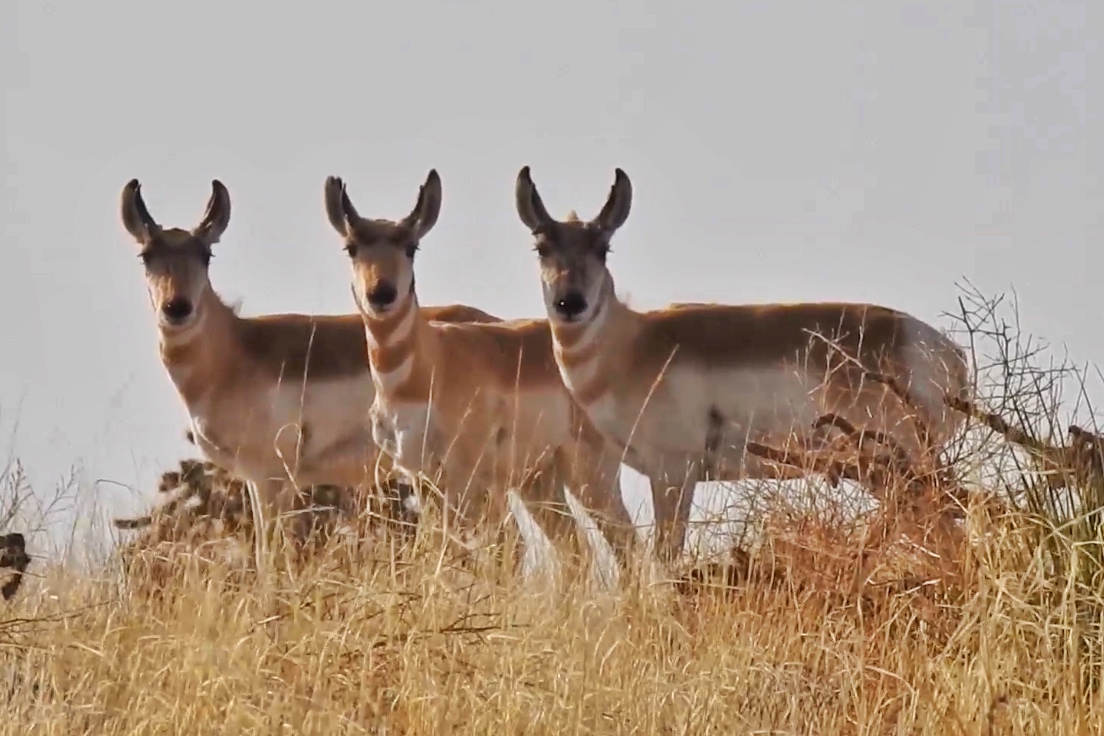
Pronghorn
Black-tailed Prairie Dog
Rock Squirrel
Collared Peccary
Raccoon
White-tailed Deer
Coati
Harris’s Antelope Squirrel
Round-tailed Ground Squirrel
Eastern Fox Squirrel
Arizona Gray Squirrel
Black-tailed Jackrabbit
I had a great time, got some good stories, met some great people, and appreciated the creatures the Lord created for my enjoyment.
Posted inPlaces to Go|Comments Off on Arizona Birding Adventure
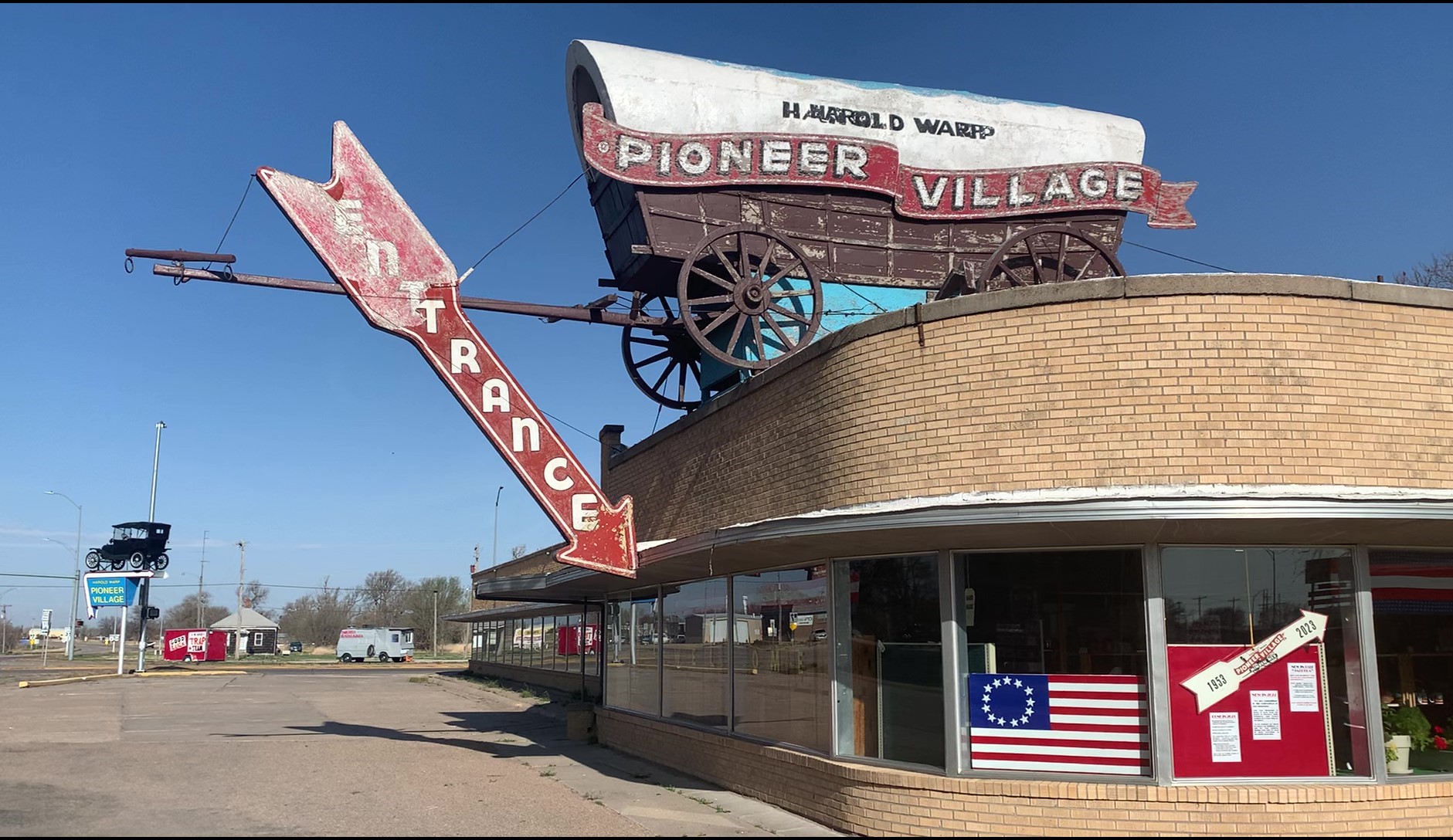
I’ve known about Pioneer Village for a long time. I think I used to own a postcard with the sod house on it, so I may have even been here as a child. It’s one of those places that become an icon in and of itself — like House on the Rock, Meramec Caverns, or Rock City.
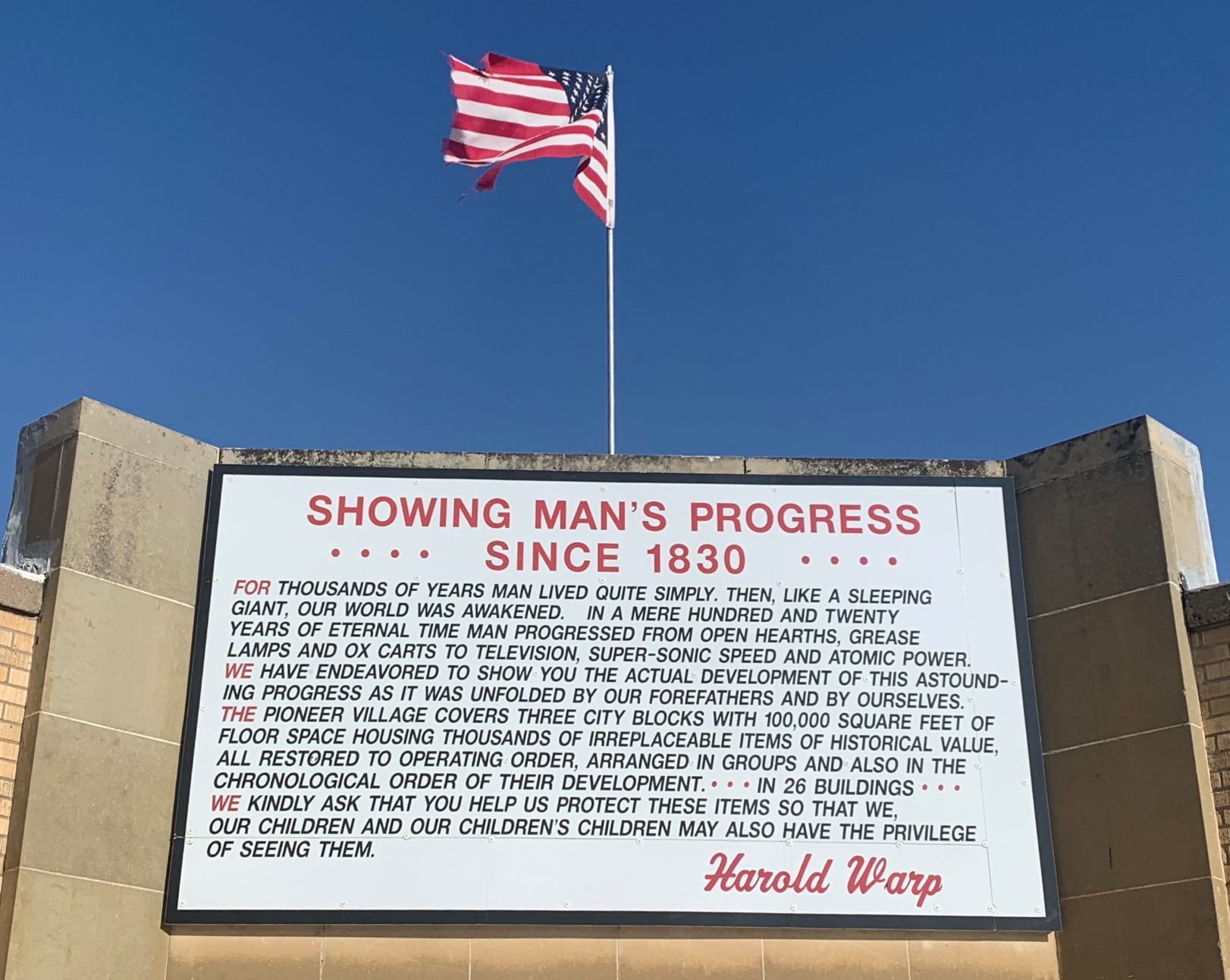
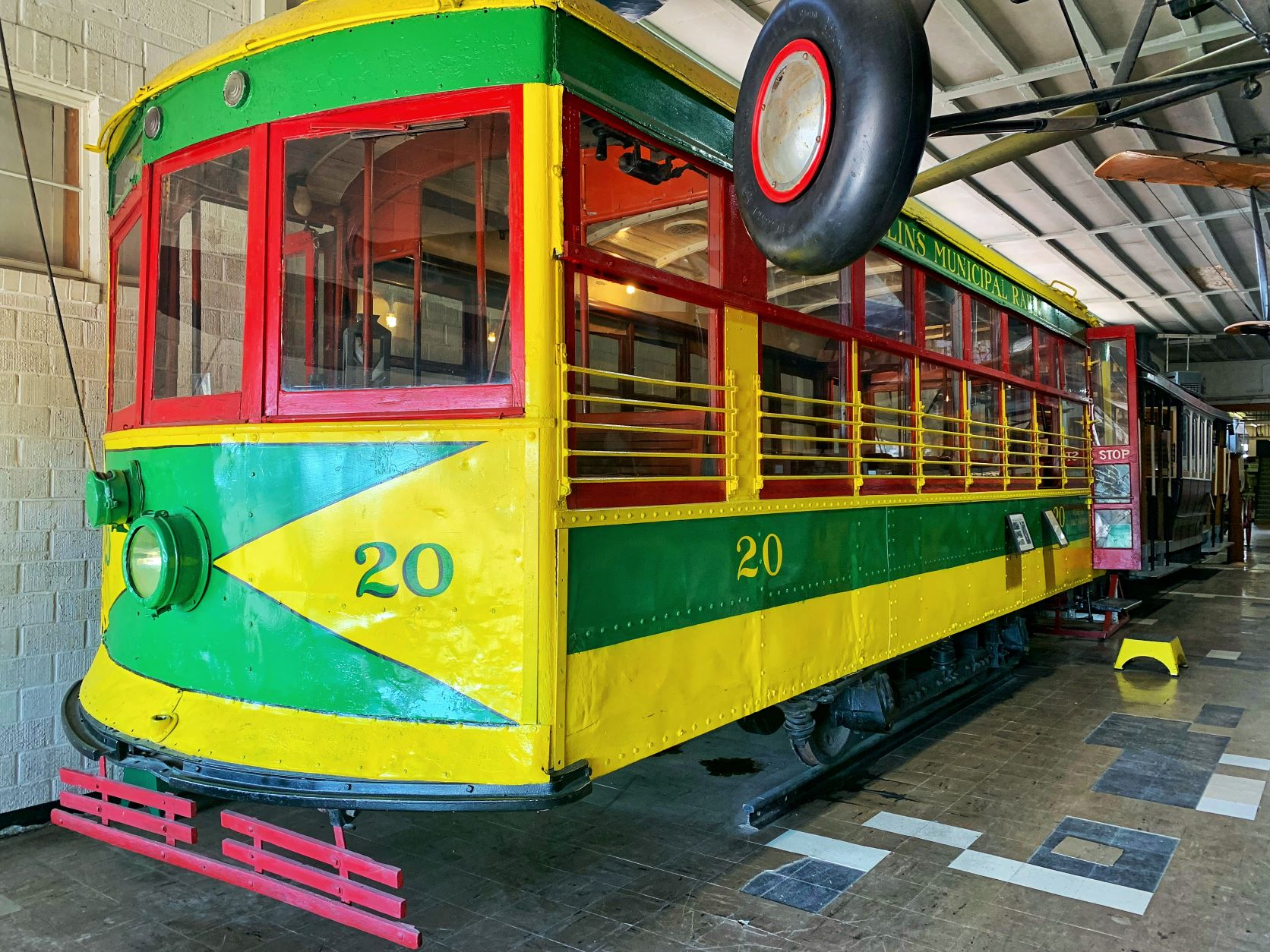
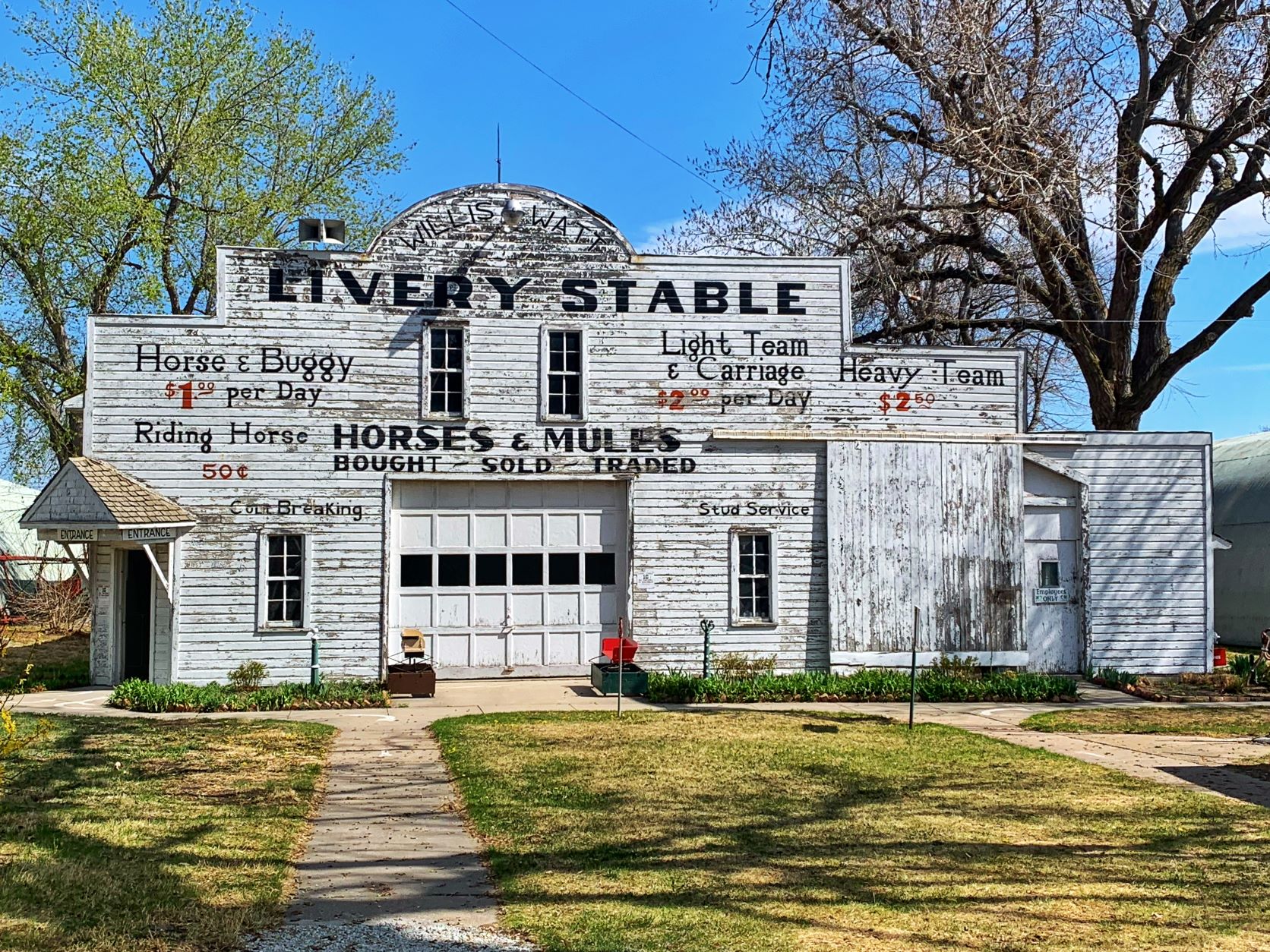
Except people have stopped visiting Pioneer Village and the place is falling apart. We stopped in on a Thursday morning on our way to a wedding in Iowa. We were there about four hours, and I believe I saw six other visitors, all of them in the 15 minutes before we left. There are actually signs by the doors of the various buildings asking you to turn the lights off when you exit. The condition of the famous sign shows what kind of shape the place is in.
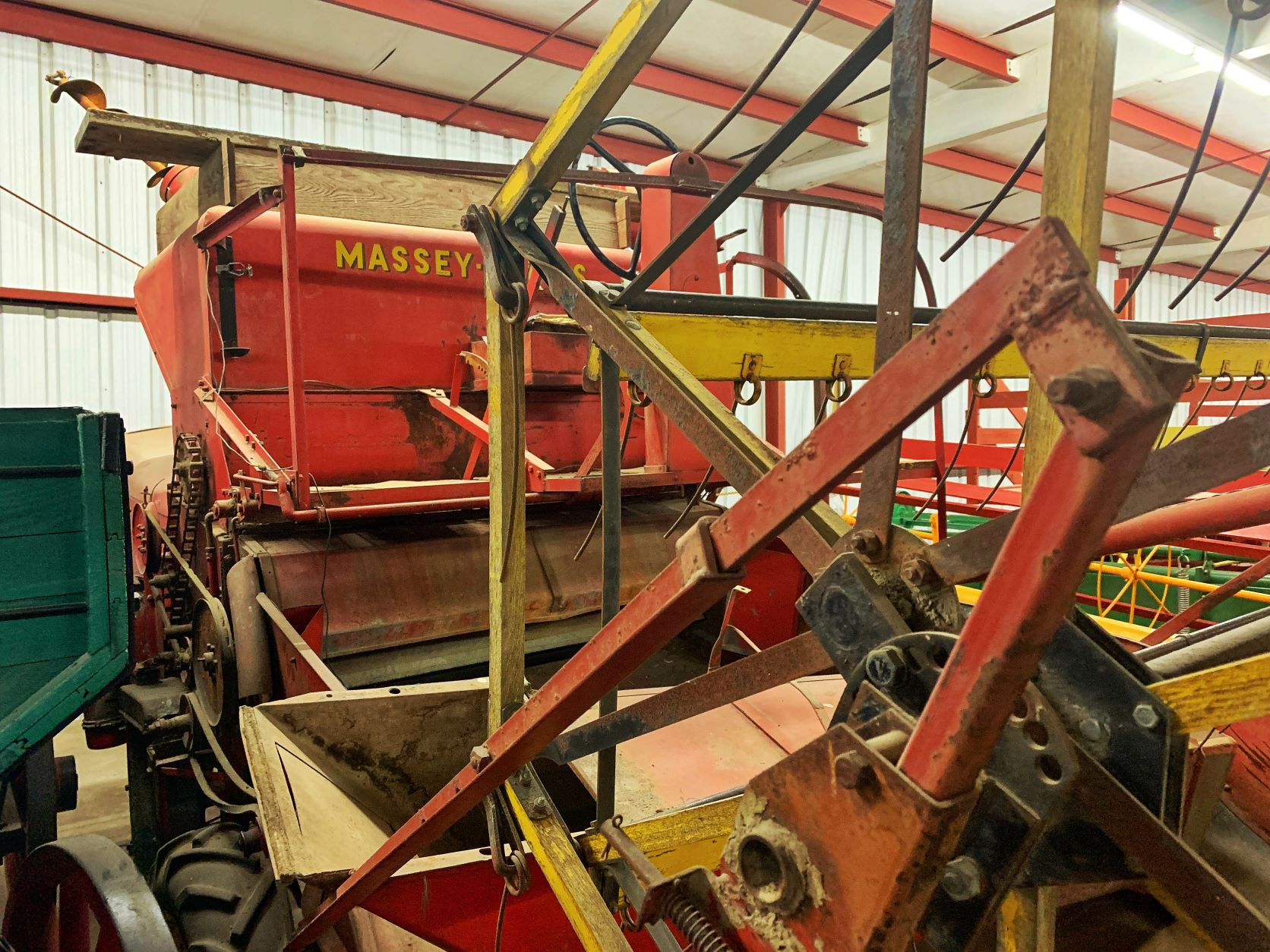
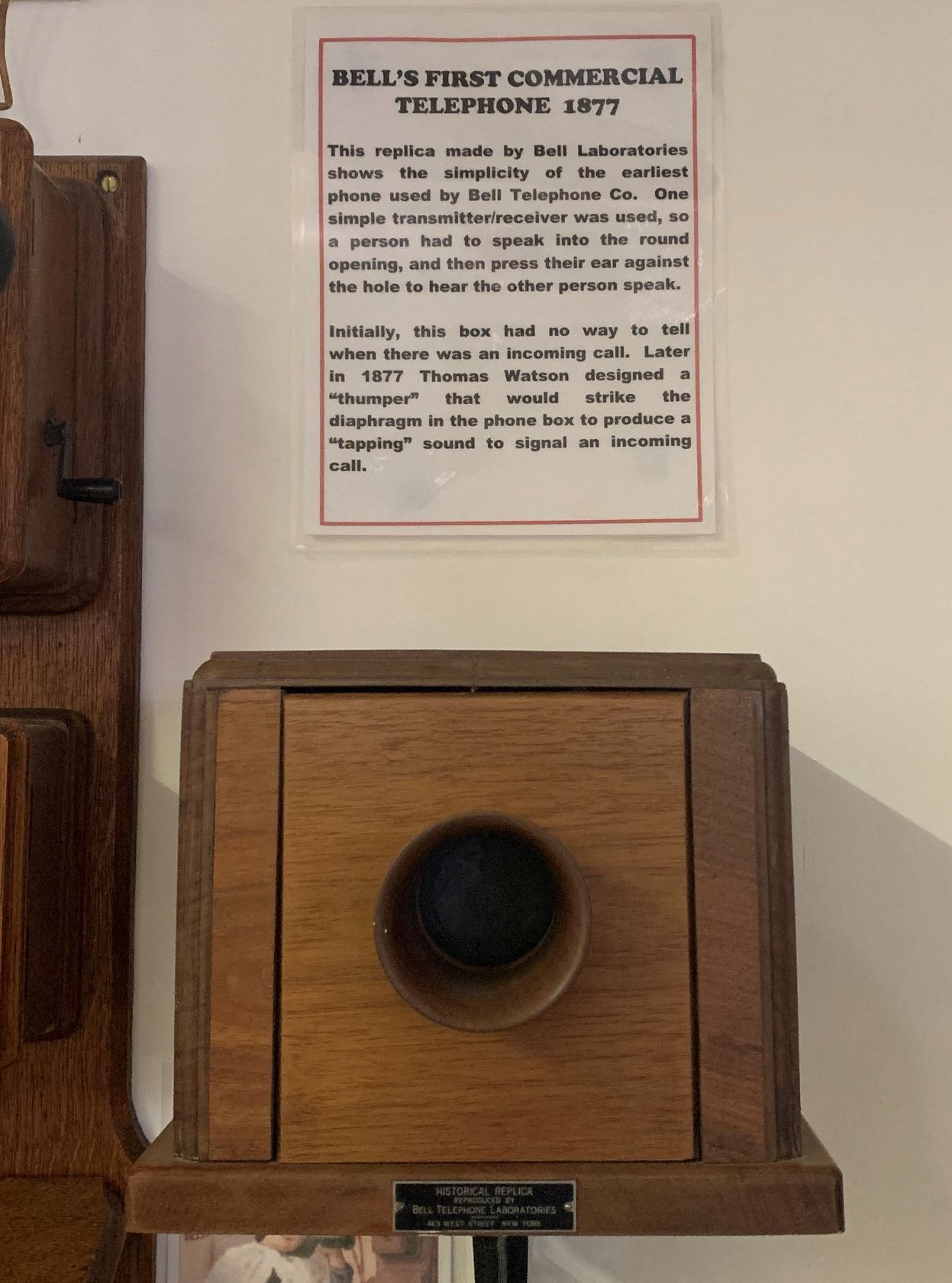
The premise is to display everyday items — phones, washing machines, fans, cars — beginning with the first ones manufactured in America and showing the progress up to modern day. It’s a cool idea, but modern day in the village ended around 1974. Very little recent progress has been documented, and it doesn’t look like anything has been dusted or painted since 1974, making the museum itself an artifact.
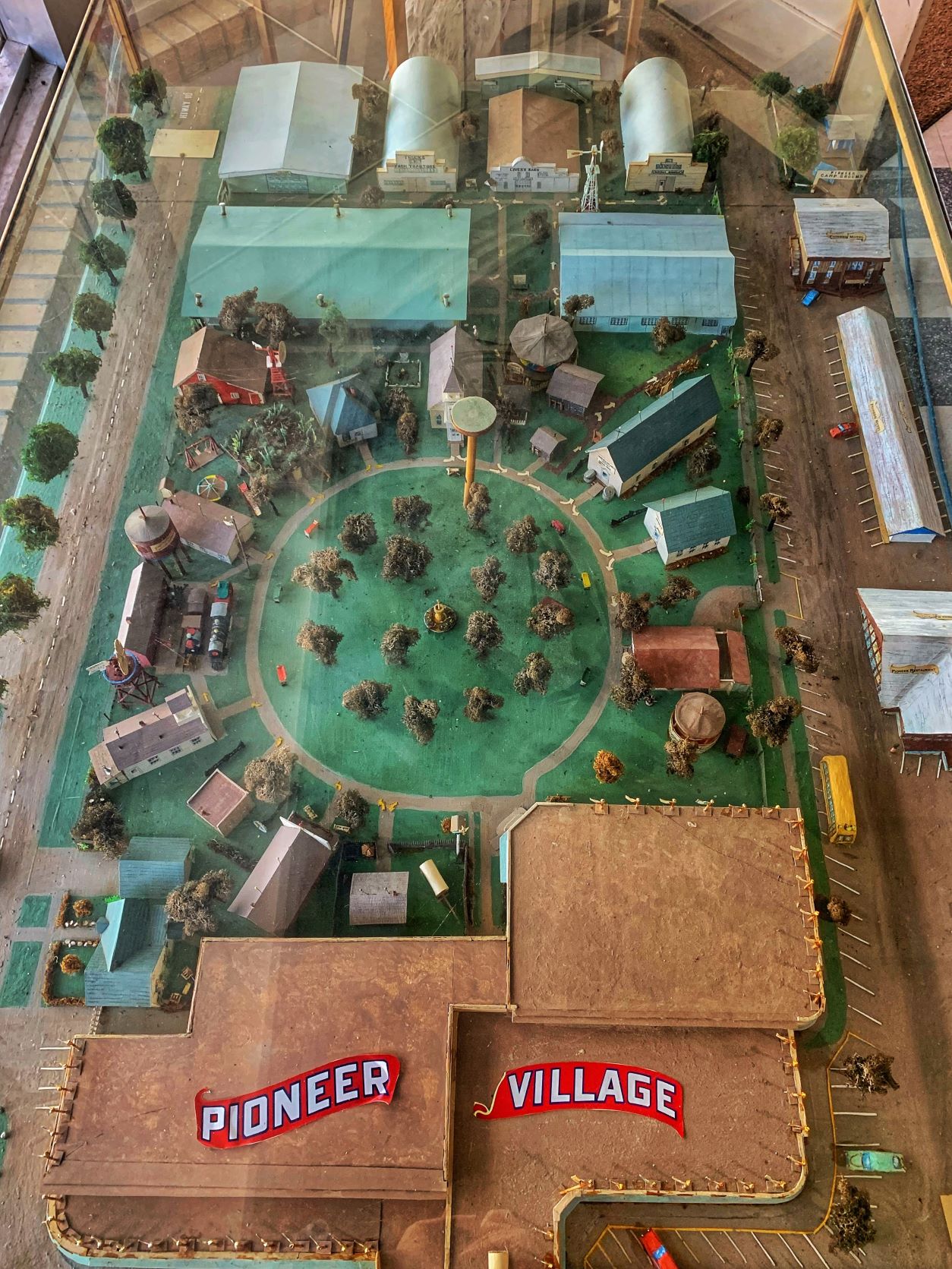
There are several historic buildings arranged around a town square and seven or eight others, all filled with stuff.
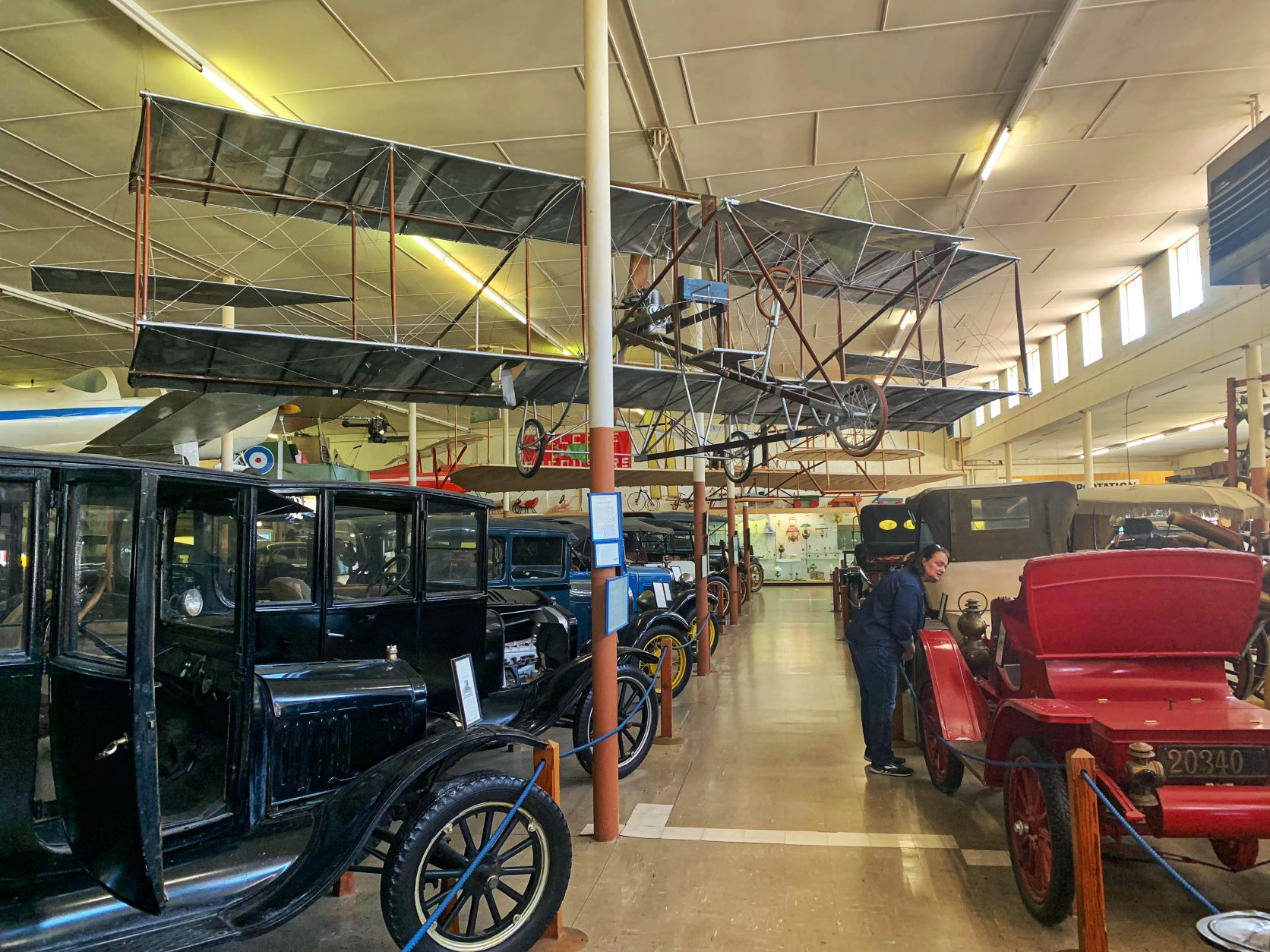
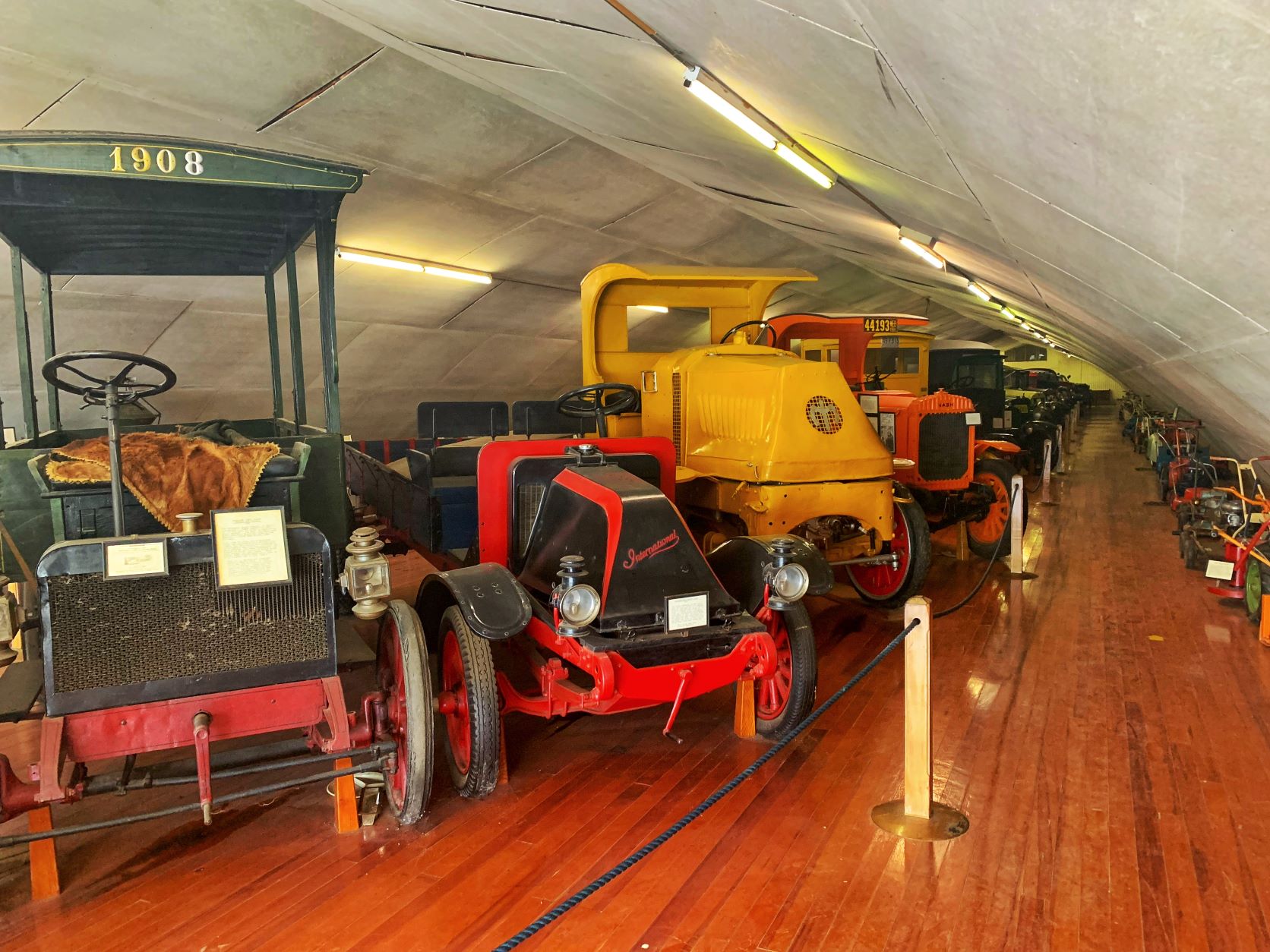
We toured everything, although it quickly became sensory overload, and the five or six buildings of old cars got old quickly. I felt like I was the first person in some of the buildings since 1974. None of this is meant to say we didn’t enjoy it. There were some very cool items on display and having the place to ourselves made me feel like an explorer.
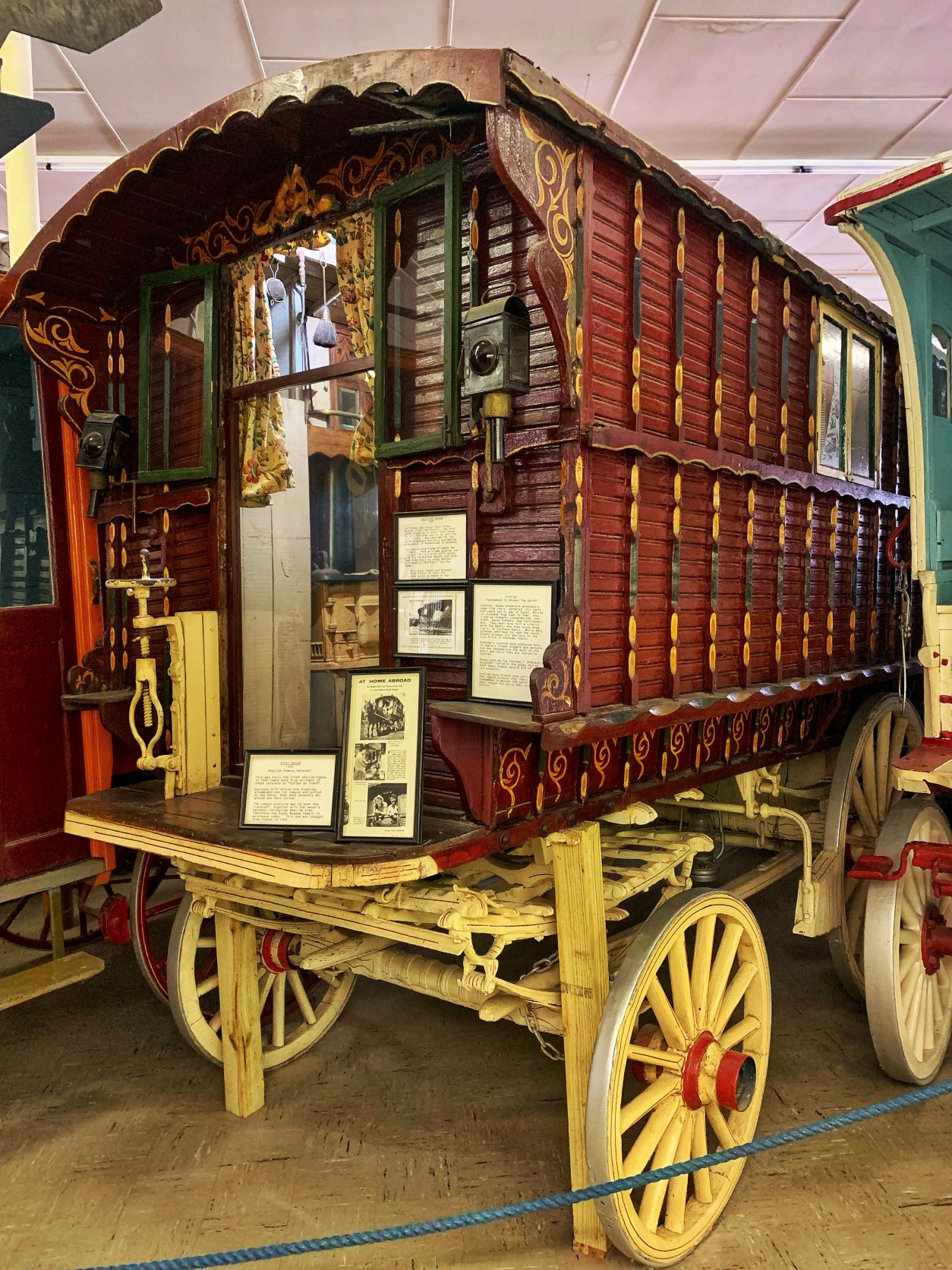
Gypsy wagon
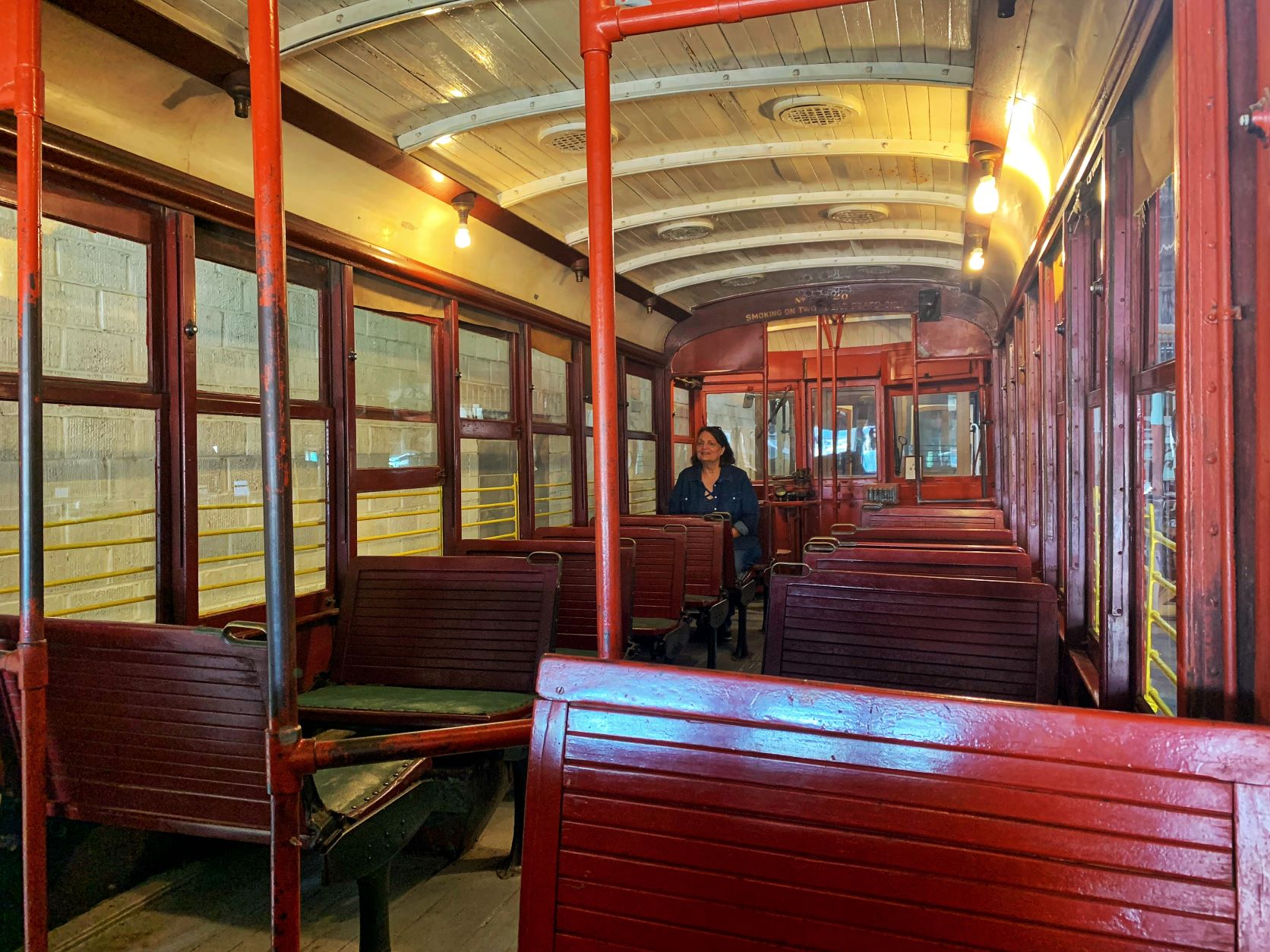
Electric streetcar
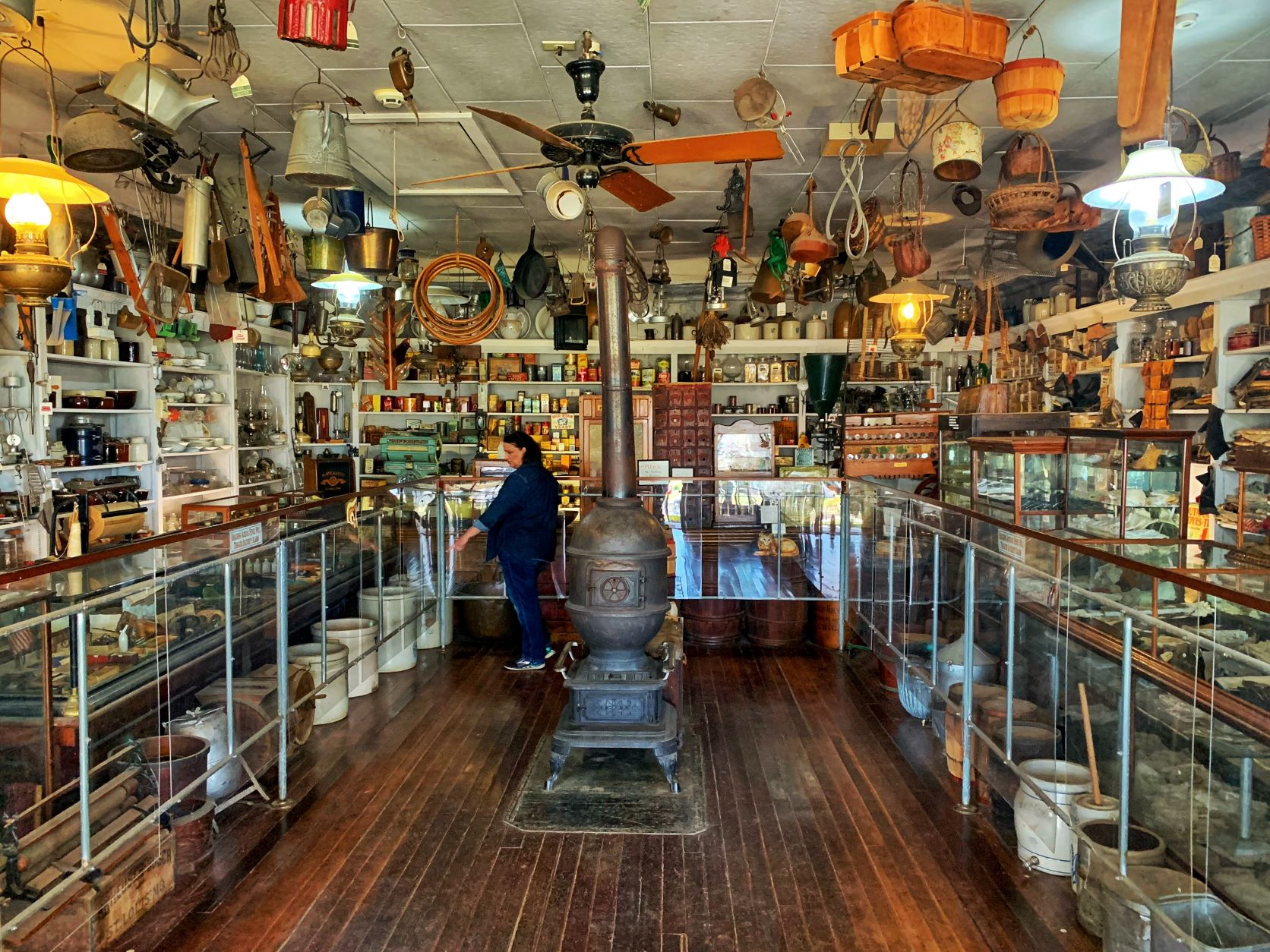
Inside the general store
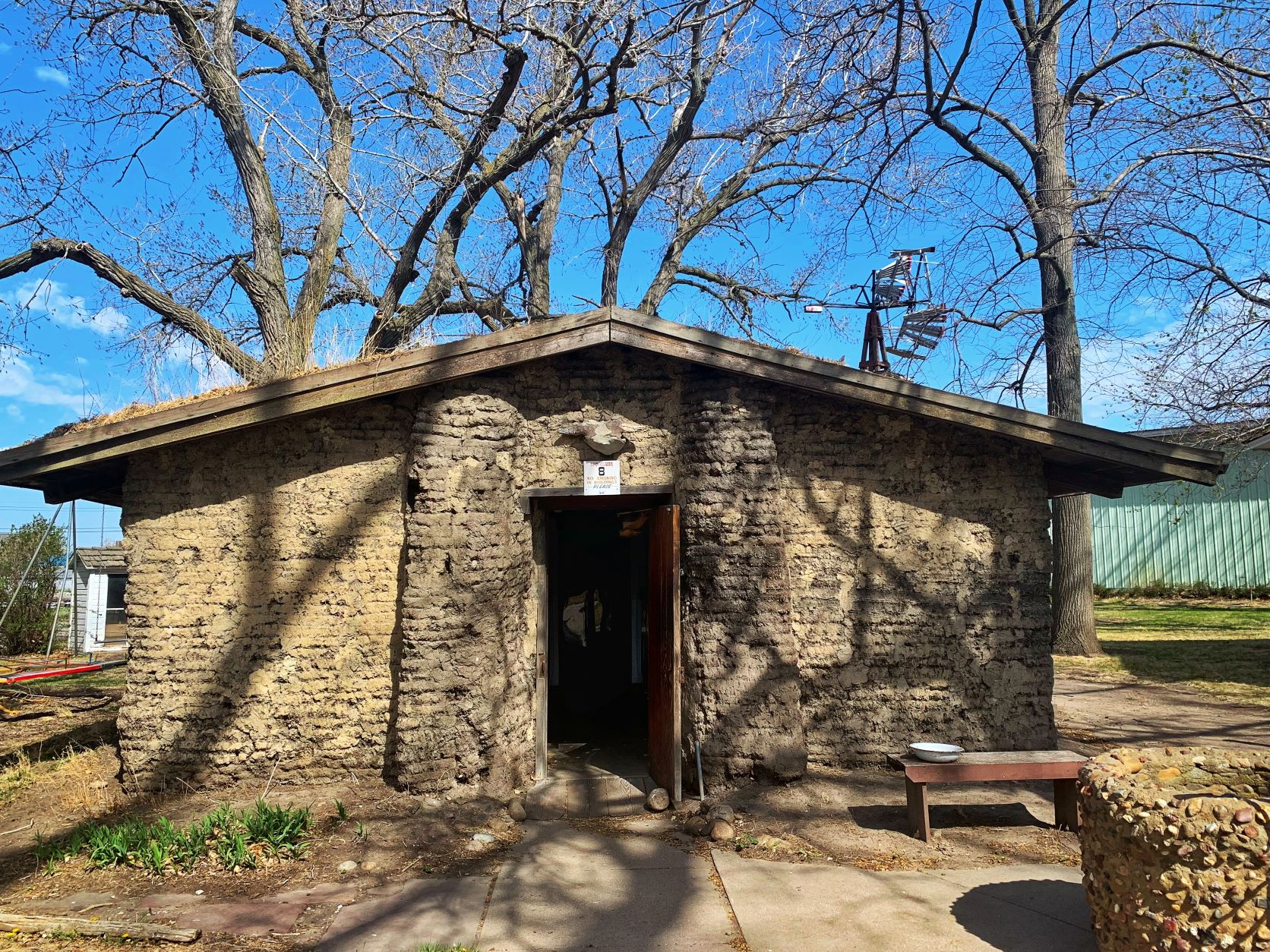
The sod house
Early TV
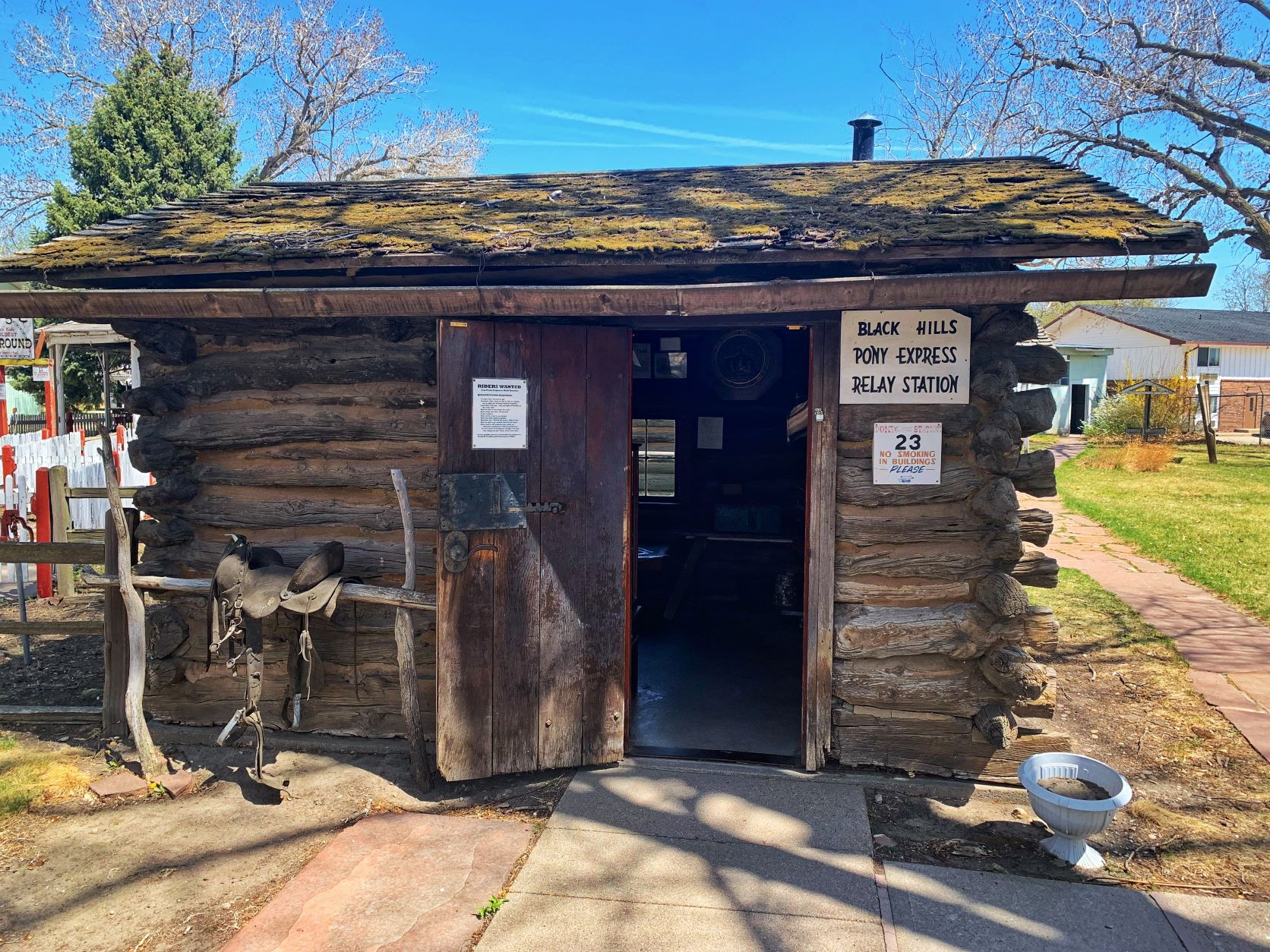
Pony Express Station
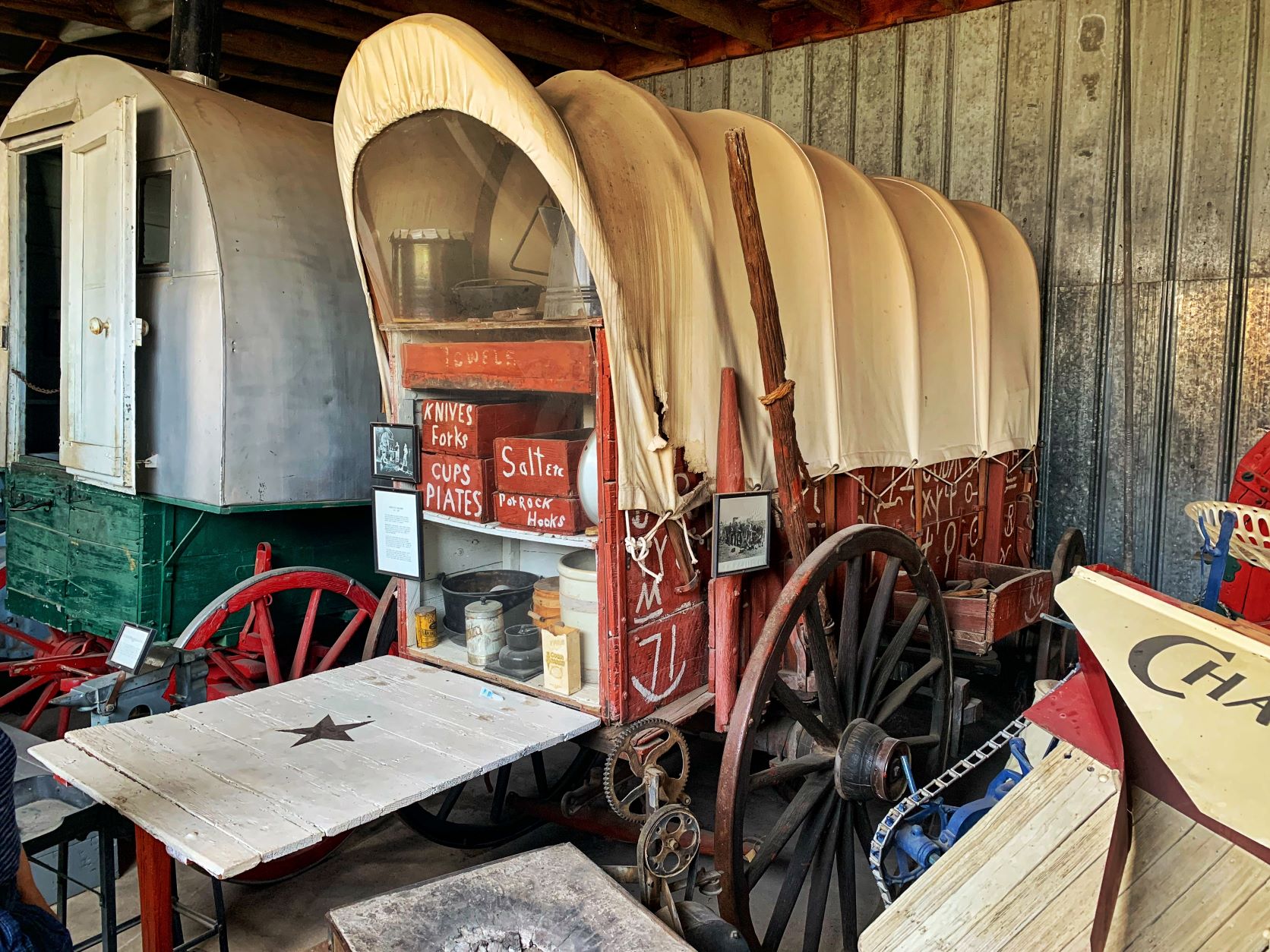
Cattle drive chuckwagon
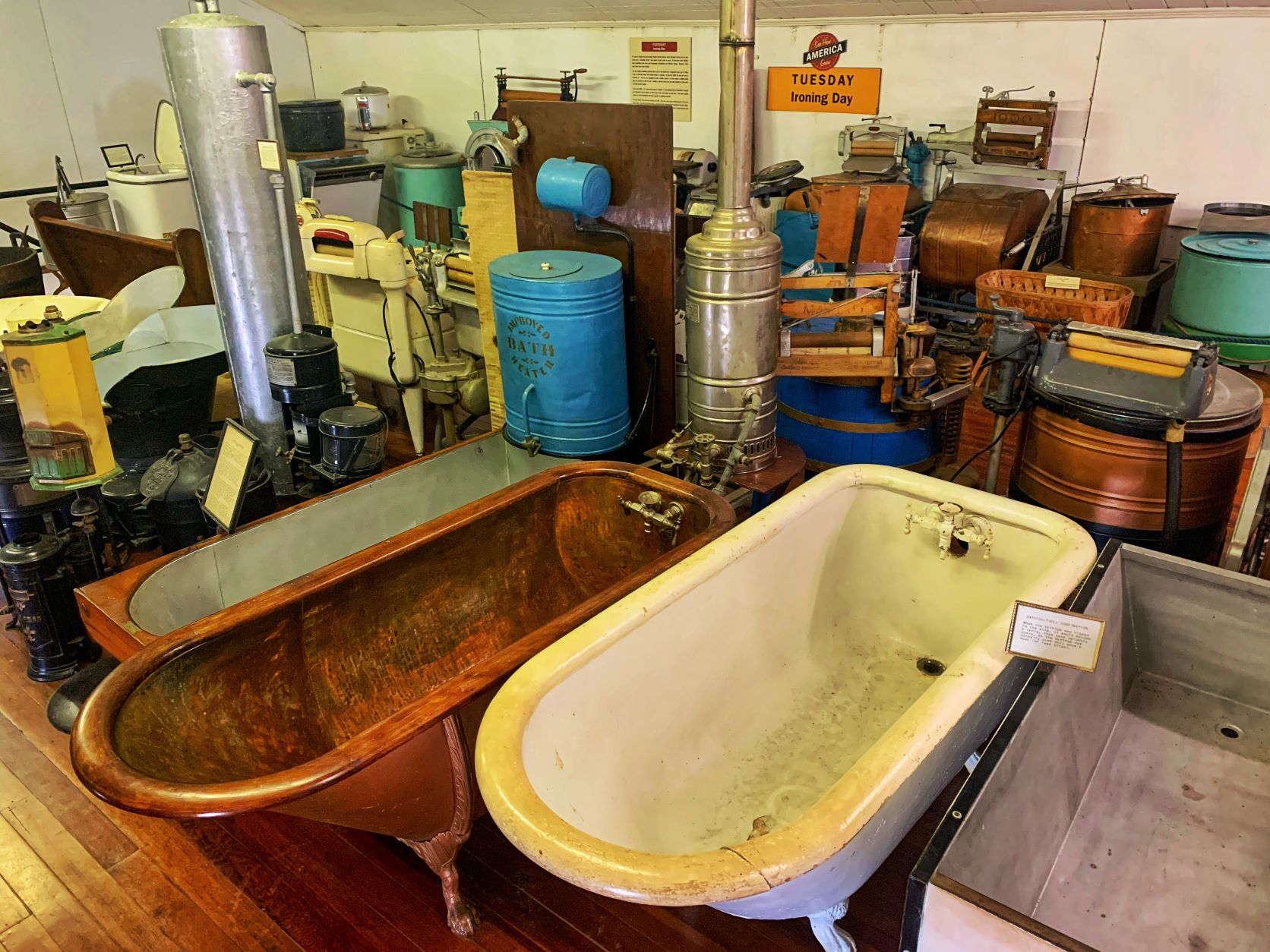
Early washing machines and bathtubs
If you’re ever footloose in central Nebraska, you like to see old, interesting stuff, and you don’t mind getting dusty, check this place out.
Posted inNebraska|Comments Off on Harold Warp’s Pioneer Village
A Varied Thrush has been sighted in the Russian olive thicket at Chico Basin Ranch. I’ll cut the suspense right off — I spent an hour and a half looking for it and never got a glimpse although another birder saw (or claimed to) it just a few minutes before I arrive, so it was almost certainly still there. It may still be.
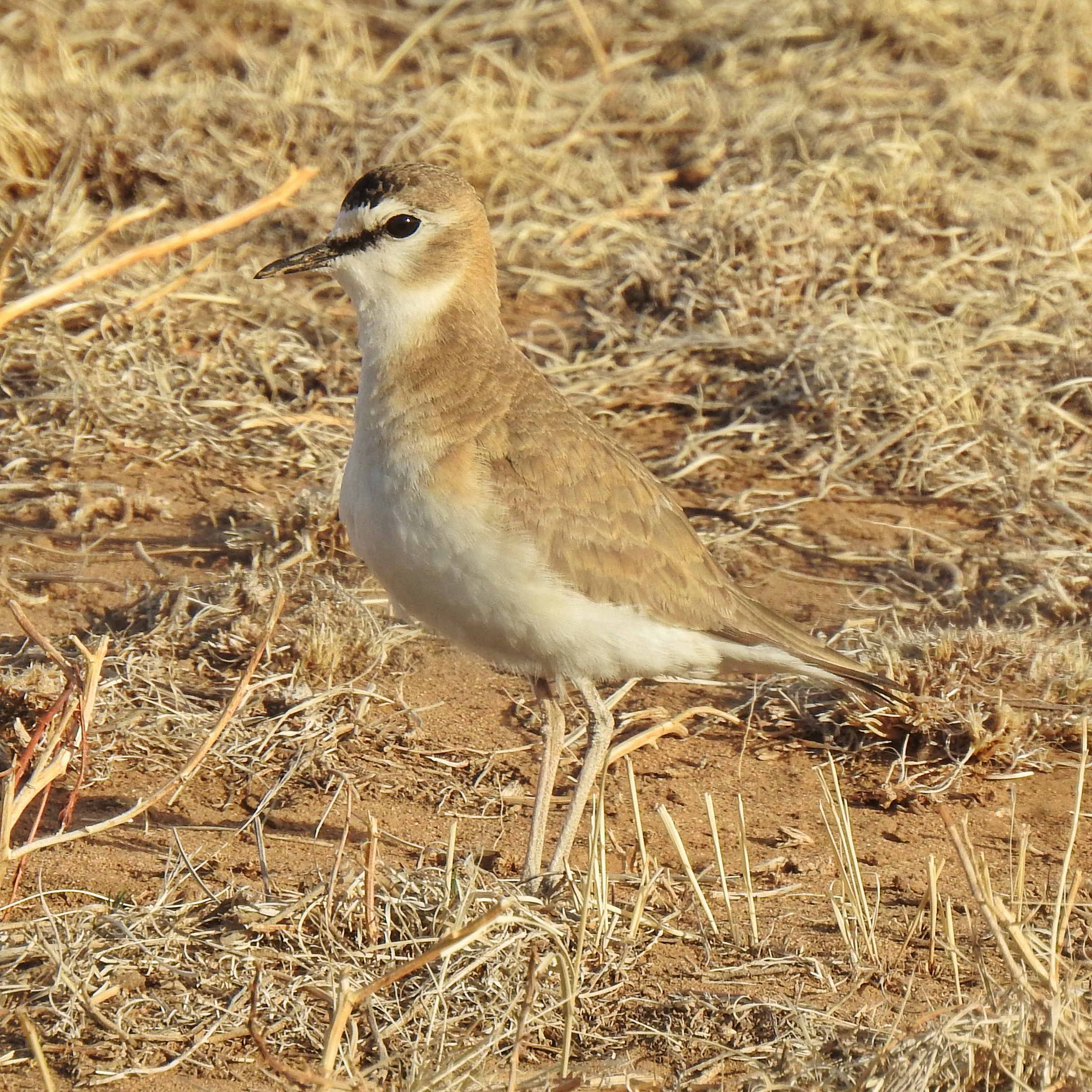
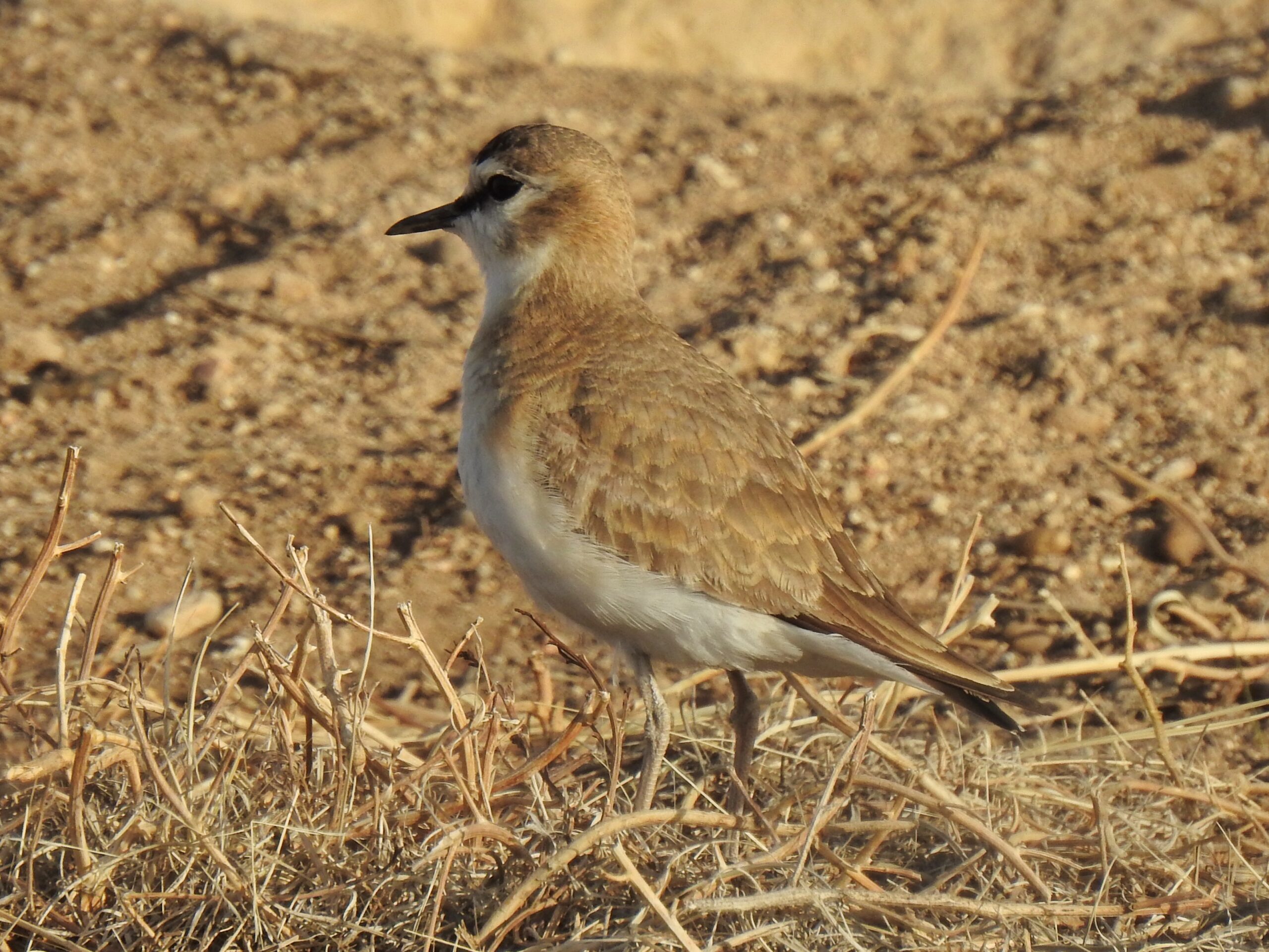
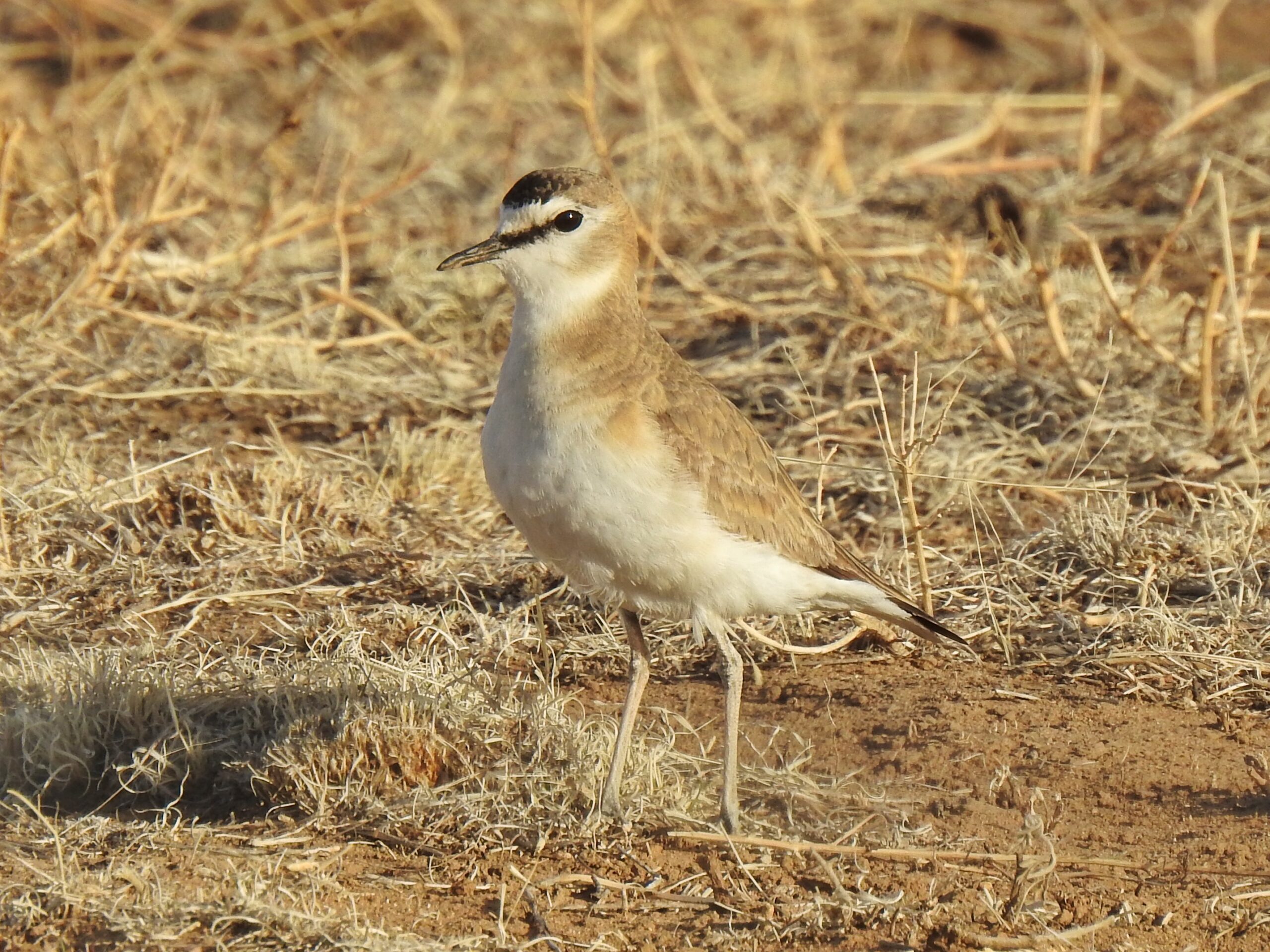
I stopped by the prairie dog village on Hanover Road and immediately spotted a Mountain Plover, about 30 yards closer to me than I’d ever seen one. It called a few times, then flew east along the road. I wandered up that way because I could still hear it calling and soon spotted it foraging and heading in my direction. I stood by the fence, and it came within 30 feet of me.
I went to the Pueblo County side of Chico Basin Ranch next and had the area to myself for the next couple hours (because all the other birders were on the El Paso side seeing the Varied Thrush, I’m guessing). I had a welcoming committee.
Very shortly after I arrived, a Peregrine Falcon flew over the pond, saving me a trip to Red Rocks to see one. Other highlights included a rare Swamp Sparrow that I was too slow to get a photo of.
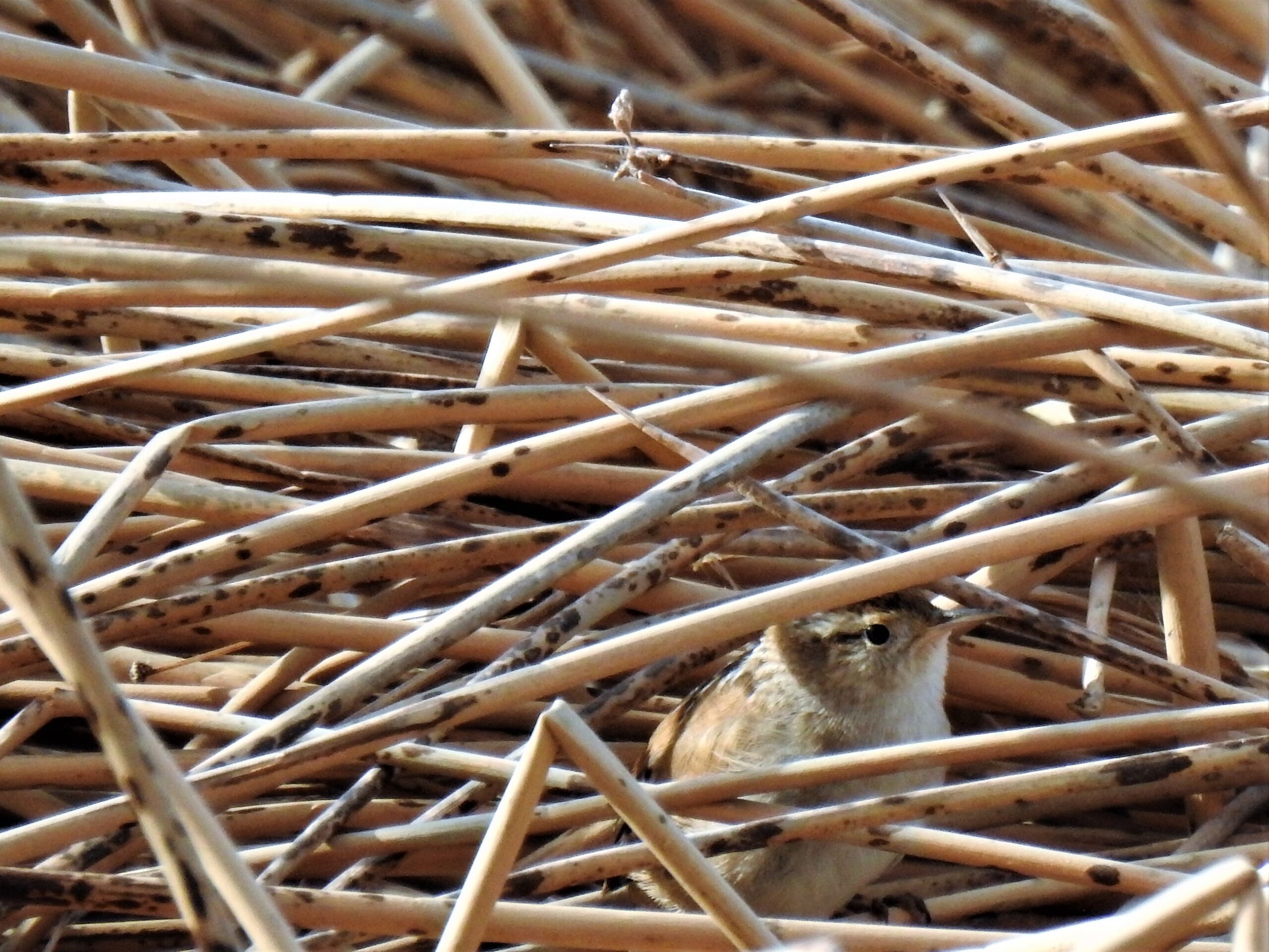
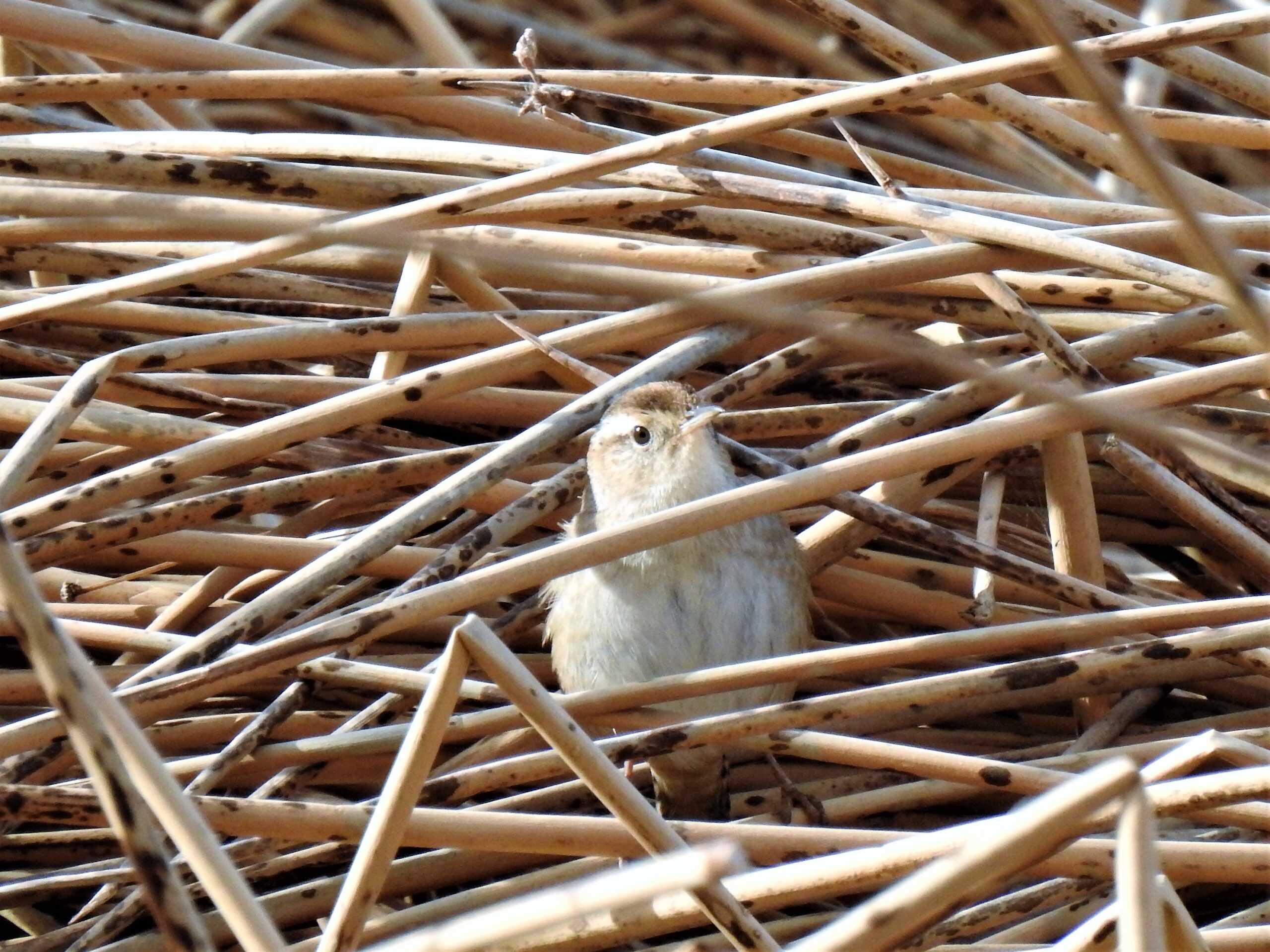
Marsh Wren
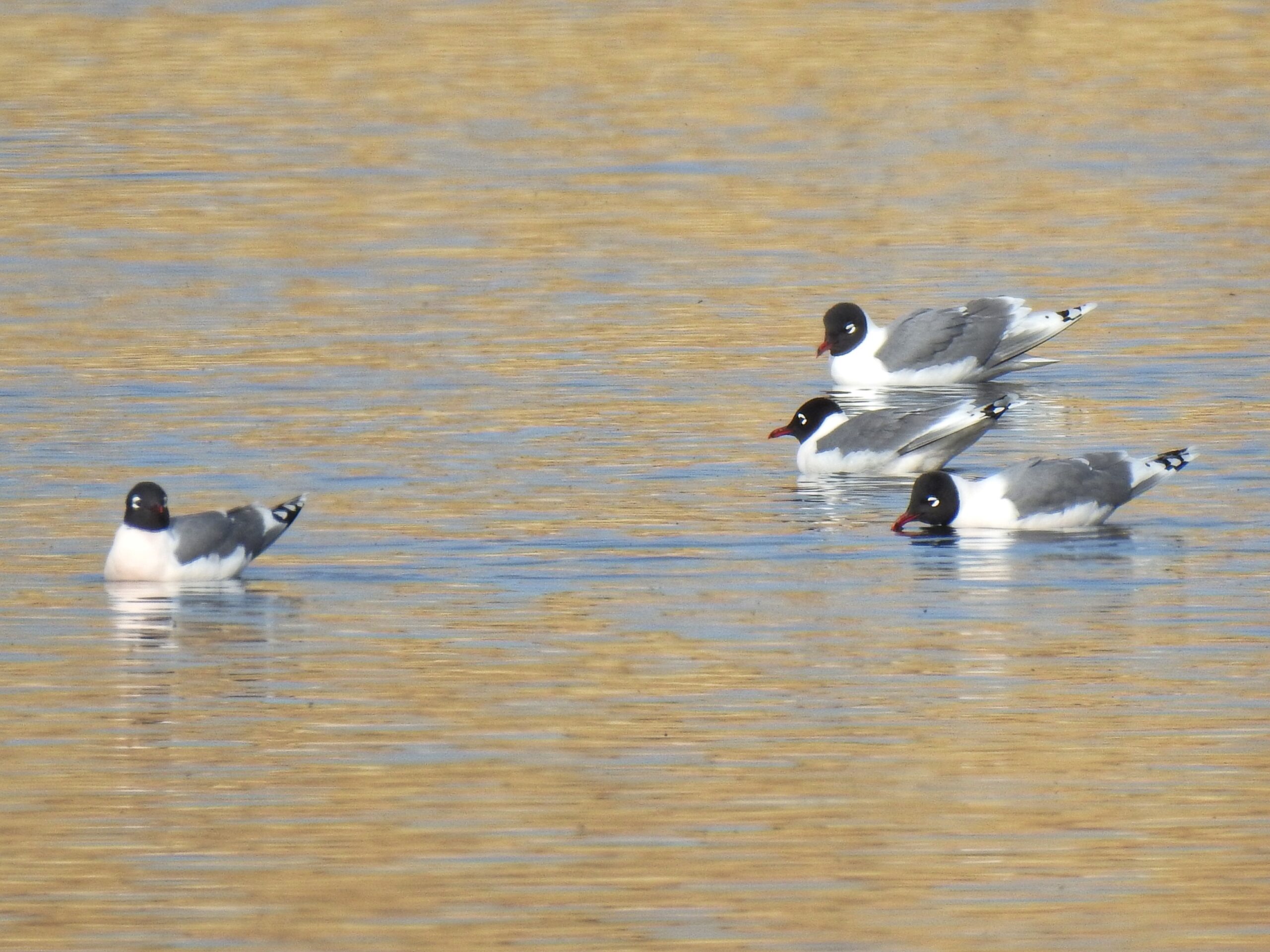
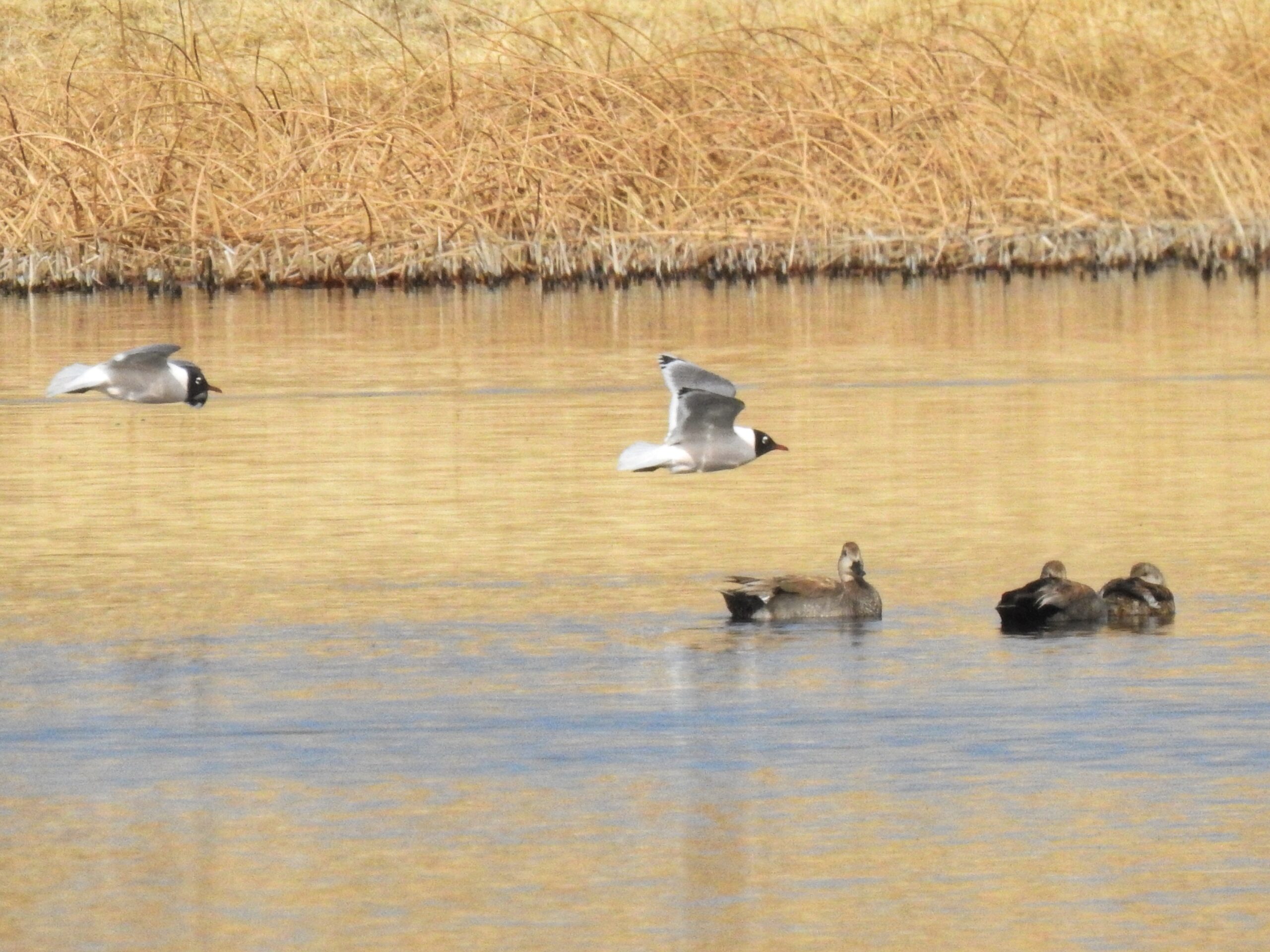
Franklin’s Gulls
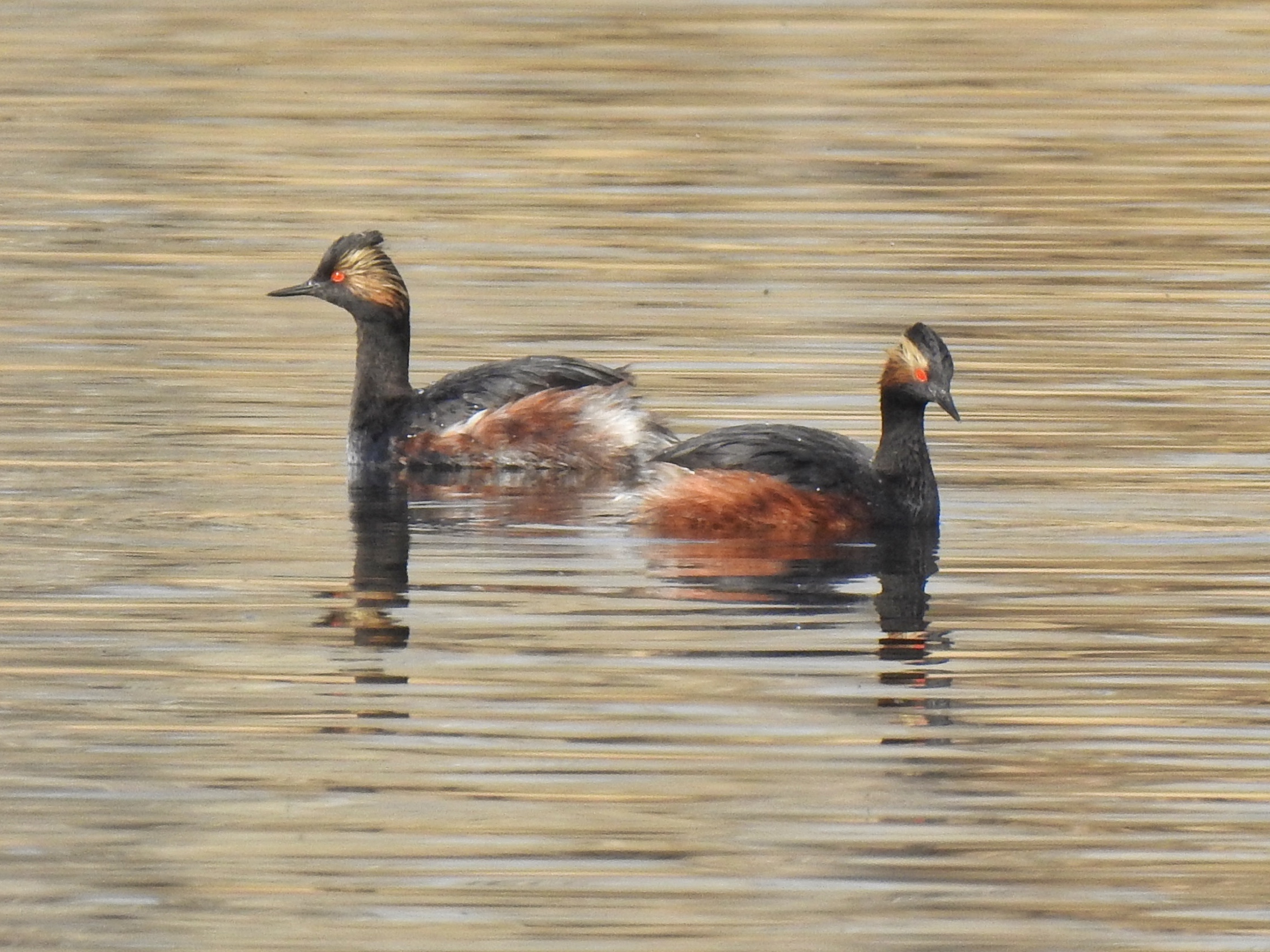
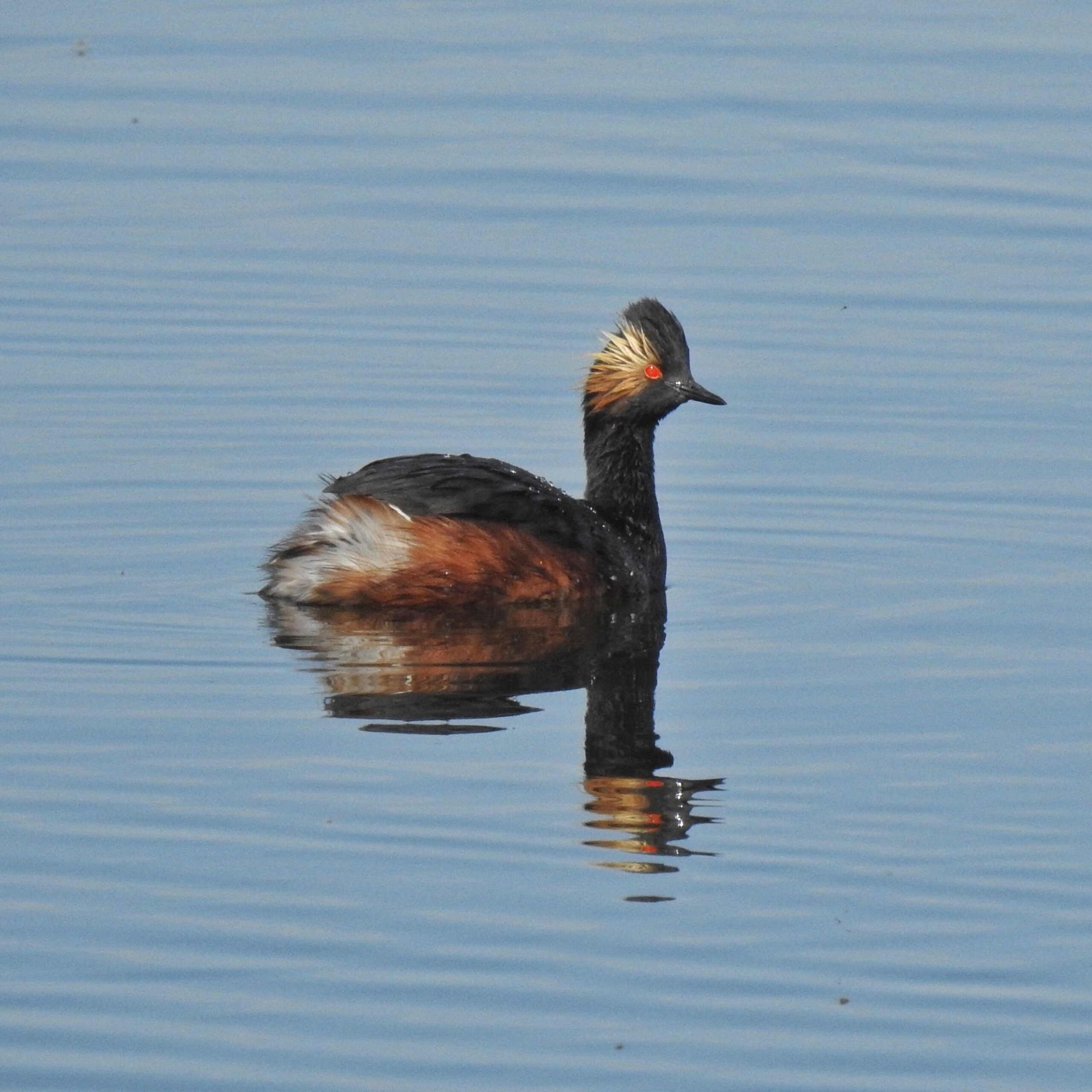
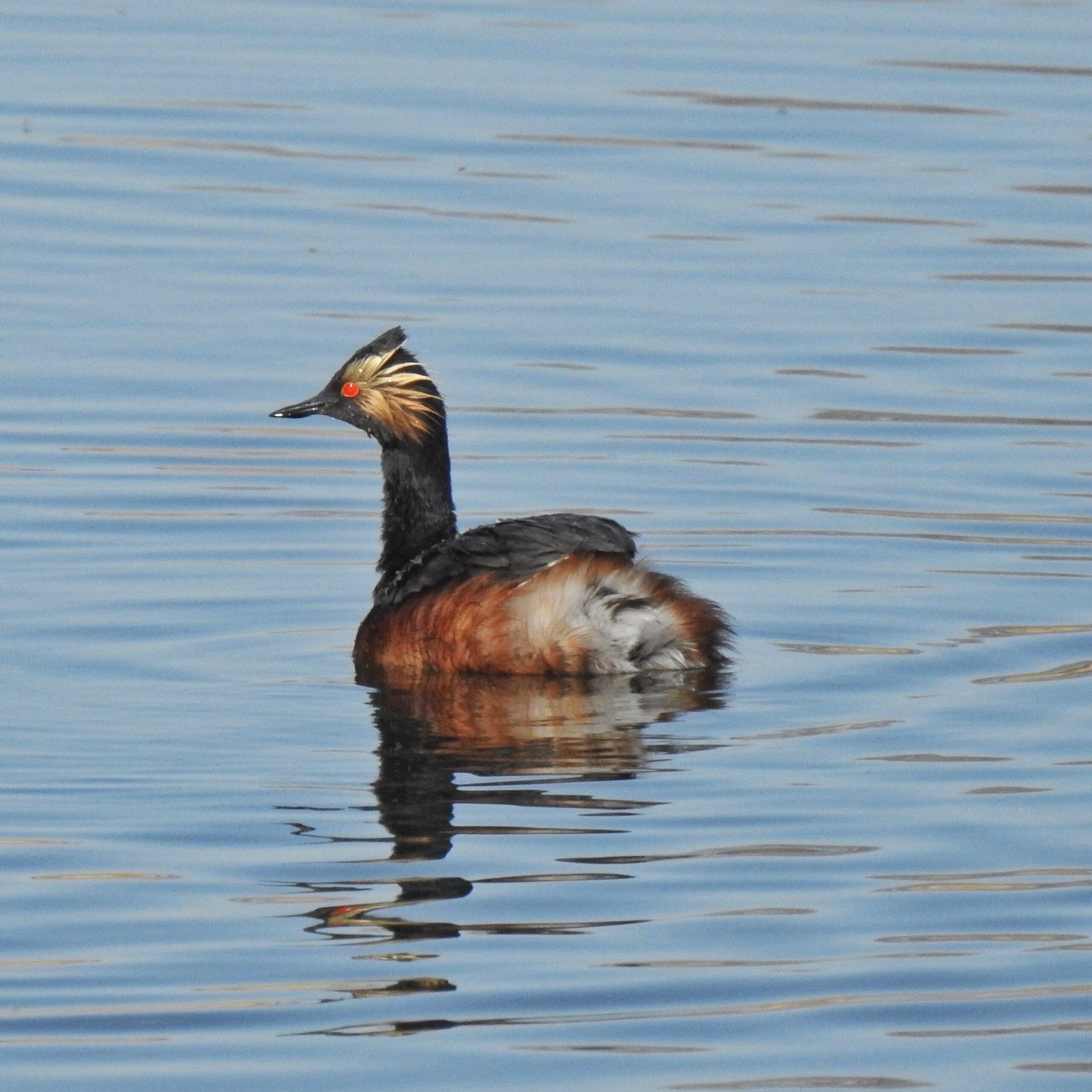
Eared Grebe
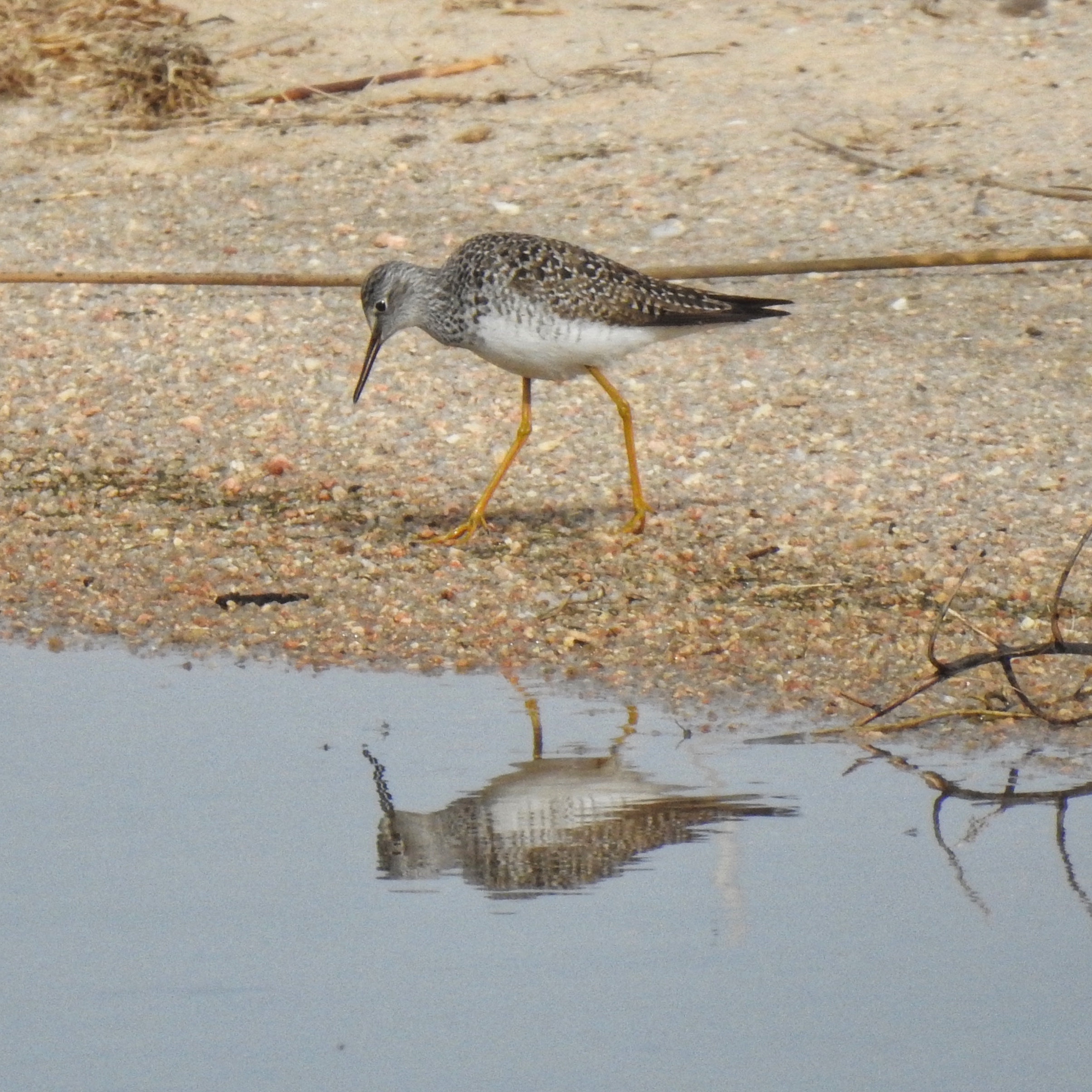
Lesser Yellowlegs
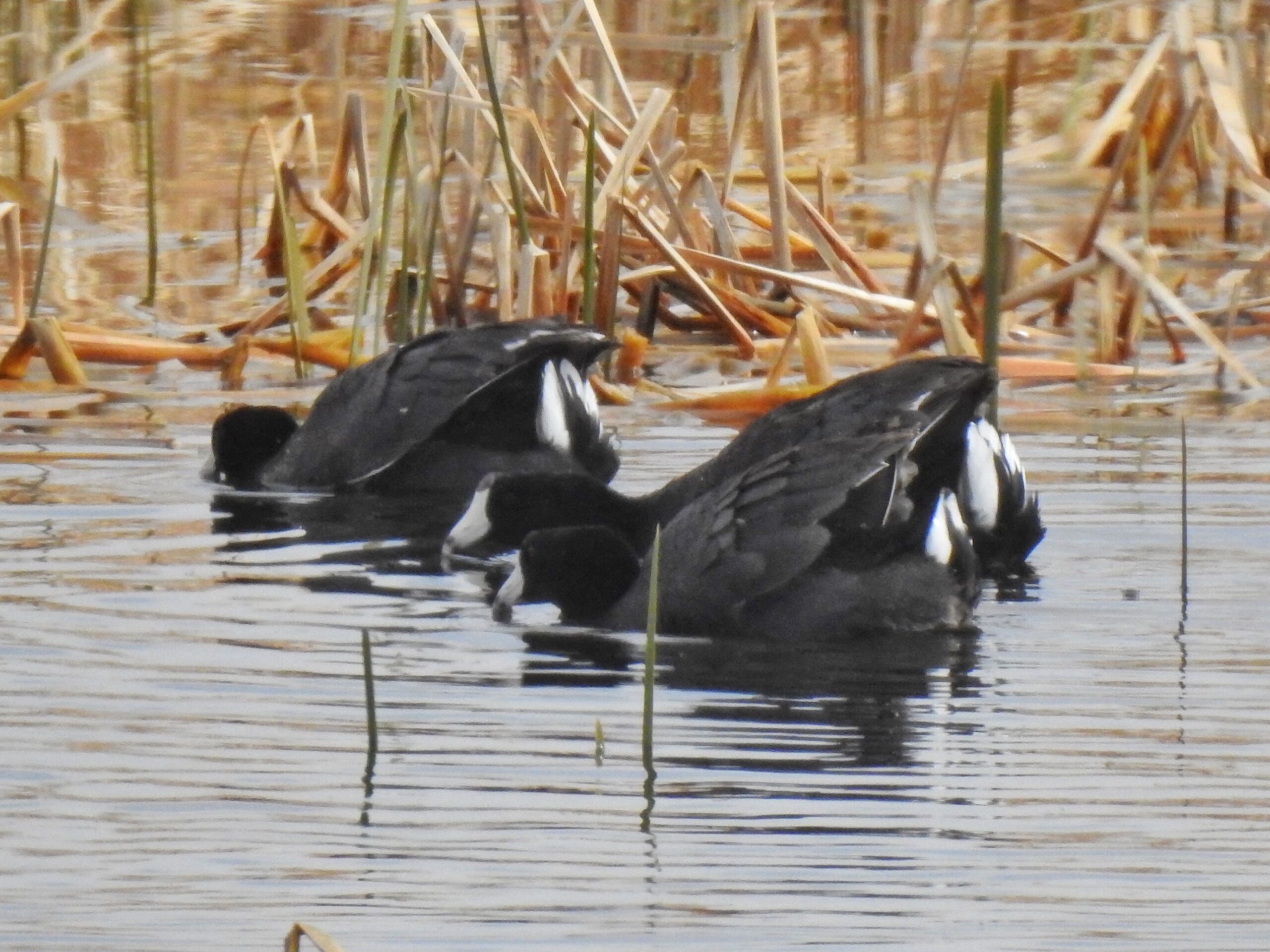
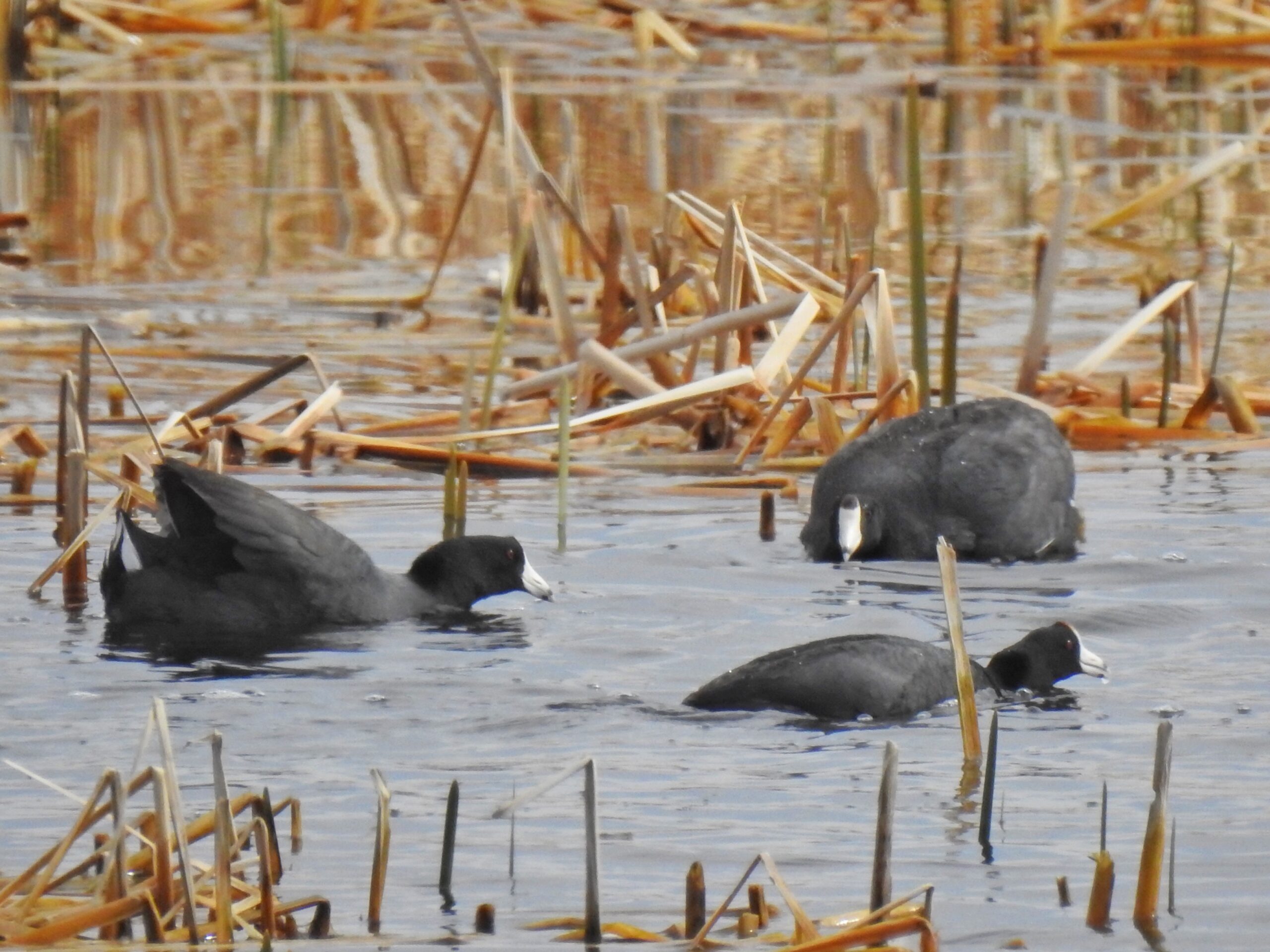
American Coots doing a courtship thing I’ve not seen before.
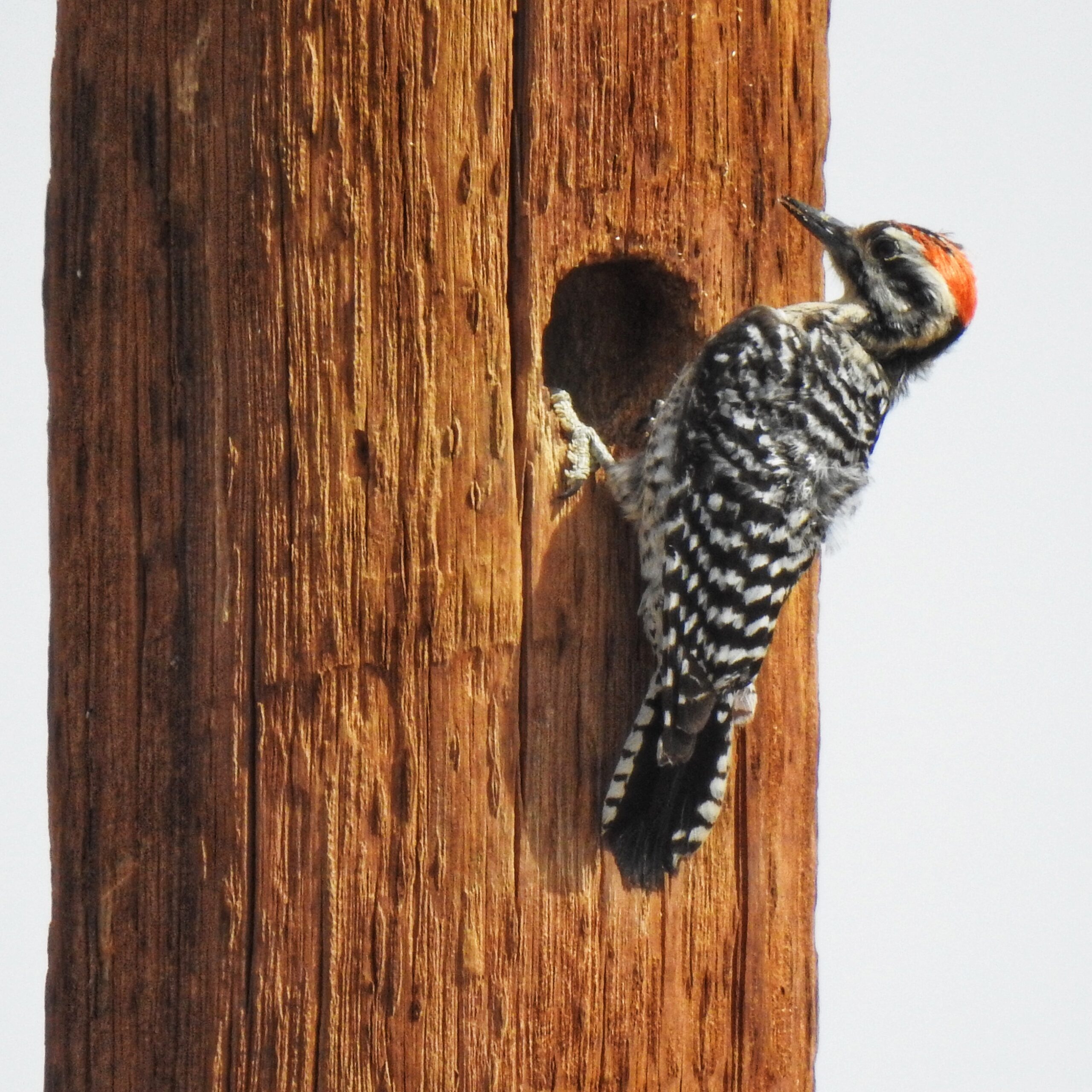
Ladder-backed Woodpecker excavating a hole in a phone pole.
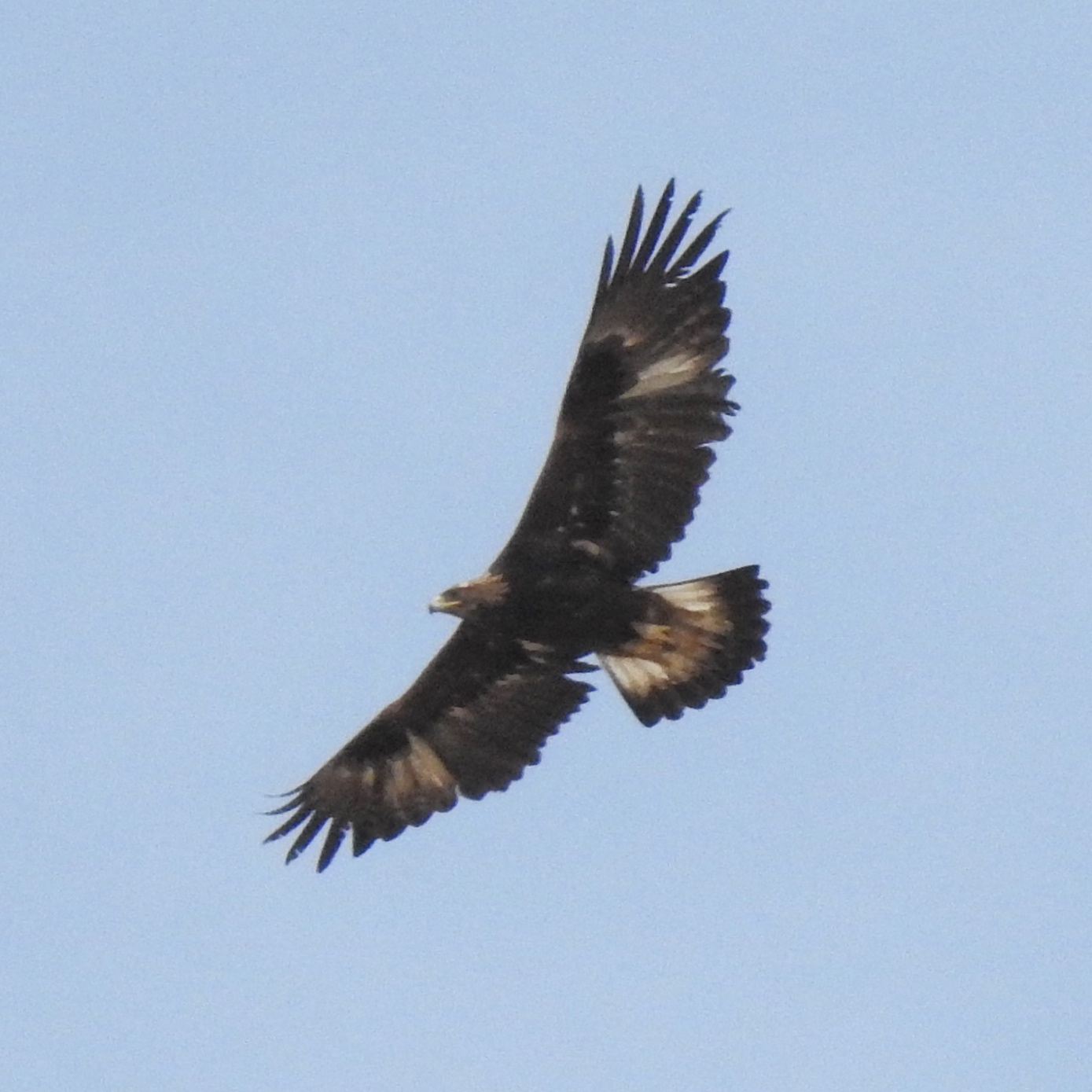
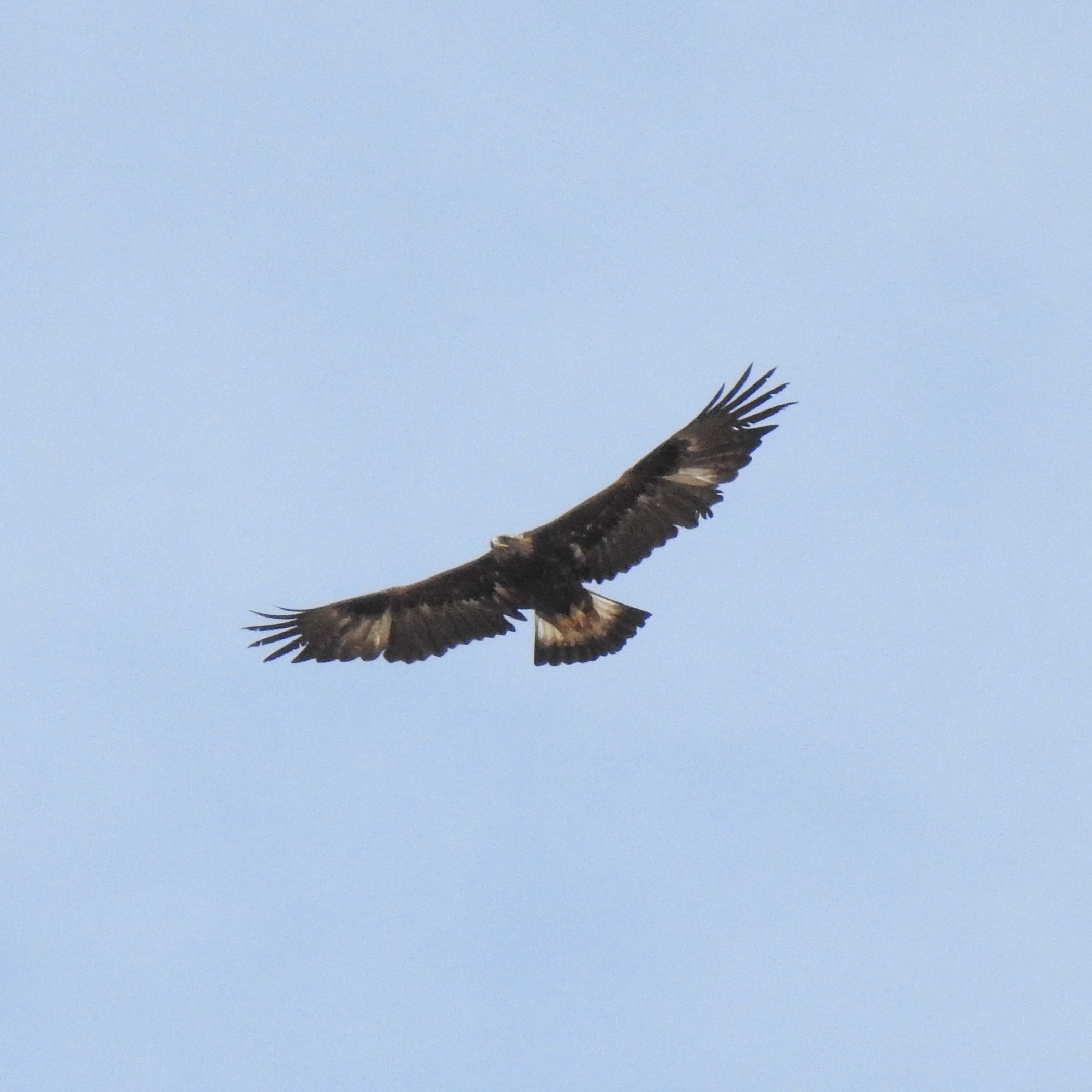
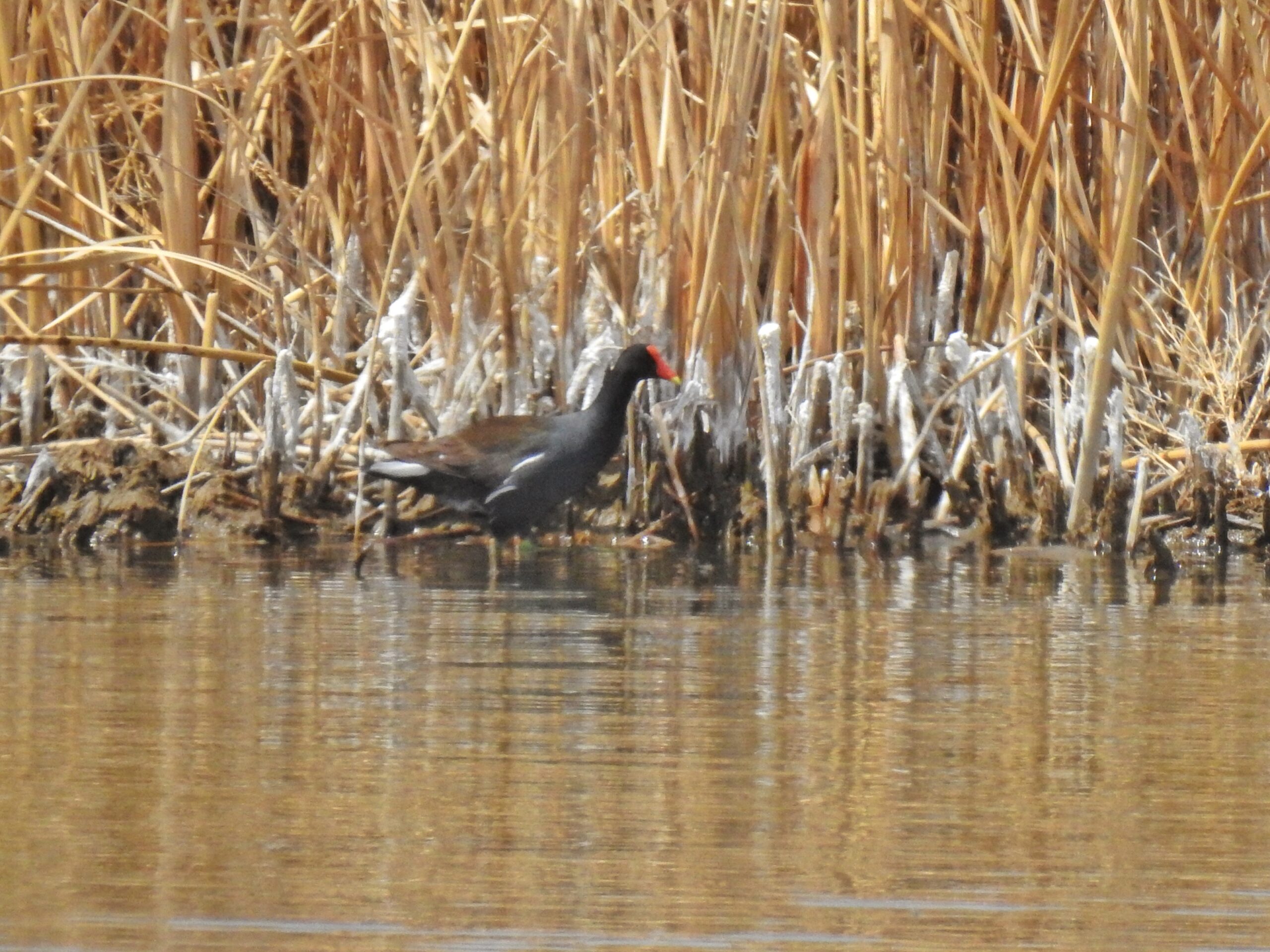
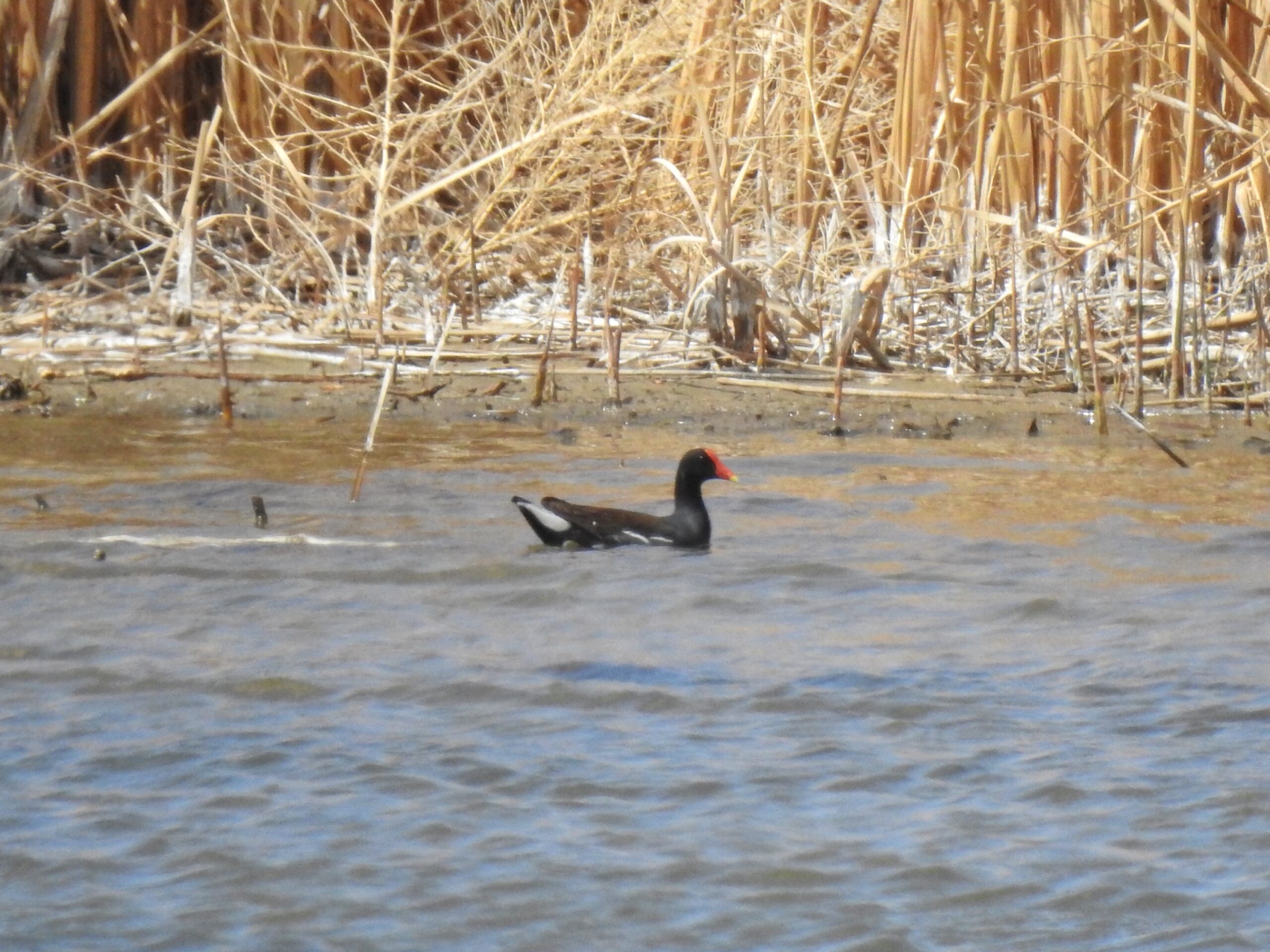
I drove over to the El Paso side to look for the Varied Thrush and met a couple other birders who told me about a Common Gallinule that was found in a pond in Fountain this morning. On my way up, I spotted a Golden Eagle soaring over the prairie.
Another birder pointed out the Common Gallinule as soon as I arrived.
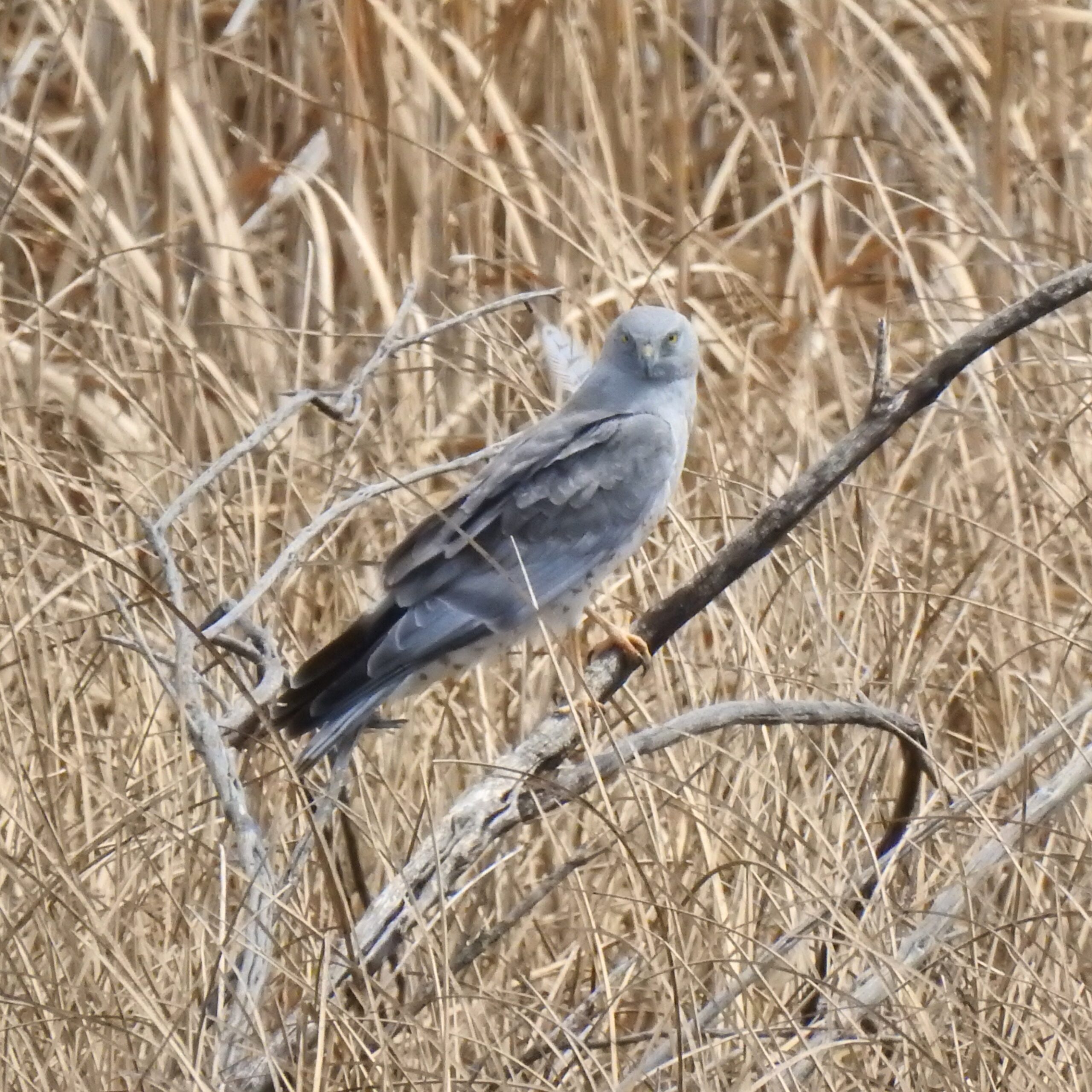
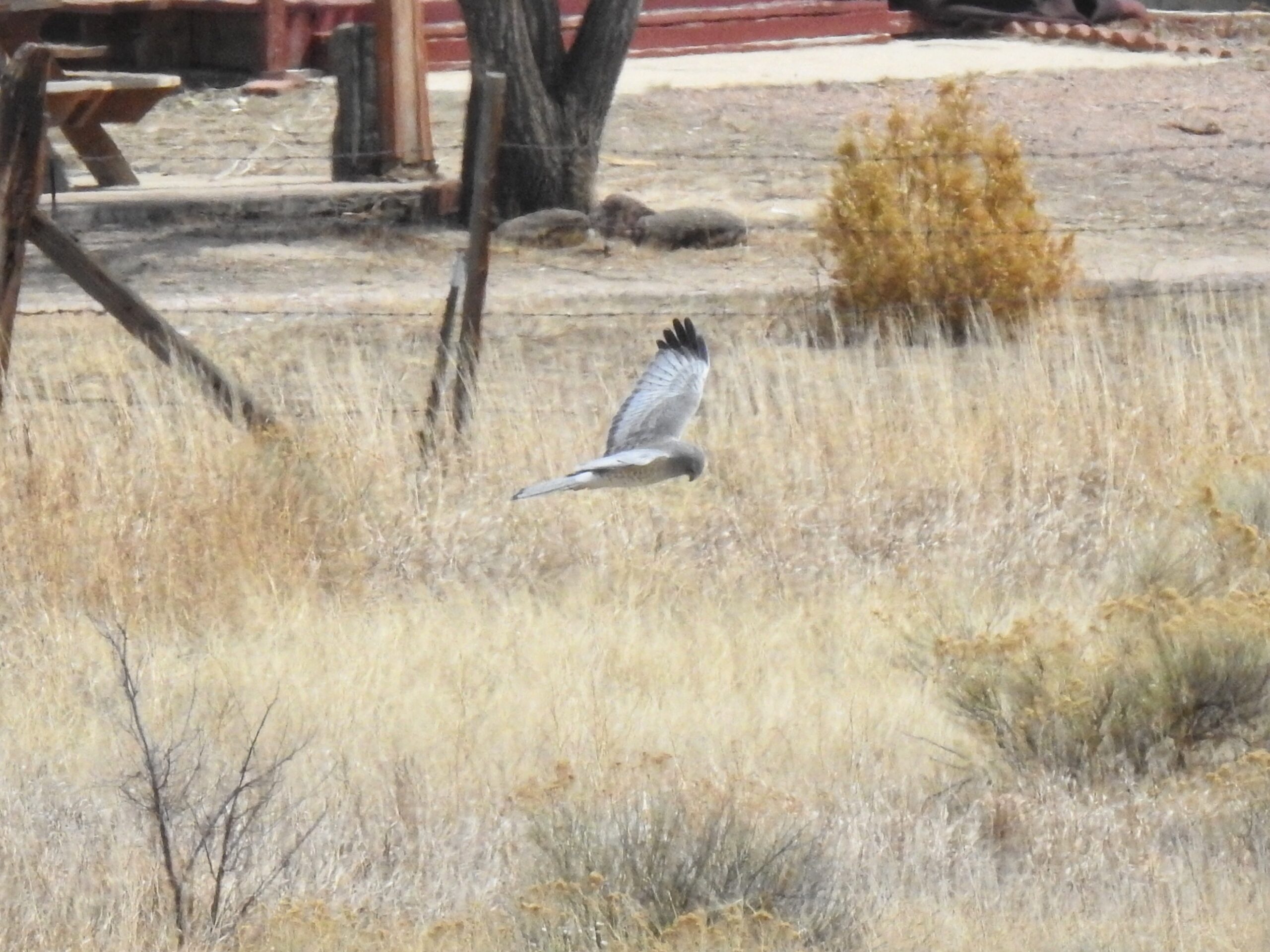
A male Northern Harrier was hanging out nearby.
I saw 63 species on the day, which is very good for Colorado, especially since I wasn’t making a particular effort to see a lot of birds. For instance, I didn’t see a magpie, crow, Blue Jay … I saw a new bird for Colorado, the Common Gallinule, bringing my state list up to 343, which isn’t bad in less than six years.
Posted inWildlife|Comments Off on Birding Southeastern El Paso County