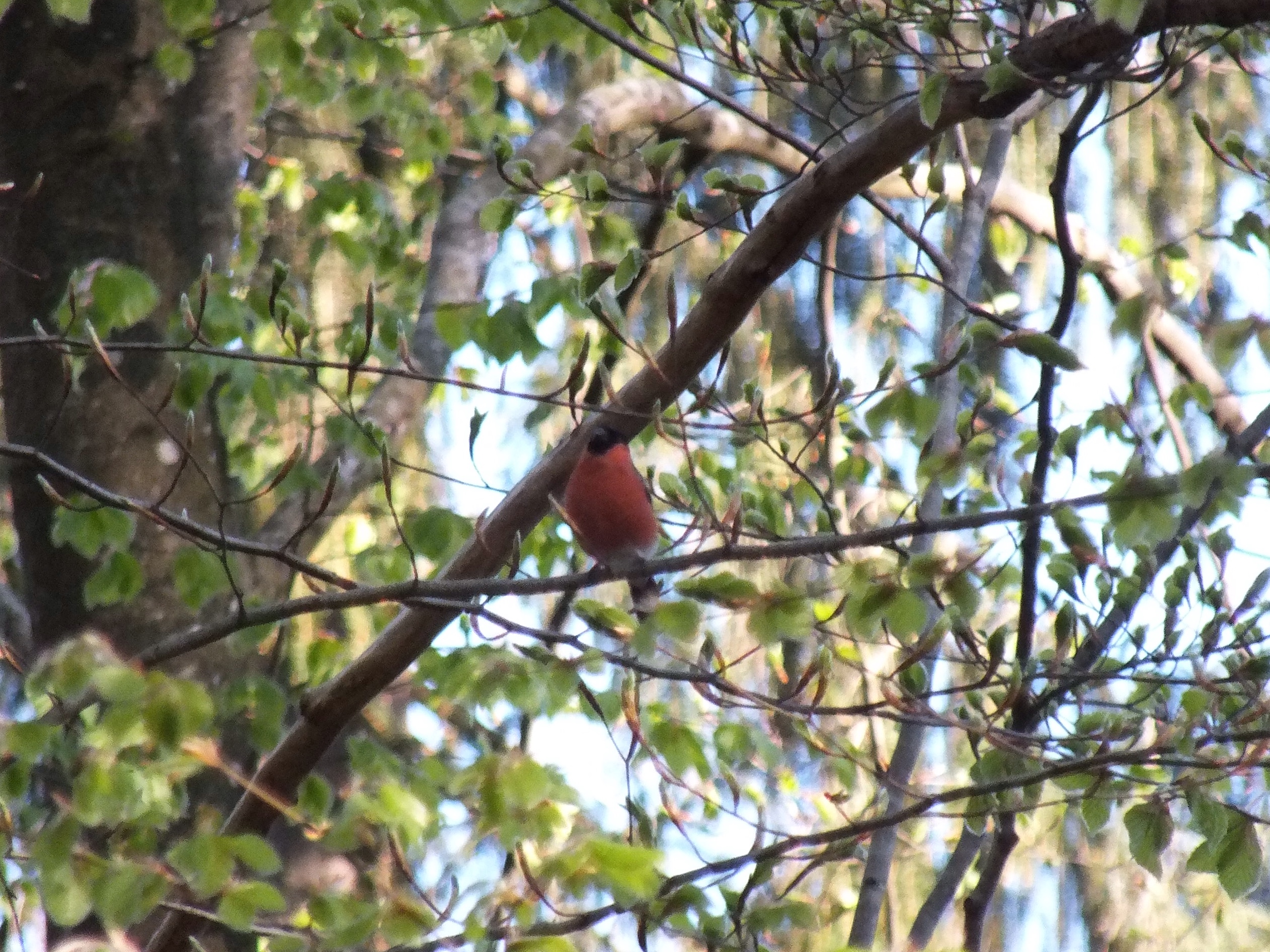
pyrrhula pyrrhula (worm-eating bird mentioned by Aristotle)
Thursday, April 25, 2019 — 8:00 am
Boblingen, Germany — hiking trails through the woods along the Panzerstrasse
On Wednesday evening, I developed a sore throat. I thought it might be an allergic reaction to the 100% pollen counts in the area. When I woke up on Thursday morning, I was in considerable pain. I debated whether I wanted to spend the morning birding as I’d planned. But then I remembered that this could very possible be my last ever chance to bird in Europe. I forced myself to get up and was out in the woods shortly after dawn.
At first, I didn’t see many birds. I could hear many, but I simply wasn’t finding them. I wandered quite a ways, beyond my furthest point when I explored the woods four days earlier. I saw and heard a small bird in the thick woods along the path and spent several minutes trying to identify it. I never did figure out what it was. But while I was making the attempt, another bird suddenly landed on a branch not far in front of me. It looked around, flew to another branch, looked around some more, then flew off into the woods. It was only in view for perhaps a minute, but that was long enough for me to identify it as a Bullfinch and get a few mediocre photos.
The Bullfinch is notable for its bright pink breast, short stubby bill, and lack of any neck to speak of.
Posted inEurope, Wildlife|Comments Off on Bird #545 — Eurasian Bullfinch
Although we knew it would be sobering, we decided to visit Dachau Concentration Camp.
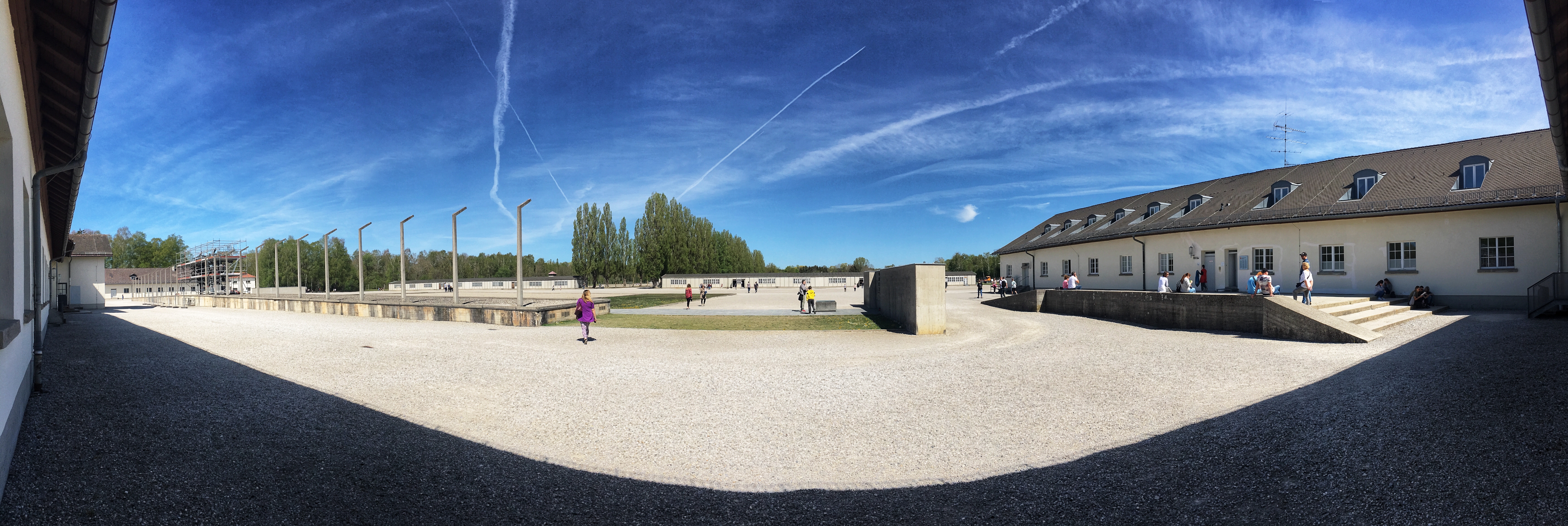
The memorial, which feels huge, only covers maybe a quarter of the war-period footprint of the camp. The rectangle in the far right, with the U-shaped building and the rows of barracks make up memorial
The camp was established in 1933 to house Hitler’s political opponents. It was used as a work camp and became the model for other camps which adopted the violent methods developed by the SS guards here. Dachau was never primarily an execution camp, but of the 200,000 people imprisoned here, more than 40,000 were murdered though outright violence or overwork.
This is the gate house. The original gate was stolen, then found and is on display in the museum. It says “Work sets you free,” a Nazi lie to convince arriving prisoners that they had some control over their fate.
The large maintenance building houses a museum. It’s the building that surrounds my location in the photo below. Some rebuilt barracks can be seen in the distance.
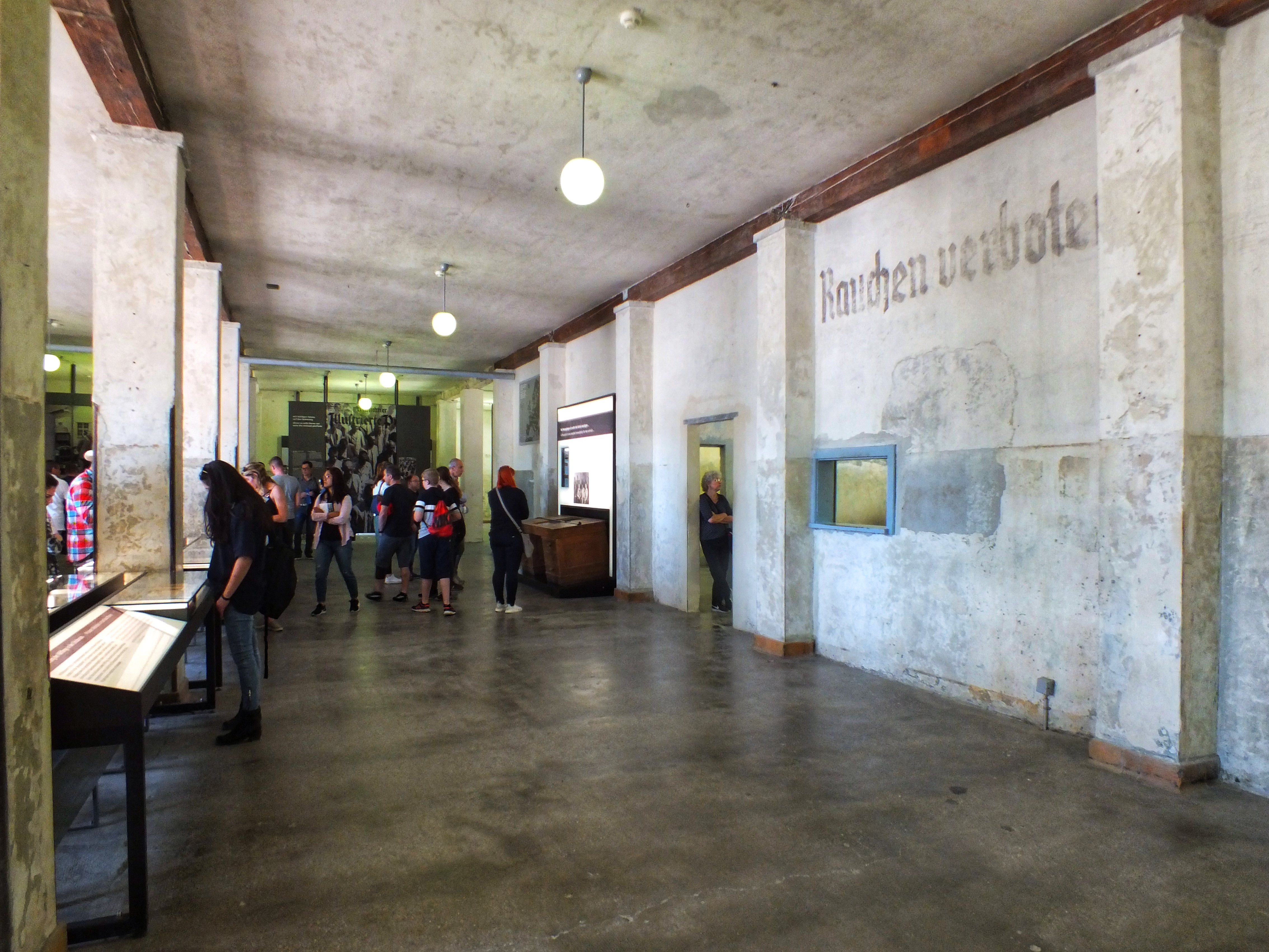
This is the room where arriving prisoners were made to surrender all their belongings.
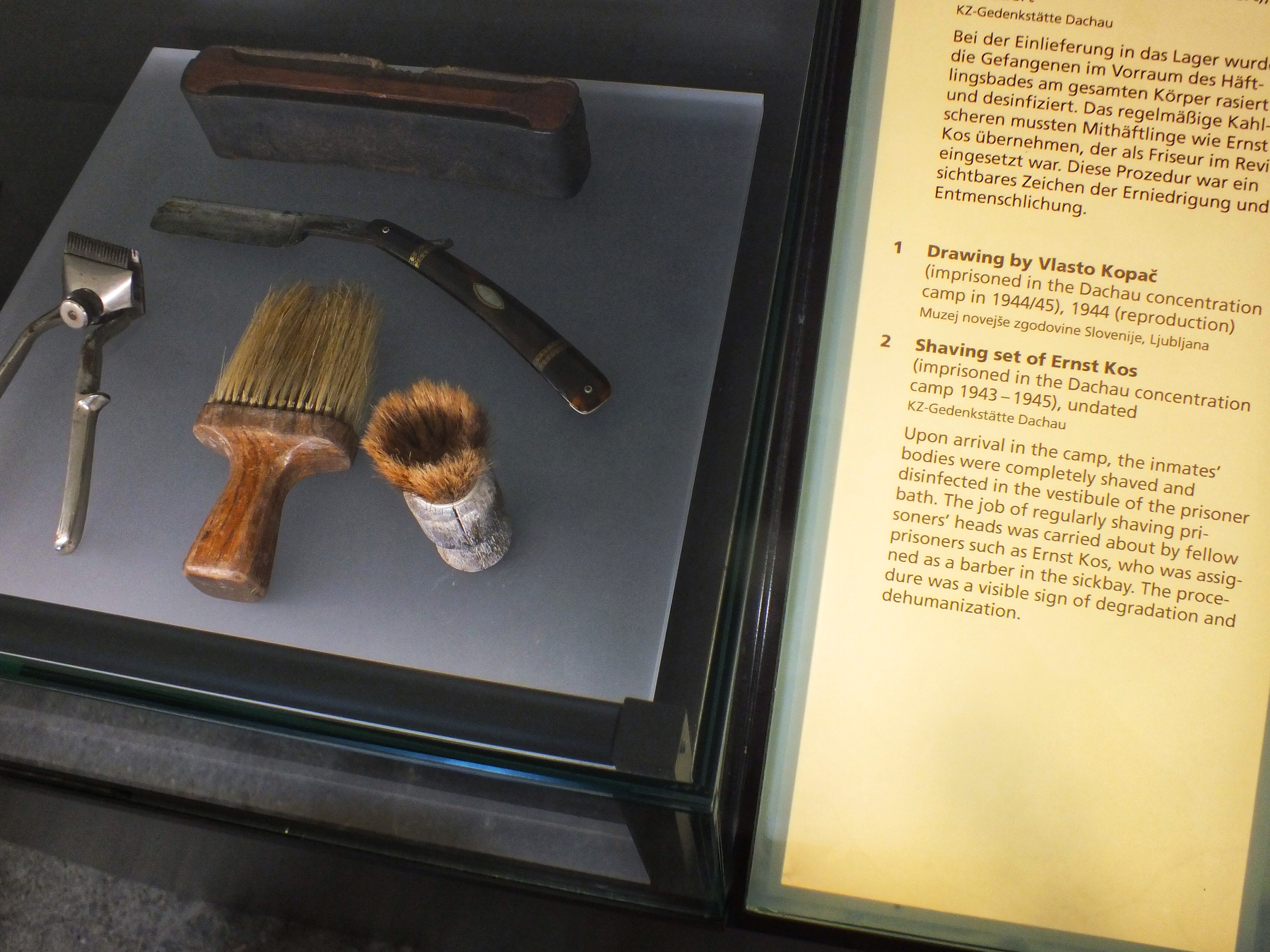
The museum went on for room after room. There were some artifacts, but mostly it signboards with pictures and history. It wasn’t very well curated. It seemed design to fill the massive amount of space rather than tell a concise history. After a while, I found myself reading the same information three and four times. There was a decent size crowd, but it wasn’t packed.
A rebuilt section of the wall around the camp. Many prisoners entered the forbidden zone, not as an attempt to escape but so that they would be shot and put out of their misery.
The Crematorium, where bodies were disposed of.
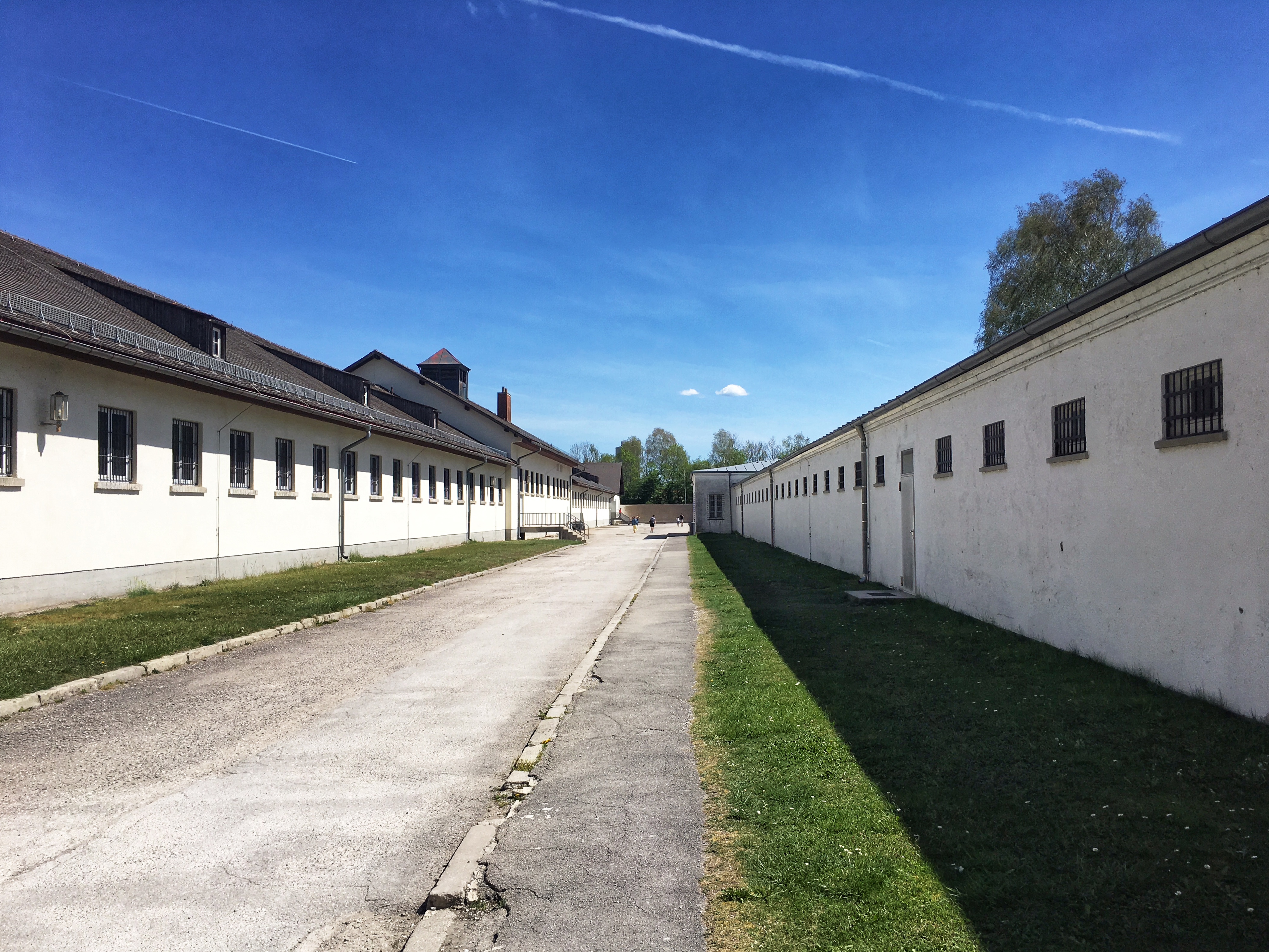
On the left is the back of the maintenance building. The building on the right was the camp prison where more important prisoners were held and also where the SS conducted their experiments on prisoners.
We were there for maybe three hours and left physically and emotionally exhausted.
On the previous evening, I had a sore throat just before I went to bed. On this day, I was feeling a little off, although I couldn’t point to anything specific. This evening, the sore throat came back with a vengeance and kept me awake most of the night.
Posted inEurope|Comments Off on Dachau Concentration Camp
We spent Wednesday in and around Munich, about two hours from Boblingen. Before we got on the Autobahn, we stopped at the local McDonald’s. I don’t know what language the guy behind the counter spoke, but it wasn’t English or German. The manager finally had to come out and take our order. I ordered a bacon, egg, and cheese McToast — a flat sandwich on pita-like bread. The ingredients were all fresh — no powered eggs here, and it was really good.
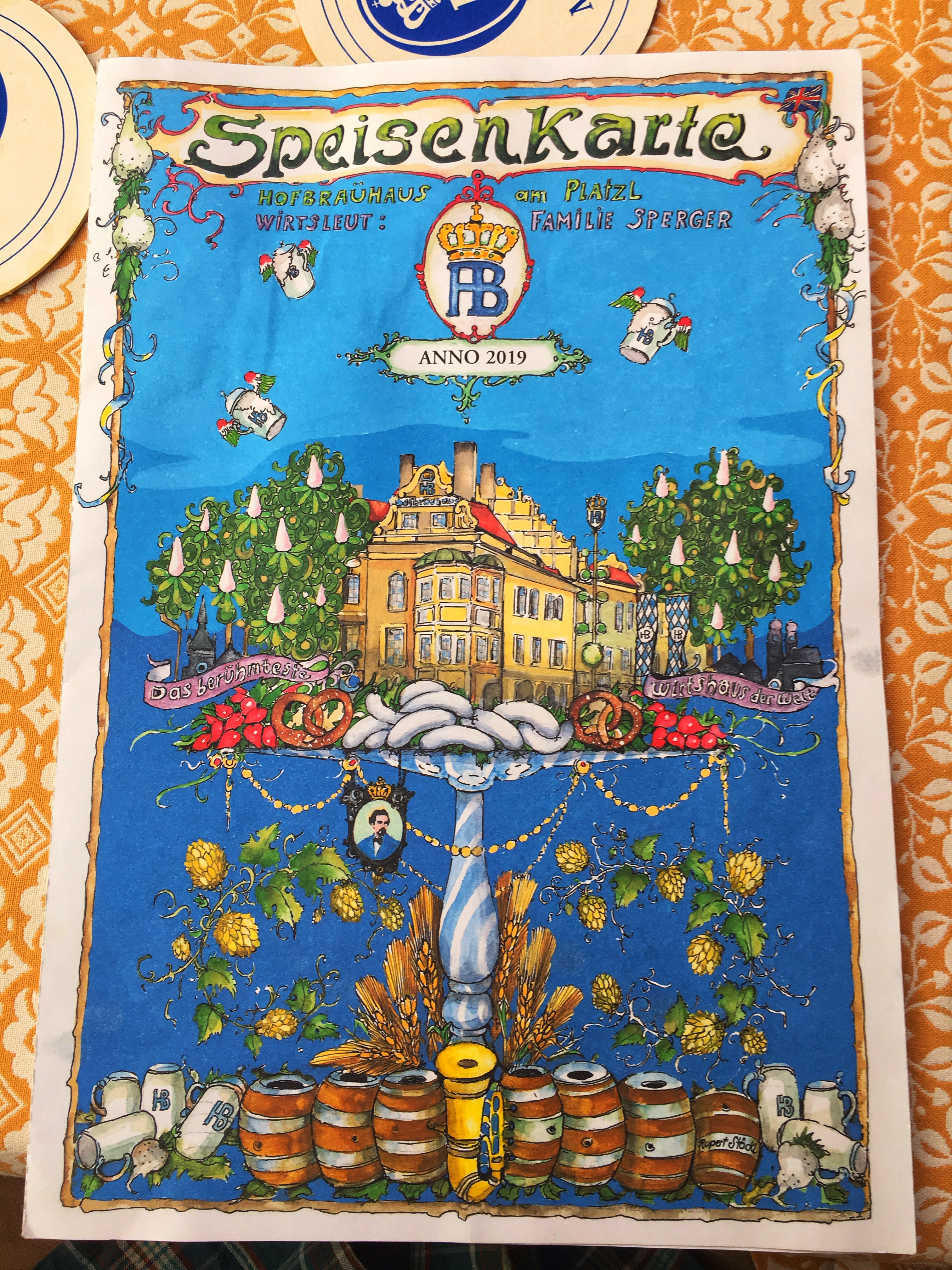
In the early afternoon, we drove into downtown Munich to the famous Hofbrauhaus. The street of Munich were chaotic, with narrow lanes, bicyclists who paid no (as in zero) attention to cars whether they were going with traffic or cutting across. The pedestrians weren’t much better. A big construction project near the restaurant complicated things even more, but we finally found a parking spot in a narrow alley about three blocks away from the restaurant.
A four-piece band — two trumpets, a tuba, and an accordion — was playing on the first floor. (There are three floors and an outdoor garden.) We found a table tucked back in the clutter of the garden. And that’s where I saw the sole truly friendly German of the trip. He and his wife were sitting at the table next to ours. The guy saw how much we were struggling to make sense of the German menu, so he got the attention of the waiter and had him bring us English menus.
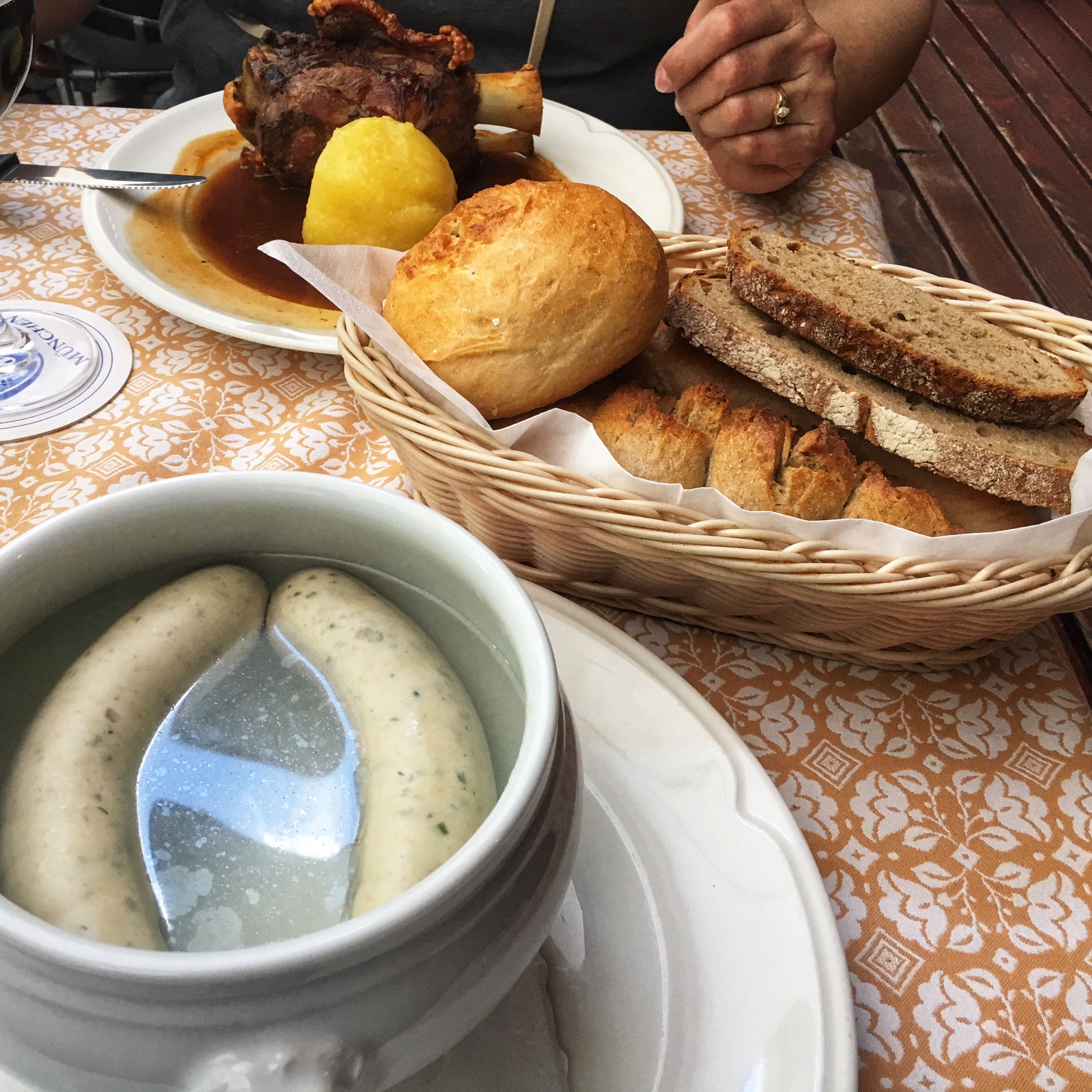
My wife ordered the pig’s knuckle. I ordered sausages. The sausages came in a pot of hot water. Like all the meat I’d had in Germany, the sausage meat was ground really finely, giving them a mushy texture I wasn’t crazy about. They came with a dark mustard that was surprisingly tasty and made the sausages edible. That yellow glob on my wife’s plate was some kind of potato thing that tasted bland and had the texture of jello. As with almost all the food I had in Germany, I wasn’t impressed. We also ordered a bread basket, and although our waiter never brought the butter we ordered, it was delicious.
After we ate, we wandered down an alley filled with shops before returning to the car. We then fought our way back through the chaos of Munich and headed home. Traffic was terrible on the Autobahn. When we came to a complete halt, we looked for an alternate route. The GPS took us down increasingly narrow farm roads. One of them appeared to be someone’s driveway. We had only gone about half a mile down it when we met a long string of cars coming back in our direction, each of them motioning to us to turn around. We somehow managed to get back on the highway beyond the obstruction and made it back to the house without further drama.
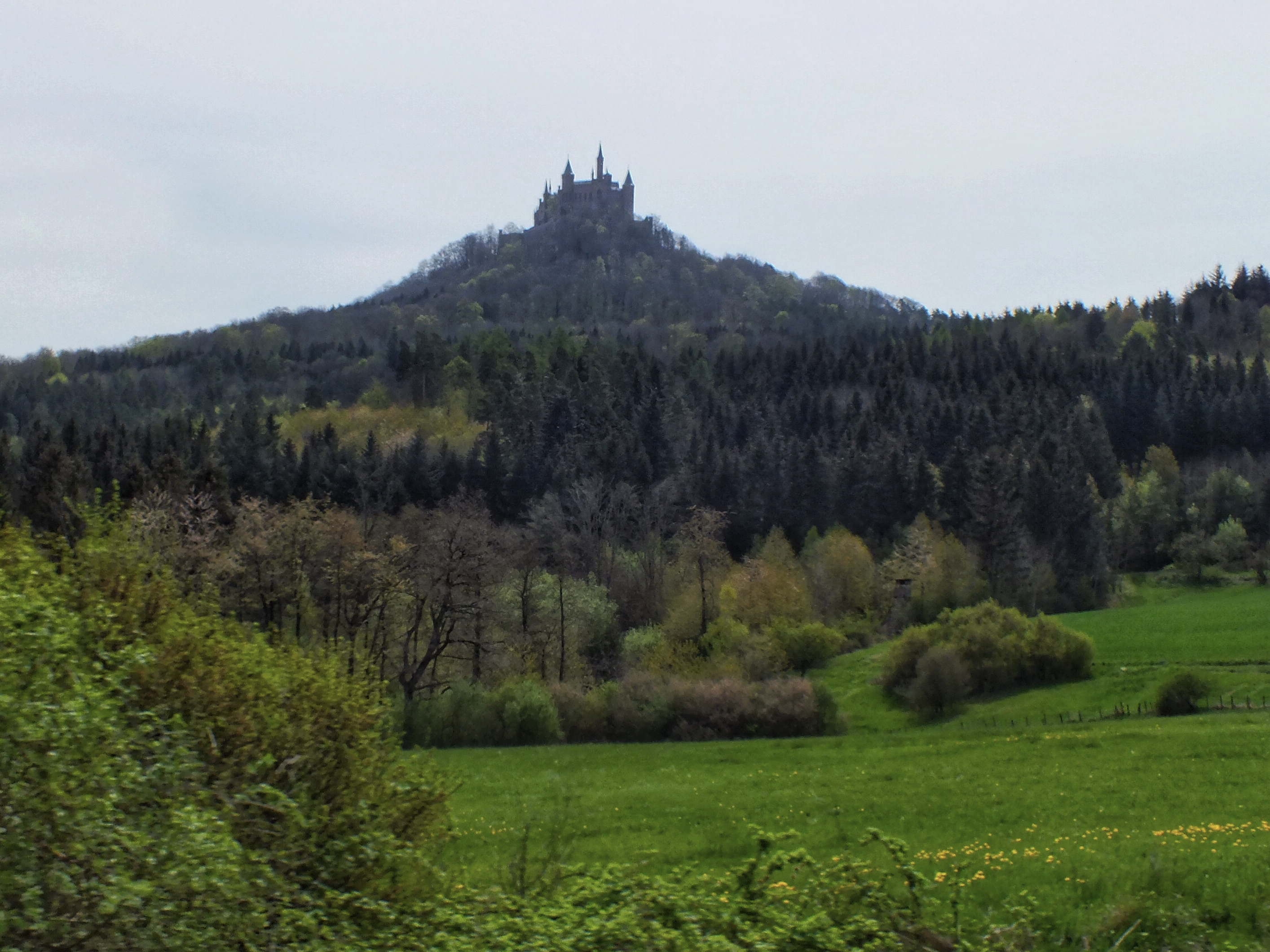
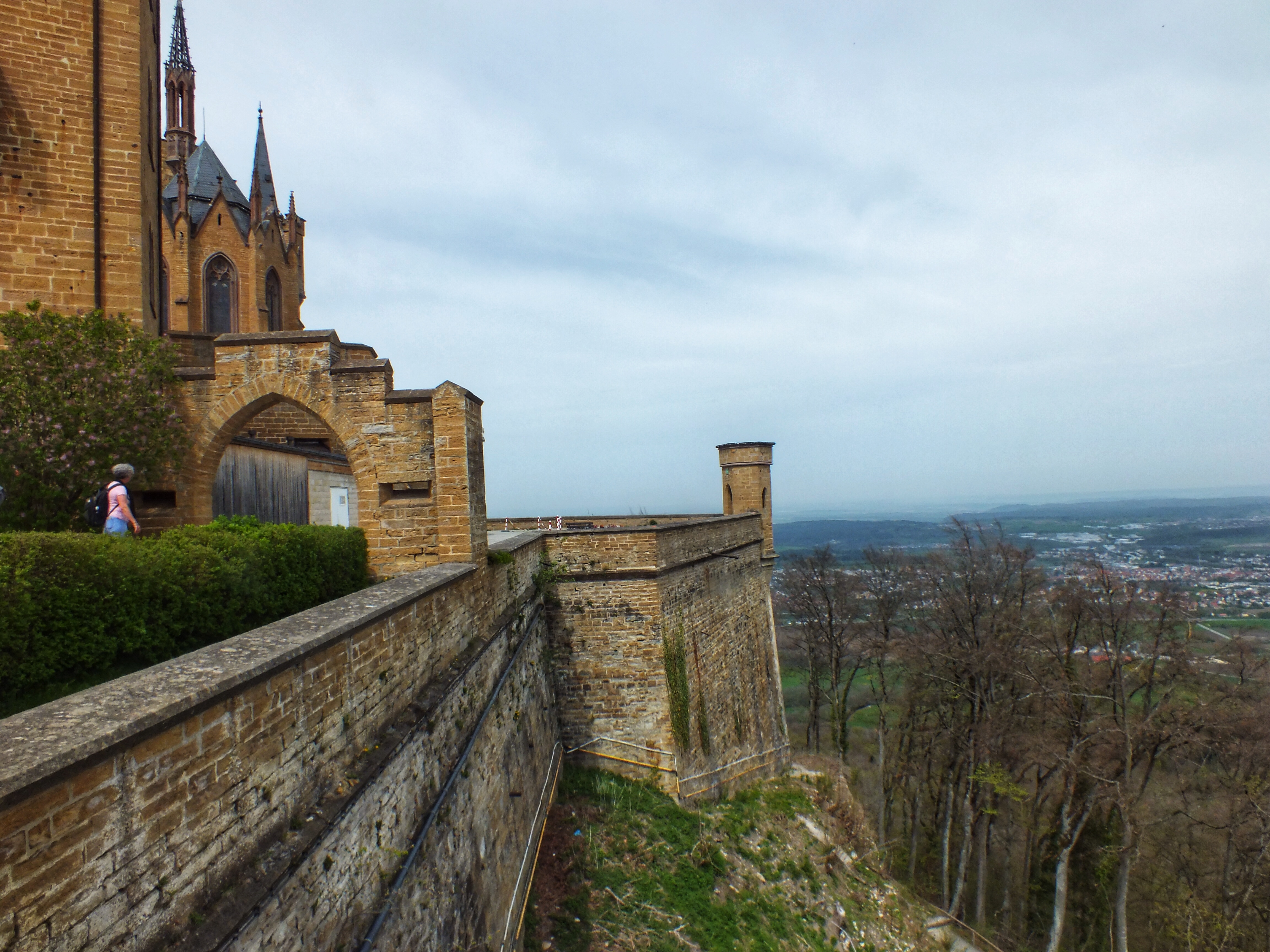
Of course, on a tour of Europe, you have to visit a castle so we headed to one on Tuesday morning. We could see our destination when we were still several miles away.
We parked at the bottom of the hill and caught a ride on a shuttle bus with a very unpleasant, unhappy driver.
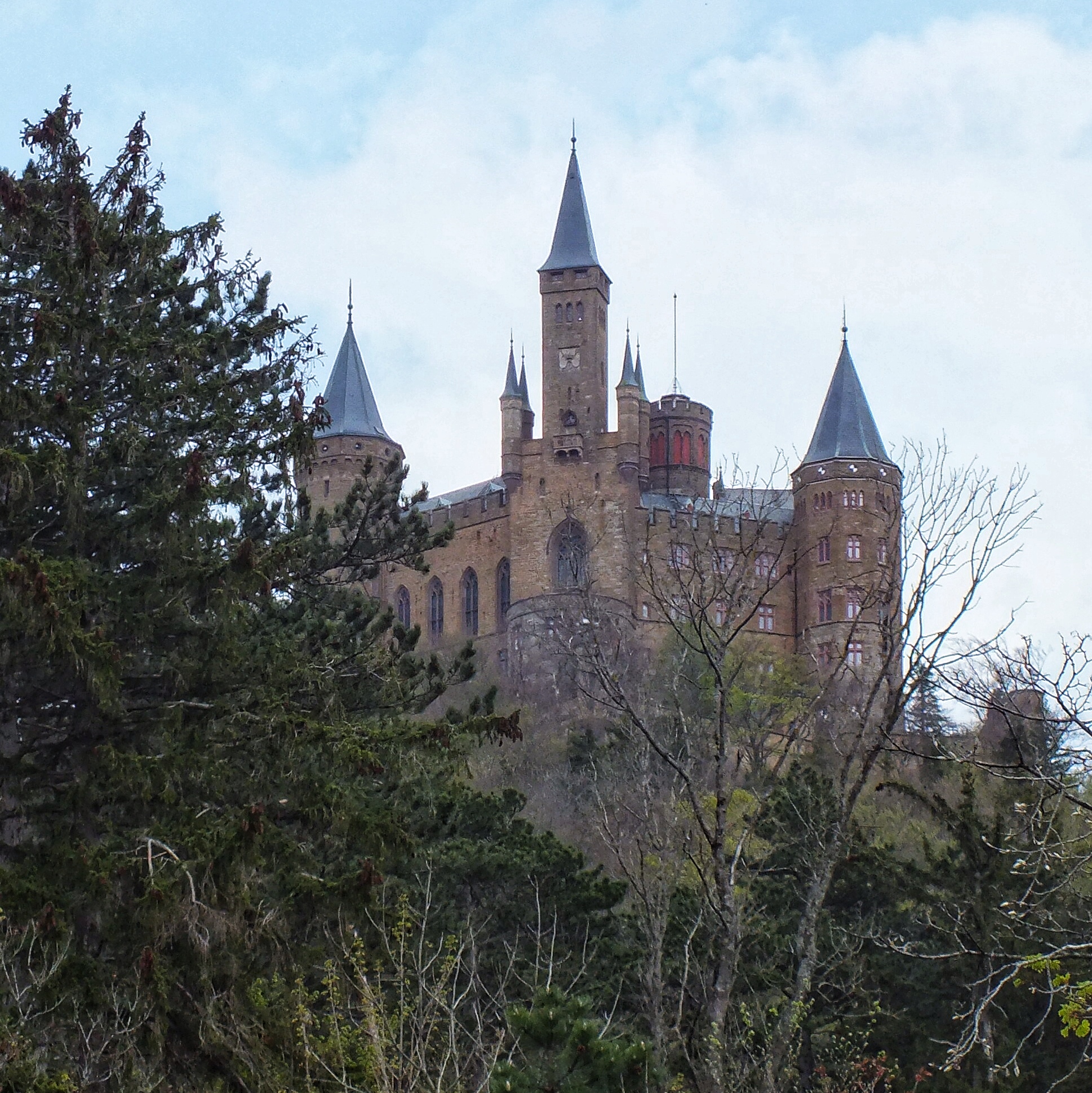
The House of Hohenzollern first built a castle on the hill in the 1000’s. It was destroyed in 1423 during a war between feuding lines of the family. A second castle was built in 1461 and lasted to the late 1700’s when it fell into disrepair. The third castle was constructed by King Frederick William IV of Prussia as a memorial to his family after he was inspired by a nostalgic visit. He was offered the crown of Germany in 1849 and became the first of three German Emperors. This third castle was never intended as a primary resident of the family, and has never been used as such except for Prince Wilhelm, the son of Kaiser Wilhelm II, who took refuge there for a short time at the end of World War II. I had no idea of any of this history when we arrived, and finding out that the castle was owned by historical figures I’d actually heard of made the experience even better. The Hohenzollern family still owns the castle.
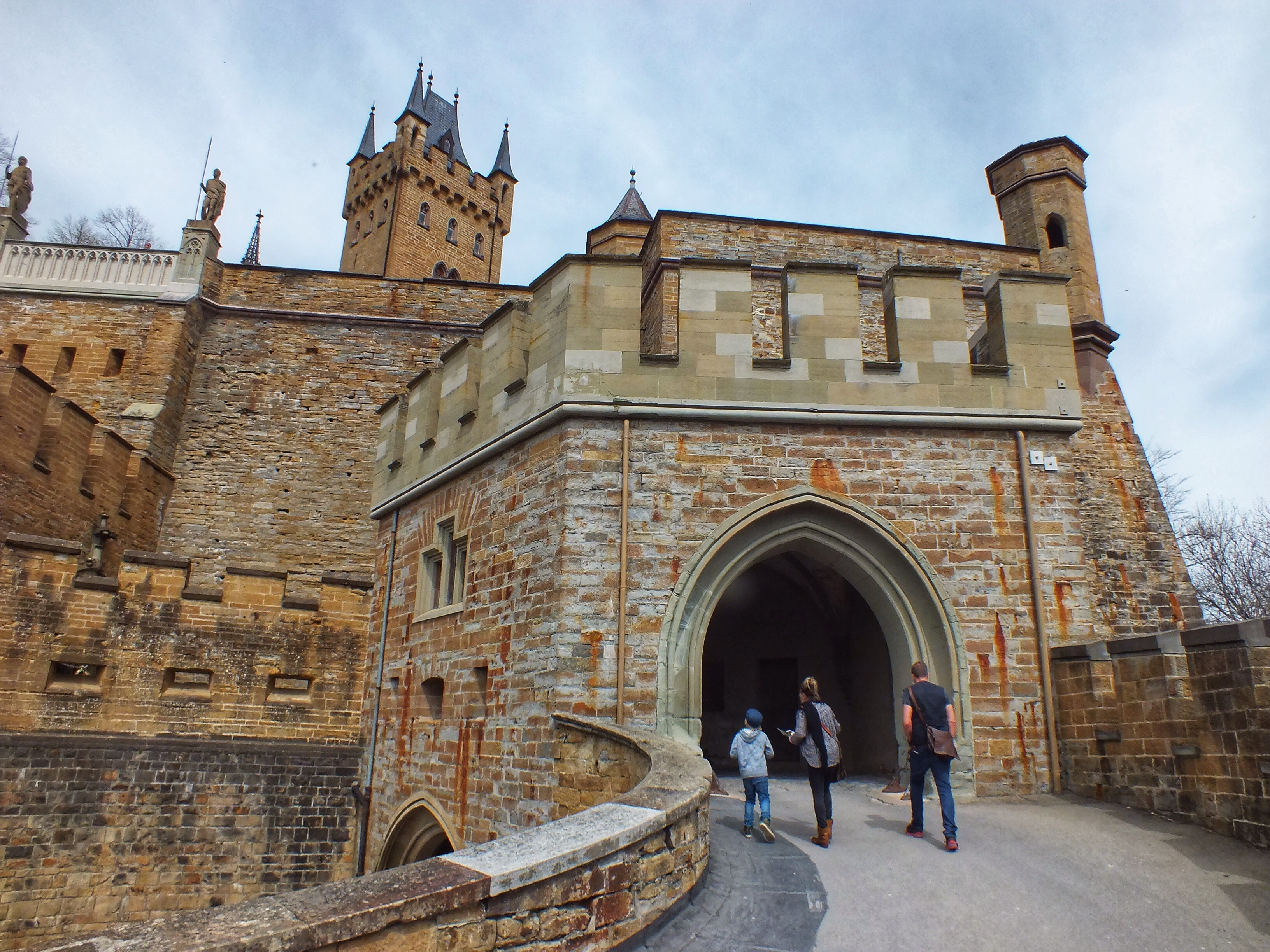
We were released by the grumpy bus driver by the main gate.
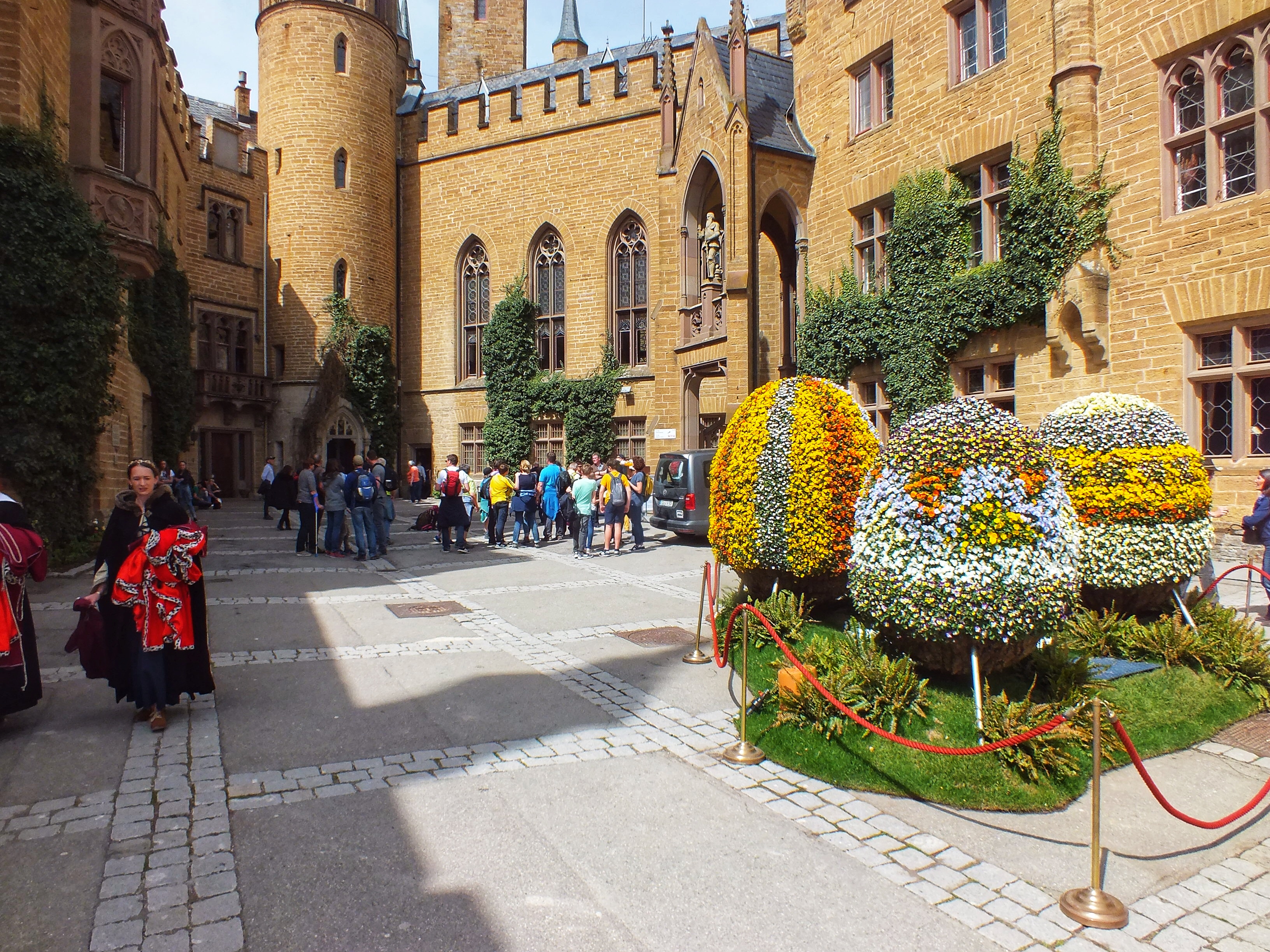
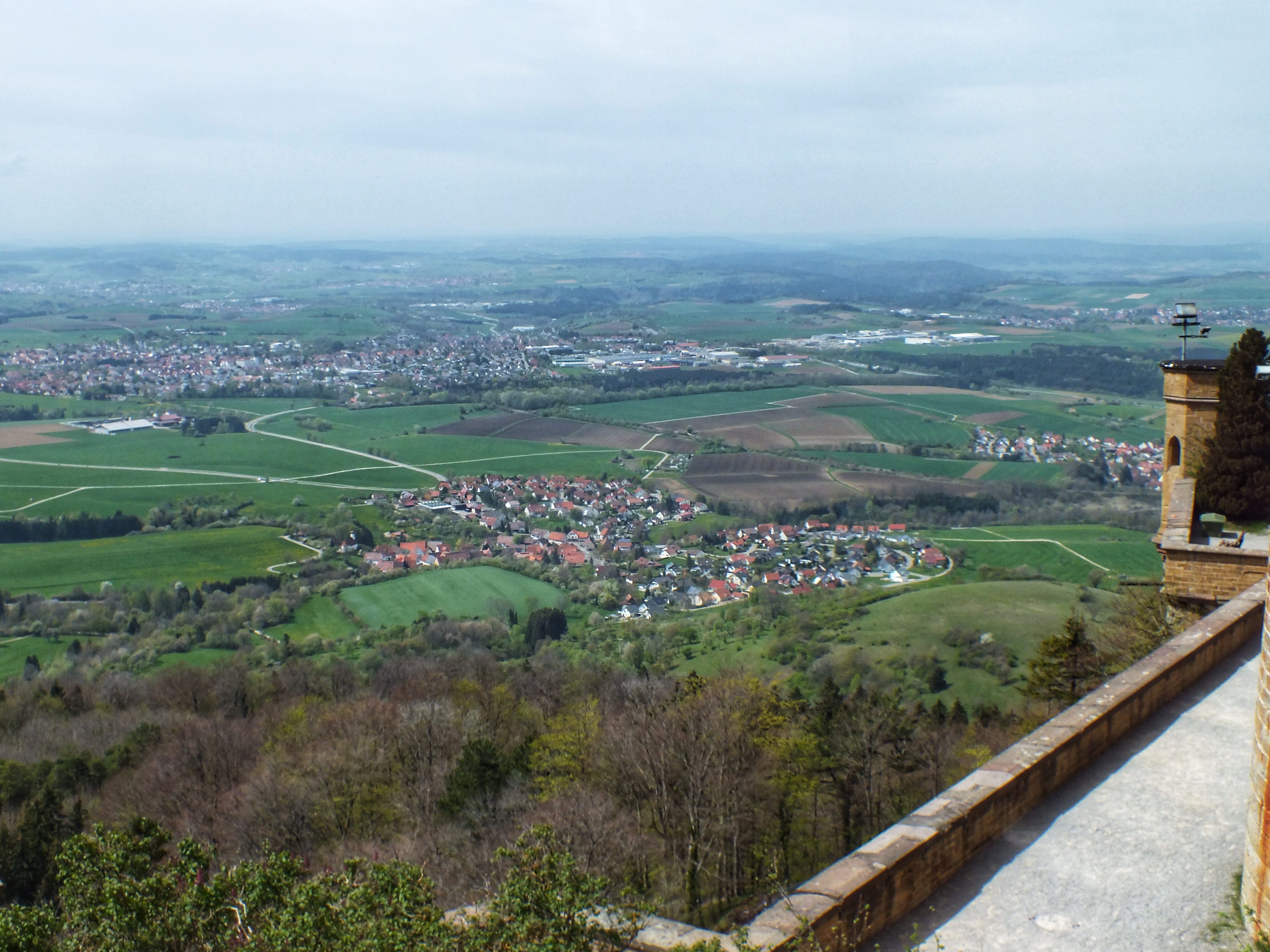
A way was made for carriages to get up to the courtyard by way of a spiral drive that makes three tight circles. We walked this roadway, admiring the view out over the valley as we went.
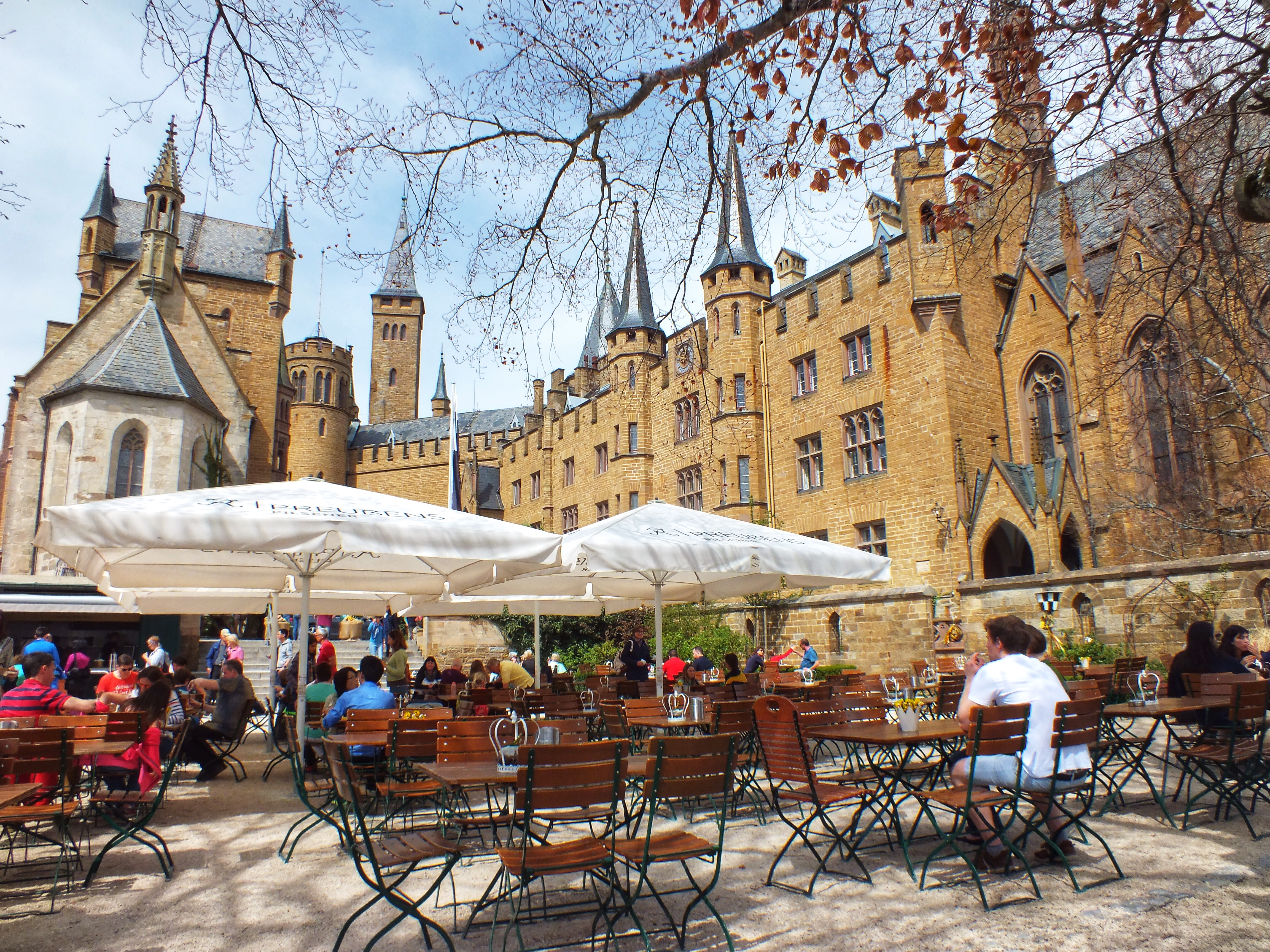
There’s a restaurant in the courtyard, next to a garden with a bird feeder. Greenfinches were moving around the area, so after I sipped an unpleasantly warm apple drink, I left my family to seek more birds.
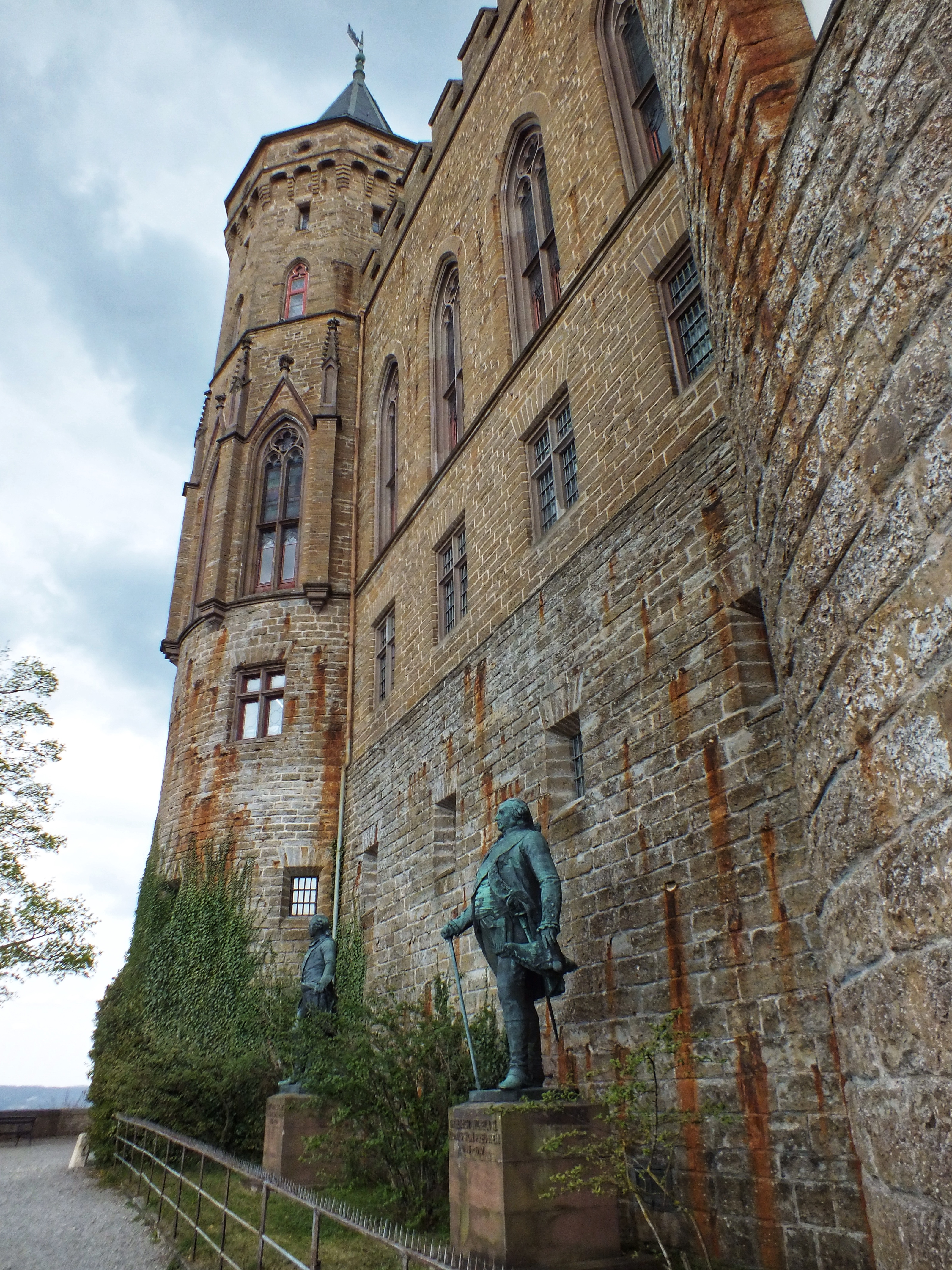
Along the walkway that surrounds the main part of the castle, there are bronze statues of some of the Hohenzollern rulers.
We had decided to buy the complete package, which included a guided tour of the main part of the castle. Until it was time for our (English language) tour, we wandered in and out of those areas open to all visitors.
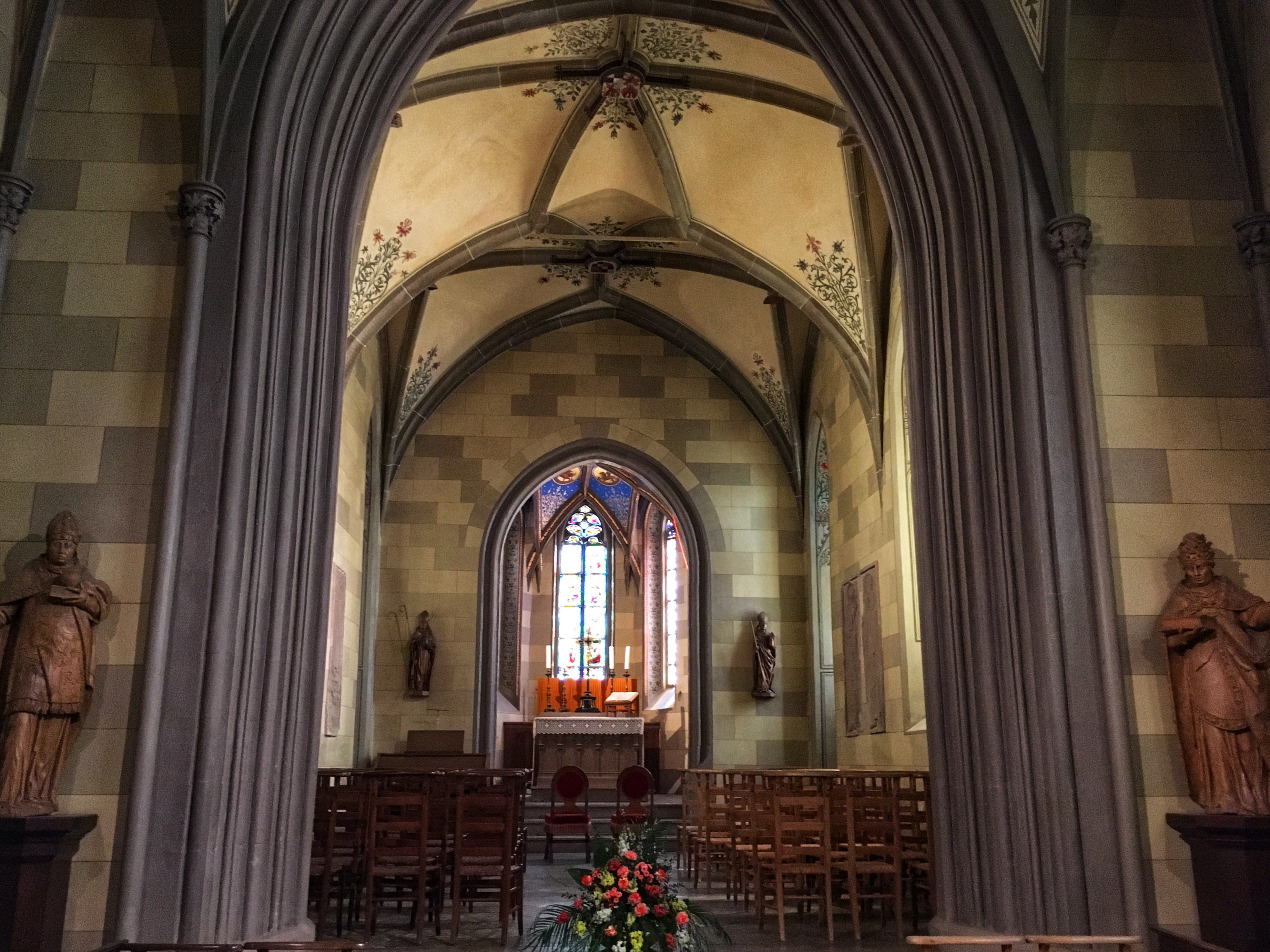
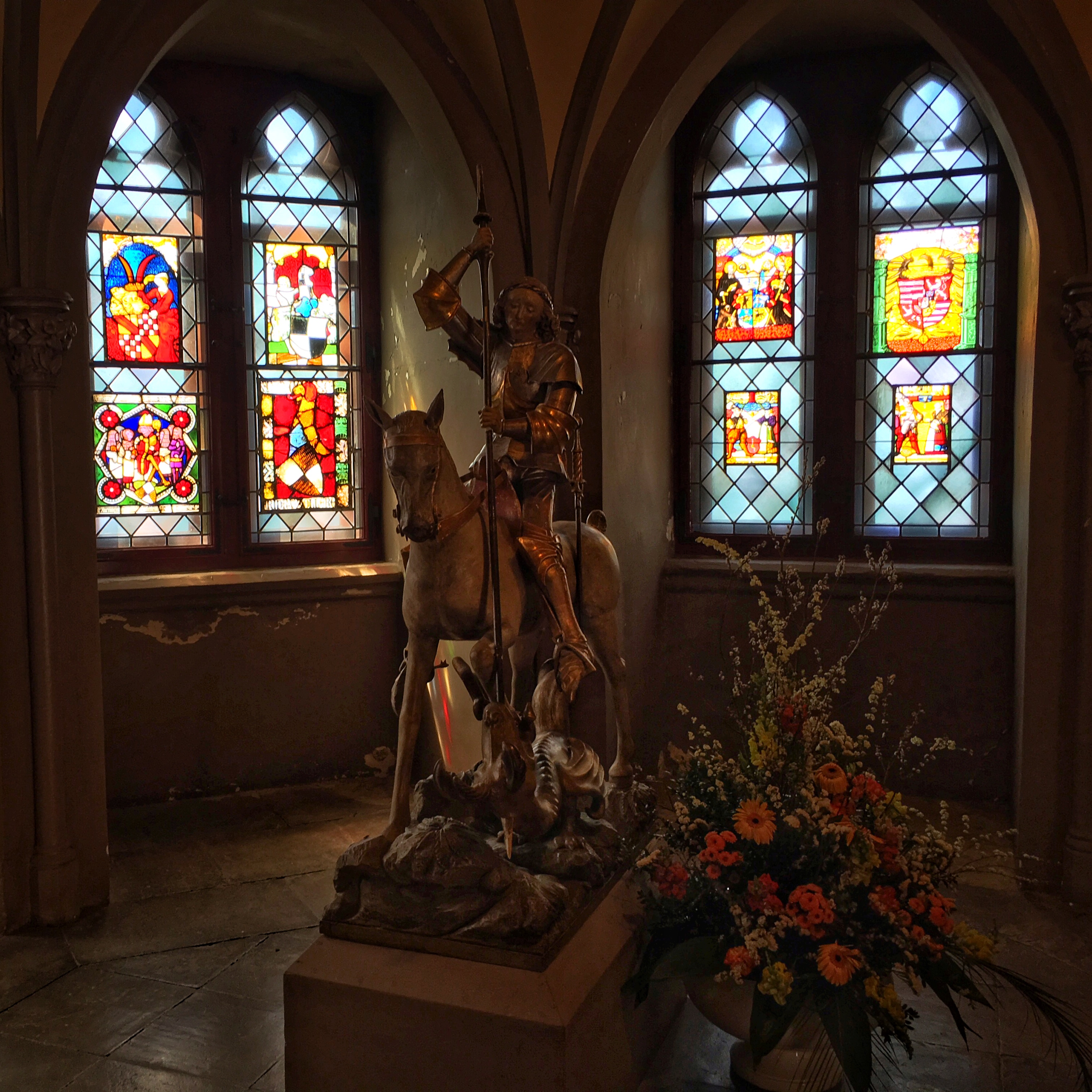
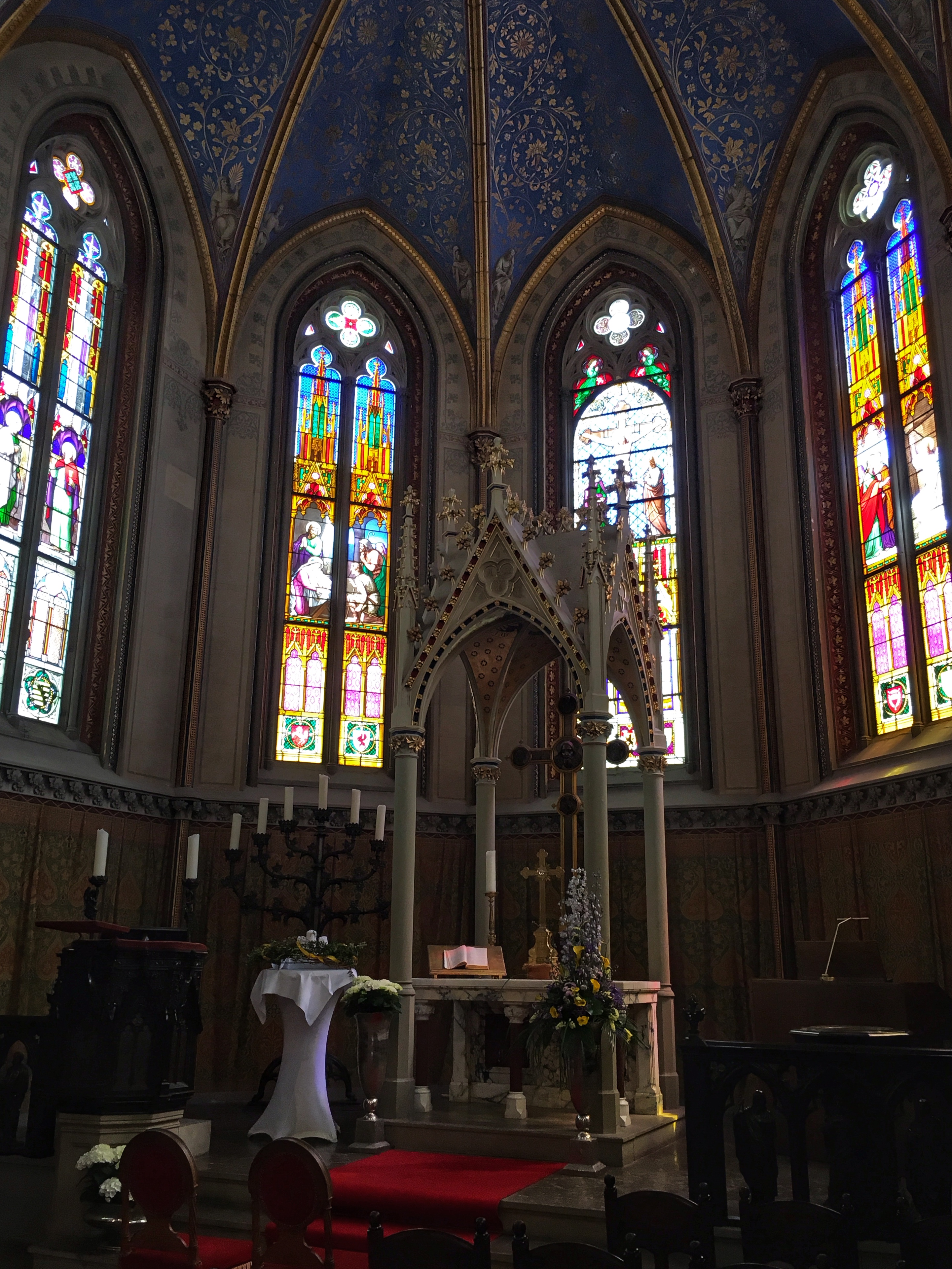
This included the Catholic chapel.
The Protestant chapel.
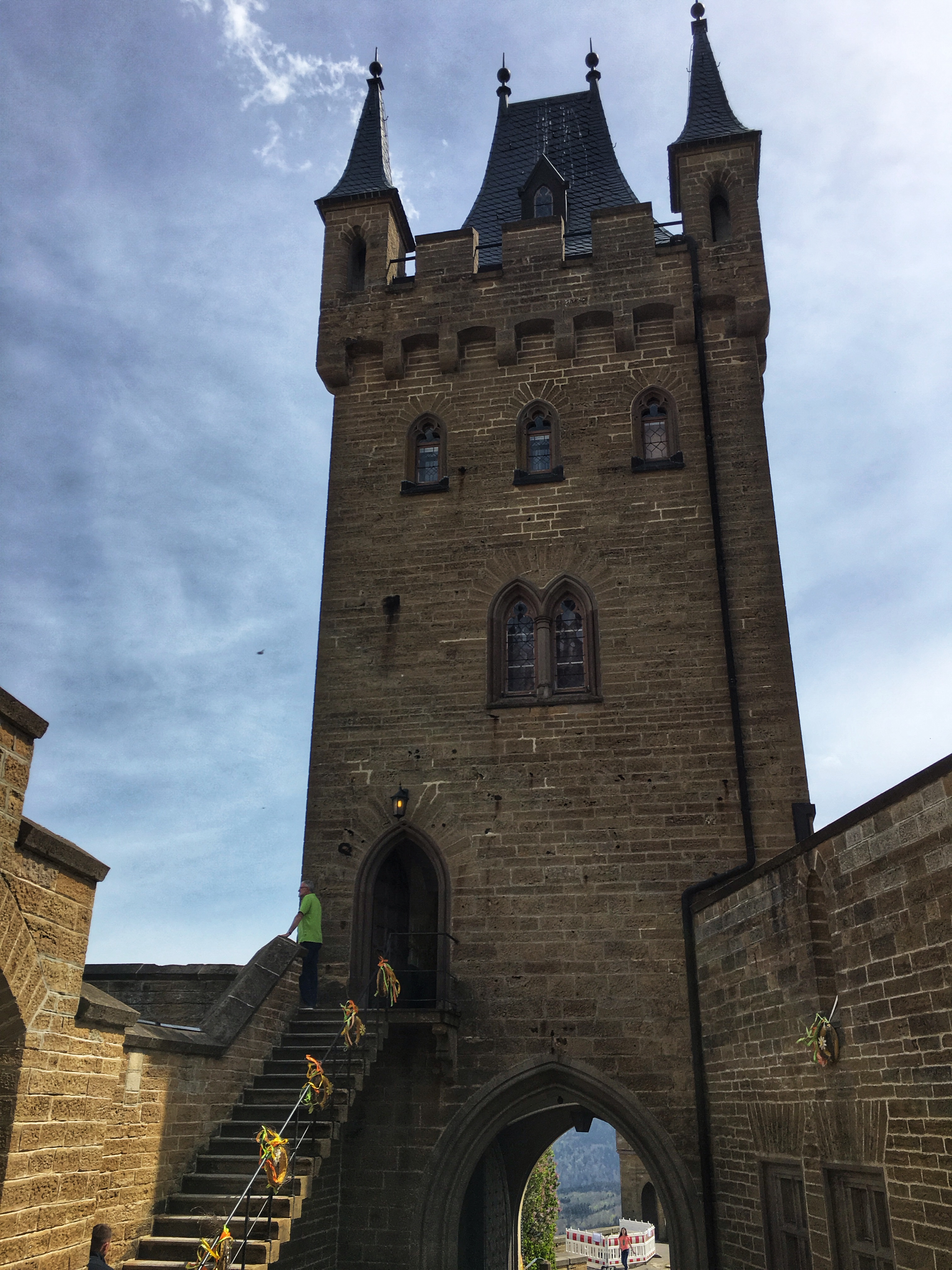
And the gate house.
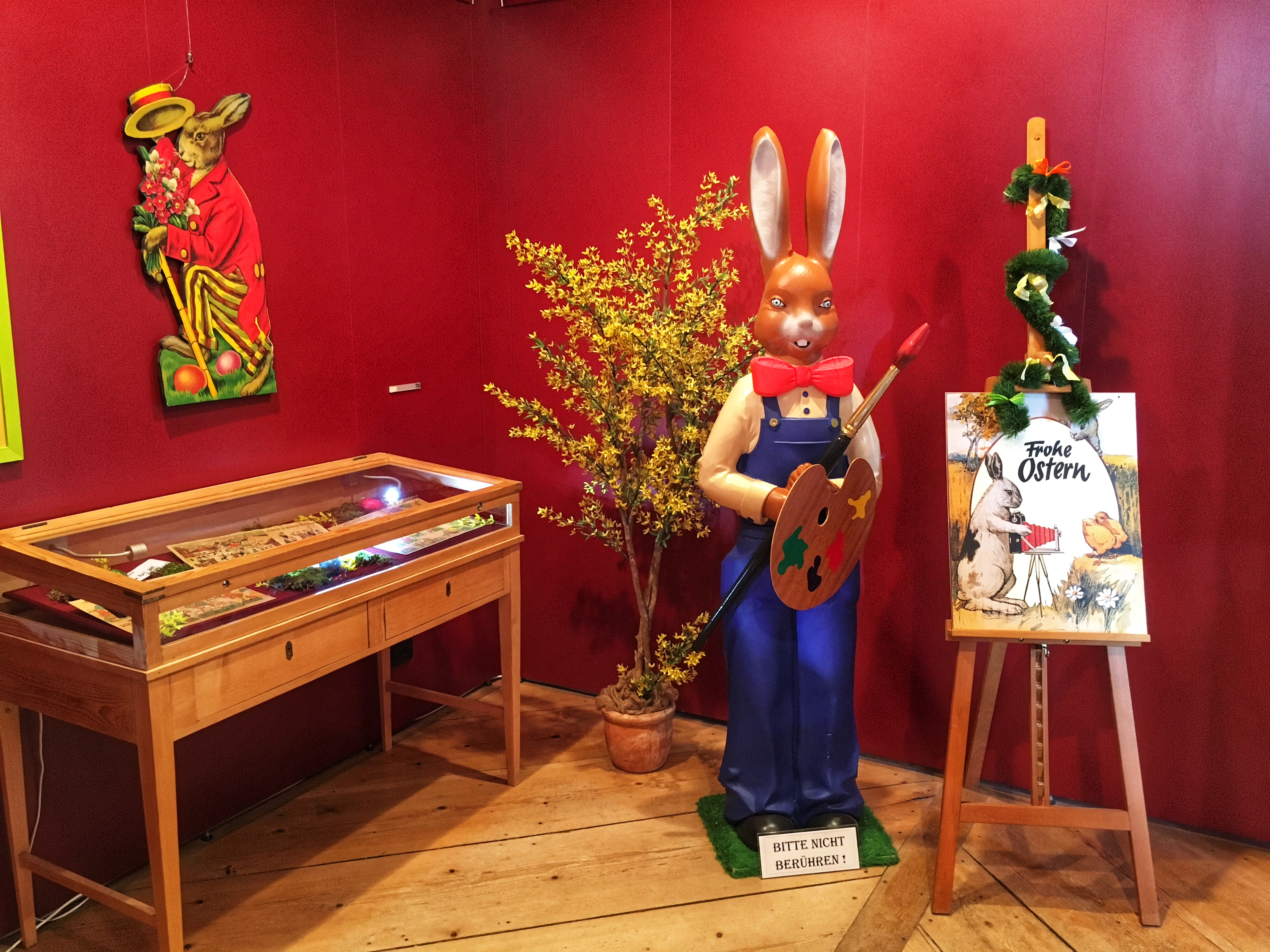
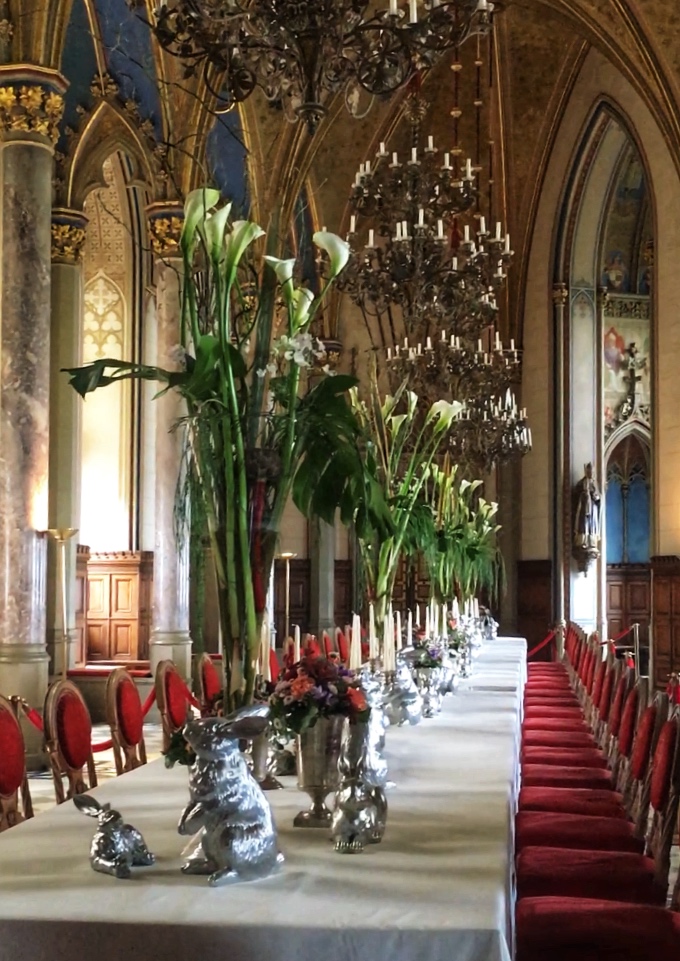
On each of the two floors, there was a small room with a display of antique Easter decorations.
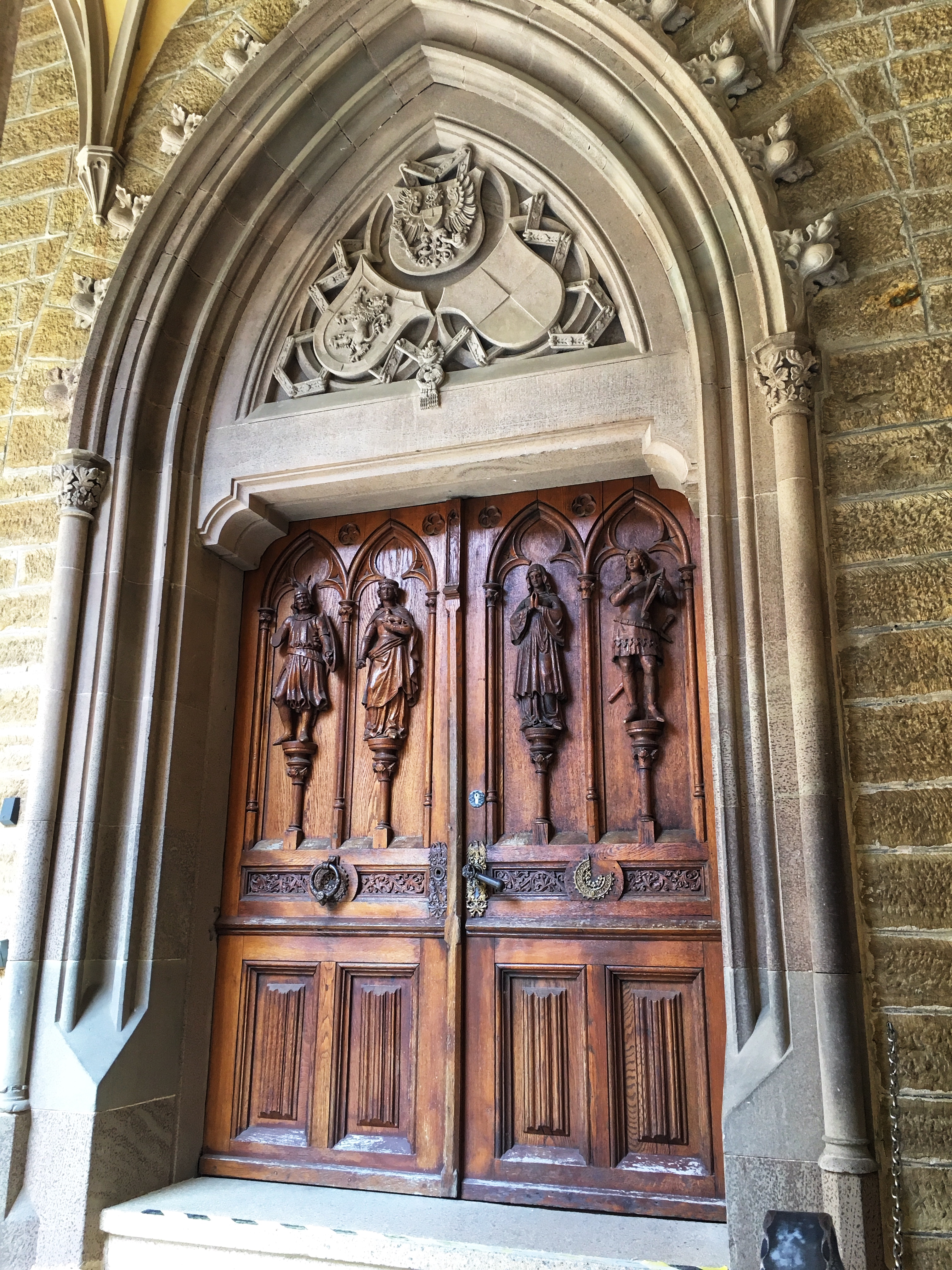
When time for our tour approached, we stood by the ornate doors that lead to the family quarters.
Our guide spoke good English with a strong accent. Her presentation, on the castle history, the architecture, and the members of the Hohenzollern family who have been around since the castle was built, was thorough and interesting. The first room had a family tree of both lines of the family painted on the walls.
We went through the dining room, the study, the bedrooms, and the princess’ parlor. It was all very fancy, and yet stylish and not garish. Our tour ended in the treasury where, among other valuable pieces, we saw the ornamental crown of the Emperors.
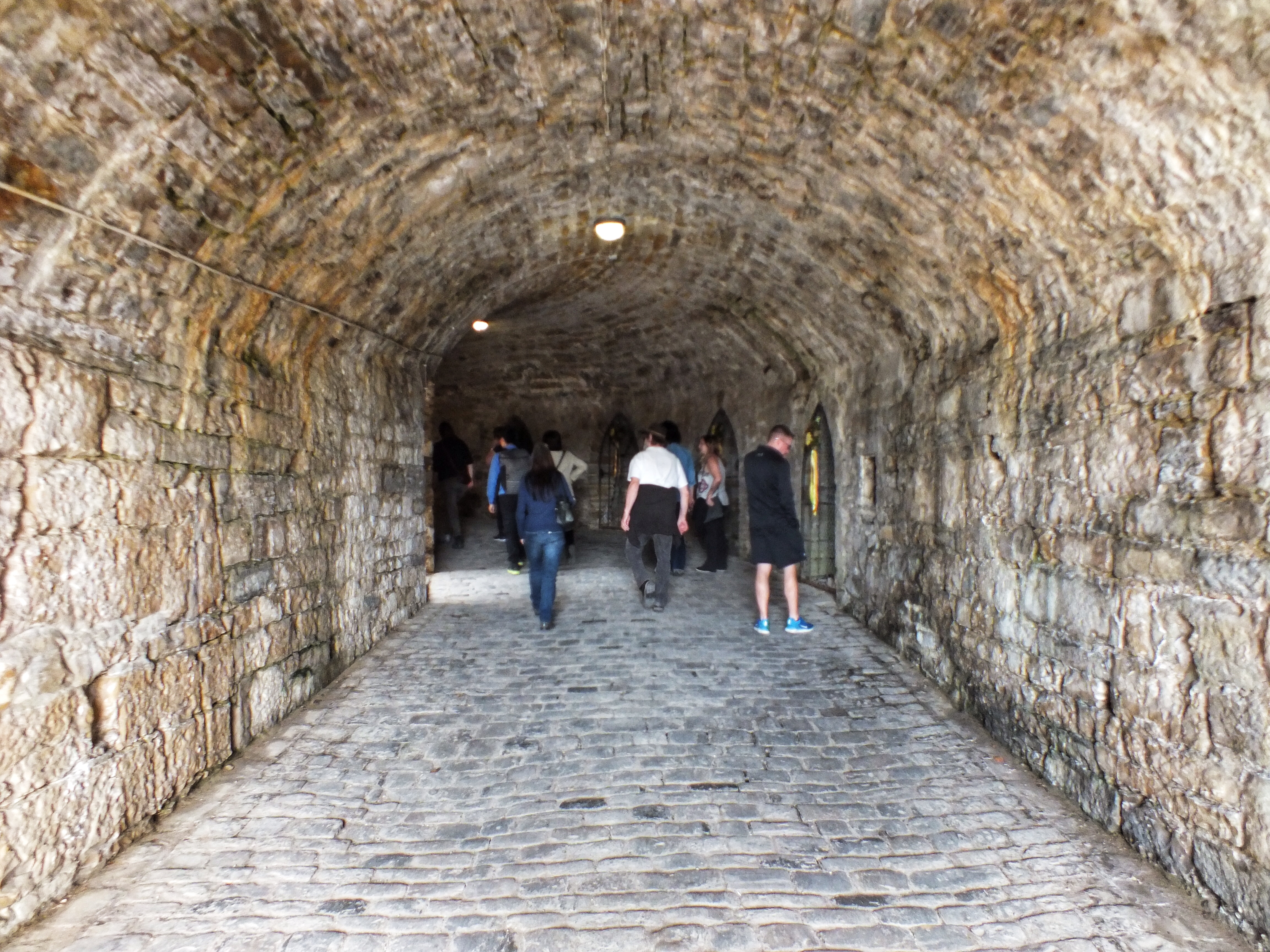
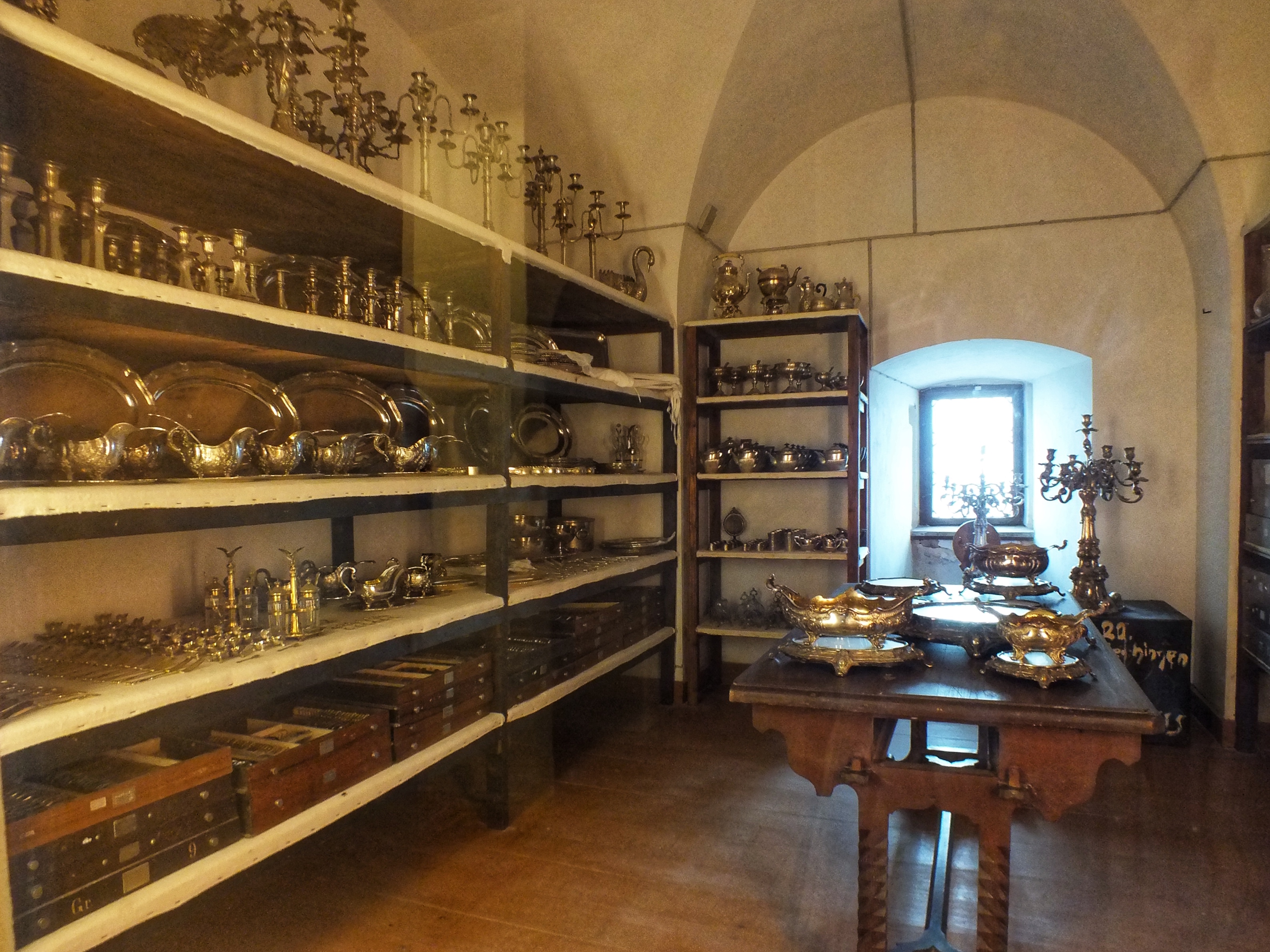
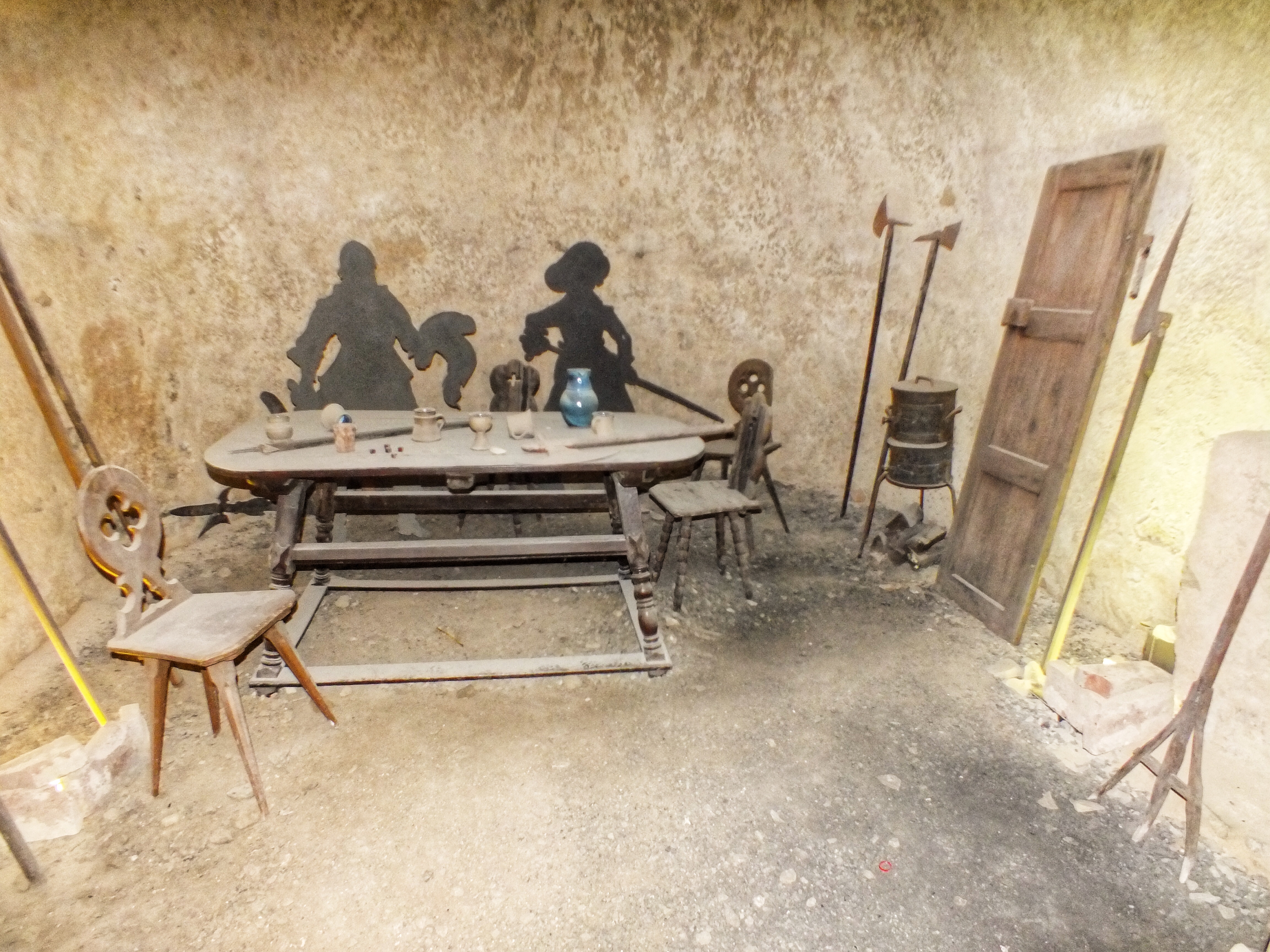
We wandered down into the basement levels where evidence of the previous castle could be found. The family silver was also kept down there.
We ate lunch in the courtyard, then wandered about enjoying the atmosphere and the views.
When we finished with the gift shop, we’d seen pretty much everything there was to see. The crabby bus driver took us back down to our car and we headed home.
Posted inEurope|Comments Off on Hohenzollern Castle
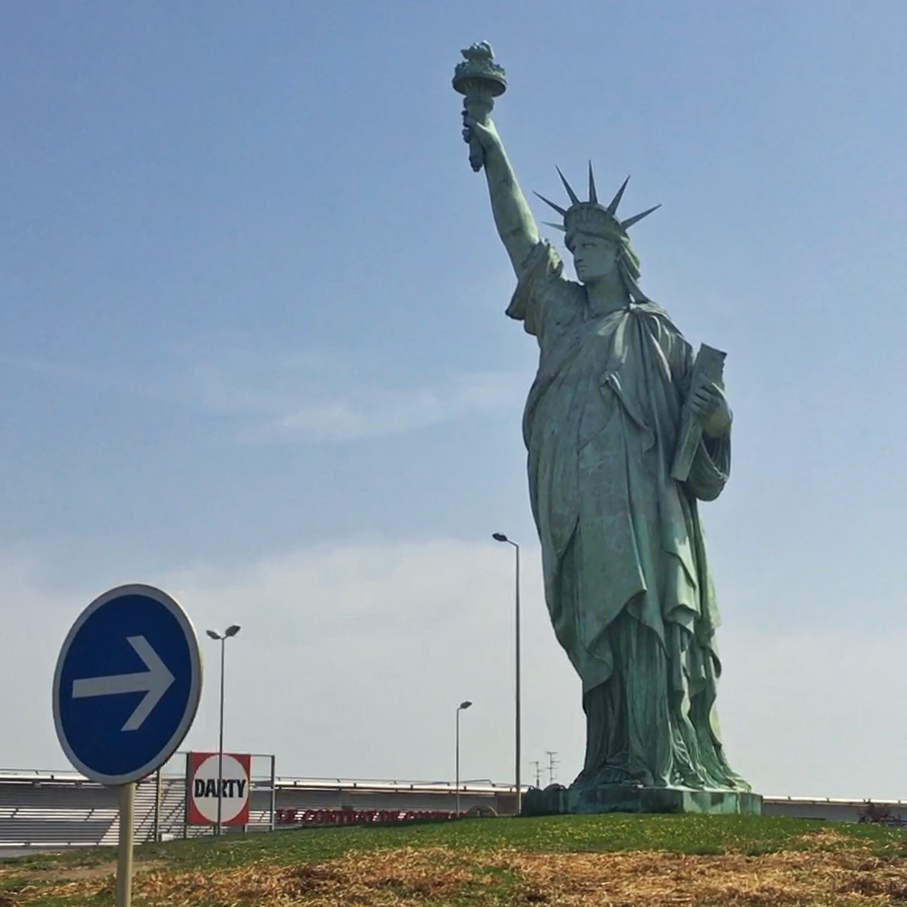
We drove south along the Rhine to Colmar. The city was the hometown of Auguste Bartholdi, the Frenchman who designed the Statue of Liberty. In 2004, to celebrate the 100th anniversary of Bartholdi’s death, the city erected a quarter-scale, 39′ tall replica. It’s located on a roundabout north of town, and we just happened to drive around that roundabout.
For the next 45 minutes, I really felt like I was in a foreign land. Up until this time, we had always been near Army bases or in heavy tourist areas. But not here. We slipped through the narrow streets of a small town, crossed a stretch of vineyard country, then drove up the side of a wooded ridge.
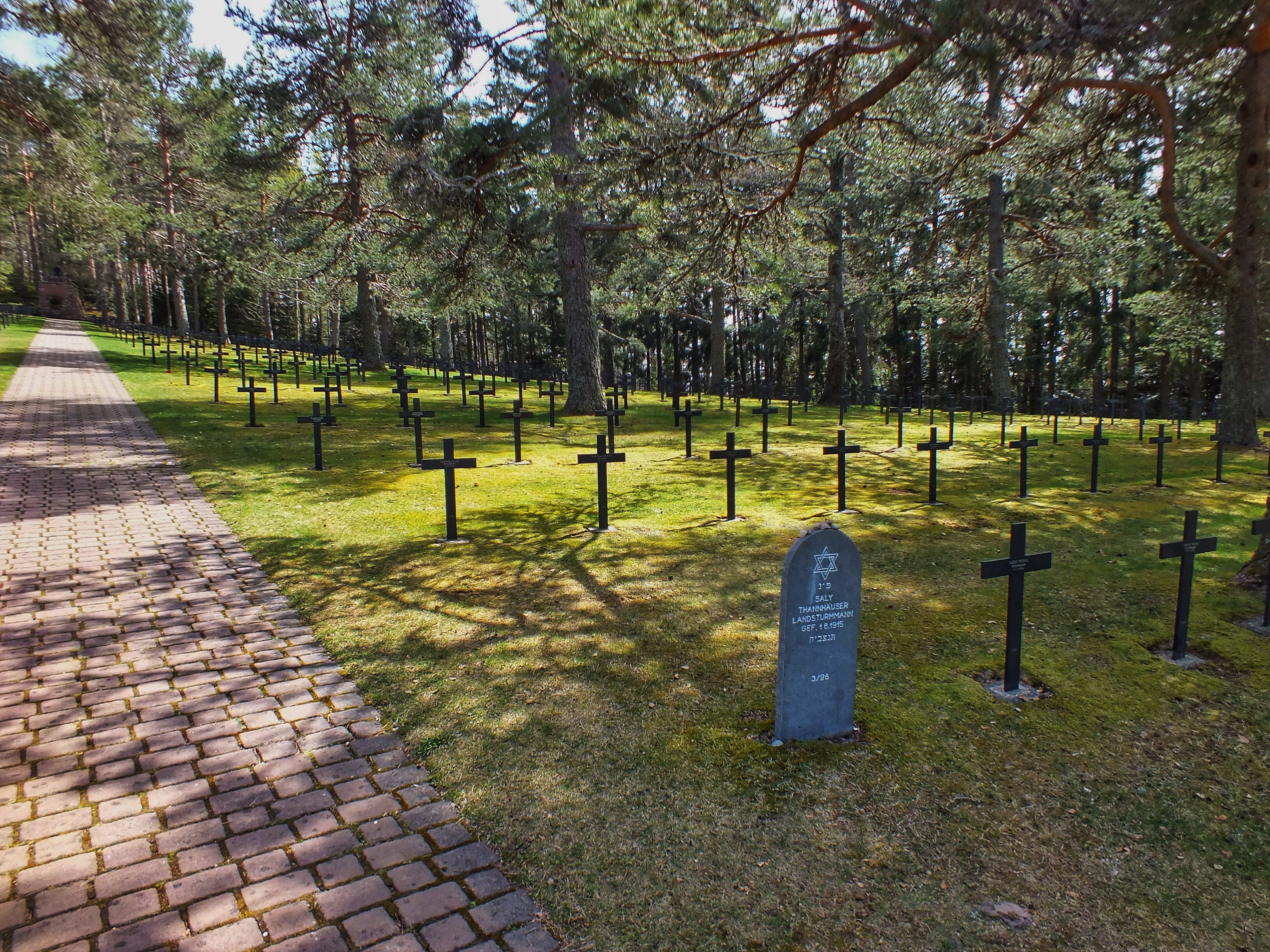
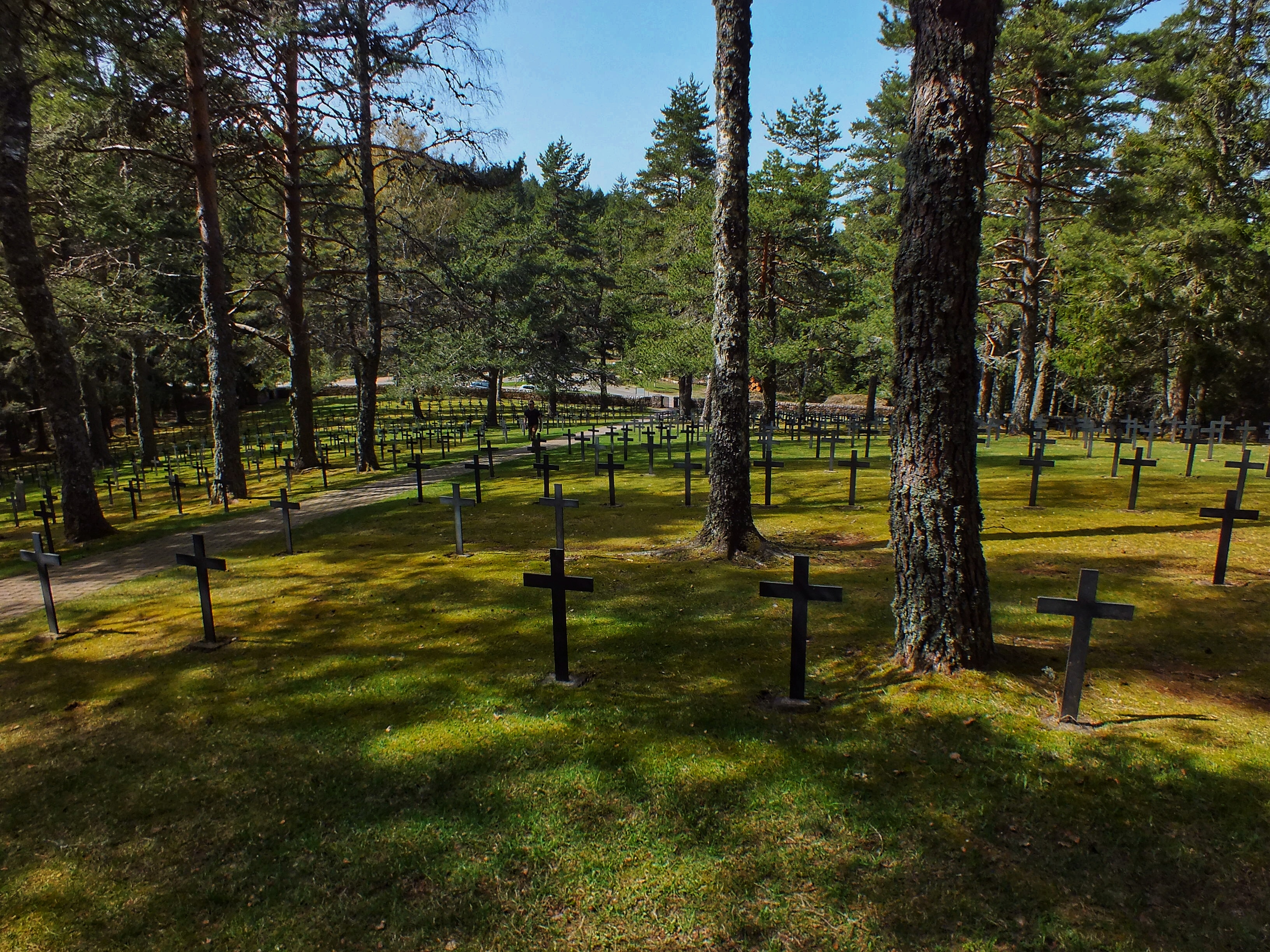
Before we got to the battlefield, we stopped to look at a military cemetery containing the graves of 2,460 German dead from World War I. It was sad to see the graves of Jewish Germans who had died for their country.
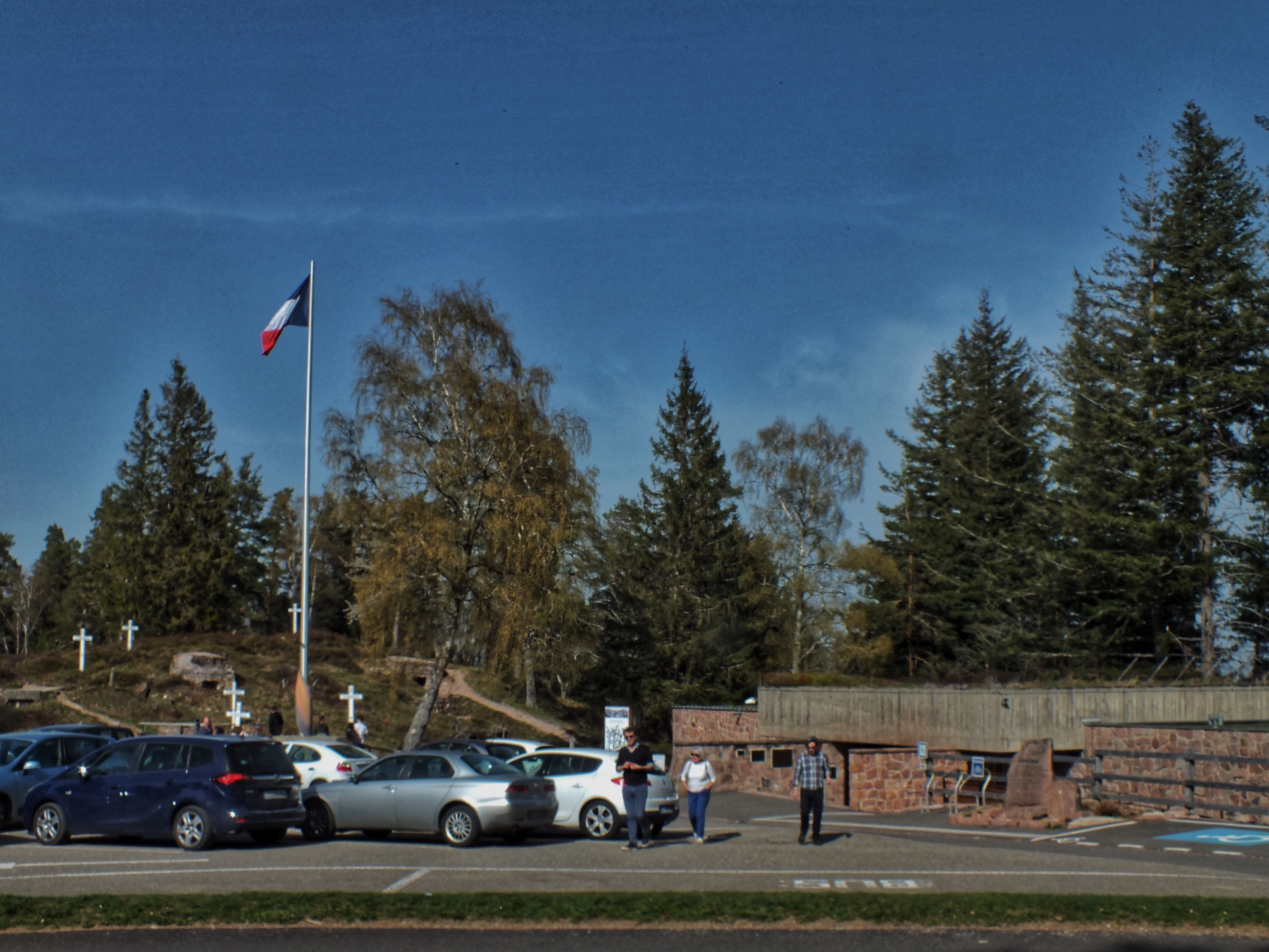
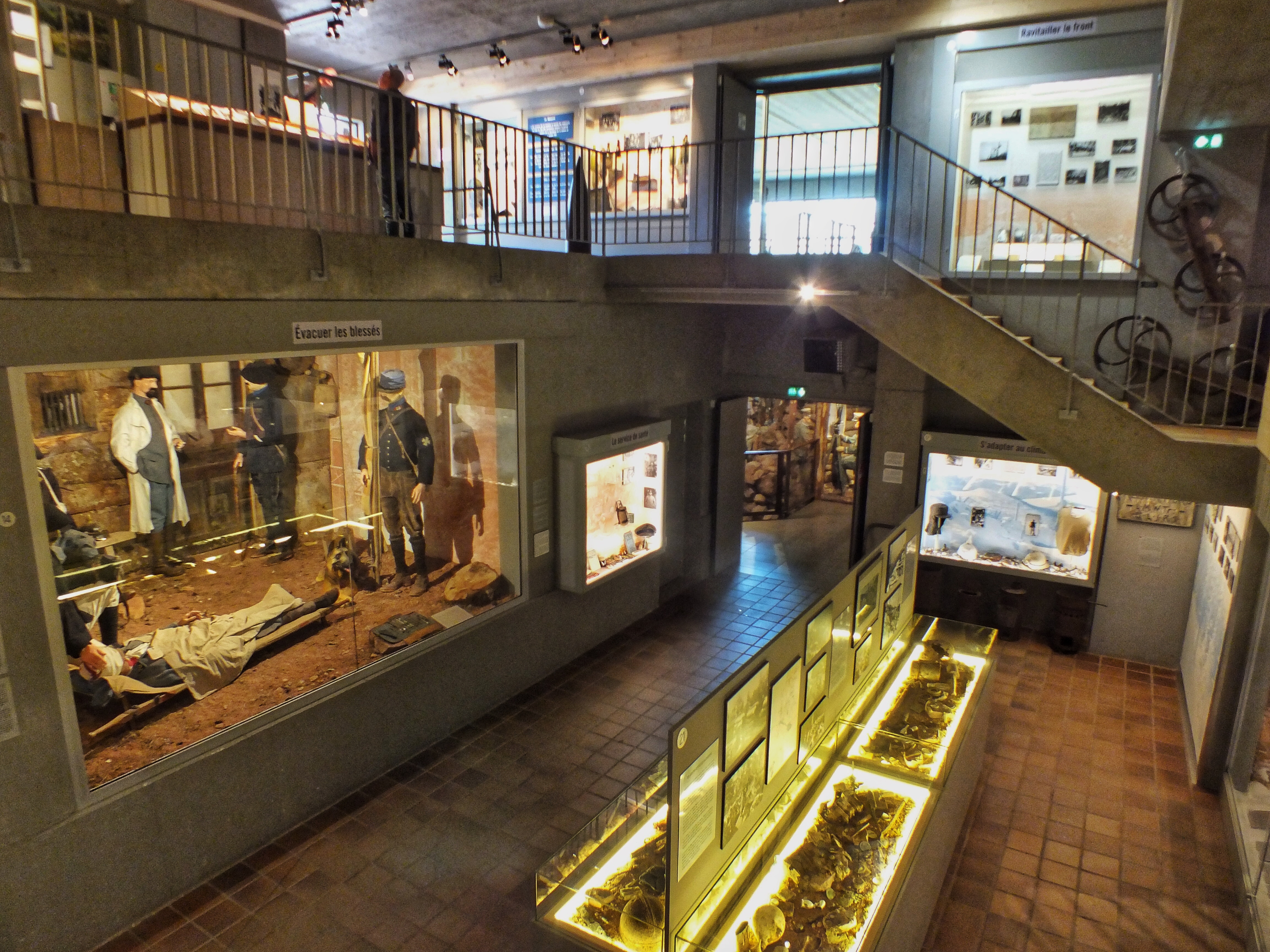
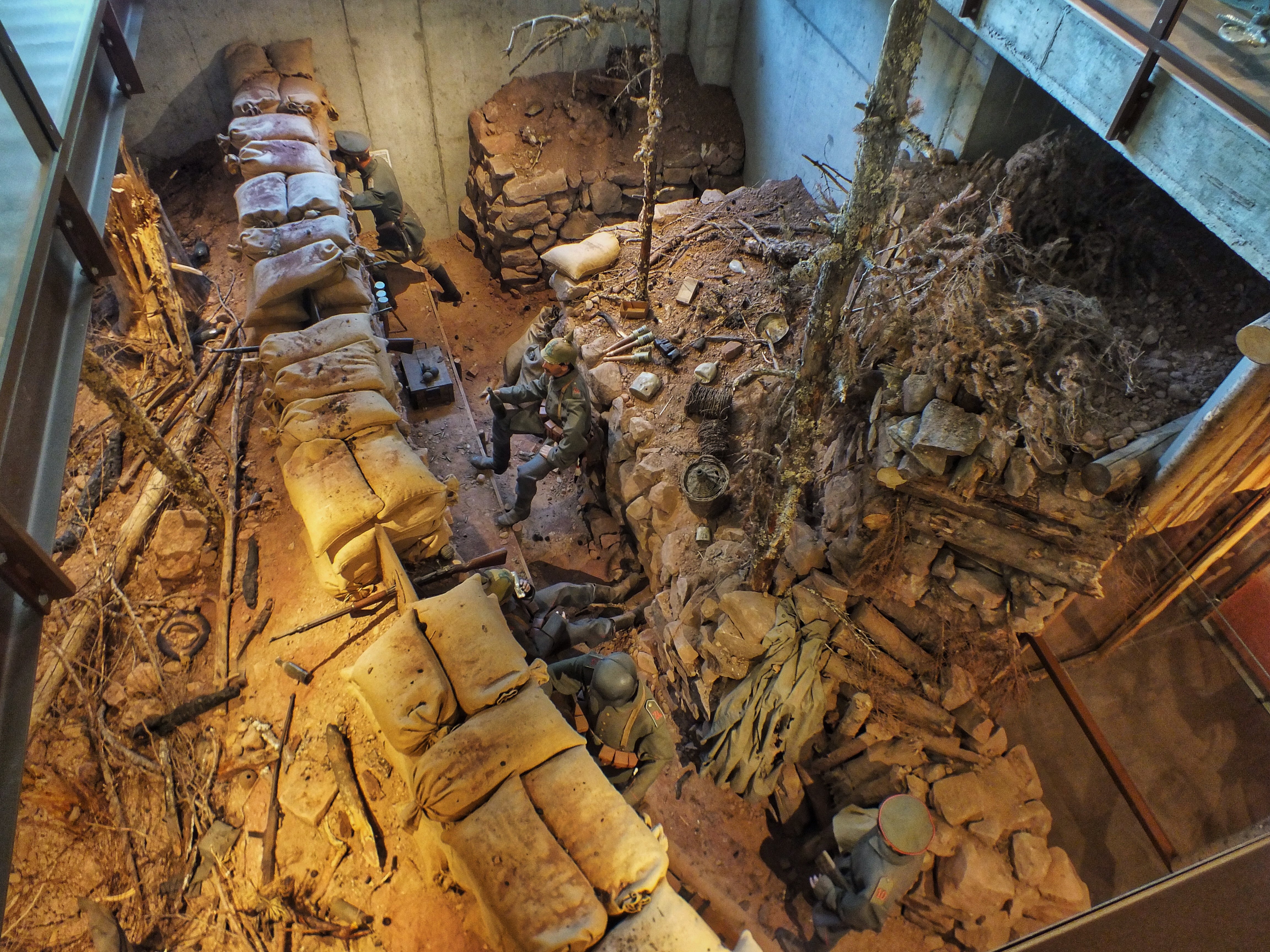
The battlefield itself was about a mile further on. There was a museum with information on and artifacts from the battle that took place here. The elderly couple who were running the place knew no English. The woman kept asking us a question, but we were struggling to understand. It was only when she pointed at a chart on the counter that we realized she was asking where we were from. We could see that no other Americans had visited that day. The old man ushered us into a theater to see a film on the battle. He asked, in French, what language we wanted to see it in. There was another couple in the theater who, I think, spoke German, but they may have understood English because they stayed.
The battle took place from July 20 to October 15, 1915. In 1914, at the start of the war, the Germans had occupied a ridge of the Vosges, a low range of mountains in eastern France. The French attacked and made some initial advancements, but the Germans soon pushed them back and the lines ended up pretty much where they started. The Germans held their lines pretty much in peace for the rest of the war. Both gas and flame throwers were used in the battle. Approximately 10,000 French and 7,000 Germans lost their lives.
About half the displays in the museum were only in French and German. The other half also had English — that was obviously translated by someone not overly familiar with the language. We could easily find the English-language signs by the small British flag printed in the corner.
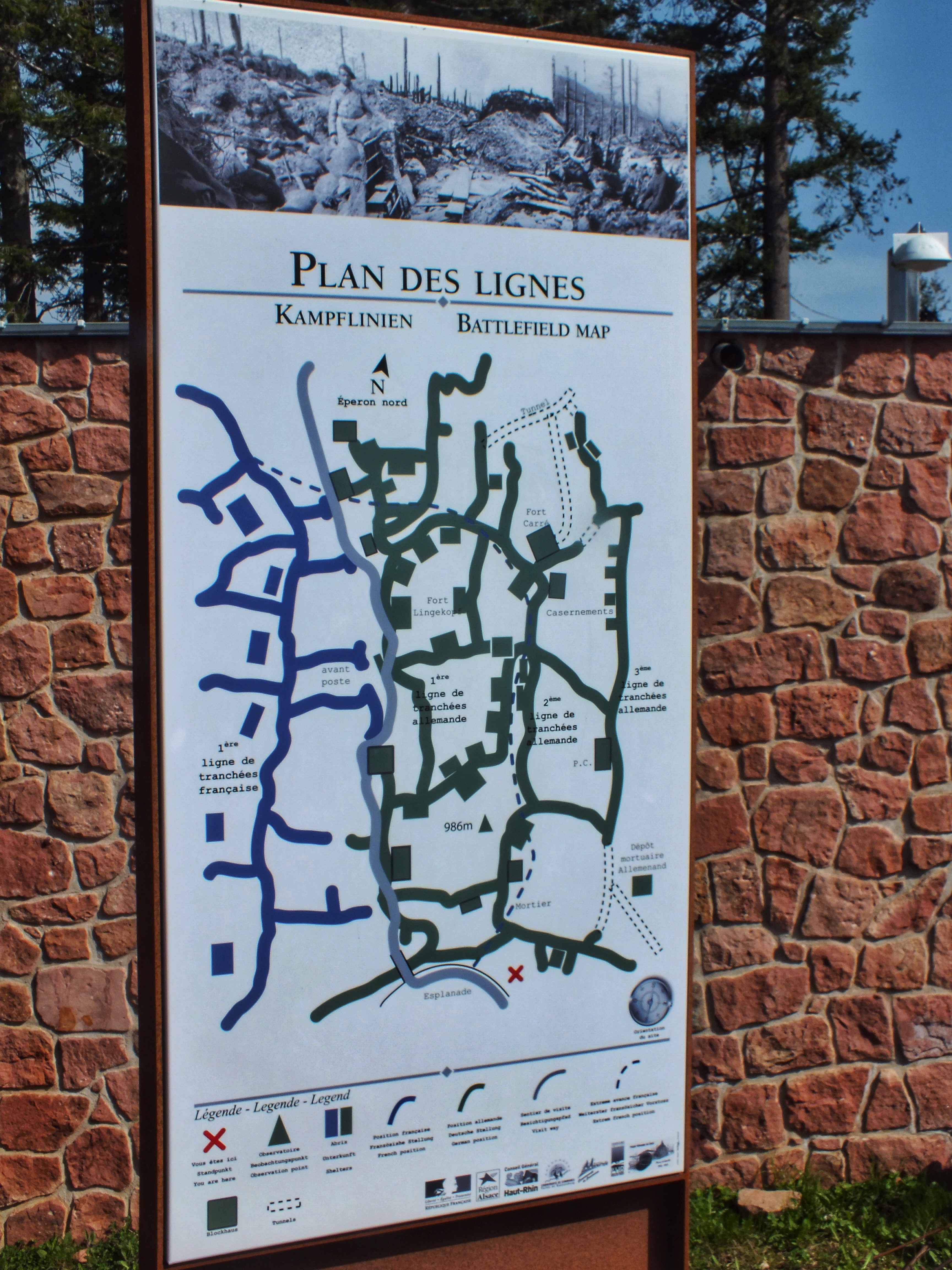
I wandered outside. There was a map of the battlefield at the start of the trails. The green lines on the right represent German trenches that were occupied for much of the war and had been constructed of bricks and concrete. The blue lines are the French approach lines that were made a lot less substantially.
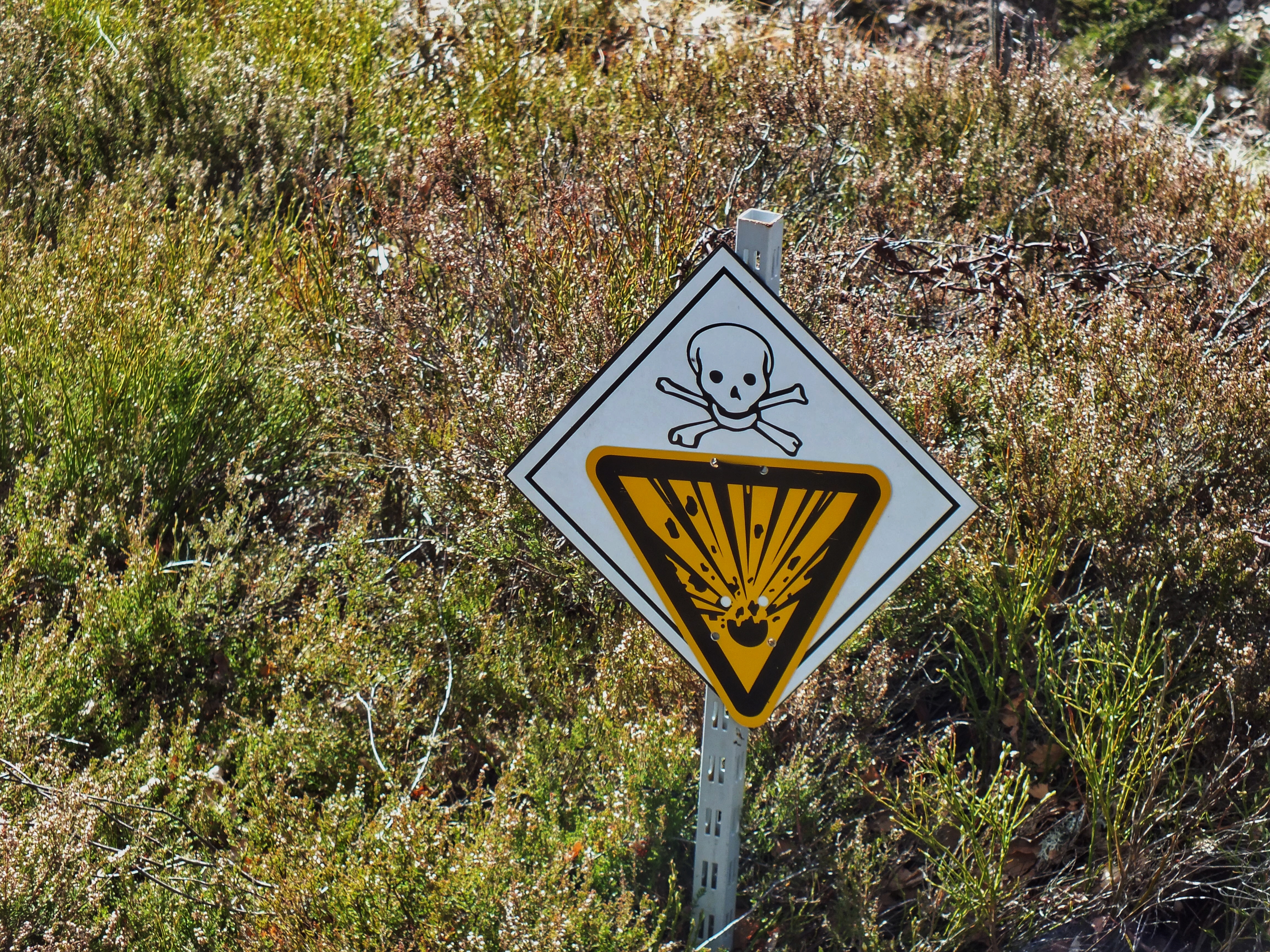
We concluded that this sign was just there for effect, but we didn’t put our theory to the test.
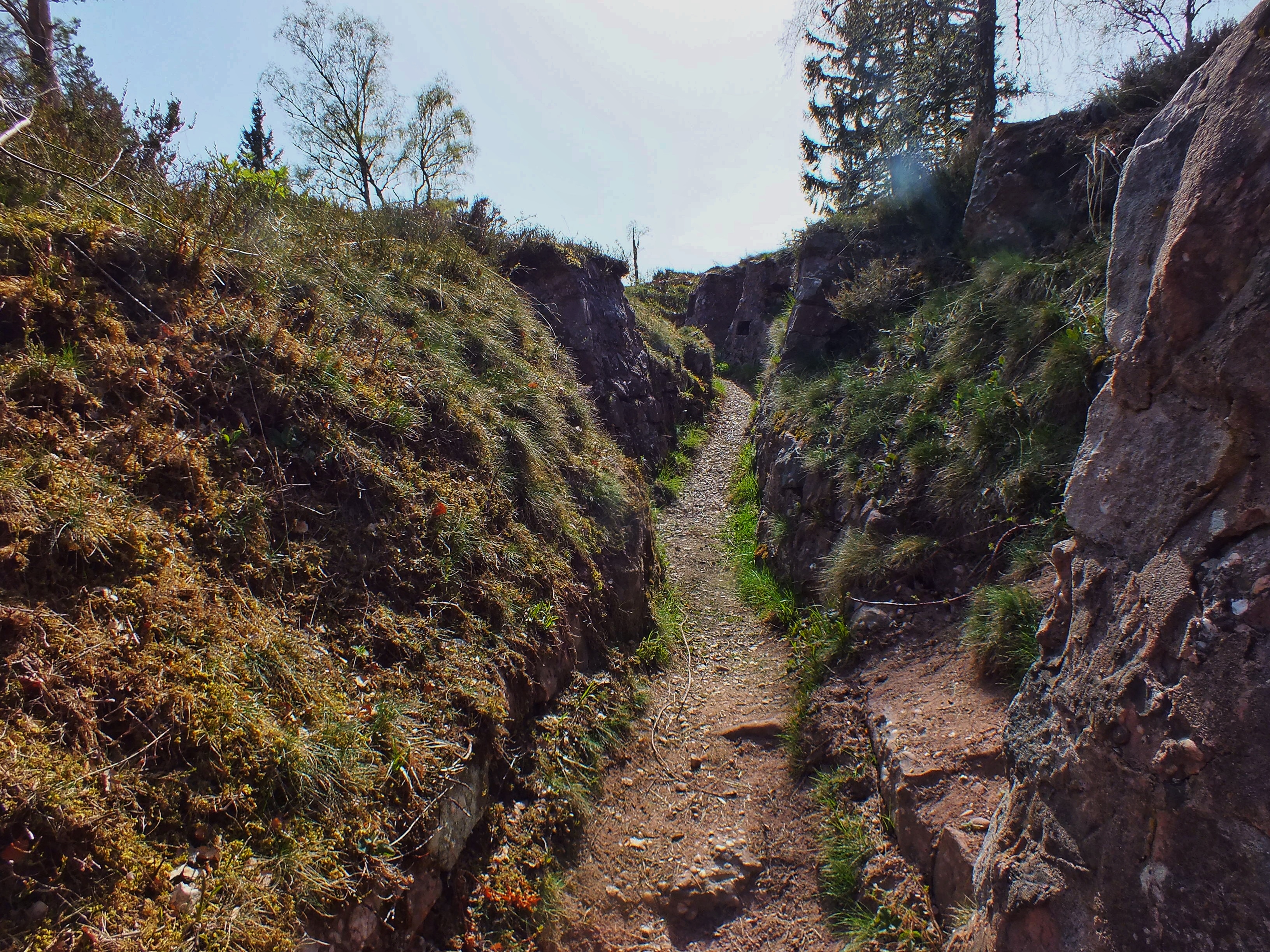
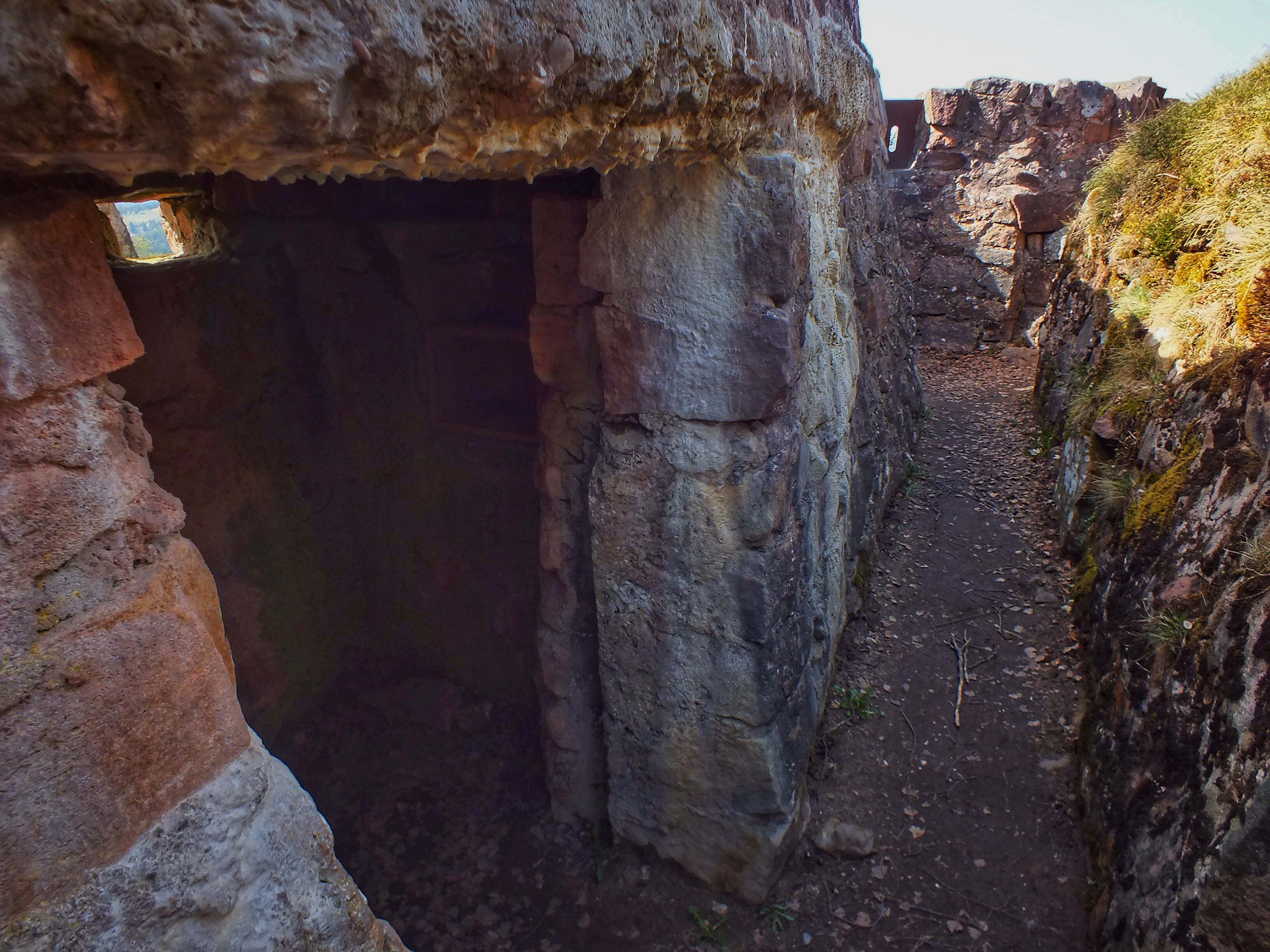
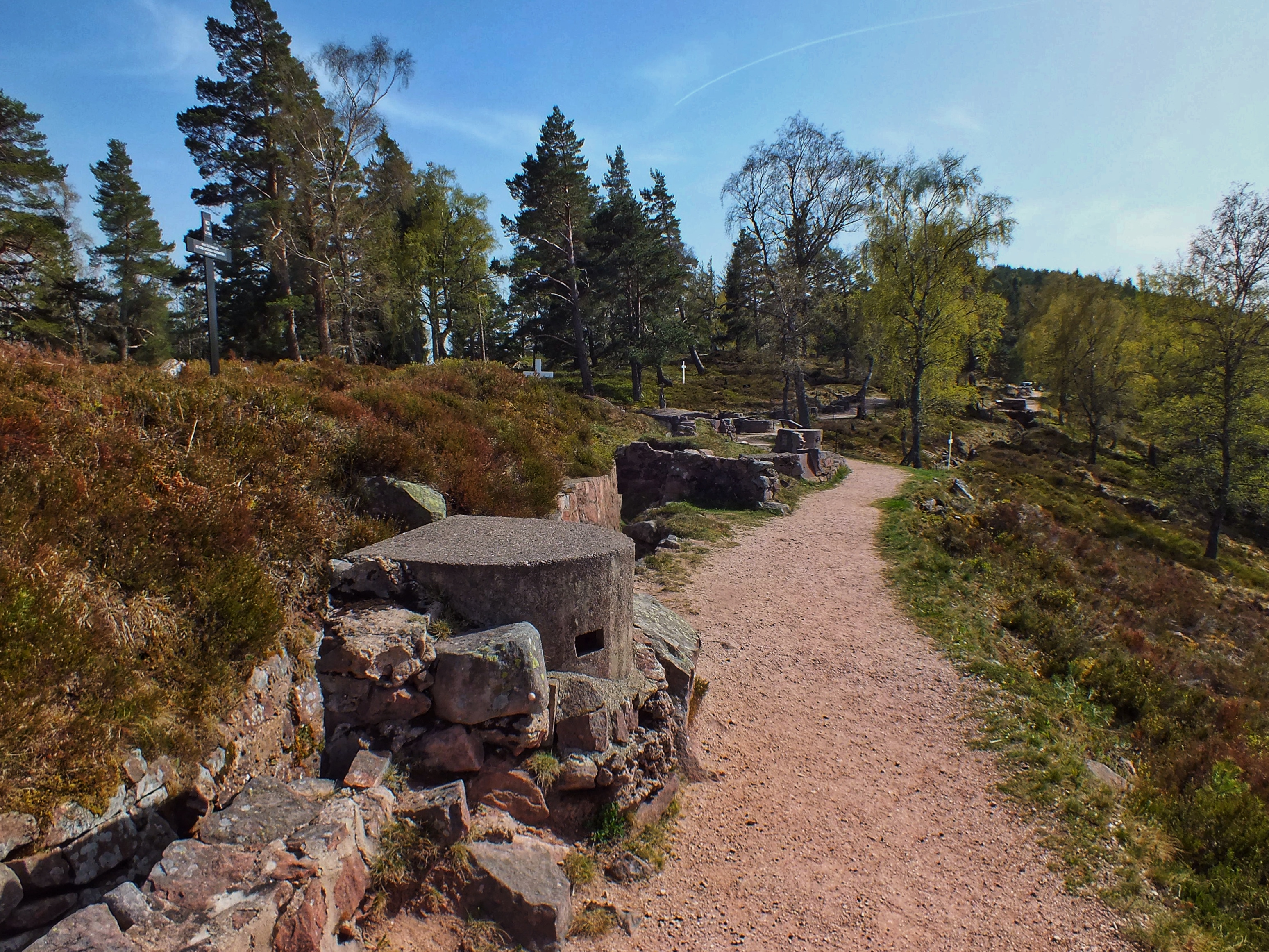
Random shots of the German lines.
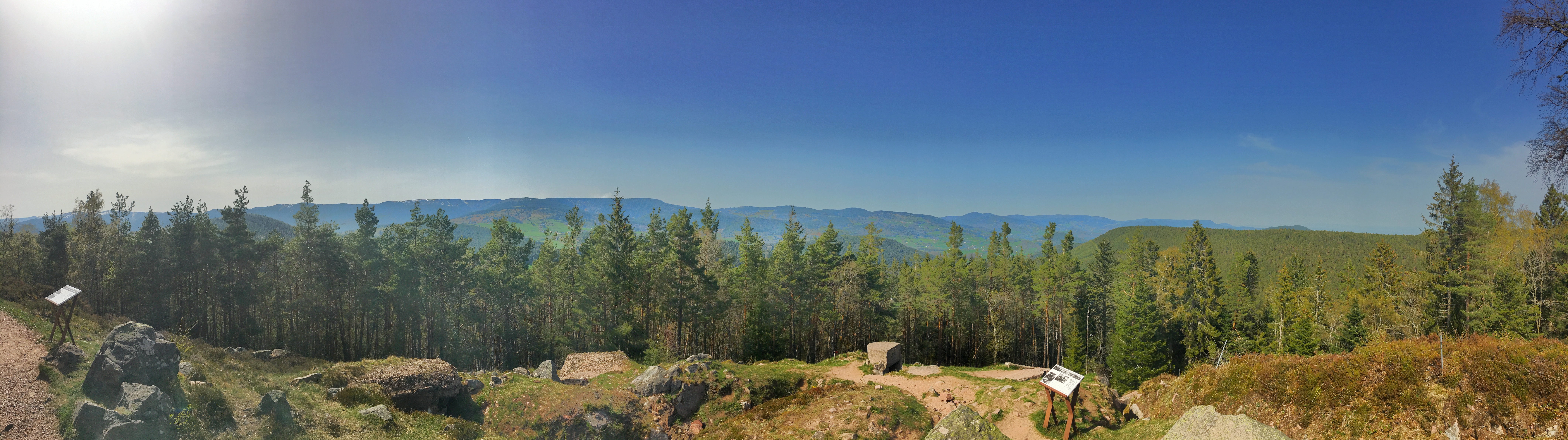
At the end of the ridge, we could see out over the valley to the mountains on the other side.
The return trail ran along the ridge through the area between the trenches.
In one spot, the French observation trenches came within maybe six feet of the German front lines. In the photo below, the German front is right along the left of the path. The French lines are to the right, and one spoke of it ends right in front of where I stood, just behind that thin sign.
Another view of the French trenches looking back toward where the photo above was taken.
Not only trenches and pillboxes, but wire obstacles of various types have survived in place. Here you can see a thick coil of barbed wire at the top of the slope across which the French attacked.
Posted inEurope|Comments Off on Battle of Le Linge