Antelope Island State Park

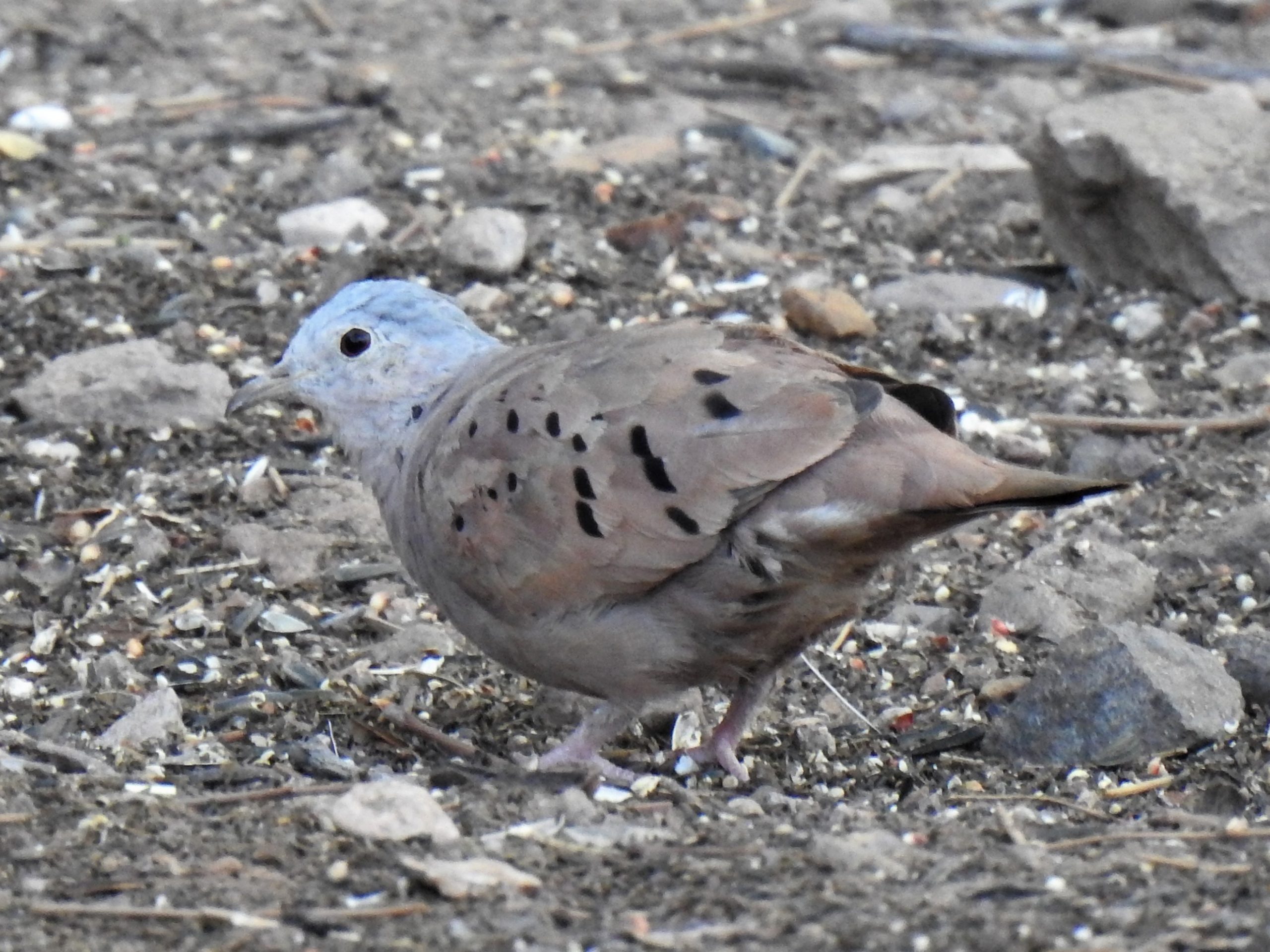
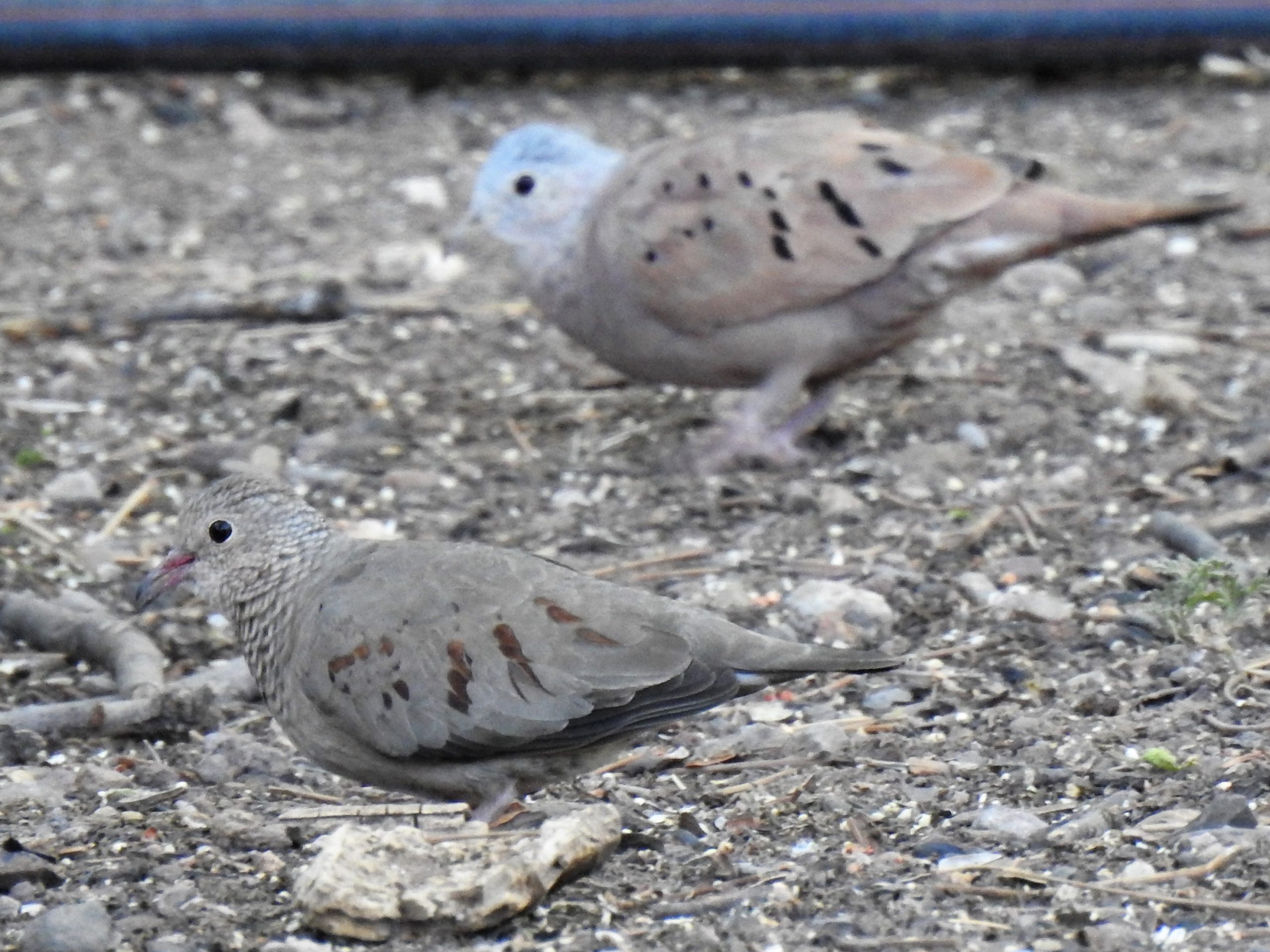
Since we were in Utah, it seemed appropriate that we see the Great Salt Lake. And since we were going to the lake, it only made sense to go to a part of the lake where I could see birds, right? The particular bird I wanted to see was a Chukar, an Asian game bird that has been introduced into the American west. They are often seen around the visitor center at the state park.

There was, however, a problem. Chukars are most easily seen early in the morning and the park was an hour drive from our hotel. Since I’d gotten up at 5:00 am the morning before and hadn’t gotten to bed until after midnight the night before, early just wasn’t going to happen.

Even seeing the lake was a challenge. The water is so low that the causeway out to the island is just a road across flats of white dirt and weeds. The open water was packed with birds, but it was also so far away that most of the birds were unidentifiable. I did pick out Black-necked Stilts, American Avocets, and Long-billed Curlew.

We drove to the visitor center and walked the trails on the knoll. There were birds around, but no Chukar.

We drove most of the roads in the park and saw some pretty cool wildlife. The island has its own herd of Bison. They’re free-roaming, and one could walk right up to one of them if one wanted to. If the water gets any lower, I don’t know what’s to keep them from walking off the island.

Watching the one in this video scratching himself is mildly amusing.

We also spotted a bored coyote.

And some Burrowing Owls.

For the record, we did see two Pronghorns, the “antelope” the island is named for.

We bought surprisingly good hamburgers at a diner in the park and then went back to the visitor center. I left my wife in the car with the air conditioner blasting (it was hot!), and walked the trails again. I met a couple other birders and struck up conversations, but none of us were seeing Chukars.

My wife wanted to wade in the lake. It took some doing to find a place where we could get to open water without a long trek across hot sand, but we finally managed. But when we got to the water, the surface was coated black with dead gnats. My wife settled for dipping a single toe into the lake. From this point, I could see thousands of birds swimming and diving. I was surprised to discover they were all Eared Grebes — a species I’ve only seen rarely and in very small numbers. Apparently, this is where they all are.

I knew the Chukars were there, so it was difficult to leave, but we had places to go and things to see.

Posted in Birds, Mammals, Scenery | Comments Off on Antelope Island State Park

Bird #564 — Flammulated Owl

psiloscops (psilos, naked, smooth, and scops, eared owl) flammeolus (diminutive of flammeus, flame-colored, or “small, flaming-red”)

Wasatch Mountain State Park, Utah — Pine Canyon Road

Wednesday, June 16, 2021 — 9:58 pm

It is thought that Flammulated Owls  are rare and very difficult to find. They live in mountain ranges around the west, from Mexico up into Canada. The “difficult to find” part made sense — they are tiny (about the size of a cell phone), strictly nocturnal, and their call is very soft. To add challenge to this, they are the exact color of the trees they live in.

The rare part may not be true. It may just be that nobody sees them. There’s a guy in Colorado who tracks a population near Woodland Park, and I hoped someday to drive up to the area some evening and hear one. I didn’t expect to actually see one.

Then I happened upon a website for a guy named Tim Avery who runs Pitta Tours out of Salt Lake City. For $100, he takes people up into the Wasatch Mountains east of the city and all but guarantees an owl sighting. We were planning a trip to Dinosaur National Monument this summer, so we decided to extend it by a couple days and a few hundred miles.

Tim picked me up at our hotel at 8:45 pm. We drove most of an hour up Big Cottonwood Canyon and into Pine Canyon. We parked in a small dirt lot and walked about 100 yards up a path to a grove of aspen. The field guides say that Flammulated Owls live in mixed oak and conifer woods, and they do. But Tim has discovered that they also live in aspen woods, which are much more open, and therefore a much easier place to find owls.

We stood in the dark and Tim played the owl’s “song,” a low “who” repeated every couple seconds. Before long, he said he heard one. I heard nothing. He then switched to the territorial call. A minute or so later, he shined his flashlight about 25 feet up an aspen and lit up an owl.

I knew it was small, but I hadn’t expected it to be that small. My first attempts at photos didn’t work, but Tim patiently told me how to set my cameras. The owl flew over our heads and landed in another aspen, and this time I got photos.

The owl continued giving its soft hoots, but even then it took me a while before I picked up on the sound. After a minute or so, it took off.

Tim and I exchanged fist bumps. It’s a big relief to him when a client gets a lifer and photos. We walked back to his van and headed back toward Salt Lake City. We stopped about five other places. I finally began hearing the owl’s sound and was a bit of help to Tim as we tried to locate other owls. There was a ridiculous amount of traffic at 11:00 pm on a remote mountain road that went nowhere. I think I heard two Flammulated Owls that we didn’t see.

We finally saw a second one along the paved road in a taller stand of aspen. This one was higher up — maybe 40 feet up the tree, so my photos aren’t as good. After a minute or so, it flew over our heads to another aspen across the road and stayed there for a couple more minutes.

We made one more stop in Big Cottonwood Canyon and heard, but did not see, another one.

Although I’ve managed to spot many of the North American owls over the years, I’d never been owling at night before. I’d also never paid a guide to take me to a bird. I’d much prefer to find them on my own, but in the case of the Flammulated Owl, I doubt I’d have succeeded.

The Flammulated Owl has a redder (more flame-like) phase, but the two we saw were gray with just a little bit of rufous around the face and on the wings. I didn’t see the ear-tufts on either bird we spotted. The eyes are dark and reflected red (which I’ve muted in my photos). The call is not only very soft, but very hard to pinpoint. Tim’s ability to locate them amazed me. You can hear the owl calling in the video, along with Tim’s clicking noise to make it look at us.

He dropped me off back at my hotel at midnight. It was a long day that began at 5:00 am when I set forth in search of my lifer Gray Vireo, but it was a riot.

Posted in Birds | Comments Off on Bird #564 — Flammulated Owl

Mammal #73 — Northern Flying Squirrel

glaucomys sabrinus

Wasatch Mountain State Park, Utah — Pine Canyon Road

Wednesday, June 16, 2021 — 9:50 pm

I was standing on a dirt road high in the Wasatch Mountains of Utah. It was dark, and I was with a guy named Tim who I’d met for the first time an hour before. We were looking for Flammulated Owls (next post). Tim was playing the calls of the owl and listening for a response. He told me to get my camera ready. While I was fumbling with it, I caught some motion and looked up in time to see a squirrel land on the trunk of an alder tree, about 20 feet off the ground and maybe five feet away from where we stood. Tim shone his spotlight on it, and I got a good look at it plastered against the trunk. While I brought my camera up to my eyes and tried to get a picture, the squirrel scurried around the trunk and climbed out on a limb. All I managed to capture was a gray blur. I didn’t even see it as it jumped and soared to another tree.

Tim was very excited. He said it was just the fourth flying squirrel he’d seen in 15 years of owling. He also said he thought the squirrel showed up in response to the owl calls, but I forget why he thought that was the case.

Posted in Mammals | Comments Off on Mammal #73 — Northern Flying Squirrel

Dinosaur National Monument — Day 2

Since we took the trouble to go to Dinosaur National Monument, it seemed that, at some point, we should see the dinosaurs. I’ve never been very interested. Perhaps its because the study is so much speculation. Maybe it’s because people can’t talk about dinosaurs without talking about evolution. Or maybe it’s because they’re dead, and there’s nothing to look at but bones and footprints.

Anyway, to get into the Quarry Exhibit Hall, we had to make reservations. I didn’t know when I would get back from my search for the Gray Vireo, so I signed up for the 11:00 shuttle bus. As it turned out, we got to the visitor center around 9:30 and found out there really wasn’t much to it other than five-minutes of displays and a small gift shop. That gave us time to see some things in the Utah part of the park, like Turtle Rock. Perhaps this is the mountain turtle our street is named after.

There were also some more petroglyphs (carvings in rock) and pictographs (paintings on rock).

The road ended at the Josie Morris Cabin. After divorcing a string of husbands, Josie homesteaded in the canyon in 1913 and lived there by herself until 1964. She planted orchards and raised cattle. The cabin has three rooms.

We got back to the visitor center around 10:30, and the guy at the desk told us to take the next shuttle. We never had to show anyone our reservations, so we could have just gotten on board without them or without the $2.00 it cost to make them. There were signs on all the doors saying that it was required that anyone who hadn’t been vaccinated had to wear a mask, but since it didn’t specify what vaccination they were referring to, we were good. There were also signs saying that everyone had to wear masks on the shuttle, but since the driver was wearing his around his chin, we didn’t bother there either. In fact, we didn’t put on masks once the entire vacation. Probably 20% of the people we saw were.

Anyway, the shuttle ride took about five minutes. I know I was at the quarry building with my parents when I was little, but I don’t know if I actually remember being there or whether I remember seeing a postcard of our visit.

We spent maybe a half hour inside looking at the bones. We made no effort to sort out the bones or determine which ones went with which dinosaur.

You can get an idea of the scale of the place by noticing the ranger in the bottom left of this photo.

The most interesting bone was the skull at the top in this photo, just right of center.

As to how all the bones ended up here, they think there may have been a flood. Who knew?

The statue of the Stegosaurus (below) is one of nine life-size dinosaur statues displayed at the Sinclair Dinoland exhibit at the 1964-65 World’s Fair in Flushing Meadows Park in New York. I was at that fair with my mom and sister. It’s weird to think I may have seen this statue 56 years ago. It’s aged better than I have.

When the shuttle dropped us off back at the visitor center, we left the park and headed west across Utah. We got to Cottonwood Heights, where our hotel was, in plenty of time to take a side trip to the top of Little Cottonwood Canyon and even get out and walk along the creek for a bit.

That’s the south suburbs of Salt Lake City in the haze at the bottom of the canyon. About 3 and a half million people live in Utah, 3 million of them in a patch about 90 x 10 miles from Ogden in the north, through Salt Lake City, to Provo in the south.

We had a hard time finding a place to eat supper — it was an upscale area with sit-down restaurants a lot fancier than what we were looking for. We ended up at Jimmy John’s. I relaxed and waiting until it was time to go owling.

Posted in National Parks, Reptiles, etc. | Comments Off on Dinosaur National Monument — Day 2

Bird #563 — Gray Vireo

vireo (bird) vicinior (from vicinus, neighboring, related — because of its similarity to other species)

Rio Blanco County, Colorado — Snake John Reef Road

Wednesday, June 16, 2021 — 6:58 am

The range of the Gray Vireo centers on the four-corner area where Utah, Colorado, New Mexico, and Arizona meet. A few summer in southeast Colorado, about three hours from my house, and that’s where I went to look for them one morning a year ago. I was not successful. I figured I’d have to make an overnight trip to Colorado National Monument sometime. They’re seen there regularly, but that’s a four-hour drive.

Then I saw that other birders had found them near Dinosaur, Utah. Since we were headed that way, I figured I could let my wife sleep in at our hotel and look for it early in the morning. I knew it would be a challenge, but a 45 minute drive is a lot shorter than 4 hours.

I set my alarm for 5:00. It was still dark when I left. I drove back east into Colorado, then headed a handful of miles south of the “town” of Dinosaur. The most recent sightings were on a dirt road through a pinyon/juniper forest. I parked just as the sun came over the mountains.

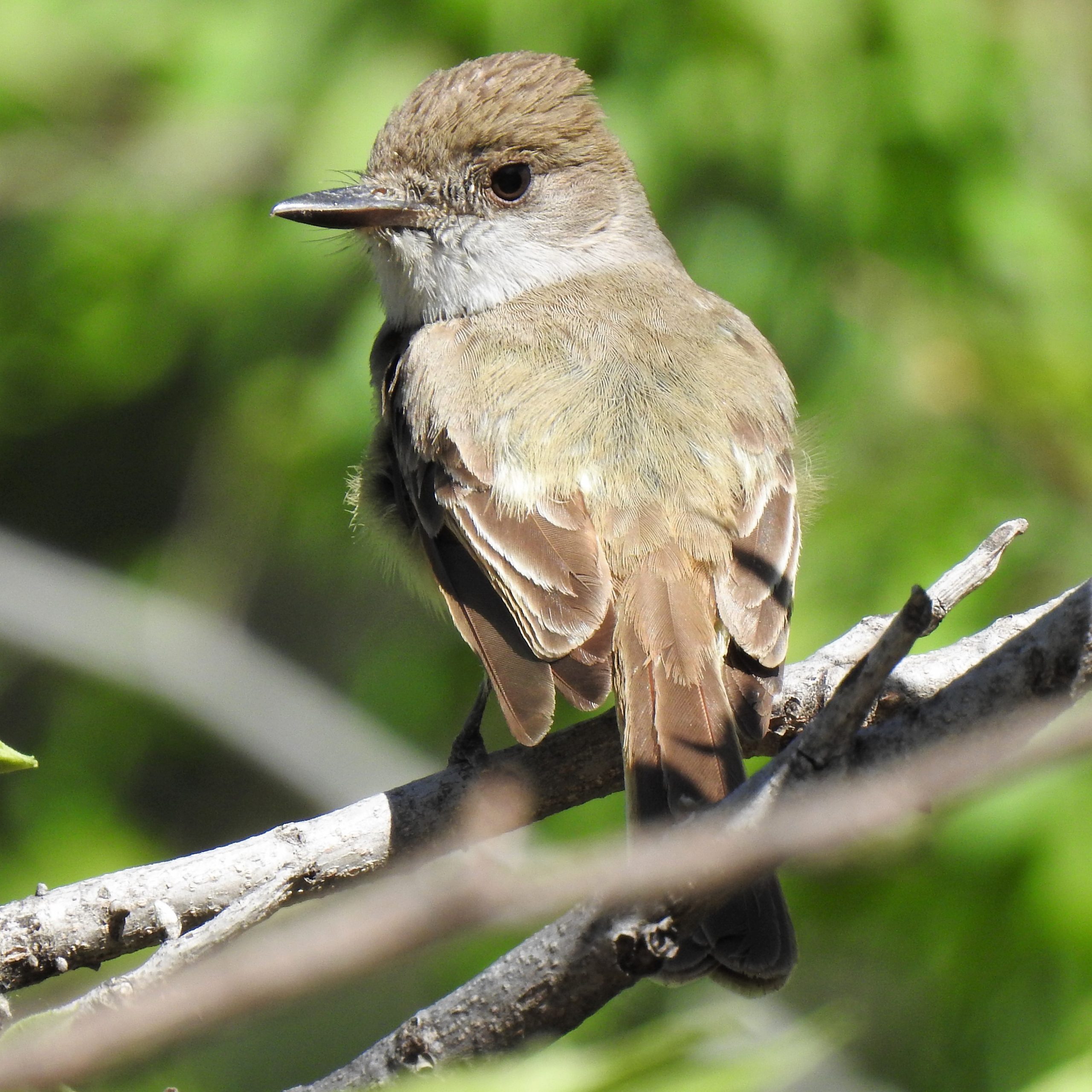
For the next 45 minutes, I wandered up and down the road, occasionally playing the Gray Vireo song. I saw Gray Flycatchers, Sagebrush Sparrows, and Ash-throated Flycatchers, but I was disappointed with both the variety and numbers of birds in the area. Even after the sun was fully up, the place was mostly quiet.

At one point, I was standing along the edge of the road looking for birds when I heard the sound of a running animal. I looked up to see a young Pronghorn trotting right toward me. It stopped about 40 yards away and began nosing at the ground. Then it must have gotten a whiff of me because it suddenly looked up with an expression that seemed to say, “Where did you come from?” We stared at each other for a few seconds, and then it took off through the trees toward the open prairie.

I began to suspect the road wasn’t going to be productive for Gray Vireo. A narrow track cut through the trees to the south, dipping down into a wash and then rising again. I decided to walk to the rise and then, if I still hadn’t seen the vireo, drive to one of the other places it had been reported this year. As I walked, I played the song a few times, but got no response.

I reached the rise and looked out over the trees ahead of me. Just then I heard the vireo singing behind me back by the wash. I walked back and played the song. Almost immediately, a Gray Vireo landed on a bare branch in a juniper, maybe 15 yards from where I stood. It hung around for maybe four minutes, enabling me to get several photos and a short video of it singing.

Then if flew off, and I never saw or heard it again. That night, I asked the bird guide who took me to see the Flammulated Owl about the vireo. He sometimes takes birders to see it too. He said Gray Vireos nest early in the spring, so that by mid-June, they’re pretty  much done. As I experienced, they will still respond to their song, but they aren’t territorial anymore and so aren’t terribly aggressive.

The song sounds like a vireo — perhaps a bit simpler and burrier than some. The bird is … gray. The throat and belly are paler. It has a thin white eye-ring and a thin white wing bar that doesn’t show up in my photos. It also had thin white lores that, with the eye-ring, give it a hint of the typical vireo spectacles. And that’s about it for distinguishing features. It’s chief mark is the lack of marks. The one I saw looked scruffy, like it hadn’t molted in a while or perhaps was mid-molt.

Here’s a close-up of the last photo.

I was back at the hotel by 8:00 am.

Other birds in the immediate area.

Sagebrush Sparrow

Gray Flycatcher

Posted in Birds | Comments Off on Bird #563 — Gray Vireo