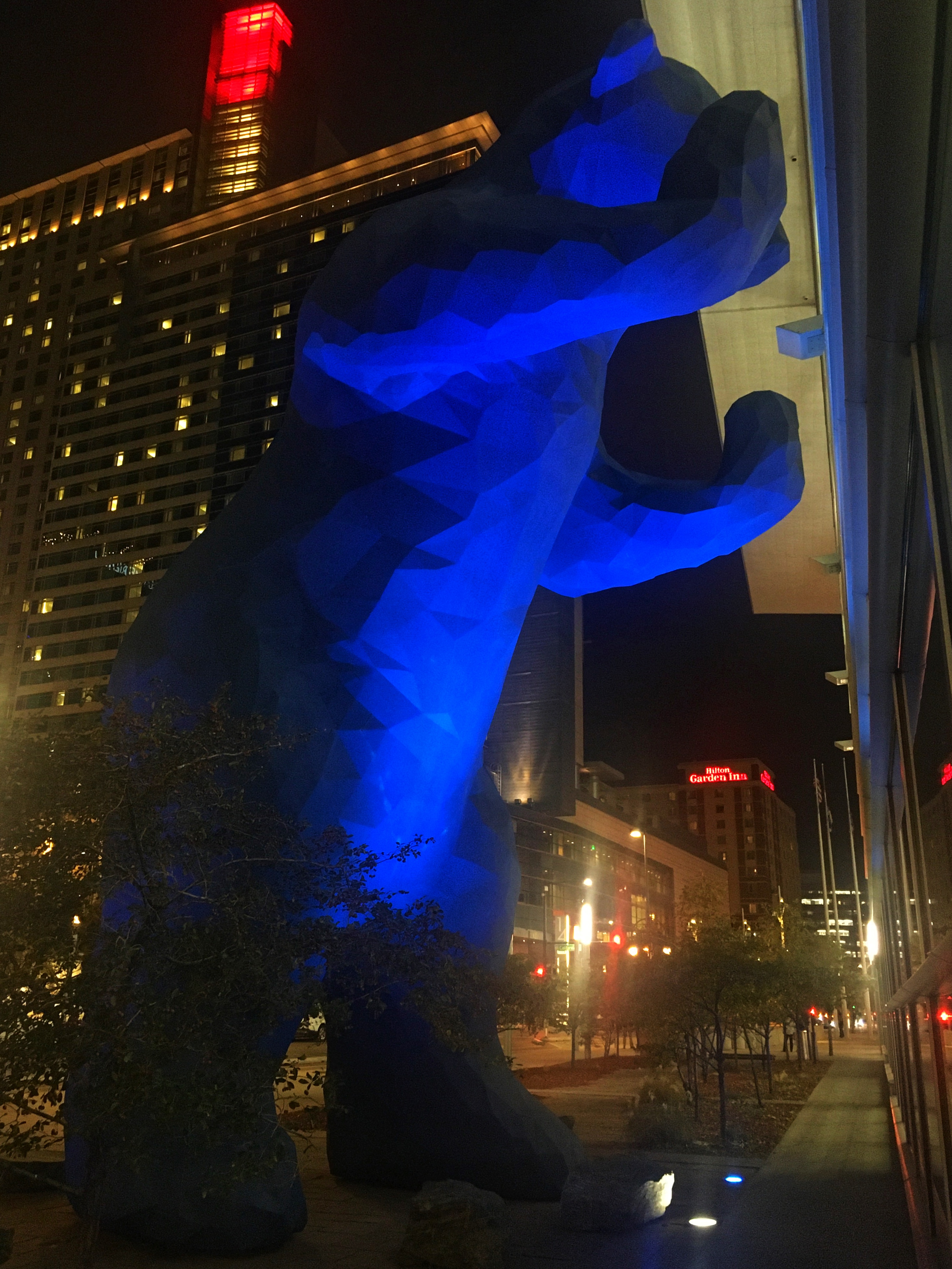
A 40-foot tall statue of a bear stands outside the wall of windows at the Colorado Convention Center. The name of the sculpture is “I See What You Mean,” but I have never heard it called that. I’d never seen it either, until we walked a block or so to take a look in the couple minutes we had before the Blue Man Group show.
There isn’t much else to say except that it’s big, it’s blue, and I kinda like it.
Posted inColorado|Comments Off on The Big Blue Bear
Do you ever go to bed at night planning on getting up the next morning and taking a nap? Asking for a friend. (10/3/19)
I was recently reminded of my 8th-grade graduation. As part of the ceremony, my entire class stood up on the bleachers and sang “Joy to the World” — the “Jeremiah Was a Bullfrog” version. I recall practicing during rehearsals and thinking that the ceremony would likely be the most embarrassing moment of my life. And then at the last moment, my dad decided that weekend would be a good opportunity for a family vacation. I don’t think I ever thanked him. I wish I had. (5/20/19)
The cashier at Noodles got inordinately excited when I walked into the restaurant. She mistook me for a customer who talks with a pronounced English accent. I was sorry I had to disappoint her. If I was capable of pulling off even a remotely accurate facsimile, I would have. But alas! Within three or four words, any accent I attempt just sounds like Grover from Sesame Street. (3/15/19)
On long road trips, we sometimes pass the time by writing limericks about the towns we pass through. Here are a couple samples from our current trip.
There was a young lass from WaKeeney Who decided to wear a bikini The Kansas wind rose
And parts of her froze
Soon the bikini was no more to be seeny
This next one is based on an actual event.
There was a short girl from Checotah Whose john cleaning skills we took note of She wiped scum off the wall High as she was tall And considered that she’d done her quota (12/23/18)
You know how, with certain movies that you.ve seen again and again, you can start watching at any point and know exactly what’s happened and where you are in the story? Apparently that’s also true of any Hallmark Christmas movie whether you’ve seen it before or not. I watched three with my wife last night (after all, I’d watched two football games earlier). I am not making this up. In the first movie, the woman decided to stay in town after all, marry the guy, and buy her parents’ old house. In the second movie, the woman decided to stay in town after all, marry the guy, and buy an antique store. In the third movie, the woman decided to stay in town after all, marry the guy, and buy her grandmother’s old house AND a bookstore (exciting plot twist, that was, let me tell you). (11/23/18)
Curling is mesmerizing. I used to watch it late into the night during the Winter Olympics. I decided long ago that it would be fun to try it sometime, but I couldn’t find anywhere in Chicagoland where doing that was easy. When I moved to Colorado Springs, I discovered the Broadmoor Curling Club, which operates out of the Colorado Springs World Arena Ice Hall (what a terrible name). The club has leagues, and once or twice a year they host “Learn to Curl” classes to encourage people to join the leagues. I asked a friend if he’d like to take the class with me and he accepted immediately. It cost us $35 each.
After signing a waver, we sat in the bleachers with perhaps 30 other people. An old guy with a tam o’shanter gave us some curling trivia while a Zamboni smoothed the ice on the hockey rink behind him. There were four curling sheets marked on the ice along with the hockey lines. A woman then showed us the various pieces of curling equipment. She wasn’t a teacher, and I had little idea of what she was talking about until we got out on the ice and were given a chance to use the equipment. She also explained the safety rules. We learned that curling stones weigh 40 lbs. and cost about $1,500. They’re made from a particularly strong and dense granite found on one island off Scotland. Behind the woman, two guys were walking around the rink spraying water droplets on the ice to create the pebbling that makes the stones slide.
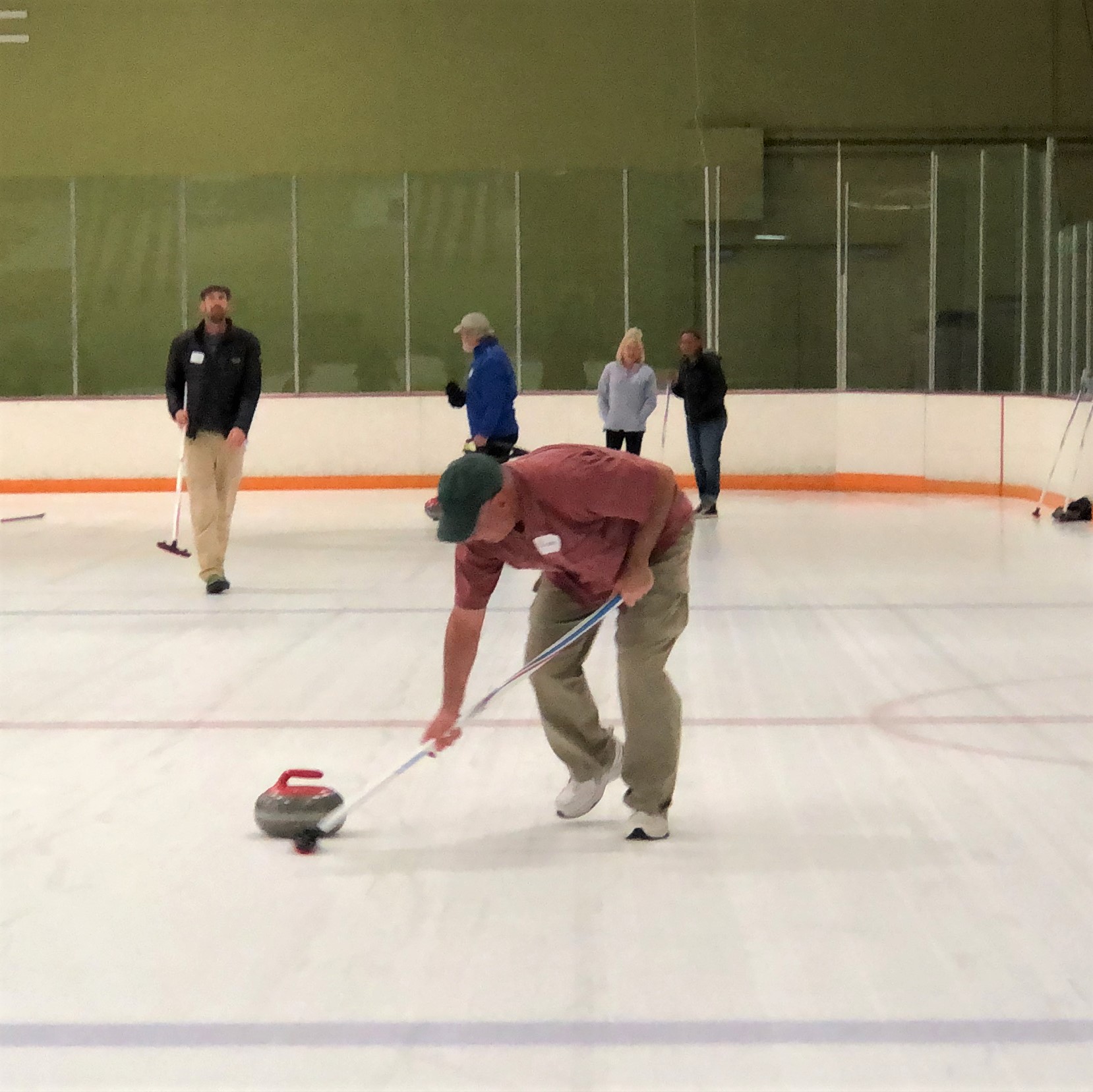
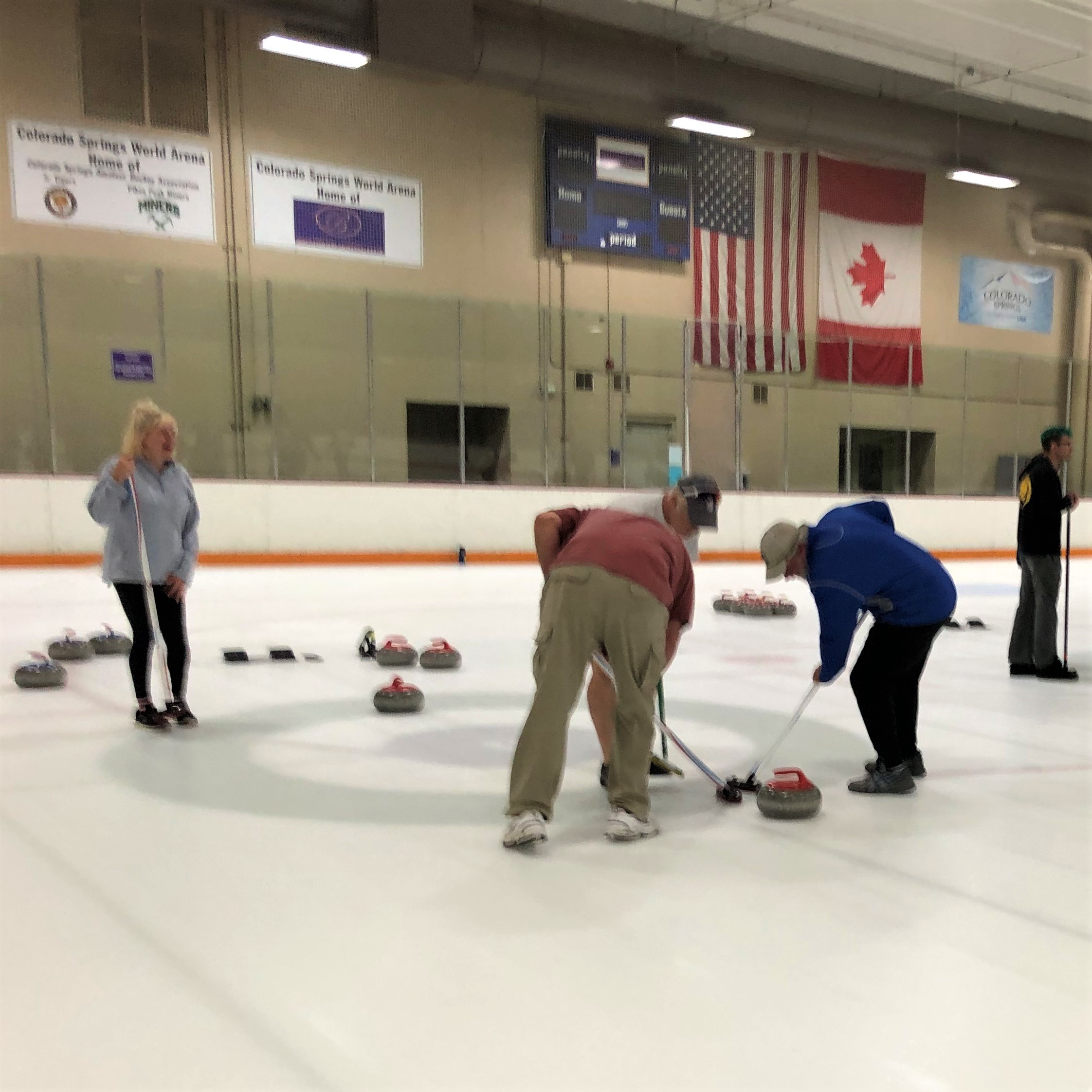
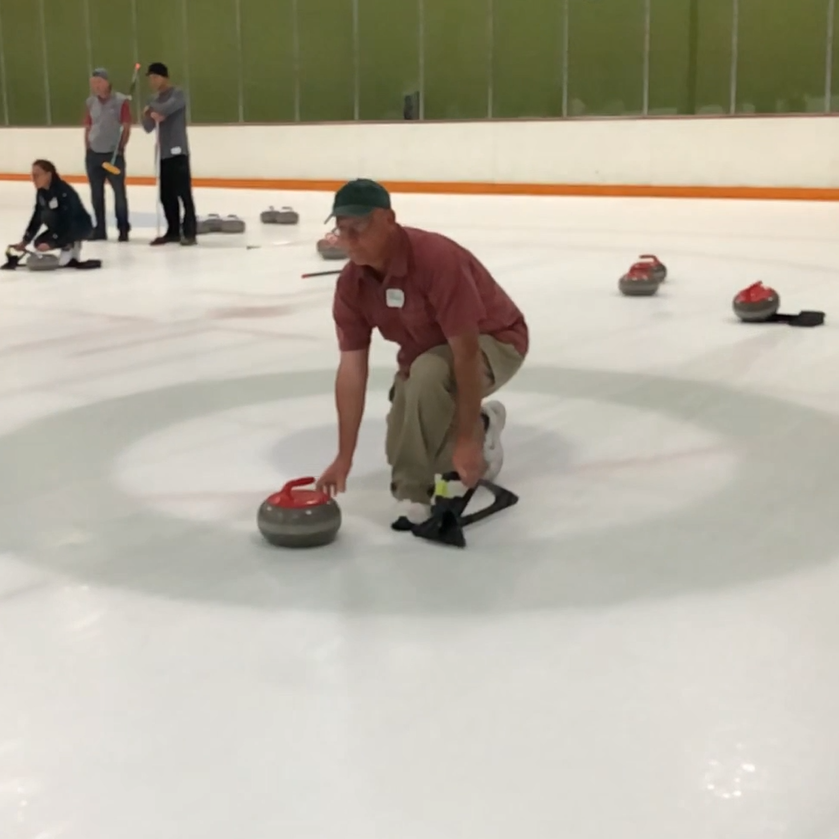
We finally grabbed our brushes and went out on the ice. We were joined by a guy named Jeff (wearing a blue jacket in the photos) and a teacher named Joe (in the black coat). Joe showed us how to stand in the toe block with one foot while putting our other foot on a slider. We held the handle on the stone with our right hands and a stabilizer with our left. We were to push off with our right foot, then let it trail behind us. We held on to the stabilizer for balance until we reached the spot where we let go of our stones. As you can see in the video below, I was too upright and shaky during my practice runs but got lower and smoother and more comfortable as the evening progressed. We gave the stones a slight spin as we released them. Ideally, they should spin three times as they travel down the sheet. It’s the rotation that causes the stone to curl (which gives the game its name). If I stood at the end of the sheet, I could see the incoming stones curl as they moved. A teammate (the “skip”) stood at the far end and gave us directions on where to aim and which direction to spin the stone. The skip also called out directions to the sweepers to sweep or not to sweep, depending on how fast the stone was moving.
We also learned to use the brush. The brush had a pad on the end. Sweeping it across the ice in front of a moving stone created friction that melted the pebbles a bit. This reduced the friction on the stone and made it travel further. Joe told us that a good team can increase the distance a stone travels by as much as 10 feet.
The curling sheet is 146 feet long. There’s a target on each end which is called a house. The small circle in the center of the house is called the button. Only one team scores per end. To begin with, the skips from each team determine which stone is closes to the center of the button. They then count out from there to see how many stones that same team has in the house that are closer to the button than the nearest stone of the other team. We played four ends. In the first three, my team had two stones in the house that were closer to the center than any stones of the other team, so we scored two points in each of those ends. We had one stone closer in the fourth end, so we won the match 7-0. In this photo, the guy who taught the women is showing us how to score. He also gave us tips during the game.
There were three friendly women on the other team. The main reason we beat them is that they weren’t at all consistent with the force they put behind their stones and many of them stopped short of the house and even of the hog line. Any stone that doesn’t cross the hog line is removed from play. Stones that cross the hog line but don’t make it into the house remain on the ice and work as blockers for future stones. Each player throws two stones. In a regulation match, there are four players on a team, but we only had three.
In our first end, both my stones went through the house. The two scoring stones were thrown by my friend. I’m not sure about the second end. The two scoring stones may have been his again, or one of them may have been mine. In the third game, both scoring stones were mine, and one of them actually landed right on the button. This happened to be the throw I filmed from the end of the rink behind me. You can see it on the video below. When my stone landed on the button, my friend raised his fist and yelled. We were told that curling protocol didn’t include celebration, but I could resist taking photo of me subtly pointing at my stone.
In the fourth game, our one point came from my stone that also landed on the button, but this time it was knocked there by a stone thrown by the other team, so I’m not as proud of that one.
We were on the ice for two hours, and every moment of it was fun. Curling is very different from anything I’ve done before. It’s also an accessible game — the fact that I didn’t make a fool of myself was a big plus, along with the fact that I landed a stone on the button (although I realize that was as much luck as anything). I may even join a league sometime.
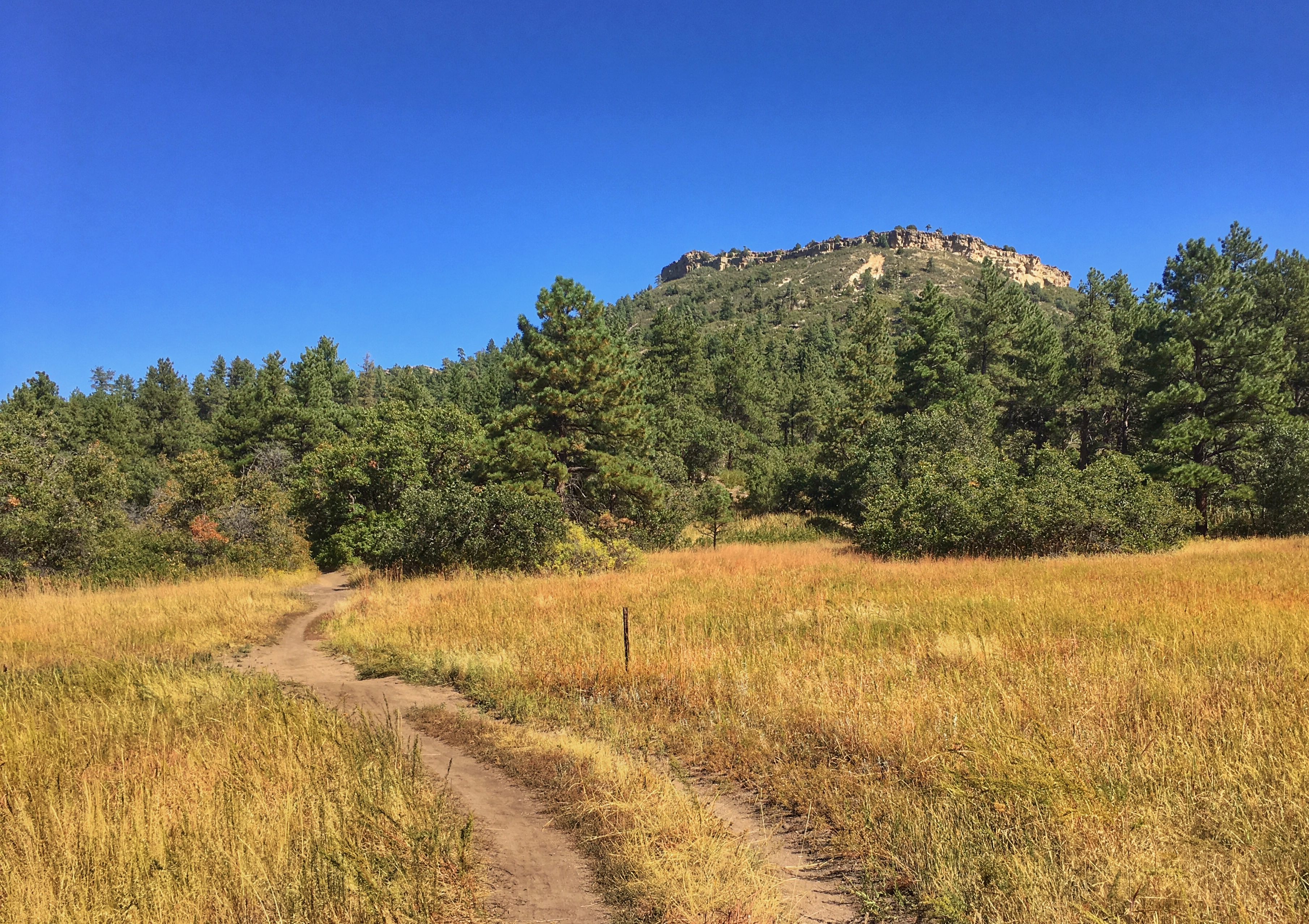
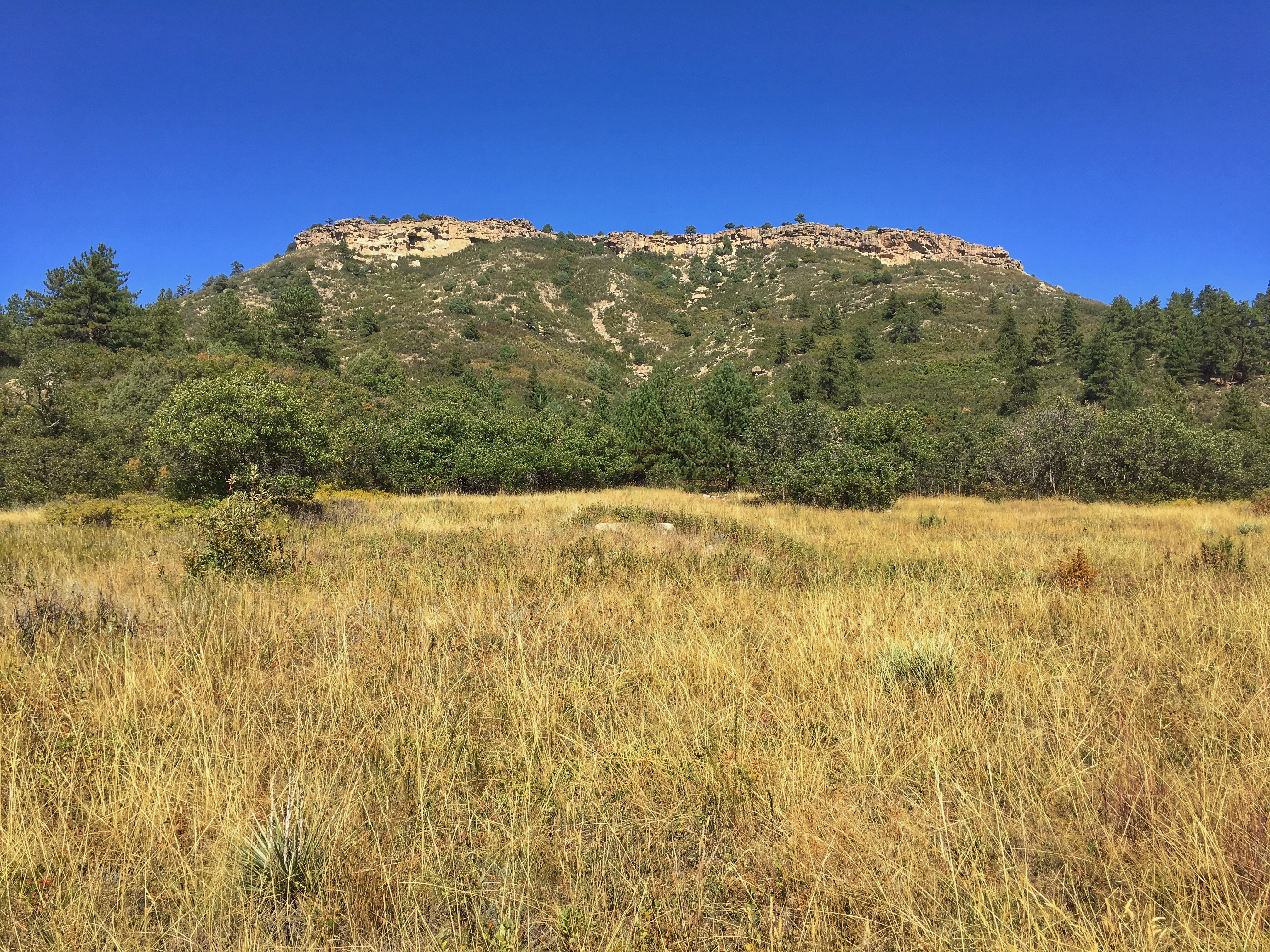
Saturday morning in Colorado Springs was gray, overcast, and damp. I headed for a trail I hadn’t hiked before. It was about 30 miles north of my house, not far from Castle Rock. As soon as I drove over the Palmer Divide, the sky cleared. As I hiked, the temperature was around 60°, and a stiff breeze kept the sun from being overwhelmingly hot. The trail at Dawson Butte makes a five-mile loop below the butte, through pines and scrub oak and a few meadows. The total altitude gain is about 150′, so it isn’t very strenuous. There are long views of the front range, and of course close-ups of the butte itself.
There were a decent number of birds around, but nothing unusual. All three species of Colorado nuthatch were there in flocks. There were also other hikers, some bikers, and some horseback riders, but never in numbers that made me feel crowded.
It was a pleasant hike in a pleasant place, but it’s a bit too far from home for me to make it a regular exercise spot. See the clouds in the photo above? They mark the Palmer Divide. On my way home, as I crossed back over, the day once again became gray, overcast, and damp. It wasn’t until later in the afternoon that the sun broke through near home.
Posted inColorado|Comments Off on Dawson Butte Ranch Open Space
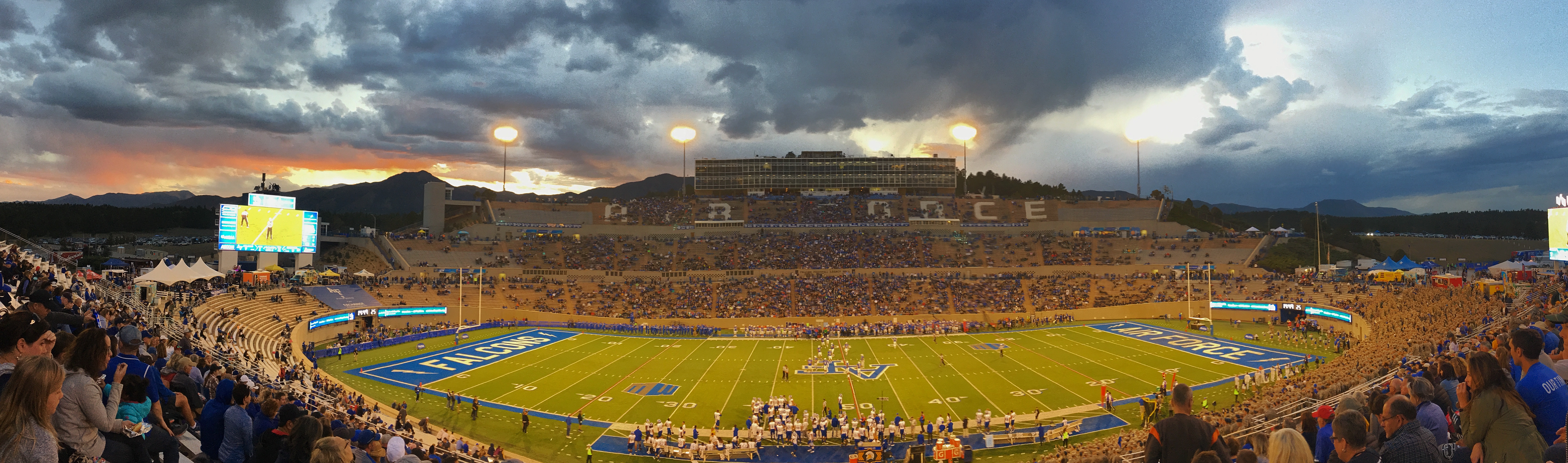
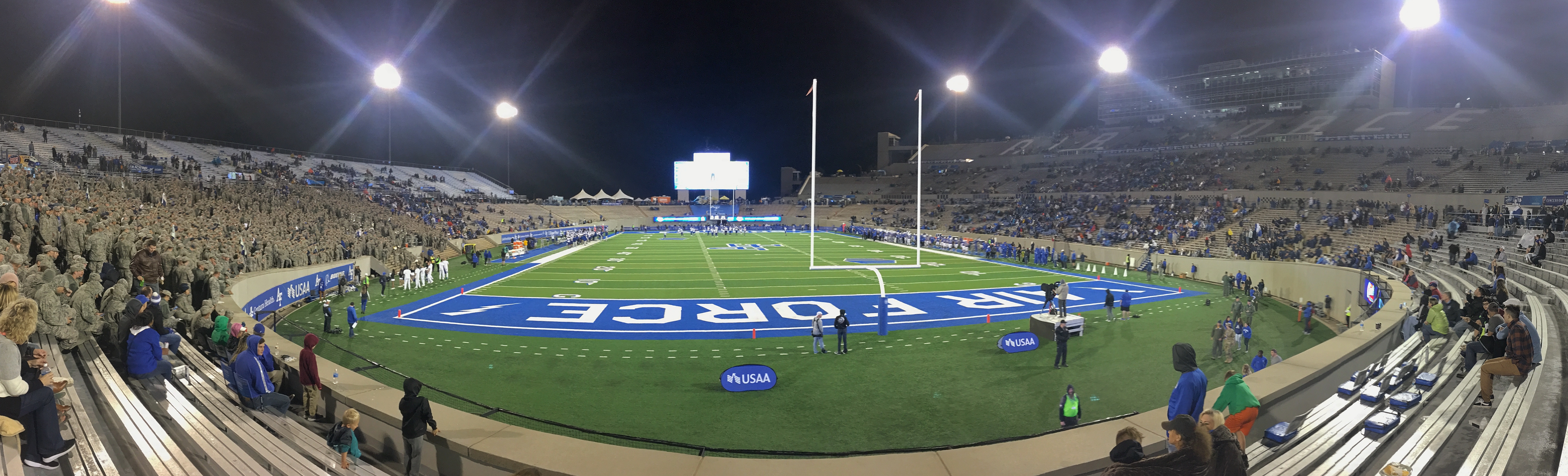
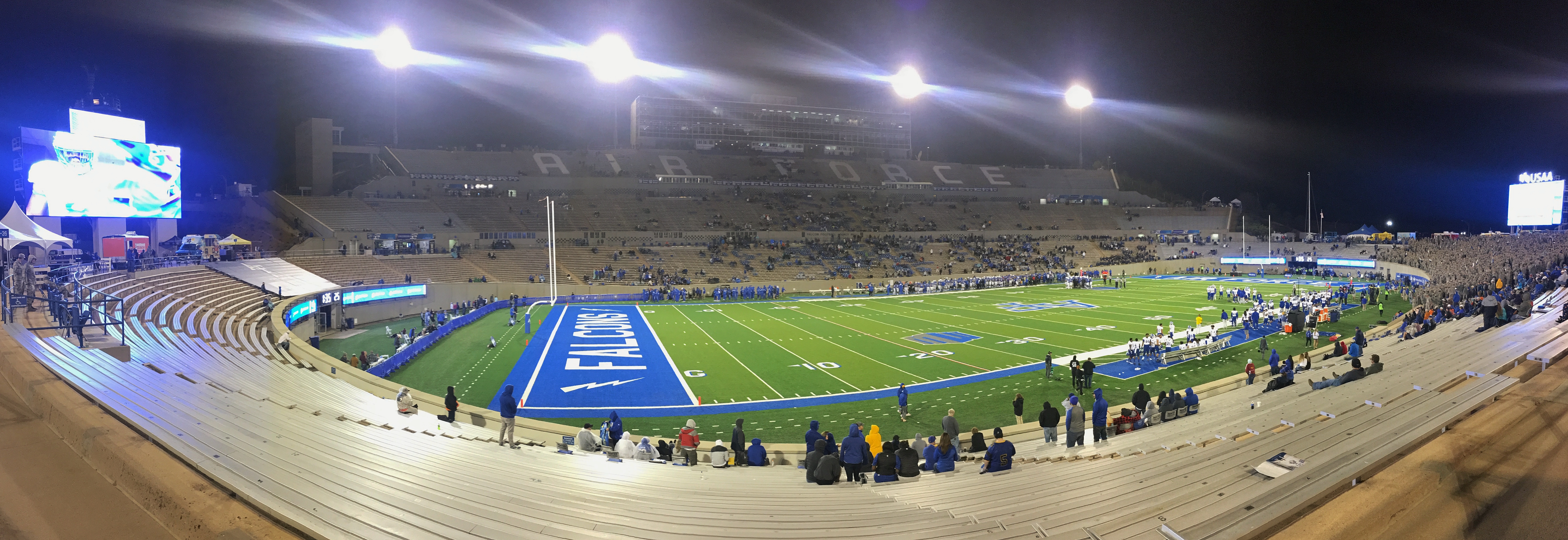
We went to the second home game of the 2019 Air Force Falcons season. It was on a Friday night at 6:00. I expected a lot of traffic and hassle, but there was none. We were waved onto the Academy grounds without stopping and were parked in the south lot shortly thereafter. Our seats were on the visiting (east) side of the stadium, near midfield but high up on the bleachers.
This was our view.
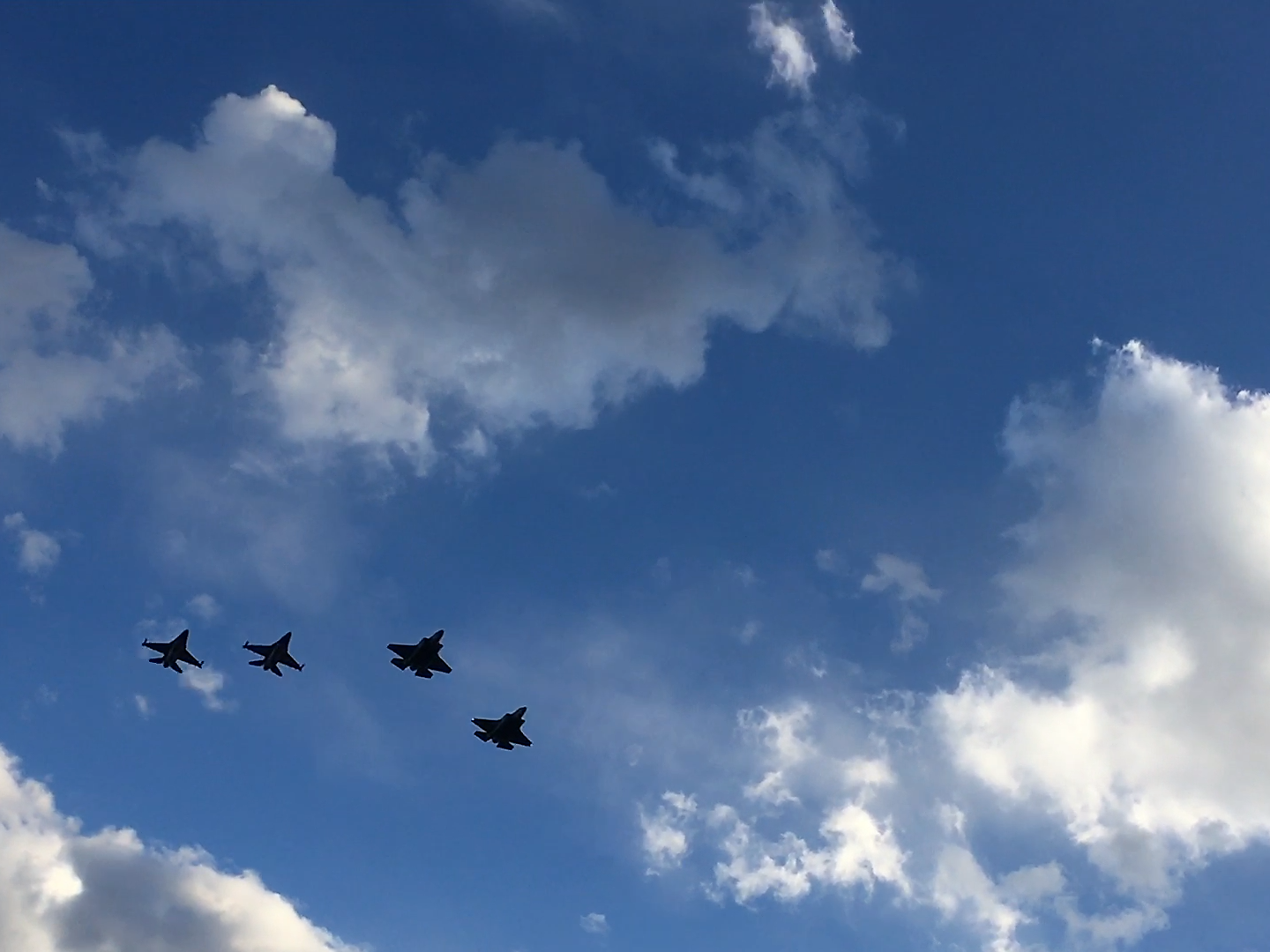
It was warm and sunny when we arrived. I wandered down to buy a mediocre supper from a food tent. I wasn’t back up on my seats long when the festivities began. Four jets flew over.
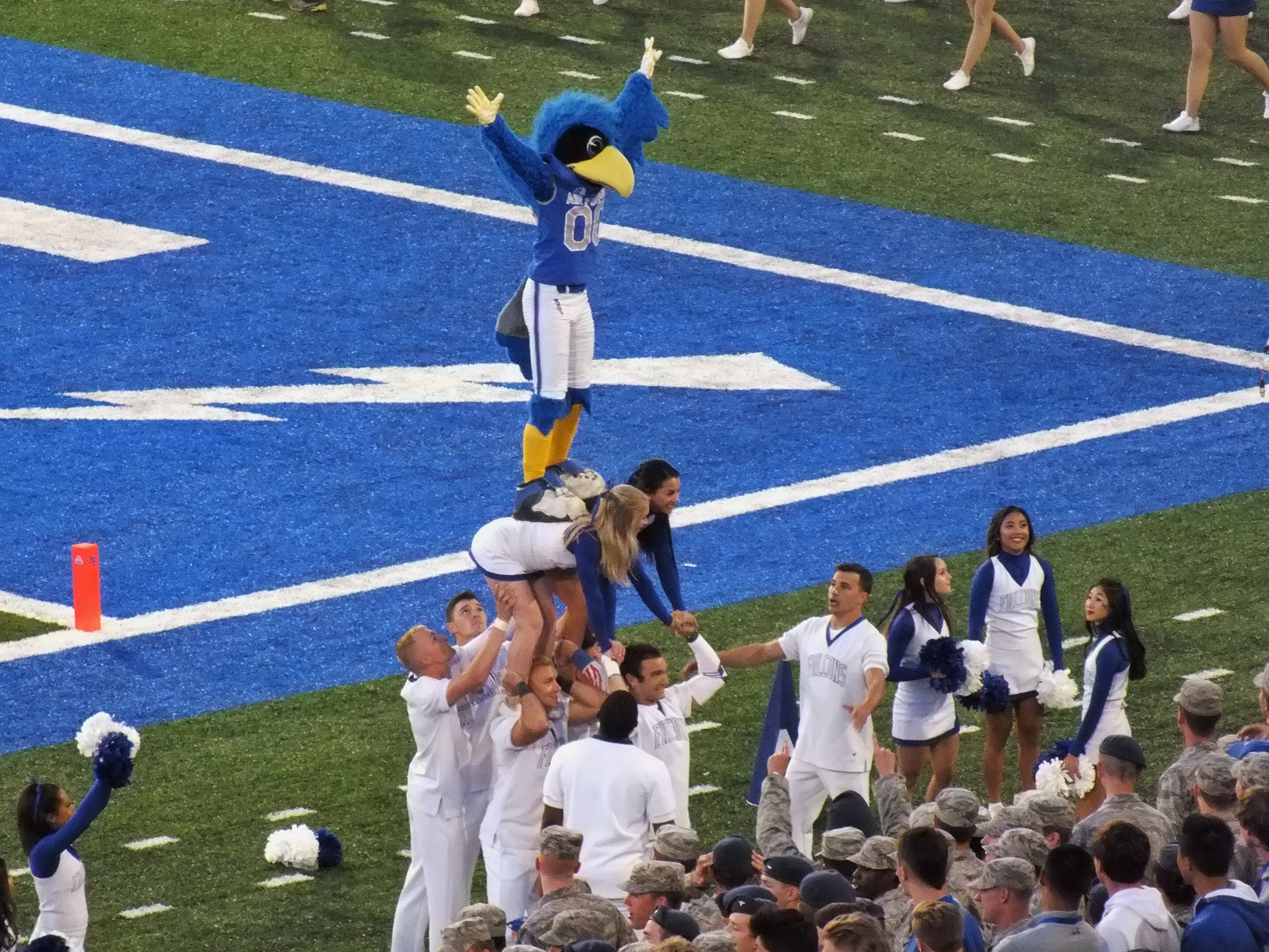
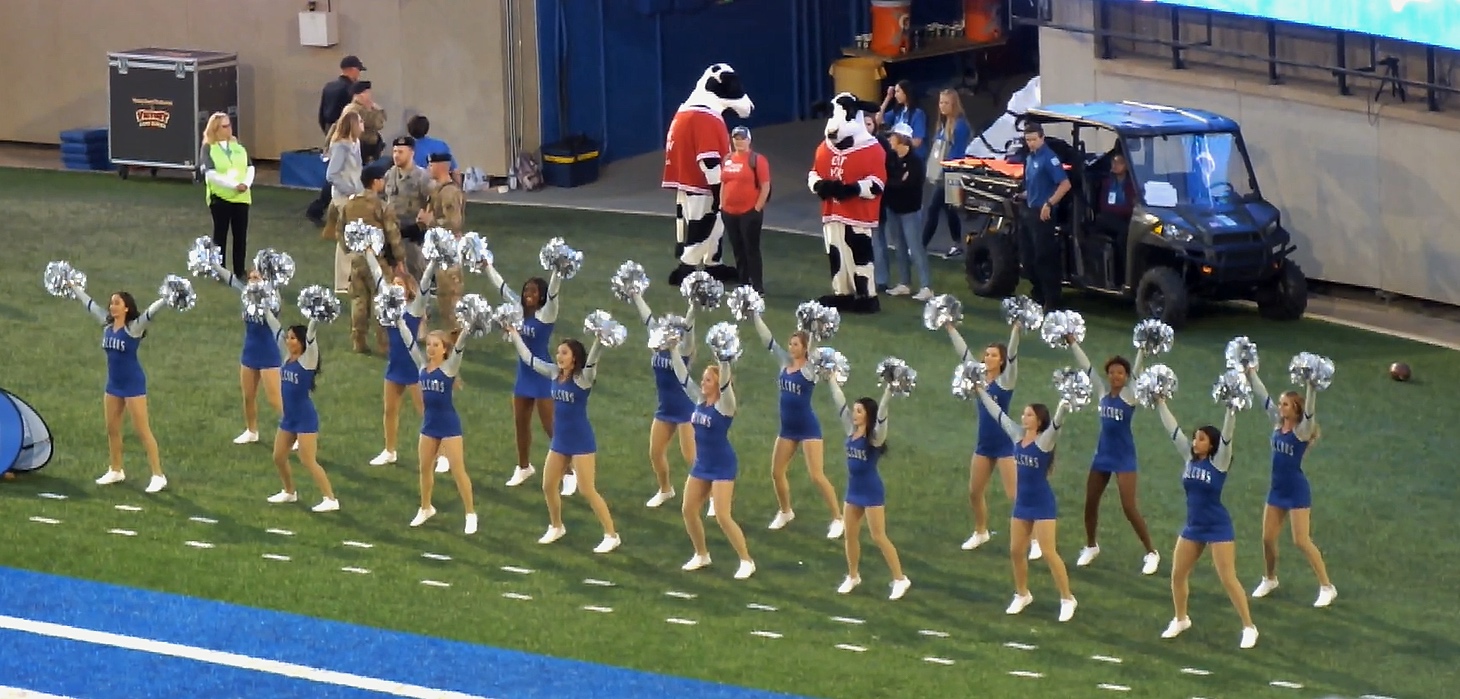
Six hang gliders parachuted down into the stadium. All the cadets marched out in formation. A guy dressed as a bird (and apparently called “The Bird” ran around frantically. There were two cheer squads and a pom squad and a couple of cows from Chick-fil-A. What there wasn’t was a large crowd. At its peak, I don’t think the stadium was one-third filled.
A weatherman appeared on the scoreboard to tell us that it might rain a few drops before the game started but then it looked good the rest of the night. He was wrong.
The Spartans scored on their first drive but then pretty much checked out. Air Force didn’t throw the ball often, but they didn’t have to. I can’t remember a single punt, although there may have been one or two. Air Force did complete one long fly pattern for a touchdown, but of course I didn’t catch it on video. The Falcons won 41-25, and the game was only that close because of charity. The Falcons quit playing defense in the fourth quarter. Seriously. At one point they tried for a 4th and 3 on their own 20 yard line when they could have punted with a stiff wind at their backs.
Whenever Air Force made a first down, the announcer would say, “That’s enough for an Air Force …” and then he would stop. An old guy two rows in front of us yelled “First down,” and I figured out that the entire crowd was expected to join in. For the next several first downs, it was just the old guy and me, but I nagged my wife until she began joining in too. Still, the three of us didn’t make much of an impact.
Whenever Air Force scored, a bunch of cadets ran onto the field and did a push-up for each point. This accumulated, so that when the last points were scored, they had to do 41 push-ups. Many Air Force personnel in the stands were also doing push-up, as you can see in the photo below. Four guys also ran out and did a loop of the north end zone carrying huge banners.
As soon as the sun went down, a cool north breeze came whipping down the front range and through the stadium. We were soon freezing, even though we’d had the foresight to bring jackets. During halftime, it began raining. We’d gone down by the food trucks and never returned to our seats. Most of the crowd left. We sheltered in the lee of a tent for the worst of it, then sat in the north end zone, somewhat out of the wind. This was our view from there.
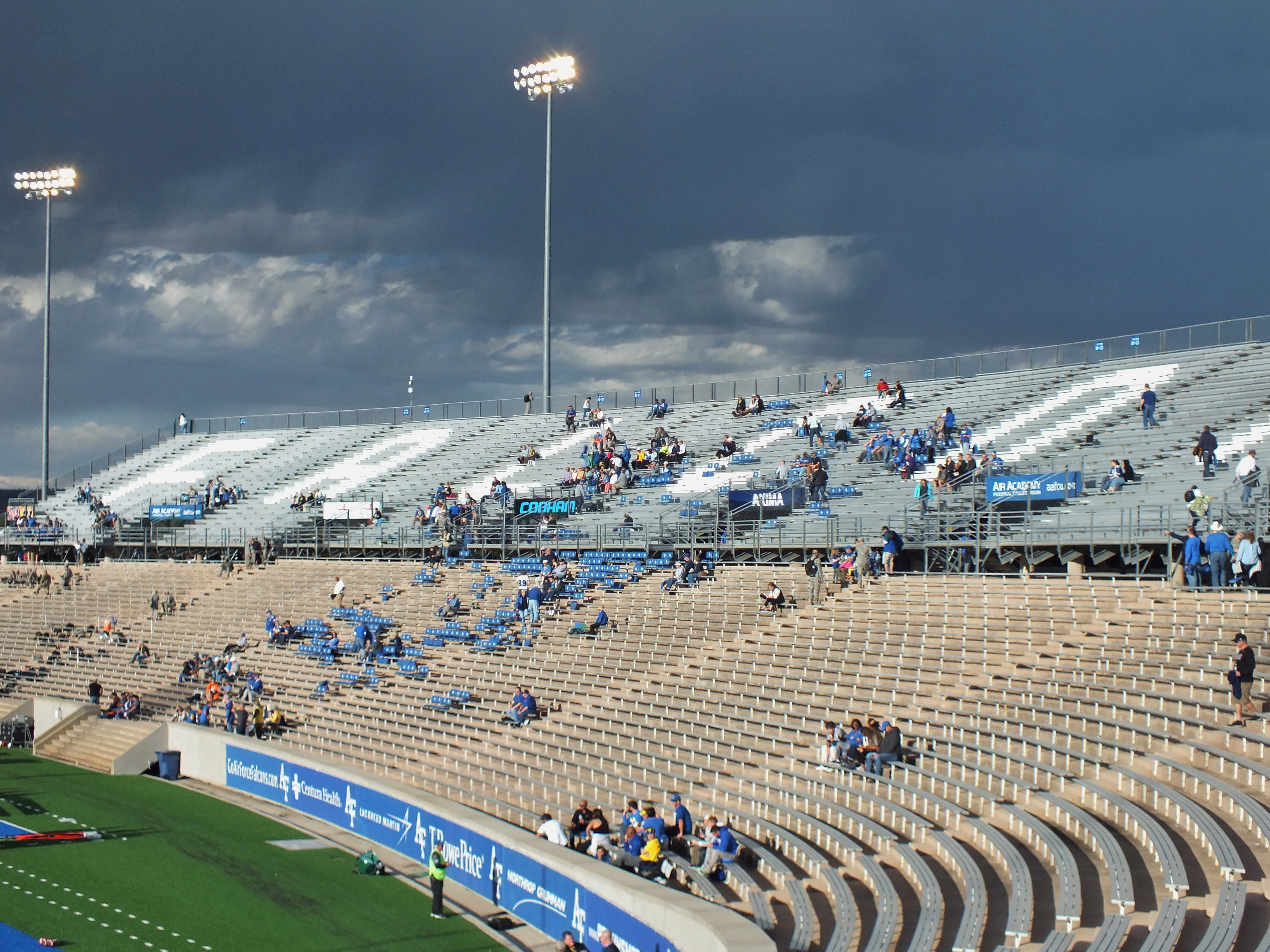
Air Force was driving for the far end zone in the fourth quarter, so we walked down to the other end. We didn’t even bother finding seats. You can see how empty the stands were by then. We huddled behind a section of the bleachers out of most of the wind. My weather app said it was 60°, but it was far, far colder than any 60° I’ve ever felt.
We stuck it out to the very end because we figured we’d only do this once. But we enjoyed the hoopla and the game and the atmosphere and weren’t at all sorry we’d gone.
We got out of the stadium and the parking lot with zero wait at any point. Because we were in the south lot, we were forced to exit the academy through the South Gate, which meant a long drive lined with cones and traffic directors who were standing in the dark with no traffic to direct.
Posted inSports|Comments Off on Air Force Falcons vs. San Jose State Spartans