Bird #486 — Yellow-billed Loon

gavia (loon) adamsii (named for Edward Adams, English surgeon-naturalist who served on voyage to Arctic in search of Sir John Franklin during which this species was discovered)

Tuesday, January 9, 2018 — 9:20 am

Arapahoe County, Colorado — South Platte Reservoir

This bird showed up on the Colorado hotline on Saturday when I was up in Victor seeing my lifer Black and Gray-crowned Rosy-Finches. I should have driven the 45 minutes north of my house to see it on Sunday afternoon, but it didn’t occur to me until it was too late. When I complained to my wife, she said, “You have vacation days. Take one and go see it.”

I dropped my wife at work on Tuesday morning and drove up. As I passed the reservoir on Highway 470, I could see a large group of birders standing on the berm along the lake. By the time I exited and found my way to the spot, they were all walking down the hill to their cars. But they assured me the loon was there.

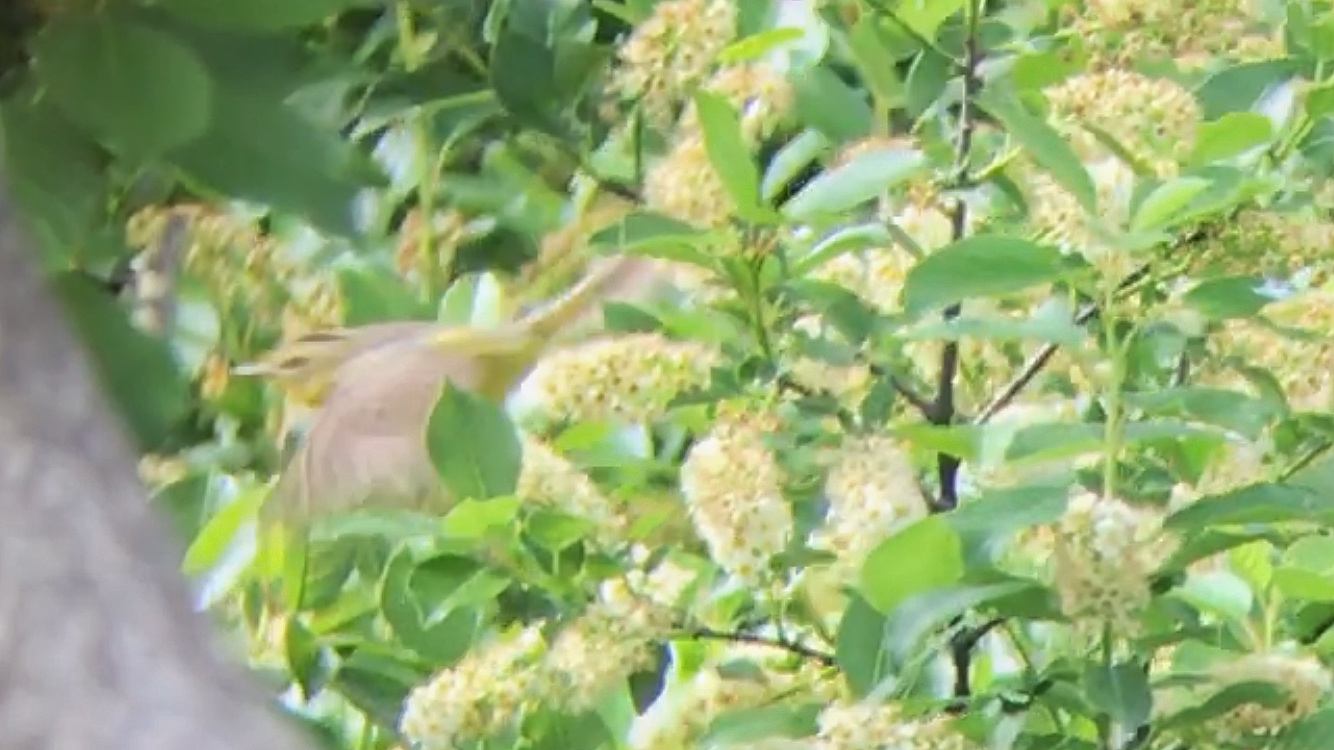
I hiked up the berm and set up my scope. Within a minute or two, I found the loon. It was about 200 yards out. It spent more time under the water than on the surface, and when it dove, it sometimes came up 50 yards from where it went under. It began every dive with a little jump. Here’s my best photo, taken with my phone held up to my scope. You can see the pale bill and dark patch on the ear that are diagnostic for this species.

Most of the time when I looked, I just saw water. Or this …

I realized I left my phone in my car, so I was on my way down to get it when a woman came up. I pointed out the bird to her. When I got back to the lake, we got to chatting. Turns out she used to live in Illinois and worked in the Schaumburg Library where I’ve been many times.

I watched the loon for several minutes as it gradually moved further away .

Another large group of birders showed up, all of them over 70. I guess that figures, seeing as it was a weekday morning. It was pretty obvious many of them were there for the social aspect — which is just fine. But some of them wouldn’t be able to tell a loon from a parakeet.

Yellow-billed Loons nest in the arctic and generally winter along the coast of Alaska. They’ve been recorded from downstate Illinois, but I don’t recall one ever being seen near Chicago. They show up a bit more often in Colorado, but it’s a rare bird by any measure this far south and inland. In this photo, the loon can just be made out as a tiny light dot on the left. That’s downtown Denver in the background.

Here are some photos I stole off the internet of the very bird I saw, taken by people with far nicer cameras. I could see it almost this well through my scope. Note the straight culmen (upper ridge of the bill), another key mark.

I wandered along the shore for a ways and spotted several Common Goldeneye, a Bufflehead, a raft of Ruddy Ducks, and two Greater Scaup. A White-winged Scoter flew down to my corner of the lake and landed about 30 yards out.

As it turned out, I didn’t need to take a day off to see it — the bird was still in the same place three weeks later. But you never know …

Posted in Birds | Comments Off on Bird #486 — Yellow-billed Loon

Mueller State Park

I’ve driven past Mueller State Park at least a dozen times, but I’ve never stopped. Today, when I went up to Victor and found the rosy-finches before 11:00, I had plenty of time to check it out. I stopped in the visitor center and asked a ranger to recommend a trail of about two or three miles that wouldn’t kill me. She suggested I take Trail 7 and circle back on Trail 11, with some side trips on shorter trails.

Mine was the only car in the lot at the trailhead, and for the next two+ hours I didn’t see another human. Much of the time, in fact, I couldn’t hear any human-caused noise, although an occasional airplane flew high overhead.

The trail cut through a picnic area. I heard a couple Mountain Chickadees and made a whispy noise to attract them. It worked better than I expected. The chickadees came, and so did a Gray Jay. It silently glided to a branch just above my head and then, when it saw I had no food, flew down to the ground about 30 feet away, then silently disappeared back into the woods.

The trail ran along a ridge with long views of distant mountain ranges.

To the south, Pikes Peak dominated the horizon, but since I was already above 9,500 feet, it didn’t seem as high as it does from home.

The side trails all led to rock outcroppings with amazing views.

The trail dropped down off the ridge and ran through dense woods.

I stopped often to listen for birds, but there weren’t a lot around — nor did I expect there to be this time of year. I did track down four Steller’s Jays, a Hairy Woodpecker, and this male Three-toed Woodpecker.

I had to pass under him and climb a hillside to get a shot that showed his small yellow crown.

When I got back to the picnic area where I started, I called for the Gray Jay again. It took longer this time for it to come, but come it did. And I was ready this time.

Mueller is a stunning park, and I will certainly return and check out some of the other trails. The hike wasn’t a piece of cake, with some steep hills made more challenging by the altitude, but it was very much worth the effort.

Posted in Birds, Scenery | Comments Off on Mueller State Park

Bird #485 — Gray-crowned Rosy-Finch

leucosticte (from leuko, white, and stictos, varicolored) tephrocotis (from tephros, gray, and otos, ear)

Saturday, January 6, 2018 — 10:05 am

Victor, Colorado — Diamond Avenue

When I first spotted the flock of rosy-finches in the aspen next to a house with a feeder, I could see that most of them were Black Rosy-Finches. But when I got right across the street, I was able to pick out four with body feathers that were brown instead of black or gray.

There are three populations of Gray-crowned Rosy-finch. One sub-species sticks exclusively to the coast along the Bering Sea. The other two breed high in the mountains from Alaska down to the Pacific Northwest and northern Rockies. The population that breeds further west is known as Hepburn’s. It has an extensive gray hood, like this bird.

The interior population has more of a gray cap than a hood. This next photo isn’t a good one, but it is the only shot I got of an identifiable interior Gray-crowned Rosy-Finch. (The bird in the foreground is the pink-sided form of Dark-eyed Junco.)

I’ve included them both because I saw somewhere online that a further split may be coming, separating Hepburn’s and the interior race into separate species. If that happens in my lifetime, I’ll have gotten three lifers today.

Apart from the color, there was nothing that stood out about the Gray-crowns. The whole flock stuck together, either sitting in the aspens, landing briefly on the ground, or circling the neighborhood. After I got back from lunch around 11:00, the flock had grown to over 70 birds, including several Brown-capped Rosy-Finches Here are a few of the shots I took of the flock.

I’m pretty sure the three birds lined up one above another in the middle of this next photo represent all three species, with the Gray-crowned (interior race) on top, the Brown-capped in the middle, and the Black on the bottom.

A Brown-capped, I’m pretty sure. It was often hard to see at the angle I had, but this one does not appear to have the gray head of the Gray-crowned.

The bird in the lower left of this next photo is also a Brown-capped.

The entire time I looked at the birds, two Mule Deer rested contentedly next to the blue house, not more than 30 feet from where I stood.

Posted in Birds | Comments Off on Bird #485 — Gray-crowned Rosy-Finch

Bird #484 — Black Rosy-Finch

leucosticte (from leuko, white, and stictos, varicolored) atrata (black)

Saturday, January 6, 2018 — 10:00 am

Victor, Colorado — Diamond Avenue

Black Rosy-Finches breed above timberline in mountains northwest of Colorado, but in the winter, they migrate southeast and hang out high in the mountains of Colorado with the other two species of rose-finches. All three species have been reported regularly in Victor, on the other side of Pikes Peak about an hour and a half from my house. The forecast was for temperatures near 50° so I headed up fairly early in the morning. I parked downtown and walked up and down the streets of the decrepit gold-mining town looking for birds while trying to look inconspicuous.

After about an hour I spotted the flock in an aspen next to an old building that I think is now divided into apartments or somesuch. The finches were there because of the feeders in front of a blue house next door. Here’s where I was when I first spotted them. The brick building on the right is an old rope-making factory from gold mining days. The bare hills in the background contain an active gold mine,

I leaned against a wall across the street for about 20 minutes and watched the finches. Locals kept driving by and staring. Most of them waved. All of them were obviously wondering what I was doing.

Anyway, even from a distance I could see that several of the birds were Black Rosy-Finches.

One with a crow for handy size comparison.

The adult males were definitely black. The females or first-year birds were grayer.

The flock spent most of the time in the tree. Once in a while most of them would fly down to the roof of the blue house, then down to the ground under the feeders. But they never stayed there for long. Something, or nothing, would spook them and they’d all take off and head back into the tree. A couple times, when a particularly loud pickup truck went by, they all took off and disappeared over the town, returning five minutes or so later.

When I first got there, the flock had 25-30 birds — mostly Blacks but with a few Gray-Crowns (also a lifer, next post) mixed in. When the flock took off yet again, I went into town to eat an early lunch at a bakery. I went back later. The flock had grown to over 70 birds with a lot of Brown-caps mixed in. Still, whenever part of the flock landed under the feeders, they were mostly Blacks.

Posted in Birds | Comments Off on Bird #484 — Black Rosy-Finch

Highlights from Recent Reading

This morning there had been a brief shower but then it had turned into a beautiful sunny day. The venerable chaplain, Colonel Stephen Williams, held Sunday services outside, attended by almost all of the Indians as well as the soldiers. It was an excruciatingly long and complex Calvinistic sermon taken from Isaiah, which was not finished until well after noon, since at the end of each sentence he had to pause so that the Mohawk interpreter could translate for the natives. They watched him closely and listened intently and when he was finished at last they clapped their hands together and thudded the ground with their bare feet.

Perplexed, Williams asked the interpreter what that outburst was for and the man bobbed his head and grinned and then said, “they think you are one of the funniest storytellers they have ever heard.”

from Wilderness Empire, by Allan W. Eckert


Uncle Stanley Gibbs, Grover’s father, had no teeth at all and talked like a bubbling spring, and would say anything at all — anything — that he thought of. And sometimes he said, as Grover put it, “things that he nor nobody else ever thought of.”

from Jayber Crow, by Wendell Berry


Am I oversimplifying here? Yes. Is all our media stupid? Far from it. Were intelligent, valuable things written about the rush to war (and about O.J. and Monica, and then Laci Peterson and Michael Jackson, et al.)? Of course.

But: Is some of our media very stupid? Hoo boy. Does stupid, near-omnipresent media make us more tolerant toward stupidity in general? It would be surprising if it didn’t.

Is human nature such that, under certain conditions, stupidity can come to dominate, infecting the brighter quadrants, dragging everybody down with it?

from The Braindead Megaphone, by George Saunders


Slow rain puckered the surface of the pool and made the marble angel glisten in the dusk. Sometimes a breeze passed and a chain of water slopped from the hanging branches onto the lawn, soaking one or the other of them. But Enderby was an English gentleman, and while God’s rain might be falling on the rest of mankind, he was damned if it was going to fall on him.

from Smiley’s People, by John le Carre


But the repercussions of the handwriting problem extend far beyond professional writers such as me and William Shakespeare. Have you ever asked yourself why the federal government, despite employing millions of bright people, displays the collective intelligence of a squeegee? The answer is that all of the important early documents that our government is based on — the Constitution, the Declaration of Independence, the Magna Carta, and the Scarlet Letter — are written in totally illegible cursive handwriting. For over 200 years the Supreme Court has been basically guessing what the Constitution says. It is only recently that historians, using modern handwriting-analysis equipment, have been able to start deciphering the handwriting; so far they have discovered that:

The so-called Bill of Rights is actually a detailed order for party supplies.

There’s no mention of any “Congress.”

The president is mentioned, but his only specified duty — which is not further explained is to “blow the Horn of Cheese.”

from Dave Barry in Cyberspace, by Dave Barry


Wit was in short supply, although Bob Hope got off a decent line: “He’s a symbol of the Old West where men are men and women are women, and the way he walks could fall into either category.”

from John Wayne: The Life and Legend, by Scott Eyman


Yakima Canutt is in most of the pictures, usually as the dog-heavy and to double Wayne. In many of the films, Canutt doubles Wayne chasing Canutt, i.e., Canutt chases himself. (Canutt’s bald spot gives away his presence when he’s doubling Wayne in fight scenes; so does his square body.) During one picture Malvern forgot to hire a second stuntman for an action sequence that involved Canutt, doubling Wayne, leaping from a running horse onto a railroad handcar. If Canutt doubled Wayne, there was nobody to double Canutt as the bad guy on the handcar.

Wayne looked at Canutt, and Canutt looked at Wayne. They exchanged clothes, and Canutt doubled Wayne while Wayne doubled Canutt — Canutt made the transfer from the horse to the handcar with Wayne catching him, and they started fighting in a long shot. The long shot completed, they changed clothes and went back to playing themselves.

from John Wayne: The Life and Legend, by Scott Eyman


Inject honesty into Political Campaigns. I am not using the word “inject” figuratively, here. I am talking about the mandatory injection of large dosages of sodium pentothal — also known as “truth serum” — into the veins of all presidential candidates. Under my plan, every candidate would be accompanied at all times by a syringe-toting physician employed by the Federal Elections Commission, who would be responsible for making sure that the candidate had enough sodium pentothal in his bloodstream to ensure that he told voters what he was actually thinking.

from Dave Barry Hits Below the Beltway, by Dave Barry


Yes, Washington has had its troubles. But it has emerged from those troubles to become one of the most vibrant and cosmopolitan cities in the entire southern Maryland area; a city where, as a visitor, you experience the thrill of knowing that you are at the epicenter of federal power, and at any moment you, an ordinary citizen, could turn a corner and find yourself bumping into the Deputy Administrative Assistant to the Assistant Executive Deputy Associate Administrator to the Acting Interim Executive Undersecretary for Coordination of Interstate Urban Fish Hatchery Affairs, or one of his top aides!

from Dave Barry Hits Below the Beltway, by Dave Barry


I’ve always been fascinated by the protective colorations of various kinds of wildlife. How did it happen that certain creatures blend in so perfectly with their background? I’ve never been able to buy Darwin’s theory of survival of the fittest. Let’s say that a few eons ago a bunch of pretty, little, bright red bugs show up on a sandy desert, but a couple of these bugs are defective and turn out to be an ugly sandy color. All the pretty bugs make fun of the ugly bugs, but then one day a big flock of sparrows shows up and eats all the pretty red bugs. The sparrows don’t even notice the little defective sand-colored bugs, who are sitting off on a dune laughing themselves silly. From then on, all this species of bug is sand colored. That’s essentially the survival-of-the-fittest theory. One of the many flaws in the theory is that while the two little sand-colored bugs are sitting on the dune laughing, a camel walks by and squishes them. This, to me, is a much more accurate view of life. Darwin was just too much of an optimist.

from The Good Samaritan Strikes Again, by Patrick McManus


What characterizes modern man … is that he disregards the voice of conscience which is tormenting him inwardly. He thinks he has silenced it. He thinks he has promulgated a new morality. Thus his conflict is unconscious; it is a sickness, a dramatic struggle which destroys his personhood. Conscious moral struggle, on the contrary, the struggle with sin in the name of a consciously recognized law, is constructive, even though man may have his defeats.

from The Whole Person in a Broken World, by Paul Tournier


Here’s a similar bonehead error that guys often commit in guest bathrooms: They see soap on a soap dish, and they use it to wash their hands. This of course ruins the guest soap, which is defined as “soap that guests are not supposed to use.” Its purpose is to match the guest towels.

In his letter to me, Dick criticized this kind of thinking by comparing it to a hypothetical situation involving guys. Suppose, he wrote, that a guy is working on his car, and he asks you to hand him a 9/16 wrench. You go over to some wrenches hanging on the wall, and you start to take one, and the guy yells, “NOT THOSE! THOSE ARE FOR DECORATION!”

Dick, when you put it that way, the concept of purely decorative towels DOES seem silly. But there’s actually a very logical explanation for it: Women are insane.

from Boogers Are My Beat, by Dave Barry

Posted in Books and Literature | Comments Off on Highlights from Recent Reading